A Pine Siskin can make a beginner feel as if every small finch in the yard has suddenly become harder to sort out. These birds often arrive in a restless flock, mix with other seed-eaters, and rarely seem interested in posing in one clean, perfect view. That can leave you thinking, "I saw a small brown bird with stripes... but so did the next five birds."
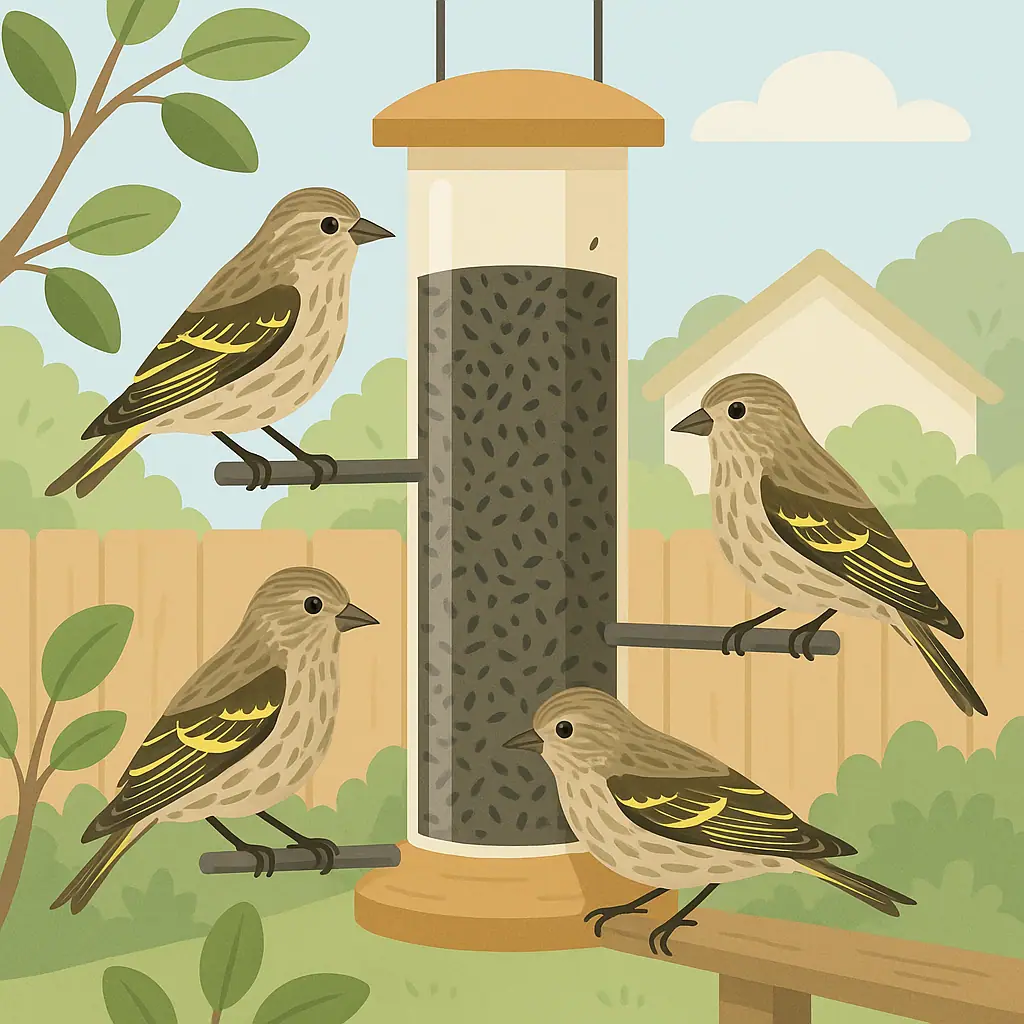
The good news is that pine siskin identification becomes much easier when you stop looking for one dramatic mark and start stacking a few calmer clues together. Fine streaking, a slim pointed bill, flashes of yellow in the wings or tail, and a busy, chatty flocking style usually tell the story better than color alone.
The Cornell Lab's Pine Siskin identification guide describes the species as a very small songbird with a sharp pointed bill and a short, notched tail. That simple shape clue is one of the friendliest places for a beginner to begin.
Why Pine Siskins Feel Tricky at First
Many backyard birdwatchers first notice Pine Siskins as motion rather than detail. The flock may descend on a feeder, shuffle positions constantly, then lift off all at once in a noisy burst. In that kind of moment, it is easy to miss the marks that separate them from House Finches, goldfinches, or other small visitors.
Another reason they feel tricky is that they do not rely on bold blocks of color. Instead, the bird gives you a collection of subtler clues: narrow streaking across the body, a finer bill than many finches, and small yellow flashes that may appear only when the bird shifts or flies.
Busy flocks can hide simple field marks
When several birds move at once, your eye may stay on the feeder instead of on body shape. Slowing down and choosing just one bird to follow helps much more than trying to judge the whole flock at once.
They look plain until you know what to watch
Pine Siskins are not dull. They are just detailed in a quieter way. Once you know to look for fine streaking and a pointed bill, the bird starts standing out much more clearly.
Start With the Shape Before the Color
The overall shape is often your best opening clue. Pine Siskins are tiny finches, but they do not usually look as thick-billed or soft-faced as some of the birds around them. The impression is slim, pointed, and slightly more delicate.
If the broad-shape method already helps you, BirdPeep's guide to identifying birds by shape before color pairs perfectly with this species. Pine Siskins reward that habit because their structure often gives you the answer before their yellow flashes do.
- Bill: look for a slim, pointed bill rather than a chunky seed-cracking shape.
- Tail: notice a short tail that can look slightly notched.
- Body feel: the bird often seems small, narrow, and a little sharper in outline than nearby finches.
- Perch style: it may cling lightly and shift often instead of settling into a heavy, relaxed pose.
Use the Streaking and Yellow Flashes Together
The body pattern matters, but it helps most when you pair two marks together. Pine Siskins are heavily streaked for such a small finch, and those streaks often run through the breast and sides instead of stopping in neat patches. Then, when the bird turns just right, you may catch a little yellow edging in the wing or tail.
Cornell's species overview notes the bird's brown streaky look and yellow wing markings, and that combination is what makes a Pine Siskin feel more specific than just "small streaky finch." One clue alone may leave you unsure. Two clues together usually feel much better.
Do not wait for bright yellow
The yellow is often subtle. In flat light it may look more like a quick wash than a loud patch. If you hold out for a brilliant color block, you may talk yourself out of a good identification.
Trust the fine streaking pattern
A Pine Siskin often looks neatly penciled rather than blotchy. The streaks feel narrow and plentiful, which gives the bird a more lined, textured look than many beginners expect.
Listen for a Restless, Wheezy Flock Voice
Sound can help when the flock will not sit still. Cornell's Pine Siskin sounds page describes a flock that stays atwitter with wheezy contact calls, and that is a very useful backyard clue. You may hear the flock before you notice which of the small birds is making the noise.
This matters because Pine Siskins often feel more energetic and chatty than a quiet feeder moment full of doves or sparrows. The voice adds confidence when you already have shape and streaking in mind.
- Listen for chatter: the flock often sounds busy even when the birds are only shifting positions.
- Listen for a wheezy quality: the call may sound sharper and thinner than a mellow song.
- Listen during takeoff: when the flock lifts together, the sound can confirm what your eyes were only starting to suspect.
Where Pine Siskins Often Stand Out in a Yard
Pine Siskins often show up best where small seed-eating birds gather. Tube feeders, nyjer feeders, and feeder edges can all become useful places to compare one bird against another. The trick is not to stare at the whole crowd. Pick one bird, follow it for a few seconds, and let the comparison happen naturally.
That is also why BirdPeep's post on platform feeders vs tube feeders can be a useful companion read. Different feeder setups change how closely birds bunch together, which can make shape and bill differences easier or harder to notice.
Compare one bird at a time
Busy feeders create visual clutter. Choosing a single bird helps you notice the pointed bill and narrow streaking without getting lost in the whole flock.
Watch the edge birds too
A Pine Siskin at the edge of the group may reveal yellow in the wing or tail more clearly when it shifts, lands, or lifts away.
How to Separate Pine Siskins from Similar Backyard Finches
Comparison is what turns a maybe into a confident identification. Pine Siskins often overlap with birds beginners already know a little better, especially House Finches and goldfinches. The best move is to compare structure and pattern before worrying about exact shades.
If one bird looked especially streaky but also slimmer-billed than the others, that is worth your attention. BirdPeep's article on House Sparrows vs House Finches can also help reset your eye for the thicker, more familiar feeder birds before you compare them with a siskin.
- Compared with House Finches: Pine Siskins often look finer-billed, more narrowly streaked, and less warm-faced overall.
- Compared with American Goldfinches: Pine Siskins usually look browner, more heavily streaked, and less cleanly patterned.
- Compared with Song Sparrows: Pine Siskins feel smaller, more finch-like, and more likely to feed in active little groups at seed feeders.
- Compared with other feeder birds: the combination of pointed bill, fine streaks, and quick yellow flashes is what matters most.
Pros and Cons of Using Flock Behavior First
It works even when the birds do not pose
Flock noise, constant motion, and shape clues are useful when you never get a textbook still view.
It helps you compare birds naturally
Watching one bird among many makes bill shape and streaking easier to judge.
It lowers the pressure on color alone
You do not need a perfect yellow flash if the pointed bill, fine streaking, and wheezy flock voice already fit.
The flock may move too quickly for a beginner
When several birds land and leave together, it can feel hard to stay with a single bird long enough.
Subtle marks can disappear in poor light
The yellow edges and the fine streaking may look less obvious on a gray day or from a shaded window.
A Simple Pine Siskin Identification Checklist
Use this short checklist the next time a restless little flock visits your feeder area.
- Check the bill: does it look slim and pointed?
- Check the body: do the breast and sides look finely and heavily streaked?
- Check for yellow: do you see a small flash in the wing or tail when the bird moves?
- Check the flock mood: do the birds seem active, busy, and lightly restless?
- Check the sound: do you hear thin, wheezy contact calls moving through the flock?
- Check one bird at a time: are the clues lining up on an individual bird instead of only on the group?
Frequently Asked Questions
What is the easiest first clue for pine siskin identification?
Many beginners do best by starting with the slim pointed bill and the fine streaking across the body before looking for yellow flashes.
Do Pine Siskins always show obvious yellow?
No. The yellow can be subtle and may show best when the bird shifts position or flies. It helps, but it is not the only clue you need.
Why do Pine Siskins feel harder than some other feeder birds?
They often arrive in moving flocks and rely on a set of smaller clues instead of one bold patch of color, so the whole impression matters more.
What should I do if I am still unsure?
Do not guess. Note the bill, streaking, yellow flashes, and flock voice, then compare those clues with a trusted guide after the moment has passed.
Final Thoughts
Pine siskin identification gets friendlier once you stop asking for one perfect view and start collecting a few steady clues. The pointed bill, pencil-fine streaking, quick yellow flashes, and busy flock voice all work together.
Watch one bird at a time, trust the shape before the color, and let the sound help when the flock will not sit still. With that calmer approach, a confusing little feeder crowd becomes much easier to read.