Choosing your first bird feeder can feel surprisingly personal. Some people want the widest variety of visitors all at once, while others want a neater setup that stays dry and easy to manage. If you have been comparing a platform feeder vs tube feeder, the good news is that both can work beautifully when you match them to the birds you hope to watch and the routine you can maintain.
The simplest difference is this: platform feeders welcome many kinds of birds because they offer open space, while tube feeders help keep seed drier and often favor smaller perch-feeding birds. Once you understand that tradeoff, the choice becomes much calmer.
Why the Platform Feeder vs Tube Feeder Choice Matters
A feeder is not just a container for seed. It shapes which birds feel comfortable visiting, how often you need to clean, and how easy it is to enjoy the view from indoors. Cornell Lab's guide to bird feeder types notes that platform feeders attract the widest variety of seed-eating birds, while tube feeders help protect seed from weather and droppings.
That makes this less about finding a single best feeder and more about noticing what matters most in your yard. If you enjoy step-by-step feeder basics, BirdPeep's complete guide to bird feeders for beginners is a helpful place to revisit the big picture before you decide.
Think about your birds first
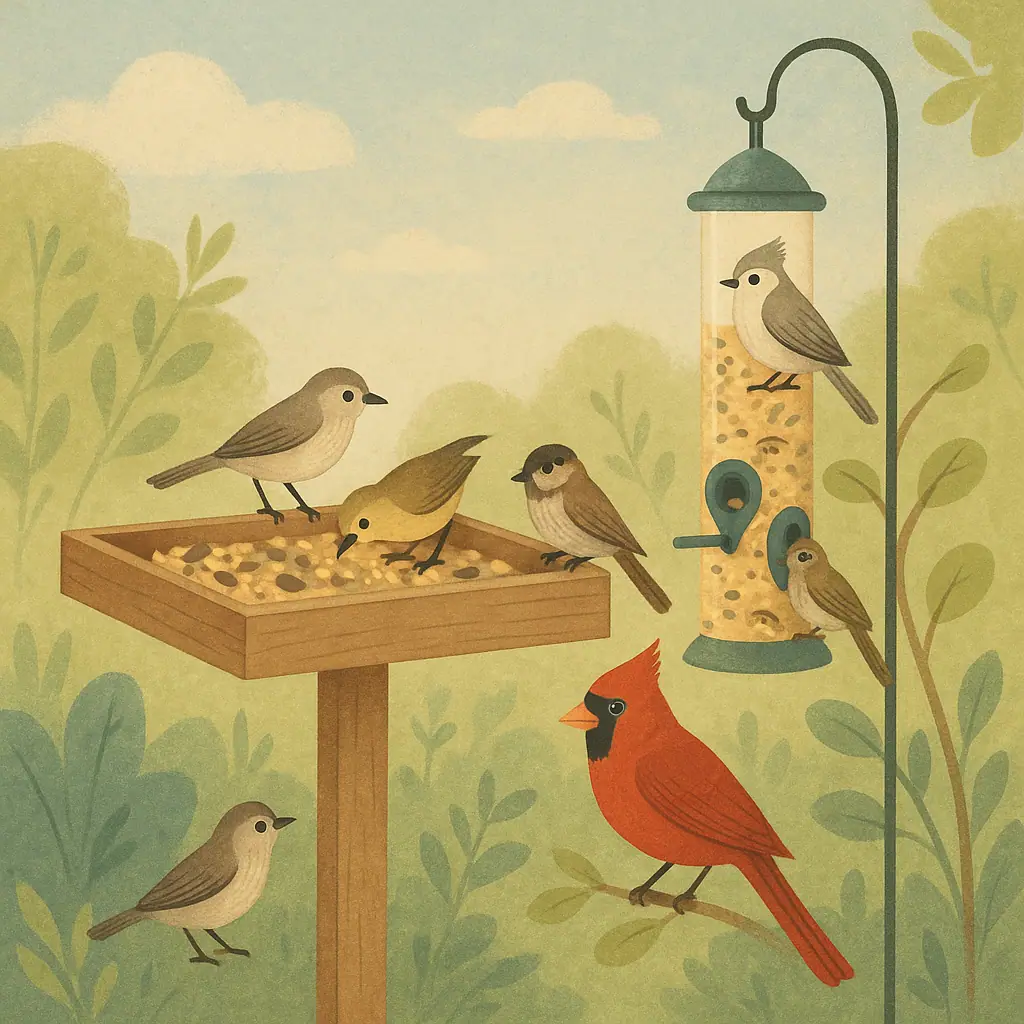
If your yard gets cardinals, doves, juncos, sparrows, and larger visitors that like room to land, a platform often feels welcoming. If you mostly notice finches, chickadees, titmice, and other smaller cling-and-perch birds, a tube feeder often fits their style better.
Think about your routine too
A beautiful feeder that is hard to refill or easy to neglect will not stay enjoyable for long. The best choice is one you will actually keep clean and stocked.
What Platform Feeders Do Best
Platform feeders feel open and easy to read. Birds can land from many angles, and you can usually watch them clearly without metal bars, roofs, or ports blocking the view. That is one reason many beginners fall in love with them right away.
According to Cornell's feeder guide, platform feeders are especially good for attracting a wide mix of seed-eating birds, including jays, sparrows, juncos, towhees, doves, and blackbirds. In many yards, they become the social table where several birds feed at once.
- Wide landing space: birds that dislike narrow perches often feel more comfortable.
- Easy viewing: open sight lines make shape, posture, and behavior easier to notice.
- Flexible placement: platforms can sit on posts, deck rails, stumps, or hanging supports.
- Good for mixed flocks: more than one bird can feed at the same time without waiting for a single port.
BirdPeep's article on feeder poles vs hanging feeders can also help if you are still deciding where your feeder should live once you choose the style.
What Tube Feeders Do Best
Tube feeders solve a different set of problems. They hold seed in a more protected way, which helps during damp weather and can keep the feeding area from feeling messy as quickly. They also let you guide bird traffic a bit more by choosing perch size, seed type, and tube design.
In Cornell's feeder overview, tube feeders are described as especially useful for keeping seeds out of the elements and making it harder for birds to foul the seed with droppings. That cleaner design is one reason many people prefer them near a porch or window where they want a tidy station.
Project FeederWatch's Common Feeder Birds resource is also helpful if you want to compare which familiar species show up at platform feeders versus large and small tube feeders before you buy anything new.
- Better seed protection: seed usually stays drier than it does on an open tray.
- More control: seed size and perch layout can favor smaller birds.
- Less exposed surface: there is less open food area collecting rain and debris.
- Useful for window views: tube feeders can work well where you want a neat, compact setup.
Which Birds Tend to Prefer Each Feeder
This is where the platform feeder vs tube feeder question becomes fun instead of technical. You are really choosing which kind of bird activity you want to encourage most often.
Platform feeders often suit birds that like broader footing or ground-style access. Doves, juncos, sparrows, towhees, blackbirds, and Blue Jays commonly look comfortable there. Cardinals may also prefer the extra room, especially when they seem hesitant on narrow perches.
Tube feeders often shine with smaller visitors that handle perches easily. Finches, chickadees, titmice, and nuthatches are common examples. If you already enjoyed BirdPeep's post on what birds eat naturally besides seed, this is a good reminder that feeder choice shapes which feeding styles fit the moment, not just which food you offer.
Some birds will visit both
Backyard birds do not read instruction manuals. A flexible cardinal may use both. A bold titmouse may hop onto a platform and then grab a seed from a tube feeder a few minutes later.
Your seed choice still matters
Black-oil sunflower seed works well in many setups and often gives beginners the clearest early results. If you change feeder style without thinking about seed, your results may feel confusing for a while.
Cleaning, Weather, and Everyday Maintenance
A feeder only stays bird-friendly when the seed stays fresh and the surfaces stay clean. Open platform feeders are easy to inspect at a glance, but they also expose food to rain, droppings, and spoiled seed more quickly. Tube feeders protect seed better, yet they still need regular emptying and washing because old seed can linger below the feeding ports.
Cornell's cleaning guide recommends washing feeders about every two weeks, and sooner in wet weather, during heavy use, or when sick birds are around. The same source says feeders can be cleaned with soap and boiling water or a dilute bleach solution using no more than one part bleach to nine parts water.
- Check after rain: platform seed can spoil fast if water sits on the tray.
- Empty before refilling: tube feeders should not just be topped off over old seed.
- Watch the ground below: hulls and spoiled seed under any feeder can attract pests.
- Pause if birds look sick: take feeders down, clean them well, and wait before putting them back.
Pros and Cons of Each Style
They welcome a wide variety of birds
Platform feeders often attract everything from sparrows and juncos to doves, jays, and cardinals, making them lively for beginners.
They make birdwatching easy from a distance
The open design gives you fuller views of shape, posture, and flock behavior while birds are feeding.
They are simple to understand right away
There is very little mystery about how birds approach, land, and leave, which helps new birdwatchers learn faster.
They can limit larger or less agile birds
Some birds simply do not enjoy narrow perches or small feeding ports, so the visitor list may feel more selective.
They still need careful cleaning inside
Protected seed lasts longer, but trapped leftovers inside the tube can mold if you keep pouring fresh seed on top.
A Calm Way to Choose for Your Yard
If you are still unsure, begin by asking what would make birdwatching more enjoyable for you this month, not forever. If you want the broadest variety and love seeing several birds at once, start with a platform feeder and keep the seed fresh. If you want a neater feeding station that favors smaller birds and cleaner seed, start with a tube feeder.
Many experienced backyard birdwatchers eventually use both because each style fills a different role. A platform can act like the open neighborhood table, while a tube feeder becomes the tidy everyday stop for smaller regulars.
- Choose platform first if broad variety and easy viewing matter most.
- Choose tube first if drier seed and a smaller footprint matter most.
- Choose both later if you want to compare bird traffic and enjoy a more balanced feeding station.
- Choose placement carefully so birds have nearby cover and you have a clear line of sight from indoors.
Frequently Asked Questions
Is a platform feeder better for beginners?
It can be, especially if you want easy viewing and a wide variety of birds right away. The tradeoff is that open seed needs closer attention in wet weather.
Do tube feeders attract fewer birds?
Not necessarily fewer birds overall, but often a narrower mix. They are especially useful for smaller perch-feeding birds and for keeping seed more protected.
Can I use the same seed in both feeder types?
Often yes, especially black-oil sunflower seed. Still, the feeder design changes which birds can use that seed comfortably.
What is the biggest maintenance mistake to avoid?
Leaving old or wet seed in place. Whether you choose a platform or tube feeder, fresh seed and regular cleaning matter more than the feeder style alone.
Final Thoughts
The platform feeder vs tube feeder choice becomes much simpler once you connect each design to the birds and habits in your own yard. One invites openness and variety. The other offers protection and a tidier routine.
If you start with the feeder that feels easiest for your birds and your cleaning rhythm, you are much more likely to keep enjoying the hobby. And that steady enjoyment is what turns a casual backyard glance into a real birdwatching habit.