Choosing between a feeder pole vs hanging feeder can feel like a tiny backyard decision until you are the one refilling it, cleaning it, moving it after a storm, or trying to watch birds without stepping into wet grass.
The easier choice is usually the one that fits your yard, your reach, and your daily routine. A pole setup gives you a dedicated feeding station. A hanging feeder uses a tree branch, hook, porch beam, or shepherd hook you may already have. Both can work beautifully for beginners when they are placed thoughtfully and kept clean.
Why the Feeder Pole vs Hanging Feeder Choice Matters
Bird feeders are not only decorations. They become little gathering places where birds eat, wait, scatter, return, and sometimes leave plenty of mess behind. The support you choose affects how easy the feeder is to refill, how close it sits to cover, how well you can see it, and how simple it is to clean around it.
Project FeederWatch, a program associated with the Cornell Lab of Ornithology and Birds Canada, recommends placing feeders where they are easy to see and convenient to refill, while also thinking about nearby cover and safe spacing from strong squirrel or cat jump-off points. Their feeding birds guidance is a helpful source when you want to check placement, feeder types, and safe feeding habits.
Once you know those basics, the pole-or-hanging question becomes less about which one is best for everyone and more about which one is easiest for you to maintain calmly.
Start With Your Own Yard and Reach
Before buying anything, stand where you would actually refill the feeder. Notice the ground under your feet. Is it level? Is it slippery after rain? Can you reach comfortably with both hands? A feeder that looks perfect online may become annoying if it hangs too high or sits in a muddy corner.
If you are still deciding where the whole feeding area should go, review BirdPeep's guide to where to place bird feeders. Placement has a bigger effect on daily enjoyment than the feeder support itself.
After that, think about the kind of watching you enjoy. Some readers want a neat station visible from a favorite chair. Others like a simple feeder swaying gently from a branch outside the kitchen window. Neither approach is wrong. The question is which one makes birdwatching easier to keep up.
Feeder Poles: The Beginner-Friendly Station Option
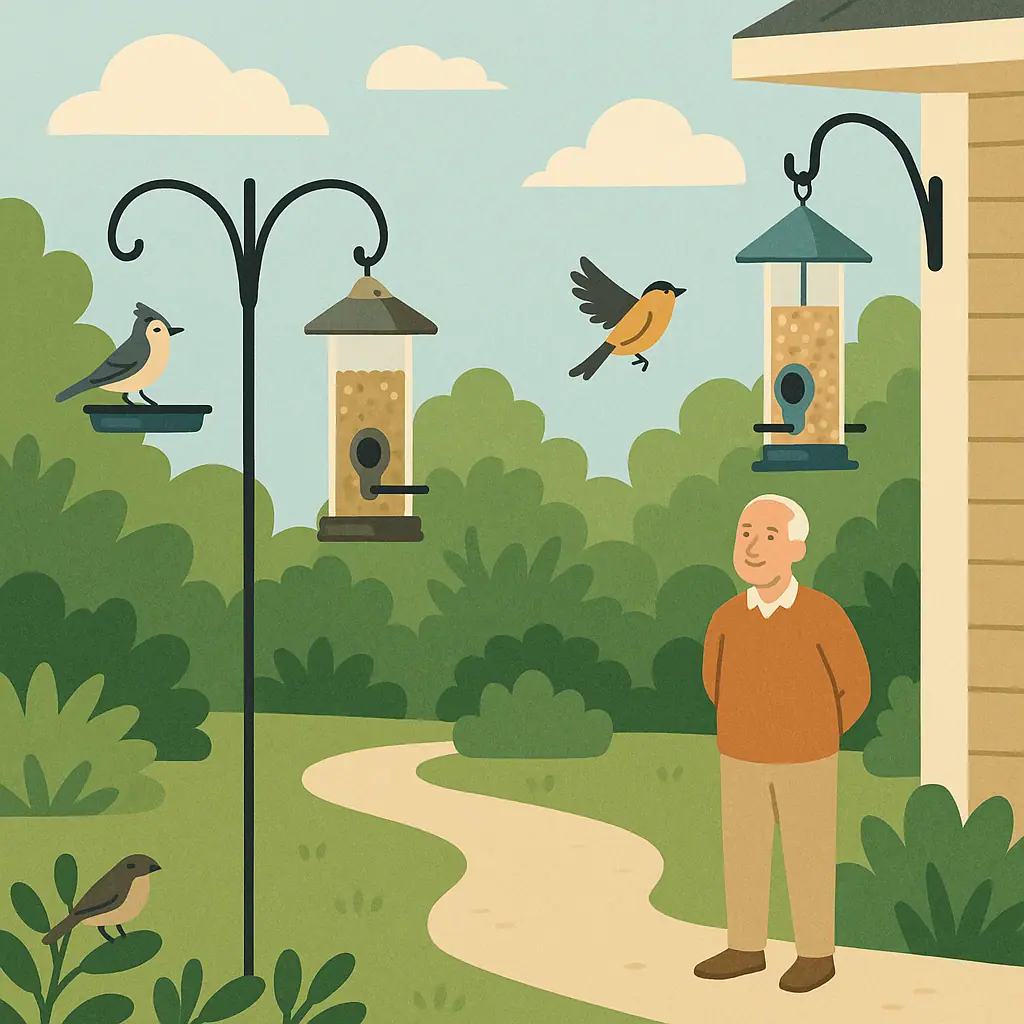
A feeder pole is usually a metal pole or pole system placed in the ground, often with hooks for one or more feeders. For many beginners, it feels tidy because everything belongs in one clear feeding spot.
What makes feeder poles easier
Feeder poles are often easier to plan. You can choose a visible location, keep the height consistent, and add a baffle if squirrels become a problem. The area underneath is also easier to rake or sweep because you know exactly where fallen seed will collect.
- Clear viewing: A pole can be placed where you can watch from a window, porch, or comfortable chair.
- Predictable cleaning: Seed hulls and droppings usually gather in one area, making cleanup less scattered.
- Flexible feeder mix: Many pole systems let you hang a tube feeder, suet cage, or small hopper from the same station.
- Better squirrel planning: A properly placed pole can work with a baffle and distance from jumping points.
What can make feeder poles harder
The main drawback is setup. A pole needs stable ground and enough strength to stay upright. If your soil is rocky, your yard is sloped, or you do not want to push hardware into the ground, the first day may feel like more effort than you expected.
Feeder poles also need thoughtful placement away from busy walkways and places where a mower, hose, or garden cart will bump them. Once they are set, moving them can be more work than moving a simple hanging feeder.
Hanging Feeders: The Simple Hook-and-Branch Option
A hanging feeder is any feeder suspended from a branch, bracket, porch hook, deck arm, or shepherd hook. This is often the fastest way to begin because you can start with one feeder and one sturdy hanging point.
What makes hanging feeders easier
Hanging feeders are flexible. If one spot is too busy, too windy, or too hard to reach, you can often move the feeder without redesigning the whole station. They also work well for small yards, patios, and renters who do not want a permanent pole in the ground.
- Low commitment: You can test one location before building a full feeding station.
- Good for small spaces: A porch hook, balcony arm, or shepherd hook may be enough.
- Easy seasonal changes: You can move a feeder to shade in hot weather or a better viewing spot in winter.
- Less initial setup: Many hanging feeders need only a safe hook and comfortable height.
What can make hanging feeders harder
The hard part is choosing a strong, safe hanging point. A thin branch may sway too much or break. A branch near a trunk can give squirrels an easy route. A feeder hung too high becomes unpleasant to refill, especially when it is full of seed.
For beginners who are still learning feeder styles, BirdPeep's complete guide to bird feeders can help you match the feeder type to the birds you hope to see. Read that first if the words tube, hopper, suet, and platform still feel mixed together.
Which Is Easier for Cleaning and Refilling?
For regular cleaning and refilling, feeder poles usually win when they are installed at a comfortable height on level ground. You can walk up, remove the feeder, clean under it, and return it to the same place. That predictable routine matters, especially when wet seed or seed hulls need attention.
Hanging feeders win when the hanging point is close, low enough to reach, and protected from awkward footing. A porch hook beside a stable walkway may be easier than a pole across the lawn. A high branch that requires a step stool is not beginner-friendly, even if it looks charming.
If you are thinking about weekly maintenance, keep BirdPeep's bird feeding station cleaning guide nearby. A feeder setup is only easy if the cleaning routine feels realistic after the first week.
Pros and Cons at a Glance
Creates one clear station
A pole gives beginners a dedicated place for feeders, cleanup, and daily watching.
Works well with squirrel planning
When placed away from jump-off points, a pole can pair with a baffle more easily than many tree branches.
Often easier to maintain
A stable height and predictable ground area make refilling and cleaning feel more routine.
Depends on the hanging point
A weak branch, high hook, or awkward porch corner can make a simple feeder frustrating.
Can be easier for squirrels to reach
Branches, railings, and nearby trunks may give squirrels a direct path unless you choose the spot carefully.
A Simple Beginner Checklist
Use this quick check before choosing. It keeps the decision grounded in your own yard instead of a product photo.
- Reach: Can you remove and refill the feeder without standing on anything?
- Footing: Is the ground or walkway stable after rain?
- Visibility: Can you watch from a comfortable place without disturbing the birds?
- Cover: Are there shrubs or trees nearby for birds to feel safe, without giving predators or squirrels an easy jump?
- Cleaning: Can you sweep, rake, or rinse the area underneath without strain?
- Flexibility: Do you want a permanent station, or do you need a setup you can move easily?
Frequently Asked Questions
Is a feeder pole always better than a hanging feeder?
No. A feeder pole is often easier for a dedicated station, but a well-placed hanging feeder can be simpler in a small yard, patio, or porch setting.
Which setup is better for squirrels?
A pole is usually easier to plan with a baffle and open spacing, but placement matters most. A hanging feeder near a trunk or branch can be very easy for squirrels to reach.
How high should a beginner hang a feeder?
Keep it at a height where you can remove, refill, and clean it comfortably with both feet on the ground. If you need a stool, the spot is probably not beginner-friendly.
Can I switch later if I choose the wrong setup?
Yes. Many birdwatchers begin with one hanging feeder, then add a pole after they learn where birds feel comfortable and where cleanup is easiest.
Final Thoughts
The feeder pole vs hanging feeder decision does not need to be perfect. Begin with the setup you can reach, clean, and enjoy. Birds respond well to consistency, and you will learn more from one calm, well-kept feeder than from a complicated station that becomes a chore.
If you are unsure, start small for two weeks. Watch which birds visit, how the seed holds up, and whether the refill routine feels easy. Your backyard will tell you what the next step should be.