After setting up my first bird feeder three years ago, I watched from my kitchen window for days, wondering why no birds appeared. The feeder was beautiful, the seed was fresh, but my backyard remained empty. It wasn't until my neighbor Margaret gently pointed out my placement mistakes that everything changed. Within a week of relocating my feeder following her advice, cardinals, finches, and chickadees were regular visitors.
Bird feeder placement isn't just about convenience for refilling – it's about creating a safe, accessible environment that birds naturally trust. The wrong location can keep birds away permanently, while the right spot transforms your yard into a bustling wildlife hub. Let me share the key principles I've learned about strategic feeder placement that actually works.
The Critical Distance Rule: Windows and Safety
The most important rule for bird feeder placement revolves around your windows and building structures. Birds face a deadly threat from window collisions, but proper positioning dramatically reduces this risk while improving your viewing experience.
The 3-Foot or 30-Foot Rule
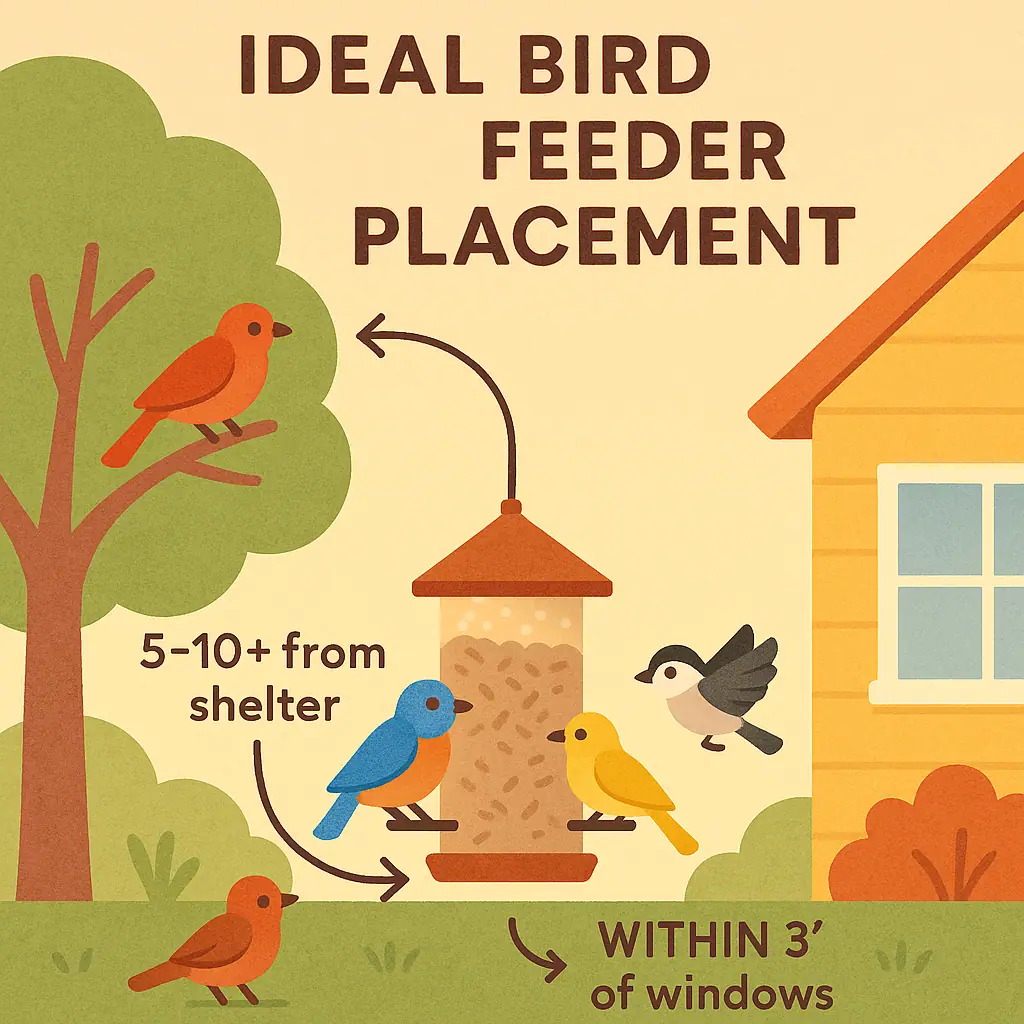
Place feeders either within 3 feet of windows OR farther than 30 feet away. This isn't arbitrary – it's based on bird flight patterns and collision physics. Birds feeding close to windows (under 3 feet) don't build up enough speed to seriously injure themselves if they hit glass. At distances of 30+ feet, they have enough space to recognize the window as an obstacle and change course.
The danger zone: 4-29 feet from windows creates the perfect storm – enough distance for birds to build speed, but not enough for them to recognize and avoid glass barriers.
Best viewing position: Feeders placed 2-3 feet from a main window give you excellent observation opportunities while keeping birds safe.
Natural Shelter: The Cover Equation
Birds are naturally cautious creatures. They want quick access to safety while feeding, which means your feeder location should balance openness with nearby shelter options.

Optimal Shelter Distance
Position feeders 8-12 feet from substantial cover like trees, large shrubs, or brush piles. This distance allows birds to quickly reach safety if predators appear, while preventing predators from using the same cover to ambush feeding birds.
Types of good shelter: Evergreen trees, dense deciduous shrubs, brush piles, or even large ornamental grasses. Birds use these spots to rest between feeding sessions and scan for dangers.
Avoid placing feeders: Directly under dense cover where cats or other predators could hide, or in completely open areas with no nearby shelter options.
Creating Shelter When None Exists
If your yard lacks natural cover, create it strategically:
- Plant native shrubs: Choose species that produce berries or seeds for additional bird food
- Stack brush: Create small brush piles from pruned branches
- Install trellis: Grow climbing vines on fence sections or standalone structures
- Group containers: Large planters with tall ornamental grasses work well
Height and Accessibility Considerations
Different bird species prefer different feeding heights, and your maintenance needs matter too. The goal is finding the sweet spot that serves both birds and humans effectively.
Standard Feeder Heights
Most tube and hopper feeders work best 4-6 feet off the ground. This height accommodates the majority of backyard birds while keeping feeders accessible for refilling and cleaning.
Ground level feeding: Platform feeders can sit directly on the ground or 1-2 feet high. Ground-feeding birds like juncos, sparrows, and doves prefer this low placement.
Specialty heights: Suet feeders can go higher (6-8 feet) since woodpeckers are comfortable at various heights. Hummingbird feeders work well 4-5 feet high near flowers.
Maintenance Access
Choose locations you can easily reach year-round:
- Avoid deep snow areas: Southern sides of buildings often clear faster in winter
- Consider ladder needs: If you need a ladder to refill, you probably won't maintain it consistently
- Clear walking paths: Ensure safe access during ice and wet conditions
- Multiple locations: Several easily accessible feeders work better than one perfectly placed but hard-to-reach feeder
Wind, Weather, and Seasonal Factors
Environmental conditions dramatically affect feeder success. Smart placement accounts for prevailing weather patterns and seasonal changes in your specific location.
Wind Protection
Strong winds scatter seeds, make feeders swing wildly, and discourage bird visits. Look for naturally protected spots or create windbreaks.
Natural windbreaks: Buildings, large shrubs, or fence lines can protect feeders from prevailing winds
Seasonal shifts: Winter winds differ from summer patterns. Consider moving portable feeders with the seasons if necessary
Weather Exposure
Feeders need some protection from rain and snow, but not complete enclosure:
- Partial overhead cover: Tree branches or roof overhangs help keep seed dry
- Drainage: Avoid low-lying areas where water collects
- Sun exposure: Some morning sun helps dry overnight moisture, but avoid all-day intense sun in hot climates
- Winter access: Choose locations that remain accessible when snow accumulates
Predator-Proofing Your Setup
The most beautiful feeder location means nothing if predators make it unsafe. Effective placement considers threats from cats, hawks, squirrels, and other potential dangers.
Cat-Safe Positioning
Outdoor cats kill billions of birds annually. Your feeder placement can significantly reduce this threat:
- Height requirements: Position feeders at least 5 feet high in areas where cats roam
- Clear sightlines: Avoid areas where cats can hide in nearby bushes or under structures
- Barrier plants: Thorny shrubs around feeder bases deter cat approaches
- Open areas: Cats prefer ambush hunting and avoid open spaces where birds can see them approaching
Squirrel Considerations
Even squirrel-proof feeders work better when positioned thoughtfully:
- Jumping distance: Position feeders 10+ feet from launching surfaces (trees, fences, decks)
- Pole systems: Metal poles with baffles work better than hanging systems near trees
- Multiple feeders: Spread feeders out so squirrels can't monopolize all feeding stations
Pros and Cons of Common Feeder Locations
Close to House (2-3 feet)
Excellent viewing, easy maintenance, natural wind protection, safe from window strikes.
Near Natural Shelter
Birds feel secure, encourages longer visits, provides staging areas for cautious species.
Multiple Scattered Locations
Reduces competition, accommodates different species, creates backup options.
Danger Zone (4-29 feet from windows)
High window strike risk, birds build up dangerous speed toward glass.
Under Dense Cover
Provides hiding spots for predators, limits escape routes for feeding birds.
Completely Open Areas
Birds feel exposed and vulnerable, reduces visit frequency and duration.
Frequently Asked Questions
Can I move my bird feeders once birds have found them?
Yes, but move them gradually. Relocate feeders 2-3 feet at a time over several days. Birds will follow short moves but may abandon feeders moved suddenly over long distances.
How many feeders can I put in one location?
Group 2-4 different feeder types in one area for convenience, but also have backup locations. Dominant birds can monopolize grouped feeders, so scattered placement serves more species.
Should I move feeders seasonally?
Consider moving feeders if seasonal conditions change dramatically (winter wind patterns, leaf cover, snow access). Permanent locations work if they account for year-round conditions.
What if I don't have good natural shelter in my yard?
Create artificial shelter with brush piles, plant containers with tall grasses, or install trellises with climbing vines. Even small improvements help nervous birds feel more secure.
Testing and Adjusting Your Setup
The perfect feeder location often requires some experimentation. What works in theory might not work in your specific yard conditions, and that's perfectly normal. Start with the basic principles, then adjust based on what you observe.
Give new locations at least 2-3 weeks before making changes. Birds need time to discover feeders and establish them as part of their daily routines. If you're not seeing activity after a month, try relocating based on what you've learned about bird behavior patterns in your yard.
Remember that successful bird feeding is about creating an environment where birds feel safe and comfortable. The best feeder location is one that serves both bird needs and your viewing pleasure, maintained consistently over time. With thoughtful placement and patience, your backyard can become a thriving bird habitat that brings you joy throughout the year.