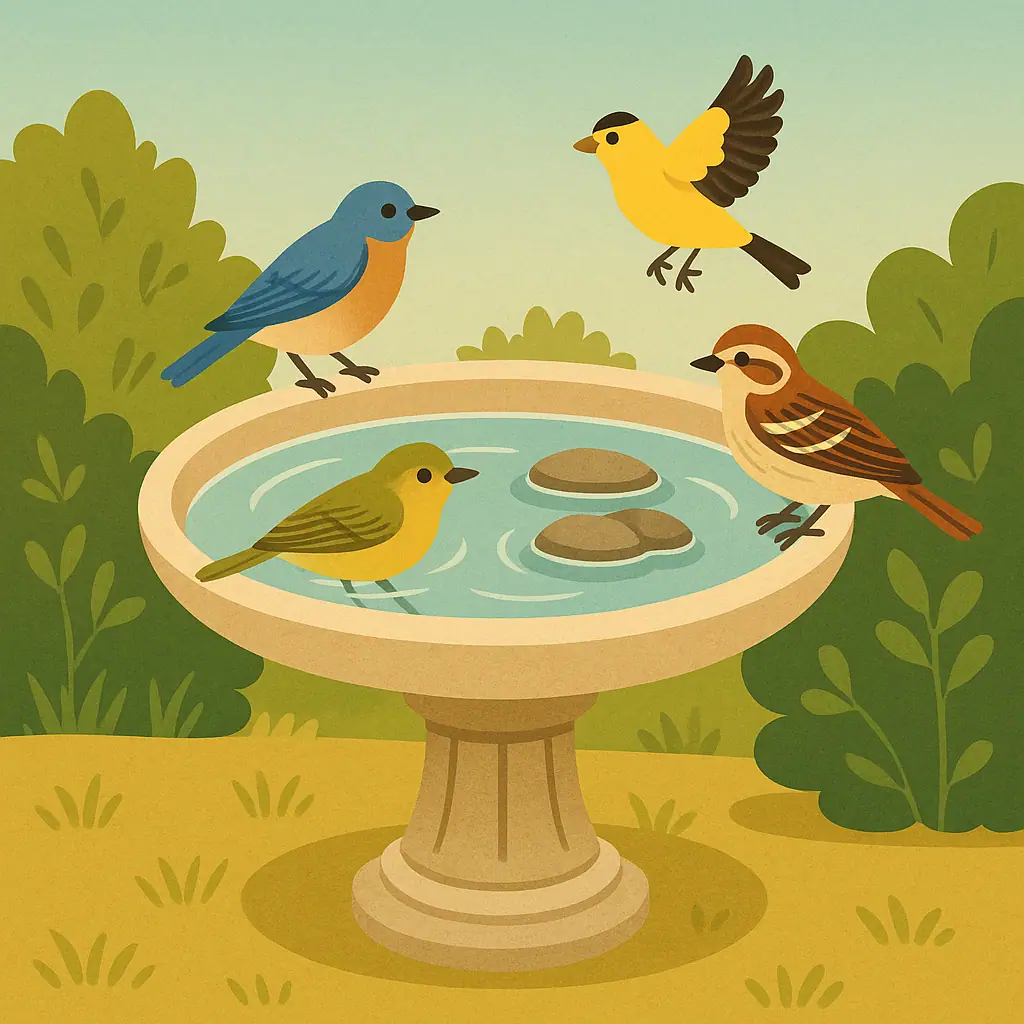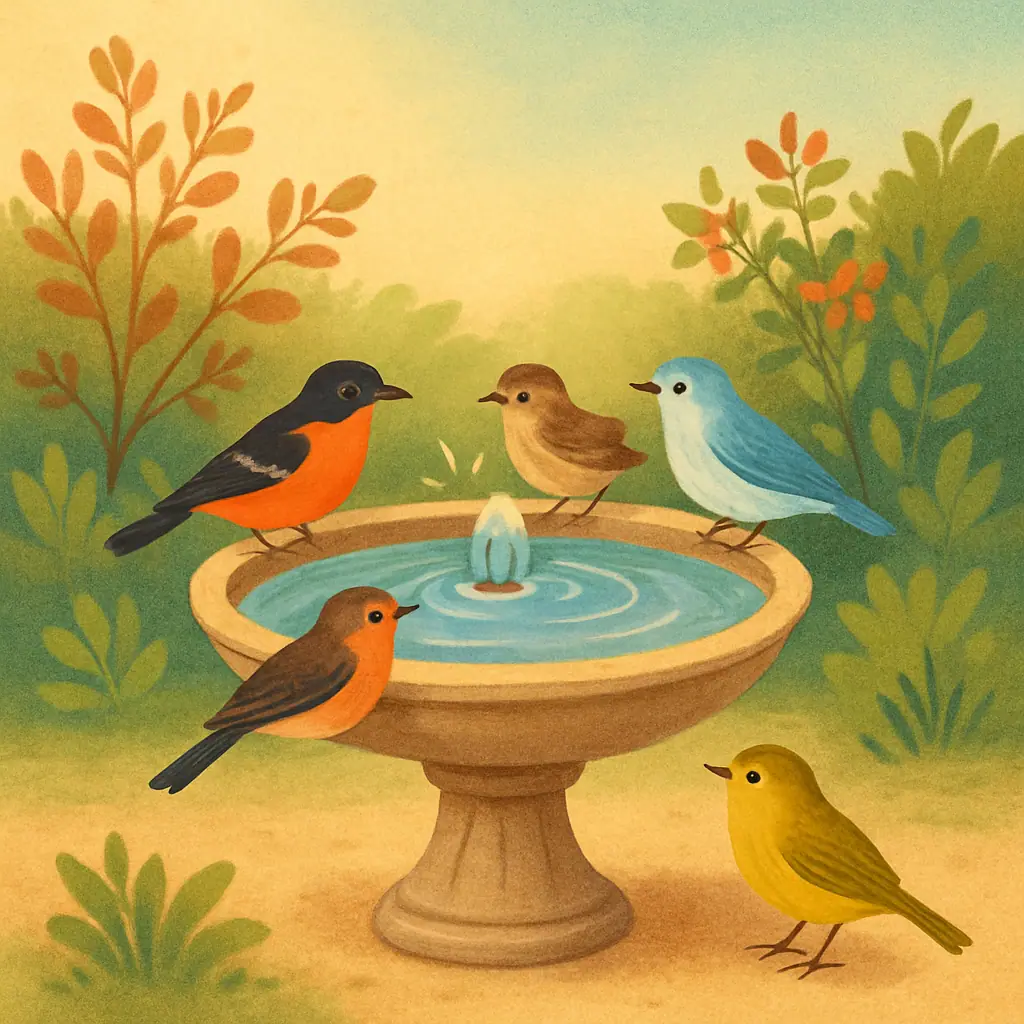
Moving water for birds can turn an ordinary bird bath into the liveliest little corner of the yard. A quiet drip, a gentle bubbler, or a small recirculating fountain catches light, makes a soft sound, and helps birds notice water from a distance.
The safest setup is not the fanciest one. For most beginners, it is shallow, easy to clean, stable on the ground or pedestal, and placed where birds have cover nearby without giving cats or other predators an easy hiding spot. Think of it as a welcoming drinking station, not a backyard construction project.
Why Moving Water for Birds Matters
Birds need water for drinking and bathing, and fresh water can be especially helpful when natural puddles dry up or freeze. Movement adds one more invitation: the sound and sparkle can make the bath easier for birds to find.
For a helpful overview of safe water habits, Audubon explains that bird baths work best when the water is kept clean and refreshed regularly. Their bird bath cleaning guidance is a good reminder that water is only helpful when it stays fresh: Audubon bird bath cleaning advice.
Start With a Safe, Shallow Basin
Before buying a pump or solar gadget, look at the basin itself. A bird bath should be shallow enough for small songbirds to stand comfortably. If the basin is deeper than a couple of inches, add clean stones so birds have steady footing and an easy way out.
What makes the basin beginner-friendly?
- Shallow edges: Birds feel safer when they can step in gradually instead of dropping into deep water.
- Textured footing: A slightly rough surface or a few clean stones helps prevent slipping.
- Easy lifting: If you cannot tip, rinse, or scrub it comfortably, it will be harder to keep clean.
- Stable placement: Wobbling baths can spill, crack, or frighten birds away.
If you are still planning the whole water area, BirdPeep's earlier guide to creating a bird-friendly water feature on any budget can help you compare simple setups before you add motion. Read that first if you are deciding between a bath, basin, or small garden water corner.
Choose the Gentlest Kind of Movement
The best moving water for birds is gentle. Backyard birds do not need a tall spray or noisy waterfall. In fact, strong splashing can empty the basin quickly, wet nearby seed, and make smaller birds hesitant.
Three beginner options
A dripper is often the calmest choice. It sends slow drops into the bath and creates a soft sound birds can notice. Some attach to a hose, while others use a small reservoir.
A bubbler lifts water softly from the center of the bath. This works well when the basin is wide and shallow, because the movement stays contained.
A small solar fountain can be charming, but choose one with a low spray and a way to keep it centered. If the spray shoots outside the bath, the water may disappear on a sunny afternoon.
Slow drippers
They create gentle sound without turning the bath into a splash zone, making them easy for cautious birds to approach.
Low bubblers
They keep water moving in place and are usually easier to manage than tall fountain sprays.
Simple removable parts
Pumps, tubes, or solar discs that lift out easily make cleaning less of a chore.
Deep basins
Deep water can make small birds uncomfortable and harder to escape safely.
Strong sprays
High jets waste water, soak nearby surfaces, and may discourage quieter backyard visitors.
Place Water Where Birds Can Escape Quickly
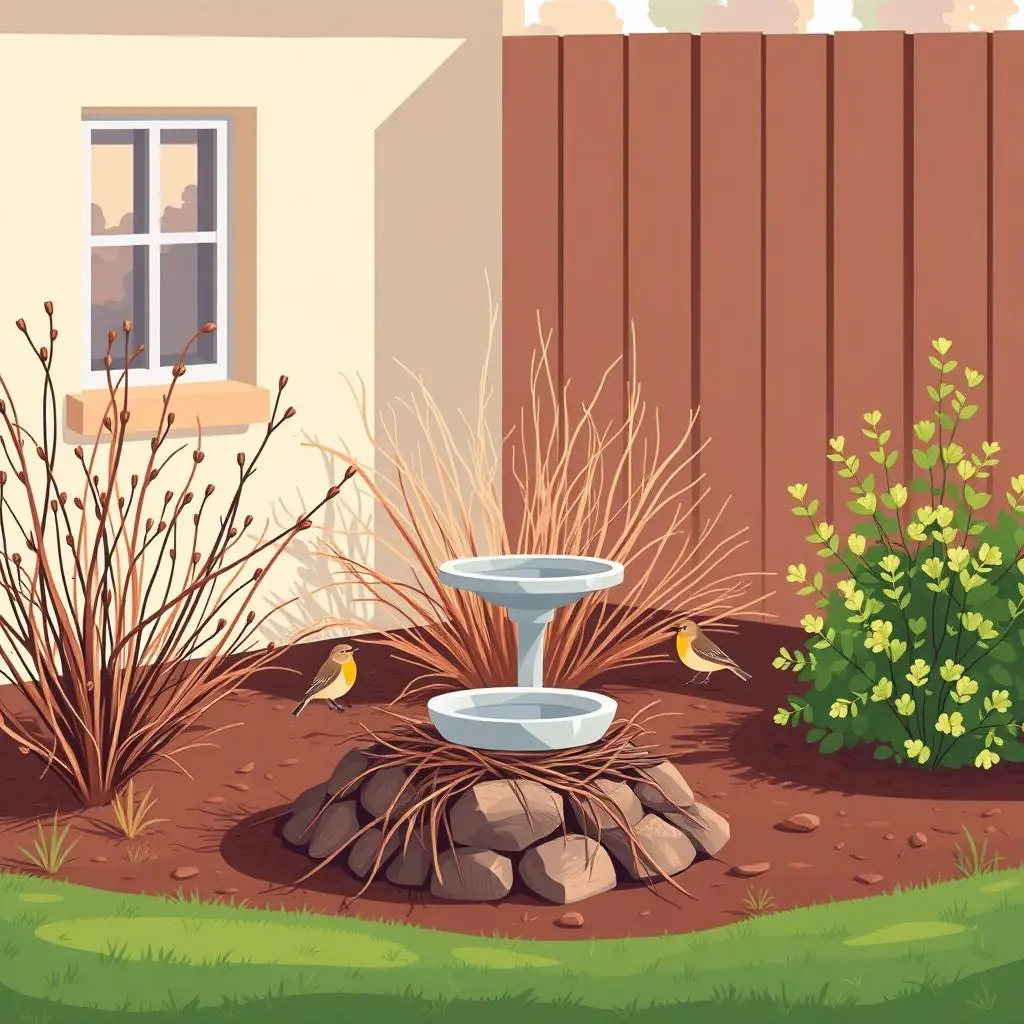
Good placement feels a little like choosing a peaceful bench at a park. Birds like a clear view, but they also need shrubs, small trees, or brushy cover nearby so they can retreat if startled.
Try placing the bath near cover, but not directly under heavy branches where leaves and droppings constantly fall in. Keep it away from places where outdoor cats can hide. If cats visit your yard, a pedestal bath in an open area may be safer than a low basin beside dense shrubs.
Window safety matters too. The Cornell Lab's bird-help guidance includes practical ways to reduce window collisions, such as breaking up reflections on glass: Cornell Lab seven simple actions to help birds. That matters when a bird bath sits close to a patio door or picture window.
Keep the Water Fresh and the Parts Simple
Moving water is not a substitute for cleaning. A bubbler can slow mosquito problems and make the bath look fresher, but dirt, algae, seed hulls, and droppings still collect in the basin. The safest routine is simple enough that you will actually keep doing it.
- Refresh often: Tip out old water and refill with clean water before it looks scummy.
- Scrub the basin: Use a stiff brush to remove slippery buildup from the surface.
- Check the pump intake: Leaves and seed bits can clog small pumps quickly.
- Watch the cord or panel: Keep electrical cords secure and use outdoor-rated equipment only when electricity is involved.
- Skip harsh chemicals: Rinse thoroughly after cleaning so no residue remains where birds drink or bathe.
For readers who also use feeders, water and food should be managed as separate little stations. The BirdPeep guide to bird feeders for beginners explains feeder placement and upkeep, while your water station should stay far enough away that seed mess does not fall straight into the bath.
A Calm Setup Checklist
Use this quick check before calling the project finished. If you can answer yes to each item, your moving water is probably simple, safe, and manageable.
- Is the water shallow? Small birds should be able to stand, drink, and bathe without struggling.
- Can you clean it easily? If cleaning requires awkward lifting, simplify the setup.
- Is movement gentle? Choose dripping or bubbling over tall spraying.
- Is cover nearby? Birds need a quick retreat, but predators should not have a hiding place right beside the bath.
- Is the surface steady? A bath should not wobble when touched or when wind picks up.
Frequently Asked Questions
Is moving water better than a regular bird bath?
It can be more noticeable to birds, but a clean regular bird bath is still useful. Movement is a bonus, not a requirement.
Should I use a solar fountain or a dripper?
Choose the one you can clean and manage easily. A dripper is often calmer, while a solar fountain works best when the spray stays low and contained.
How close should moving water be to shrubs?
Place it near enough for birds to reach cover quickly, but not so close that cats or other predators can hide beside the bath.
Can I leave a small pump running all day?
Only if it is designed for outdoor use, has enough water to run safely, and is checked often. For beginners, short supervised periods are a safer way to learn the setup.
Final Thoughts
The safest way to add moving water for birds is to keep the whole idea gentle: shallow basin, soft movement, easy cleaning, and thoughtful placement. You do not need a showpiece fountain to make birds curious. A quiet drip in a clean bath can be enough to bring more life, sound, and wonder to the yard.
Start with one small change this week. Watch how the birds respond, adjust the setup, and let your backyard teach you slowly.