A bird friendly backyard corner does not need to be large, expensive, or perfectly landscaped. For many birds, the safest-feeling part of a yard is simply a quiet place with cover nearby, clean water within reach, and fewer sudden surprises.
Think of it as a little resting room for birds. They may use it before visiting a feeder, after bathing, during windy weather, or while moving through the neighborhood. Once you learn what makes a corner feel calm, you can improve one small area without turning the whole yard into a project.
Why a Bird Friendly Backyard Corner Matters
Backyard birds are always weighing comfort against risk. Open lawns may offer a clear view, but they can also feel exposed. A corner with shrubs, seed heads, leaf litter, or a brushy edge gives birds a place to pause, hide, preen, and watch before they move again.
The Cornell Lab of Ornithology recommends simple bird-helping actions such as reducing lawn, planting native plants, keeping cats indoors, and making windows safer. Their guide to seven simple actions to help birds is a useful outside reference because it connects ordinary yard choices with real bird safety.
Start With the Quietest Part of the Yard
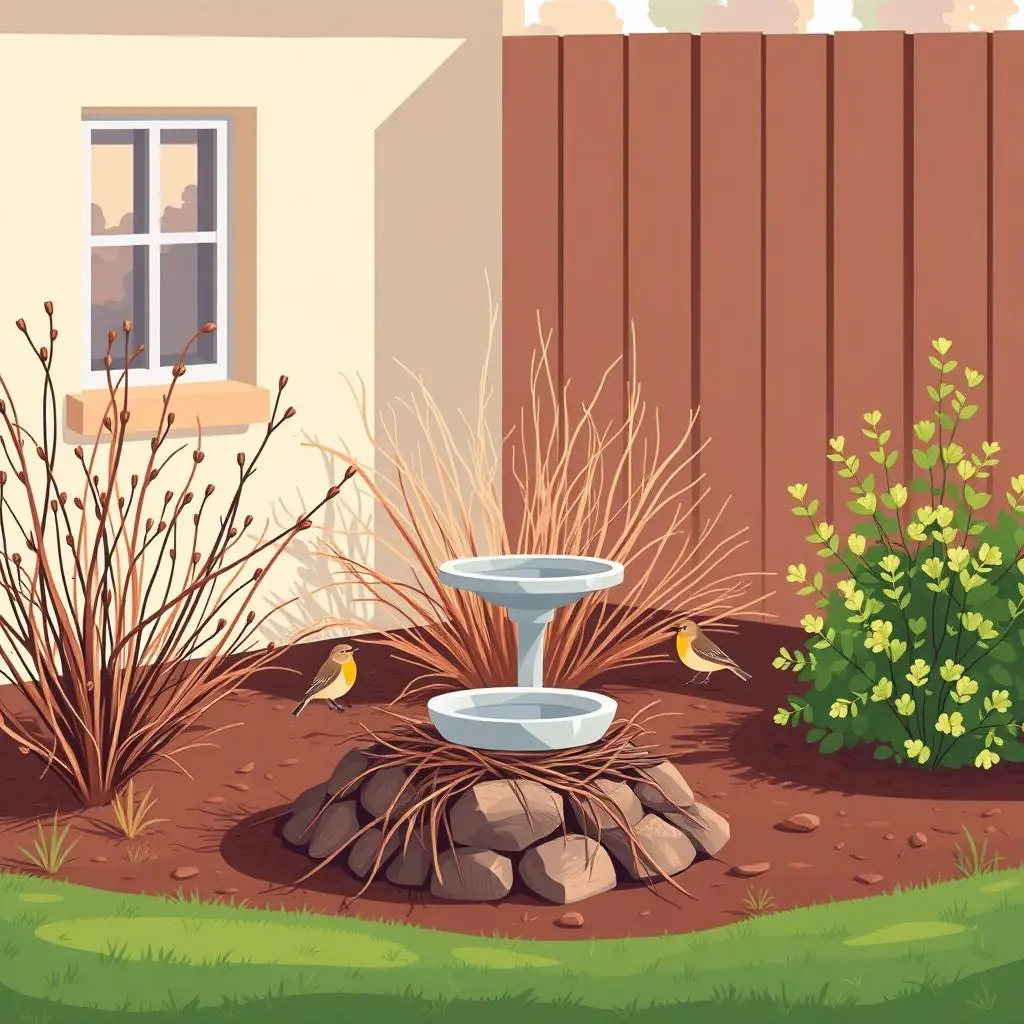
The best place for a bird friendly backyard corner is usually not the busiest patio edge or the middle of the lawn. Look for a spot near a fence, hedge, small tree, shed wall, or existing shrub bed where people and pets do not pass every few minutes.
If you already enjoy watching from indoors, BirdPeep's guide to watching birds from a kitchen window without disturbing them can help you choose a calm viewing angle. A good bird corner should be useful for birds and easy for you to observe quietly.
What to Look for First
- Nearby cover: shrubs, vines, evergreen branches, tall grasses, or a brush pile help birds feel less exposed.
- Low foot traffic: choose a place away from doors, garbage bins, loud tools, and busy play areas.
- Some morning light: gentle light makes the corner inviting without turning it into a hot, exposed spot.
- Easy maintenance: you should be able to refresh water, remove spoiled seed, and check for hazards safely.
- Clear viewing lane: pick a spot you can enjoy from a window, porch chair, or garden bench without walking too close.
Add Shelter Before You Add More Food
Many beginners start with seed, but shelter often matters first. A bird that can retreat into cover will feel more comfortable exploring water, seed, flowers, and natural food nearby. Cover can be beautiful, tidy, informal, or temporary.
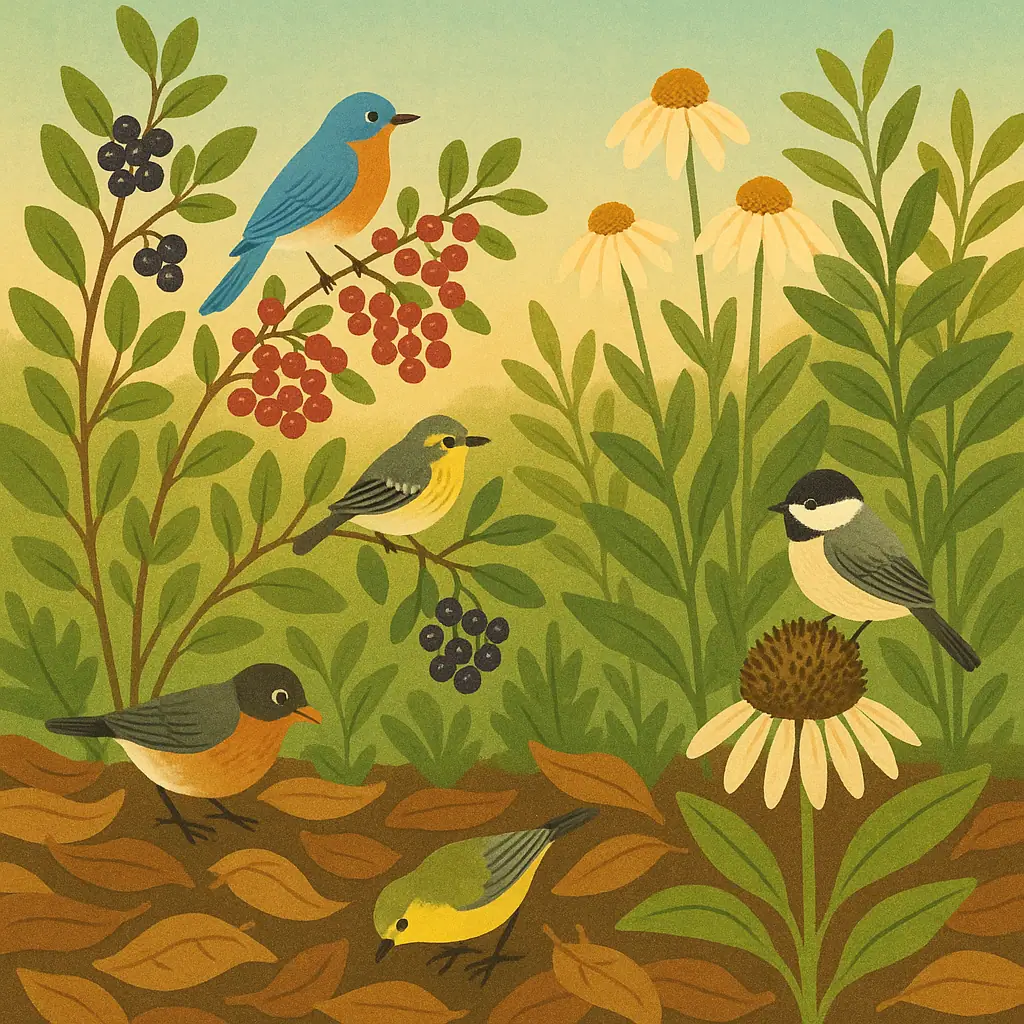
Native shrubs and layered plantings are especially helpful because they can provide perches, nesting cover, insects, berries, and seeds through the year. If you want plant ideas by region, BirdPeep's guide to native plants that birds love is a natural next step after choosing the corner.
Simple Shelter Options
- Keep an existing shrub: a mature shrub may already be one of the most useful bird features in the yard.
- Use a small brush pile: stack fallen twigs loosely in an out-of-the-way place so small birds have quick cover.
- Leave seed heads: spent flowers and grasses can offer natural food and a softer edge than bare mulch.
- Add an evergreen: even one compact evergreen shrub can provide year-round shelter in many yards.
- Layer heights: combine low plants, medium shrubs, and a taller branch or small tree if space allows.
Place Water Where Birds Can Escape Quickly
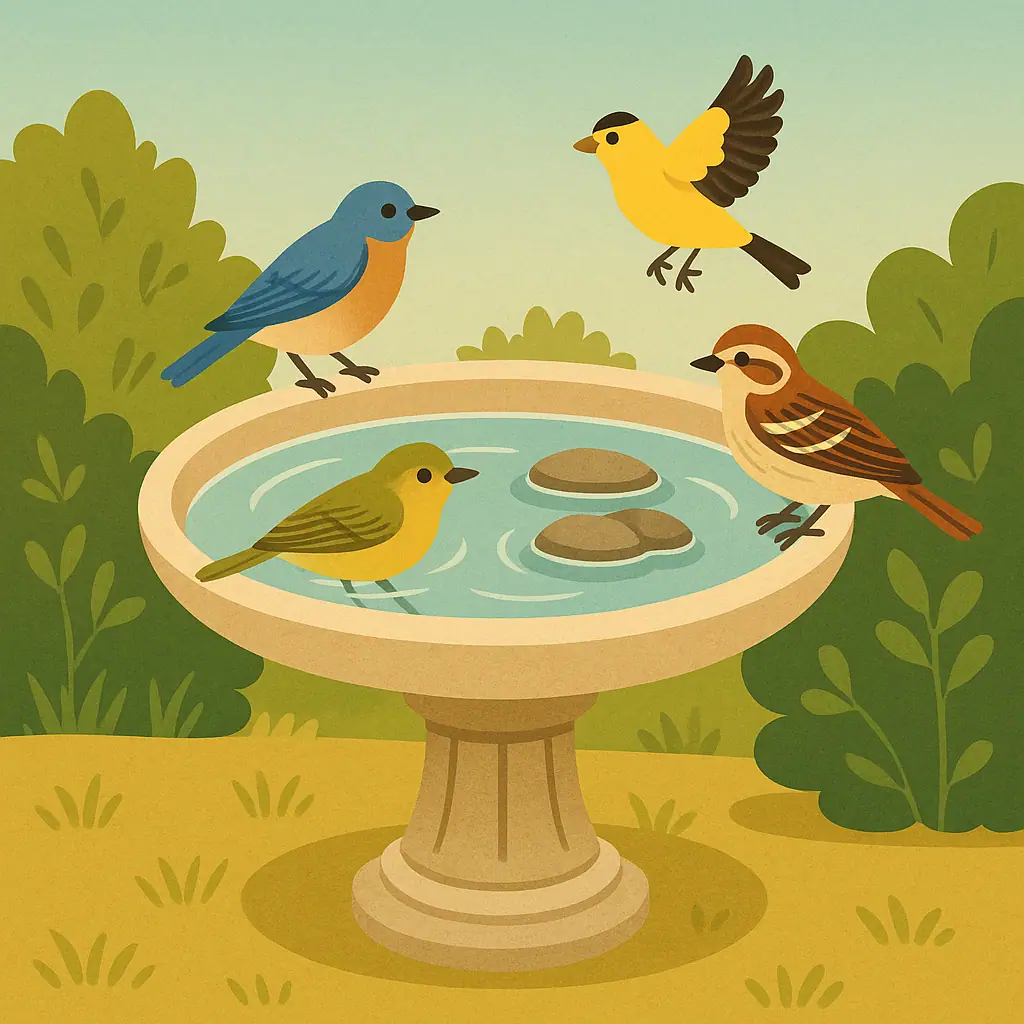
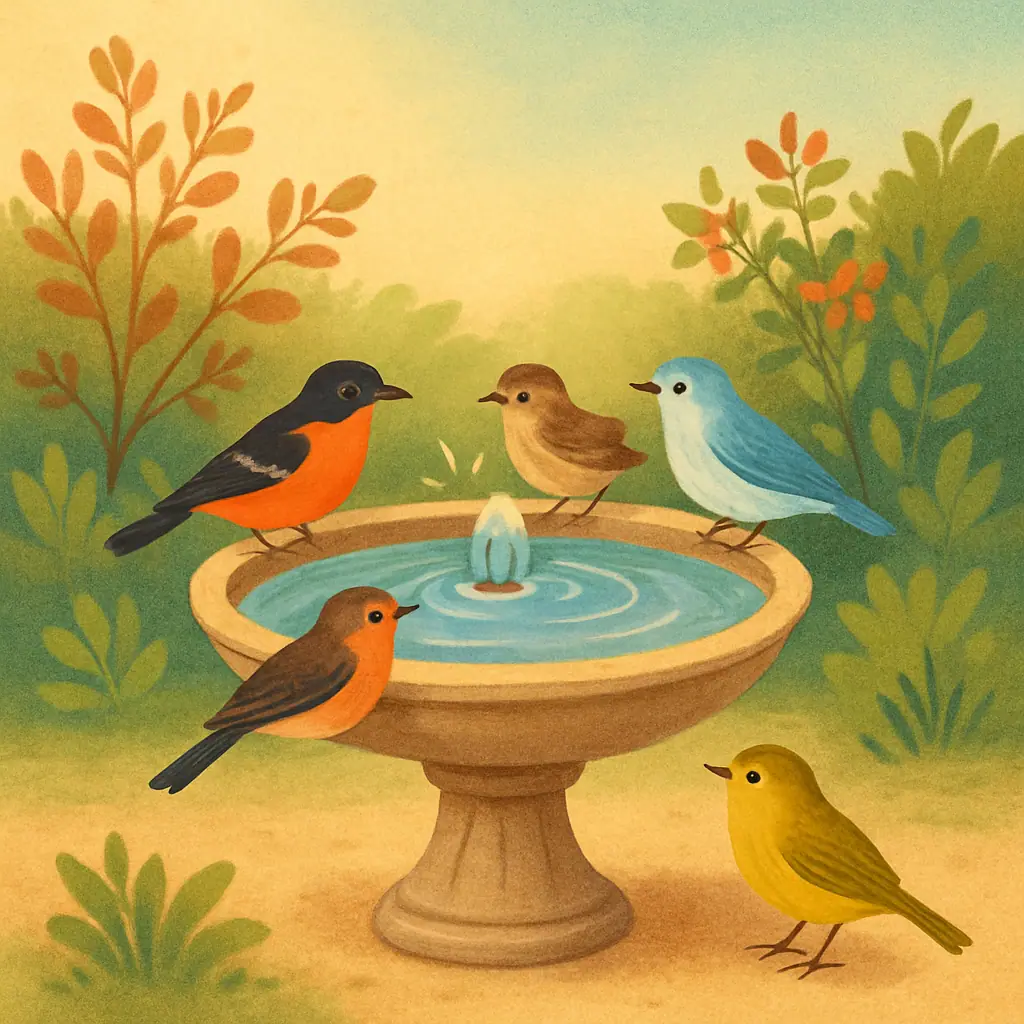
Clean water can make a quiet corner more useful, but placement matters. Birds often prefer a bath or shallow dish near cover, not buried so deeply under shrubs that a hidden predator could surprise them. Aim for a balance: close enough to shelter, open enough to see around.
If cleaning is the part that worries you, our article on choosing an easy-clean bird bath for seniors focuses on lightweight, reachable choices. The simpler the bath is to lift and rinse, the more likely it is to stay fresh.
Make the Corner Safer Around Windows and Pets
A quiet corner near the house can be wonderful for watching, but glass reflections can confuse birds. If birds fly between shrubs, feeders, water, and windows, add visible window markers, screens, external decals, or other reflection-reducing treatments where strikes are most likely.
Pets also change how safe a corner feels. Cats should be kept indoors or away from bird areas, and dogs should not have regular access to the resting corner. Birds learn patterns quickly; a place that is peaceful most of the day can become unreliable if a pet rushes through it every afternoon.
Safety Checks to Repeat
- Look at reflections: stand outside and see whether your window reflects trees, sky, or shrubs.
- Watch traffic patterns: notice where people, pets, hoses, and tools usually move.
- Remove spoiled food: damp seed and old fruit should not sit in the corner.
- Keep water shallow: a shallow basin with textured footing is easier for small birds to use.
- Avoid pesticides: insects are food for many birds, especially during nesting season.
Let the Corner Stay a Little Natural
A bird friendly backyard corner should not look abandoned, but it does not need to be spotless. A few fallen leaves, dried stems, seed heads, and loose twigs can support insects and give birds more reasons to explore.
This can feel like a shift if you enjoy a tidy yard. The key is to choose one defined place for a softer style. Keep paths clear, remove anything unsafe, and let that one corner hold a bit more texture than the rest of the yard.
Pros and Cons of a Quiet Bird Corner
Pros: It works in small spaces
Even a townhouse patio, side yard, or fence corner can offer cover, water, and a calm viewing lane.
Pros: It supports natural behavior
Birds can pause, hide, drink, preen, forage, and move through the yard without feeling exposed the whole time.
Cons: It needs light maintenance
Water still needs refreshing, old seed should be removed, and the area should be checked for hazards.
Cons: Results may be gradual
Birds may need days or weeks to trust a new corner, especially if the yard was previously open or busy.
A Simple Checklist for Your First Corner
Use this as a calm walk-through before you buy anything. Most yards already have at least one useful feature; the goal is to improve what is there.
- Choose the spot: pick a corner with less foot traffic and at least one existing shelter feature.
- Check the view: make sure you can watch without standing too close or moving suddenly.
- Add one cover element: use a shrub, brush pile, evergreen, tall grass, or native planting.
- Add clean water: place a shallow bath or dish where birds have both visibility and nearby cover.
- Reduce hazards: address window reflections, pet access, spoiled seed, and chemical use.
- Observe for a week: note which birds visit, where they perch, and what still feels too exposed.
Frequently Asked Questions
How long does it take birds to use a quiet corner?
Some birds may investigate within a few days, while others take longer. Keep the area calm, clean, and predictable before deciding it is not working.
Should I put a feeder in the quiet corner?
You can, but start with shelter and water first. If you add a feeder, choose one you can clean easily and place it where birds have a safe retreat.
Is a brush pile messy or unsafe?
A small, tidy brush pile in an out-of-the-way spot can provide cover. Keep it away from doors, vents, and places where it would create a tripping or fire concern.
What is the easiest first plant for a bird corner?
Choose a native shrub suited to your region and space. Local extension offices, native plant societies, and reputable nurseries can help match plants to your yard.
Final Thoughts
A bird friendly backyard corner is really an invitation. It says there is a quiet place to land, a bit of shelter nearby, clean water to use, and enough peace to linger.
Start small this week. Choose one calm corner, add one shelter improvement, refresh the water, and watch from a respectful distance. The first visitor may be a familiar bird, but the pleasure is in seeing it feel safe enough to stay.