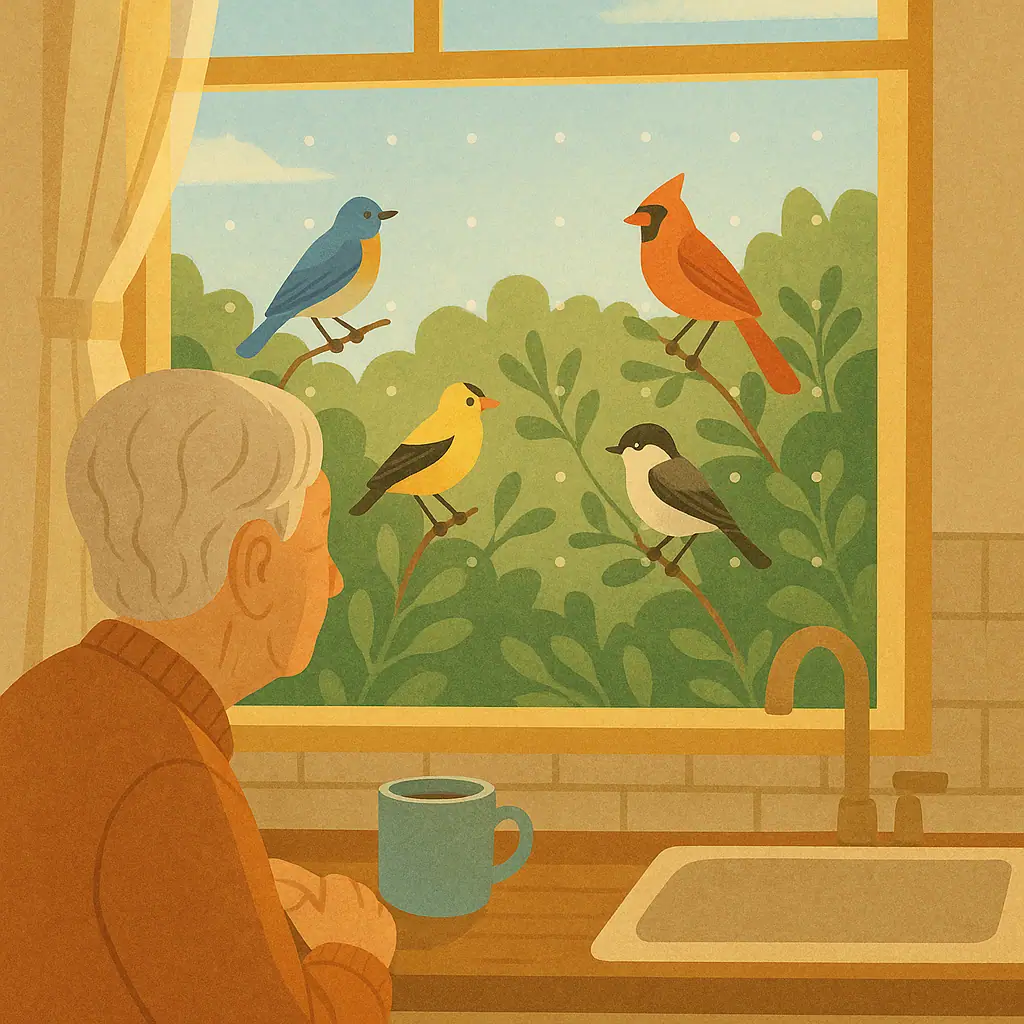
Watching birds from window spaces can become one of the calmest parts of your day, especially when the view is as familiar as the kitchen sink, breakfast table, or a favorite chair near the morning light. You do not need a long walk, a heavy camera, or a perfect garden. You simply need a safe viewing spot, a little patience, and a few habits that help birds feel unbothered.
The secret is to become part of the room instead of part of the commotion. Birds notice sudden motion, shiny reflections, pets rushing to the glass, and feeders placed in risky spots. When you set up your kitchen window thoughtfully, a cardinal landing near the shrubs can feel like nature delivering a little gift right to your doorstep.
Why Watching Birds from Window Spaces Works So Well
A kitchen window is often better than people expect because it gives you shelter, comfort, and a consistent view. Birds become easier to recognize when you see them in the same setting day after day. You start noticing which perch the chickadees prefer, when the doves arrive, and whether a flash of movement is a finch, sparrow, or wren.
Indoor observation is also gentle on the body. For many older bird lovers, it removes worries about uneven trails, heat, cold, or carrying equipment. A window can turn a normal cup of coffee into a small field trip.
What you can learn without stepping outside
- Shape and posture: A robin stands differently from a sparrow, even before you notice color.
- Feeding behavior: Some birds hop on the ground, some cling to bark, and others perch lightly before darting away.
- Daily rhythm: Early morning, late afternoon, weather changes, and quiet periods all affect what you see.
- Comfort signals: Relaxed birds preen, feed steadily, and move in short, ordinary bursts.
Set Up Your Kitchen Window for Safe Birdwatching
Before you think about notes or binoculars, look carefully at the window itself. Glass can confuse birds because it reflects sky, trees, and shrubs. Several bird conservation groups recommend treating risky windows with exterior patterns, screens, cords, or other visual barriers so birds understand that glass is solid.
If you use feeders near the window, placement matters. A feeder very close to the glass can reduce the distance a startled bird has to build speed, while a feeder far away keeps birds clear of reflection danger. The risky middle zone is what you want to avoid.
A simple safety check
- Look for reflections: Stand outside and see whether the window mirrors trees, shrubs, or open sky.
- Mark the outside of the glass: Use bird-safe tape, dots, cords, screens, or decals spaced closely enough that birds do not try to fly between them.
- Move visible indoor plants: If a plant looks like outdoor habitat through the glass, shift it away from the window.
- Keep pets calm: A cat or dog rushing the window can startle birds even when the glass separates them.
Create a Quiet Viewing Routine That Birds Accept
Birds are surprisingly good at reading motion. They may tolerate a person sitting still, but they often flush when a curtain snaps open, a hand points quickly, or someone leans suddenly toward the glass. Think of your kitchen window as a little theater: the birds are on stage, and your job is to keep the audience calm.
Start by choosing one comfortable seat or standing spot. Keep your notebook, glasses, and mug within reach so you are not constantly moving. If you use blinds or curtains, adjust them before the busy bird time rather than while birds are already feeding or bathing.
Try observing for ten quiet minutes at the same time each day. That short routine trains your own eyes without changing the birds' routine. Over a week, you may begin to recognize individuals by behavior: the bold jay, the cautious dove, the finch that waits until the others leave.
What to Notice Before Reaching for Binoculars
Binoculars can help, but they are not required for kitchen-window birdwatching. In fact, beginners often learn faster by watching the whole scene first. Notice how a bird enters the yard, where it pauses, what it eats, and how quickly it leaves. Behavior is often more memorable than a tiny field mark.
- Size comparison: Ask whether the bird is smaller than a robin, about robin-sized, or larger than a robin.
- Tail movement: Wrens often cock their tails, doves move with a gentle bob, and woodpeckers brace against surfaces.
- Bill shape: Thick seed-cracking bills suggest finches or cardinals, while slender bills may point toward insect eaters.
- Group behavior: Some birds arrive in pairs, some in loose flocks, and some prefer solitary visits.
- Sound clues: Even through a closed window, you may notice repeated chips, whistles, or alarm calls.
Pros and Cons of Kitchen Window Birdwatching
Comfortable and accessible
You can enjoy birds from a chair, with good lighting, warm coffee, and no need to walk far or carry gear.
Excellent for building daily skill
Seeing the same yard repeatedly helps you learn patterns, compare species, and remember behavior more easily.
Low disturbance when done calmly
Quiet indoor watching lets birds feed, perch, bathe, and preen without a person walking directly into their space.
Window safety needs attention
Untreated reflective glass can be hazardous, so a safe setup matters before you invite birds closer.
Views can be limited
You may miss birds behind shrubs, high in trees, or around the side of the house unless you rotate observation spots.
Keep a Tiny Kitchen-Window Bird Log
A bird log does not need to be fancy. A small notebook by the salt shaker is enough. Write the date, weather, time, and two or three details about what you saw. If you are unsure of the species, describe it instead of forcing a name. "Small gray bird, crest, quick hop to feeder" is a useful note. Later, that may become a tufted titmouse.
Over time, your notes become a friendly map of your own yard. You may notice that birds come earlier after rain, that seed disappears faster during cold snaps, or that one shrub is the favorite waiting room before the feeder.
Frequently Asked Questions
Will birds know I am watching from inside?
Sometimes, yes. Birds can notice movement through glass, especially if you stand close or move quickly. Sit back a little, move slowly, and avoid tapping or pointing at the window.
Do I need binoculars for watching birds from a kitchen window?
No. Binoculars help with details, but shape, size, behavior, and timing can all be learned with your eyes alone. Start simple, then add binoculars if they make the habit more enjoyable.
How can I watch without causing window strikes?
Treat reflective glass with exterior patterns or barriers, avoid risky feeder placement, and reduce sudden indoor movement. If birds ever hit the window, improve the glass treatment before continuing to attract birds nearby.
What is the best time to watch from the kitchen?
Early morning is often lively because birds are feeding after the night. Late afternoon can also be productive, especially when the yard is quiet and the light is softer.
Final Thoughts
Kitchen-window birdwatching is gentle, practical, and surprisingly rich. When the glass is safe, the room is quiet, and your attention is patient, even a familiar backyard begins to feel new. A sparrow's hop, a cardinal's pause, or a chickadee's quick visit can become a small daily reminder that wild life is closer than we think.