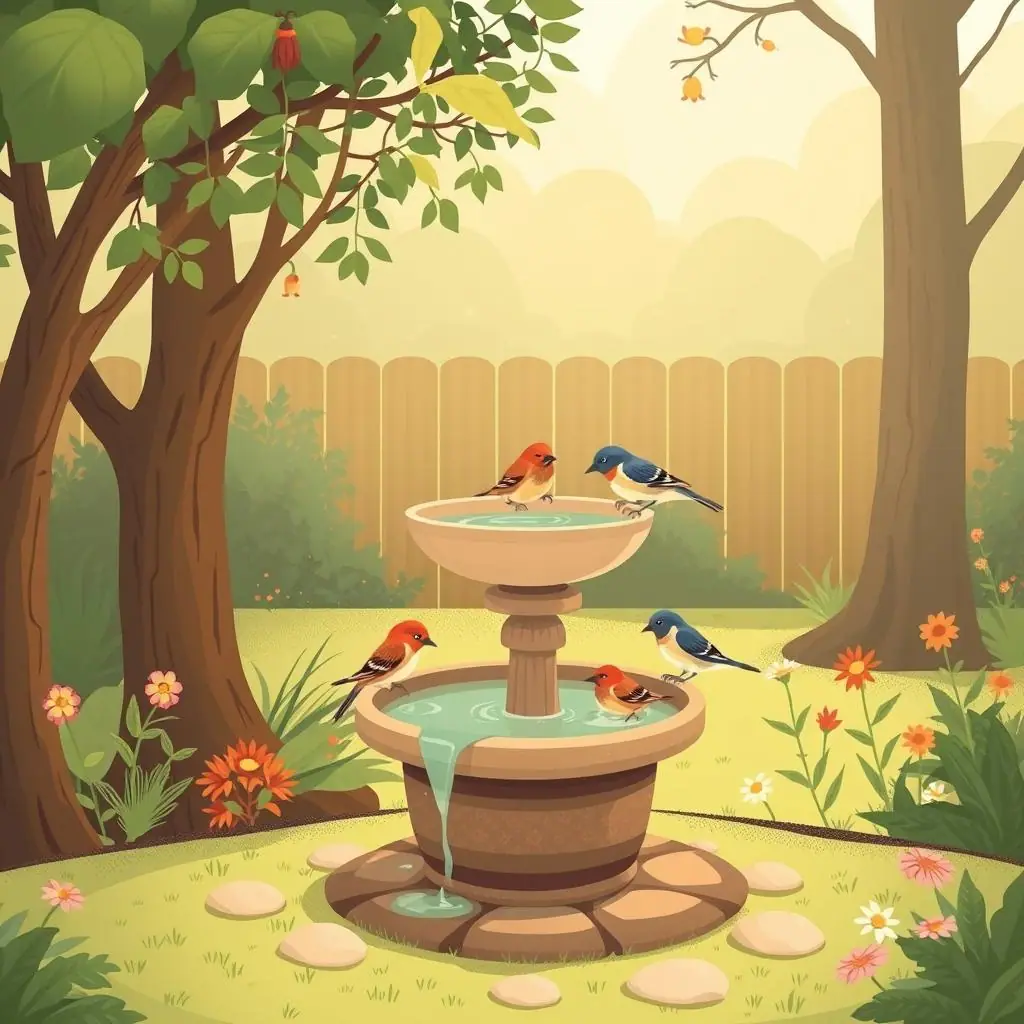
Water is like a magnet for birds—it draws them in faster than any feeder I've ever put up. During my first week of bird watching, I was amazed to discover that a simple shallow dish of water brought more species to my small backyard than months of seed feeders had managed to attract.
The wonderful truth about creating water features for birds is that you don't need to spend hundreds of dollars or hire a landscaper. Some of my most successful **bird bath** setups have cost less than twenty dollars and taken less than an hour to create. Whether you're working with a tiny balcony, a modest backyard, or just want to test the waters before investing in something bigger, there are affordable options that will have birds lining up for their daily drinks and baths.
Let me share the budget-friendly water feature ideas that have transformed my backyard into a bustling bird sanctuary, along with the simple maintenance tips that keep them working year-round.
\n\n💧 Why Water Attracts More Birds Than Food
\n\nBefore diving into the how-to details, it's worth understanding why **water for birds** is so incredibly effective at drawing in feathered visitors. Unlike food, which certain species prefer, all birds need water for drinking and bathing—making it a universal attractant.
\n\nIn my experience, water features bring in birds I never saw at my feeders. Cardinals that ignored my sunflower seeds for months suddenly became regular visitors once I added a simple birdbath. Even birds that don't typically visit feeders, like warblers during migration, will stop for a quick drink and bath.
\n\nWhat makes water so appealing to birds:
\n- \n
- Essential need: All birds require water for drinking and temperature regulation \n
- Bathing behavior: Clean feathers are crucial for insulation and flight \n
- Migration stops: Traveling birds actively seek water sources \n
- Year-round appeal: Unlike food preferences, water needs remain constant \n
- Movement attraction: The sound and sight of moving water draws birds from greater distances \n
Simple DIY Bird Bath Solutions Under $20
\n\nYou don't need to visit specialty bird stores or invest in expensive equipment to create effective water features. Some of the most successful bird baths in my neighborhood are made from items you probably have around the house or can pick up at any hardware store.
\n\nThe Terracotta Saucer Method
\nMy go-to recommendation for beginners is the classic plant saucer bird bath. Large terracotta or ceramic plant saucers make perfect bird baths because they're naturally the right depth and have a slightly rough texture that gives birds good footing.
\n\nWhat you'll need:
\n- \n
- Large plant saucer (16-18 inches diameter) \n
- Decorative stones or gravel \n
- Overturned flower pot for height (optional) \n
Simply place stones around the edges to create different depths—birds prefer water 1-2 inches deep. The center can be slightly deeper for larger birds, while the edges stay shallow for smaller species.
\n\nThe Garbage Can Lid Solution
\nFor a larger water feature that can accommodate multiple birds at once, clean garbage can lids work wonderfully. Choose a textured lid rather than smooth plastic to provide better grip for visiting birds.
\n\nAdding Movement: The Magic of Moving Water
\n\nStill water is good, but moving water is absolutely irresistible to birds. The gentle sound of dripping or bubbling water acts like a dinner bell, calling birds from surprising distances. Fortunately, adding movement doesn't require expensive equipment.
\n\nThe Dripping Water Technique
\nThe simplest way to create moving water is with a slow, steady drip. I use a plastic water bottle with a tiny pinhole in the bottom, suspended above the bird bath. The gentle dripping creates ripples and sound that birds find compelling.
\n\nDIY drip setup:
\n- \n
- Clean plastic bottle with cap \n
- Create tiny hole with heated needle or drill bit \n
- Suspend with wire or string above water feature \n
- Adjust drip rate by changing hole size or bottle angle \n
Solar Fountain Options
\nFor those willing to spend $30-50, small **bird water fountain** pumps powered by solar panels offer a more sophisticated solution. These create gentle bubbling or small fountains that birds absolutely love, and they operate completely free once installed.
\n\nPlacement Strategies for Maximum Bird Appeal
\n\nThe perfect water feature in the wrong location won't attract many birds. Through years of observation, I've learned that placement matters just as much as the feature itself.
\n\nThe Safety Zone Principle
\nBirds are most comfortable with water features positioned within 3-10 feet of protective cover like shrubs or trees. This gives them quick escape routes if predators appear, but keeps them far enough from hiding places where cats might lurk.
\n\nVisibility and Sun Exposure
\nChoose locations where you can easily observe visiting birds, but also consider their comfort. Partial shade prevents rapid evaporation and keeps water temperatures comfortable, while some morning sun helps prevent algae growth.
\n\nIdeal placement characteristics:
\n- \n
- Near cover: Within 3-10 feet of trees or large shrubs \n
- Open approach: Clear flight paths from multiple directions \n
- Partial shade: Protection from intense afternoon sun \n
- Easy maintenance: Accessible for regular cleaning and refilling \n
- Viewing opportunities: Visible from windows where you can enjoy watching \n
Year-Round Water: Winter Considerations
\n\nOne of the most rewarding times to provide water for birds is during winter, when natural sources may be frozen. Birds that rarely visit during warm months often become regular customers when you're their only reliable water source.
\n\nPreventing Ice Formation
\nIn areas with freezing temperatures, keeping water liquid becomes crucial. Simple solutions include moving water features to protected areas, using dark-colored containers that absorb more heat, or adding a small floating object to keep water moving and prevent complete freezing.
\n\nHeated Options for Cold Climates
\nFor consistent winter water provision, heated bird bath elements are worth the investment. These typically cost $20-40 and can transform winter bird watching in cold climates.
\n\nMaintenance: Keeping Your Water Feature Fresh
\n\nThe secret to successful bird water features isn't just the initial setup—it's the ongoing maintenance that keeps birds coming back. Clean, fresh water is essential for bird health and continued visits.
\n\nDaily and Weekly Tasks
\nDuring hot weather, I refill bird baths daily and give them a quick scrub with a brush every few days. In cooler weather, weekly cleaning usually suffices. The key is preventing algae growth and mosquito breeding while maintaining fresh water.
\n\nSimple maintenance schedule:
\n- \n
- Daily: Check water level, refill as needed \n
- Every 2-3 days: Quick scrub to remove debris \n
- Weekly: Empty completely, scrub thoroughly, refill \n
- Monthly: Deep clean, check for damage or wear \n
Pros and Cons of Different Water Feature Types
\n\nSimple DIY Solutions
Plant saucers and household items work as well as expensive commercial bird baths.
Universal Bird Appeal
Water attracts all bird species, not just seed-eating birds like feeders do.
Year-Round Interest
Birds need water in all seasons, making water features consistently attractive.
Regular Maintenance
Water features require more frequent cleaning than seed feeders to prevent algae and disease.
Weather Challenges
Hot weather increases evaporation, cold weather can freeze water solid.
Frequently Asked Questions
\n\nHow deep should bird bath water be?
\nIdeal depth varies from 1/2 inch at the edges for small birds up to 2 inches in the center for larger species. Most birds prefer shallow water where they can maintain footing and feel secure while bathing.
\nHow often should I change the water?
\nIn hot weather, change water every 2-3 days to prevent bacterial growth and mosquito breeding. In cooler weather, weekly changes are usually sufficient. Always change immediately if water appears cloudy or dirty.
\nWill a bird bath attract mosquitoes?
\nStagnant water can breed mosquitoes, but regularly cleaned bird baths typically don't become a problem. Adding movement or changing water every few days prevents mosquito larvae from completing their development cycle.
\nWhat's the best material for a DIY bird bath?
\nRough-textured materials like unglazed ceramic, concrete, or textured plastic work best because they provide good footing. Avoid smooth glass or metal surfaces that can become slippery and dangerous for birds.
\nFinal Thoughts on Budget-Friendly Bird Water Features
\n\nCreating water features for birds doesn't require a big budget or advanced DIY skills—it just requires understanding what birds need and a willingness to experiment with simple solutions. Some of my most successful bird-attracting setups cost less than a tank of gas and took minutes to assemble.
\n\nThe joy of watching a cardinal splash enthusiastically in a repurposed plant saucer, or seeing a family of wrens line up for their evening drinks at your DIY fountain, proves that birds care far more about having access to clean, fresh water than they do about expensive equipment or perfect aesthetics.
\n\nStart simple, observe what works, and gradually expand your water offerings as you discover which features your local birds prefer. Before long, you'll find that your backyard has become the neighborhood watering hole—a vital resource that brings birds closer to your windows and deeper into your daily life.
\n\n