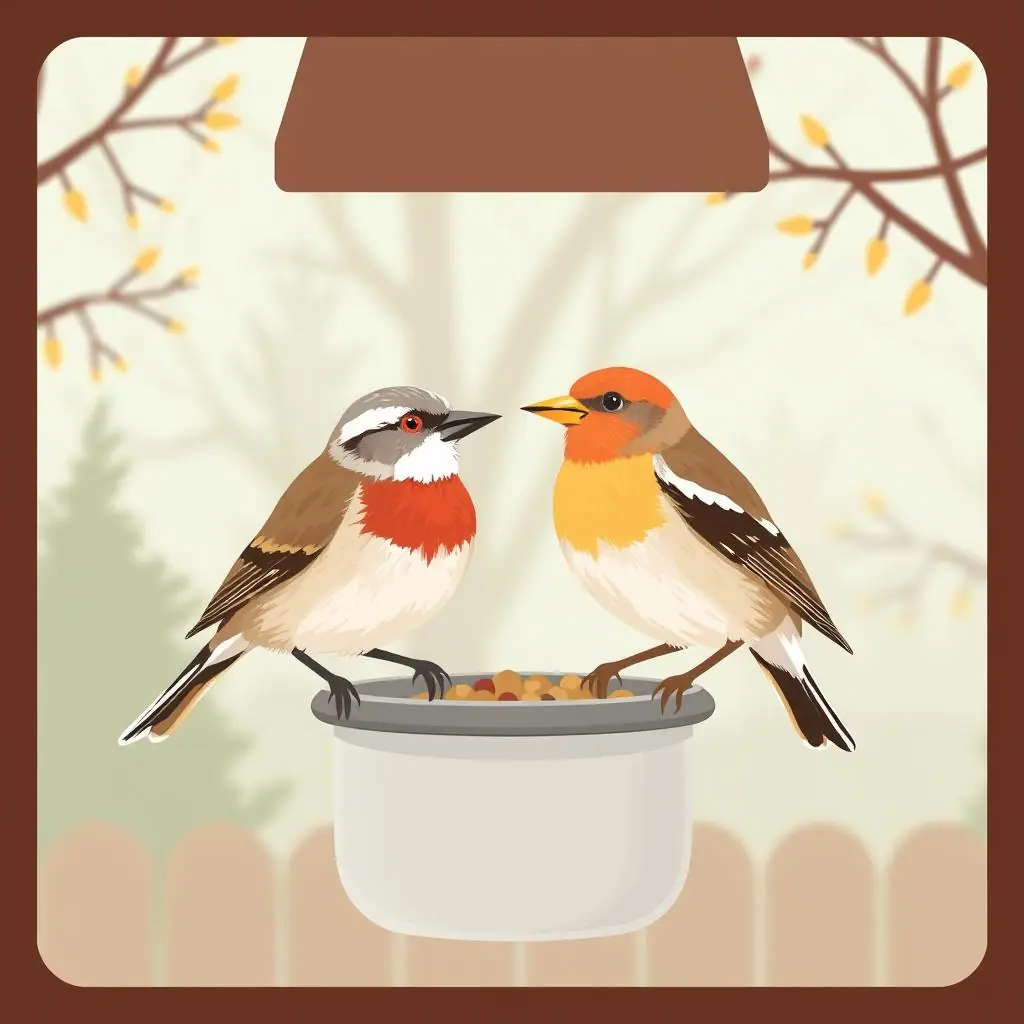
Standing at my kitchen window last Tuesday morning, I watched two small brown birds at my feeder. They looked nearly identical at first glance, both about the size of my thumb, both pecking at sunflower seeds. But years of ranger experience taught me to look closer. One was a house sparrow, the other a house finch – two species that cause more identification confusion than almost any other backyard birds.
Understanding the difference between house sparrow vs house finch opens up a whole new level of backyard bird appreciation. Once you know what to look for, you'll never mix them up again. Let me share the field-tested techniques I've used for decades to tell these look-alikes apart.
These two species share our neighborhoods so commonly that you've probably seen both today without realizing it. The key is knowing which subtle details matter most for accurate house sparrow identification and house finch identification.
🔍 Key Physical Differences at a Glance
The most reliable way to distinguish these species starts with their most obvious features. Think of it like spotting the difference between cousins – they share family resemblance, but each has distinctive traits.
Bill Shape and Color
This is your most reliable identification tool. House sparrows have thick, conical bills that are black or dark gray – built for cracking seeds with powerful jaw muscles. The bill looks chunky and substantial, like a tiny nutcracker.
House finches sport thinner, more pointed bills with a grayish or pale horn color. Their bills appear more delicate and refined, designed for extracting smaller seeds from tight spaces.
Tail Shape
Here's a detail many birders overlook: tail shape. House sparrows have square-cut tails that end in a straight line when spread. House finches show notched tails with a shallow V-shape when fanned out.
Size Comparison
While both species measure around 5-6 inches, house finches typically appear slightly smaller and more compact. House sparrows look stockier and more robust, like tiny linebackers compared to the finches' gymnast build.
🎨 Color Patterns That Tell the Story
Color differences become obvious once you know what to look for, especially during breeding season when males show their brightest plumage.
Male Coloration
Male house sparrows wear distinctive black bibs on their throats and chests, paired with gray crowns and brown backs. They look like they're dressed for a formal dinner, with that prominent black bib as their bow tie.
Male house finches showcase rosy red coloring on their heads, breasts, and rumps. The red can range from bright crimson to orange-red, depending on their diet. Think of them as wearing a red vest – colorful but not formal.
Female Identification
Females present the bigger identification challenge since both species wear brownish, streaky plumage. Here's where subtle details matter most:
- Female house finches: Show distinct streaking on their underparts, especially the belly and flanks
- Female house sparrows: Display cleaner, less streaky underparts with a buff-colored breast
- Face pattern: House finches have plainer faces, while house sparrows show subtle white patches behind their eyes
📖 Behavioral Clues in Your Backyard
Sometimes behavior gives away identity faster than physical features, especially when birds move quickly or you're watching from a distance.
Feeding Habits
House sparrows are ground feeders by preference. You'll often see them hopping beneath feeders, picking up dropped seeds. They're like the cleanup crew of the bird world, methodical and thorough.
House finches prefer perching directly on feeders, especially tube feeders. They're acrobatic eaters, comfortable hanging at odd angles to reach seed ports. Watch for their tendency to crack seeds systematically, often dropping husks below.
Social Behavior
House sparrows are intensely social, almost always in groups. Even during breeding season, you'll rarely see a solitary house sparrow. They chatter constantly, creating a continuous background soundtrack of chirps and calls.
House finches show more variable social behavior. While they do flock, especially in winter, you'll often spot individuals or pairs feeding alone. Their vocalizations include actual songs – melodic warbles that house sparrows simply don't produce.
Obvious male markings
Black bib makes males unmistakable during breeding season.
Consistent group behavior
Always in flocks, making identification easier through numbers.
Year-round residents
No confusing seasonal variations in your area.
Similar juvenile plumage
Young birds lack distinctive markings until first molt.
Female confusion
Brown females require careful attention to subtle features.
🏠 Where to Find Each Species
Habitat preferences can provide additional identification clues. Both species adapt well to human environments, but they show distinct preferences.
House sparrows gravitate toward urban centers and agricultural areas. You'll find them in parking lots, fast-food restaurants, farm buildings, and dense neighborhoods. They've mastered city living, thriving in environments that challenge other songbirds.
House finches prefer suburban areas with scattered trees and shrubs. While they adapt to cities, they're more common in residential neighborhoods with mature landscaping. They need more natural perching and nesting sites than house sparrows.
Seasonal Movement Patterns
Understanding seasonal behavior helps predict when and where you'll encounter each species:
- House sparrows: Remain year-round residents in most areas, forming larger flocks during fall and winter
- House finches: May show local movements in northern areas, with some populations migrating short distances
- Breeding timing: Both species breed multiple times per year, but house finches start earlier in spring
🔄 Quick Field Comparison Chart
When you're in the field with birds moving fast, refer to this mental checklist:
🏆 House Sparrow
Thick, dark bill • Square tail • Black bib (males) • Ground feeding • Always in groups • Urban environments
⭐ House Finch
Thin, pale bill • Notched tail • Red coloring (males) • Feeder perching • Variable group size • Suburban areas
🎯 Pro Tips from 25 Years of Field Experience
After decades of guiding nature walks and training junior rangers, here are the techniques that work best for beginners:
- Start with males during breeding season: March through July offers the clearest identification opportunities
- Use your ears: House finches sing; house sparrows just chirp and chatter
- Watch feeding behavior: Finches work feeders systematically; sparrows hop and grab
- Note the company they keep: Mixed flocks often help confirm identities through comparison
- Take photos for review: Digital comparison at home reinforces field identification skills
Can house sparrows and house finches interbreed?
No, they belong to different families and cannot interbreed. House sparrows are Old World sparrows (Passeridae), while house finches are true finches (Fringillidae).
Which species is more common at backyard feeders?
This varies by location and habitat. Urban areas typically see more house sparrows, while suburban locations with mature landscaping attract more house finches.
Do both species use the same types of bird feeders?
House finches prefer tube feeders and can use smaller perches. House sparrows work better with platform feeders or ground feeding, though they'll use most feeder types.
What's the best time to observe the differences?
Early morning hours (dawn to 10 AM) during breeding season (March-July) provide optimal viewing when males show their brightest colors and most active behaviors.
🌟 Building Your Identification Confidence
Learning to distinguish house sparrows from house finches marks a significant milestone in your birding journey. These two species share our neighborhoods so intimately that mastering their identification immediately improves your daily bird observations.
Start with the bills and tails – these features remain consistent regardless of season, age, or lighting conditions. Once you've trained your eye to spot these differences automatically, everything else becomes supporting evidence rather than primary identification criteria.
Remember that even experienced birders occasionally need a second look at distant or poorly lit birds. The key is developing a systematic approach: bill shape, tail pattern, overall behavior, then color details. This method works whether you're watching from your kitchen window or hiking a nature trail.
Your local bird community likely includes both species year-round, providing endless practice opportunities. Each correct identification strengthens your pattern recognition skills, making future observations faster and more confident. Soon you'll find yourself automatically noting "house finch at the nyjer feeder" or "house sparrow flock under the oak tree" without conscious effort.