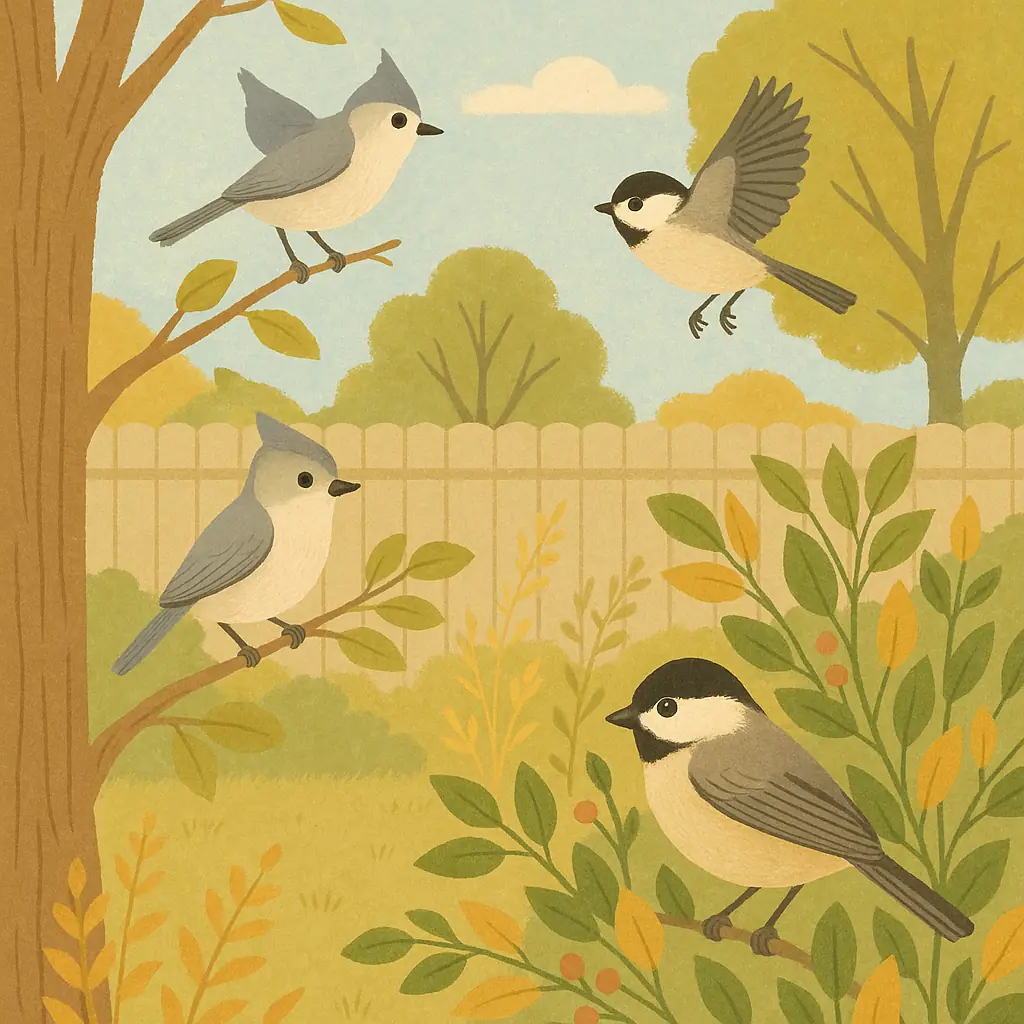
Some fall mornings feel different before you even identify a single bird. The yard seems to move in a gentle wave. A chickadee calls from one branch, a nuthatch slips down the trunk, and a titmouse flashes through the same patch of leaves a moment later. If you have noticed that kind of busy, connected movement, you may be watching one of the season's small delights: mixed bird flocks in fall.
For beginners, these flocks can feel both exciting and confusing. Several birds may pass through together so quickly that it is hard to know where to look first. The good news is that you do not need to identify every bird at once. Once you understand the pattern, mixed flocks become easier to follow and much more enjoyable from a porch, patio, or kitchen window.
Why Mixed Bird Flocks in Fall Are Worth Noticing
Fall often brings a change from the loud, territorial rhythm of spring and early summer to a quieter season of traveling, feeding, and staying alert together. Cornell's article on mixed-species flocks explains that small birds often move through the landscape in loose groups, with chickadees and titmice acting as especially vocal members of the flock. That is one reason a backyard can suddenly feel lively even when no single bird stays in view for long.
For a beginner, this matters because a mixed flock gives you more clues than a lone bird often does. Instead of one quick sighting, you may get a short sequence of related visitors using the same trees, shrubs, and feeder edges. If you already enjoy BirdPeep's guide to watching birds prepare for winter, mixed flocks are one of the easiest fall patterns to look for close to home.
They make birds easier to find
A single quiet bird can disappear into leaves. A flock is different. Calls, motion, and repeated short hops draw your eye toward the same part of the yard again and again. Even if one bird stays hidden, another often pops into view nearby.
They reward patient watching more than fast guessing
Mixed flocks are not a final exam in identification. They are a chance to notice shape, movement, and behavior in a calmer way. If you miss one bird, another often follows the same route a few seconds later.
How to Recognize a Mixed Flock From Your Backyard
In many eastern and central U.S. yards, mixed flocks in the cooler months may include chickadees, titmice, nuthatches, woodpeckers, kinglets, or other small birds moving through cover together. Cornell's Black-capped Chickadee overview notes that other species often associate with chickadee flocks, while Cornell's White-breasted Nuthatch overview points out that nuthatches are often found in small flocks of chickadees and titmice during the nonbreeding season.
You do not need every species named perfectly to recognize the pattern. What you are looking for is a moving cluster rather than one isolated bird. If the whole yard seems active for only a few minutes and then quiet again, that short burst may be your clue.
- Listen for repeated small calls: short notes from more than one direction often give away the flock before you see it clearly.
- Watch for a shared route: several birds may move through the same shrubs, fence line, or tree canopy in sequence.
- Notice different feeding styles together: one bird may probe bark, another may hang from a twig, and another may grab a seed and retreat to cover.
- Expect brief views: mixed flocks often pass through in a wave instead of sitting still for long feeder sessions.
If you want a broader seasonal frame for those quick visits, BirdPeep's post on what changes after the first frost can help connect flock activity with the rest of fall bird behavior.
How to Watch One Bird at a Time Without Losing the Flock
The easiest mistake is trying to watch everything at once. Mixed bird flocks in fall become much more manageable when you give yourself one job: follow the first bird you can see clearly, then widen your attention only after you understand where it is moving.
- Pick the clearest bird first: choose the bird on the nearest branch, feeder edge, or trunk rather than the most exciting flash deeper in the tree.
- Notice its style of movement: does it hop along twigs, creep down bark, hang upside down, or dart out and back?
- Check what appears nearby: once you have one bird anchored in your mind, scan the same branch zone for companions following behind.
- Follow the route, not just the bird: many flock members travel through the same side of a shrub, the same fence line opening, or the same pair of trees.
- Let the flock come back into focus naturally: after a minute, you often realize you are no longer watching one bird but a moving neighborhood of birds.
Simple Yard Changes That Help You See Fall Flocks Better
You do not need a major backyard project to enjoy mixed flocks more. Visibility and gentle structure matter more than novelty. A clean feeder, a little nearby cover, and a calm place to stand can turn a confusing pass-through into a memorable few minutes.
Start by asking where birds pause before and after the feeder. Mixed flocks often use shrubs, small trees, or the sheltered side of a fence as stepping stones. BirdPeep's guide to designing a feeder station you can see clearly from indoors is helpful here because it focuses on sight lines, shelter, and easy observation rather than adding clutter.
Keep food and water dependable
Fresh seed and clean water give passing flocks a reason to slow down. Even when the birds are mostly foraging naturally, a reliable feeder or bird bath can create one extra pause that helps you enjoy the scene.
Leave nearby cover alone for a while
Dense shrubs, twiggy branches, and sheltered edges often matter as much as the feeder itself. If you trim everything too neatly during active fall use, the flock may still pass through, but you may lose the little stopping places that make observation easier.
For a wider view of how these patterns fit into the year, BirdPeep's seasonal birdwatching calendar is a good companion read after you start noticing flocks in your own yard.
Common Beginner Mistakes With Mixed Flocks
Most frustration comes from expecting a mixed flock to behave like a posed feeder lineup. These groups are active, brief, and a little messy in the best way.
- Trying to identify every bird instantly: it is better to identify one bird well than five birds badly.
- Looking only at color: shape, bark behavior, tail use, and movement style are often more helpful than a quick flash of plumage.
- Standing too close to the action: a small step back from the feeder or window can give you a wider, calmer view.
- Ignoring the route through the yard: mixed flocks often tell a story through movement, not through long stationary views.
- Giving up after one fast pass: the same flock may circle back through the yard or a nearby tree line within minutes.
Pros and Cons of Watching Mixed Flocks in Fall
You can see several bird behaviors in one short visit
A single flock may show bark climbing, twig hopping, feeder stops, and alert calling all within a few minutes.
They build observation skill quickly
Because the flock keeps moving, you learn to notice route, shape, and behavior instead of waiting for a perfect still pose.
They make fall birdwatching feel lively
Even a quiet backyard can suddenly feel full of motion and discovery when a mixed flock passes through.
Views can be brief and scattered
Beginners may feel rushed at first because the birds do not stay in one easy place for long.
It is easy to feel visually overloaded
Several birds moving at once can make identification harder until you learn to focus on one bird and one route at a time.
A Simple Checklist for Your Next Fall Flock
Use this short checklist the next time the yard suddenly comes alive.
- Pause first: stay still instead of moving toward the birds.
- Choose one bird: follow the clearest bird before widening your attention.
- Watch the route: notice which tree, shrub, or fence line the flock is using.
- Listen for repeat calls: flock sounds often help you relocate the group when birds slip behind leaves.
- Check the pause points: feeders, trunks, and sheltered branches often give the best second look.
- Write one note: record the date, weather, and the first two or three species or behaviors you noticed.
When to Get Extra Help With Identification
If a flock moves too quickly for confident identification, there is no shame in staying broad. You can write down "small bark-climbing bird" or "gray bird with crest" and verify the details later instead of forcing a guess in the moment.
That is especially helpful when fall movement brings birds you do not see often in summer. Use a trusted field guide, a local checklist, or an identification resource after the sighting rather than turning a quick backyard pleasure into a stressful puzzle.
Frequently Asked Questions
What is a mixed bird flock in fall?
It is a loose group of small birds from more than one species moving and feeding through the same area together during the nonbreeding season.
Do the same birds always travel together?
Not always. Some familiar combinations appear often, but the exact mix can change by region, habitat, and which birds happen to be using your yard that day.
Why do mixed flocks feel easier to hear than to see?
The calls and movement often spread through leaves and branches faster than your eyes can settle on one bird. Listening first usually helps you find the route.
Should I use binoculars for every flock visit?
Use them when a bird pauses, but do not feel pressured to keep them up the whole time. Mixed flocks often make more sense when you watch the wider scene first.
Final Thoughts
Watching the first mixed flocks of fall in your backyard can feel like seeing your familiar space wake up in a new way. The birds may only stay a few minutes, but those minutes often hold more motion, variety, and quiet excitement than a much longer watch at another time of year.
Start with one bird, one route, and one note. That small approach is often enough to turn a blur of wings into one of the most satisfying fall habits a backyard birder can have.