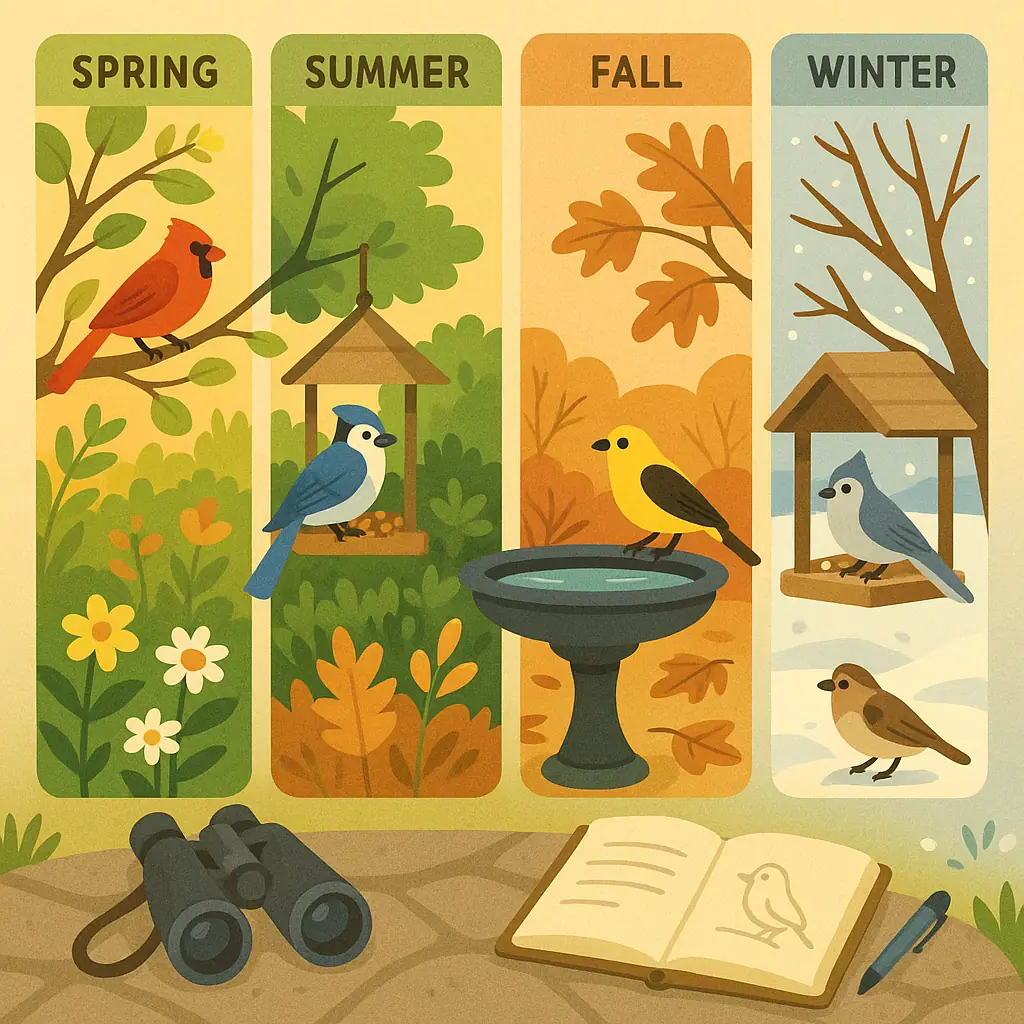
A birdwatching calendar helps beginners know what to expect month by month instead of wondering why the feeder feels busy one week and quiet the next. In most of the United States, backyard bird activity follows a gentle rhythm shaped by migration, nesting, summer molt, and winter survival. Once you learn that rhythm, even an ordinary yard starts to feel like a place full of small seasonal stories.
Managed by the Cornell Lab of Ornithology, eBird receives more than 100 million bird sightings each year, and that citizen-science data shows how bird abundance changes across the calendar. Audubon and Cornell also continue reminding bird lovers that North America has lost nearly 3 billion birds since 1970, which makes simple backyard observations and habitat support more meaningful than ever.
🌱 What a Birdwatching Calendar Really Tells You
A seasonal birding guide is not about memorizing every species. It is about noticing patterns: who arrives in spring, who disappears in fall, when birds sing the most, and when feeders need more attention. Think of it as a neighborhood calendar written in feathers.
For beginners, a monthly backyard birds routine also reduces frustration. You stop expecting hummingbirds in January or quiet winter sparrows to behave like noisy spring robins. Instead, you learn to ask, What is normal for this season?
Why this helps beginners
When you know what the season is doing, identification becomes easier and your expectations feel calmer. You also learn when to carry binoculars, clean feeders more often, or watch for migration after a weather change.
☀️ Spring and Summer: Arrival, Singing, and Family Life
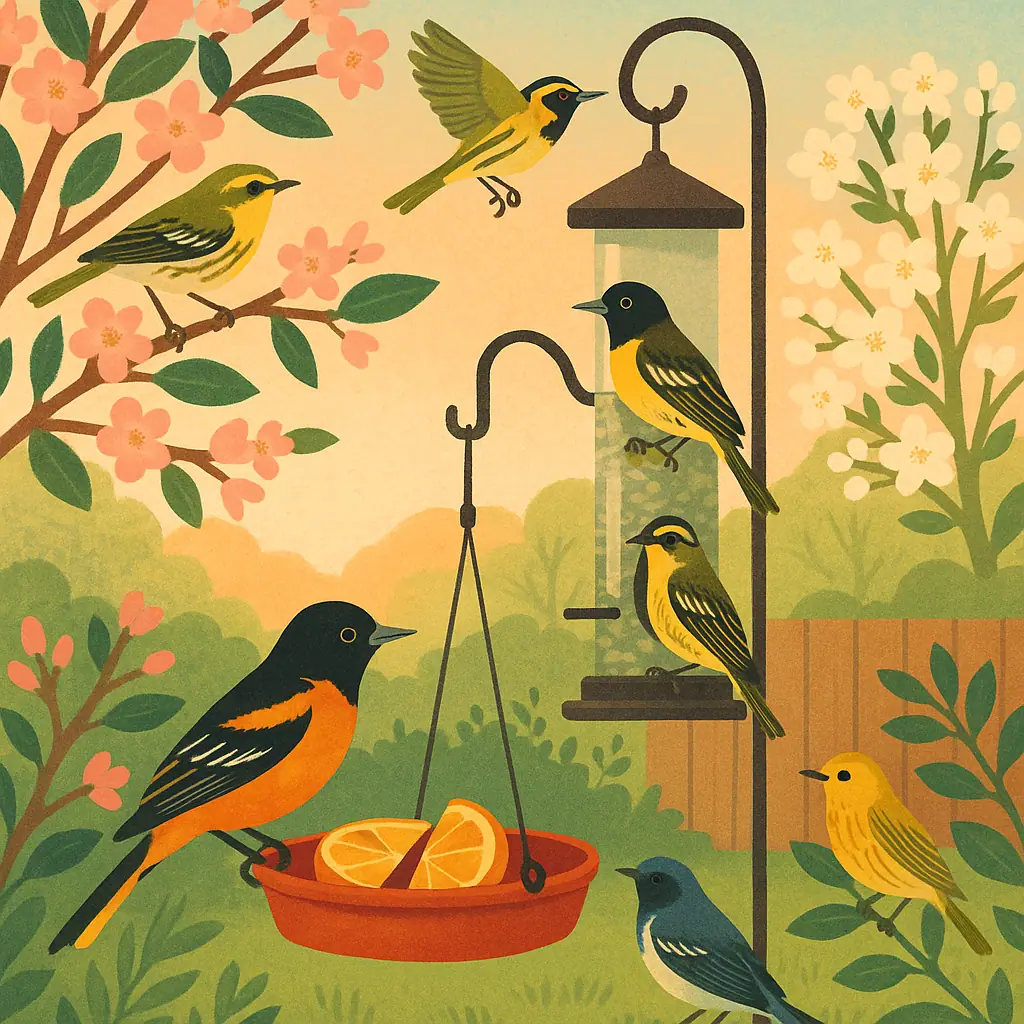
Spring is the season that hooks many new birders. From late April into May in much of North America, migration picks up, birds sing more often, and colorful species seem to appear overnight. By early summer, attention shifts from arrival to nesting, feeding young, and territorial behavior in familiar backyard spaces.
What to watch for in spring
- Migration movement: Warblers, orioles, swallows, and hummingbirds may pass through quickly, especially after warm southerly winds.
- Bright breeding plumage: Many birds look crisper and more colorful in spring, which makes identification easier for beginners.
- Singing males: Early morning often brings the busiest chorus of the year.
What to watch for in summer
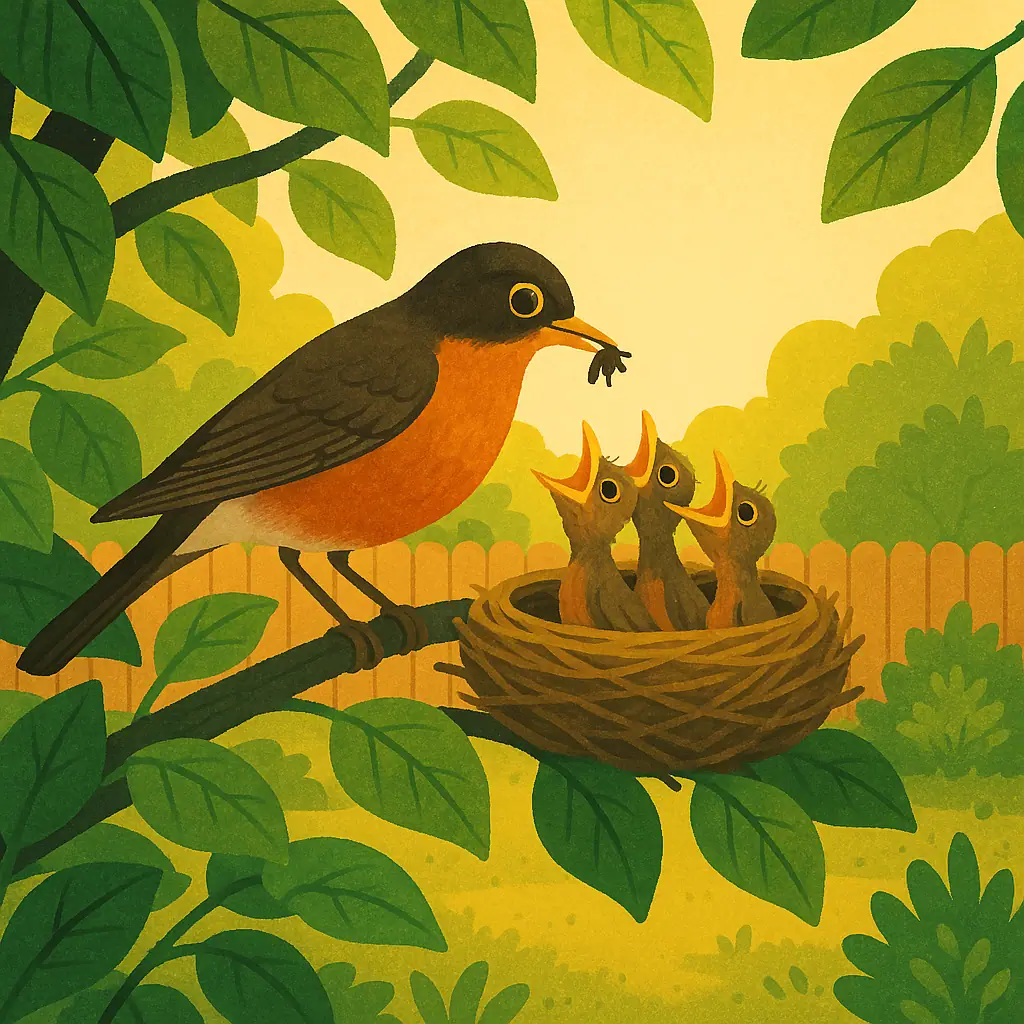
Summer birding often feels quieter at first, but it rewards patient observers. Parents carry insects to hidden nests, fledglings beg loudly, and family groups move through shrubs and lawns. Later in summer, many birds molt, which can make them look scruffy and less familiar.
🍂 Fall and Winter: Movement, Flocks, and Survival
Fall migration usually lasts longer than spring and often includes greater numbers of birds because adults travel with young from the breeding season. The challenge is that birds may be quieter and less brightly colored. A beginner birding calendar is especially useful here because it reminds you that confusion is part of the season, not a sign that you are doing something wrong.
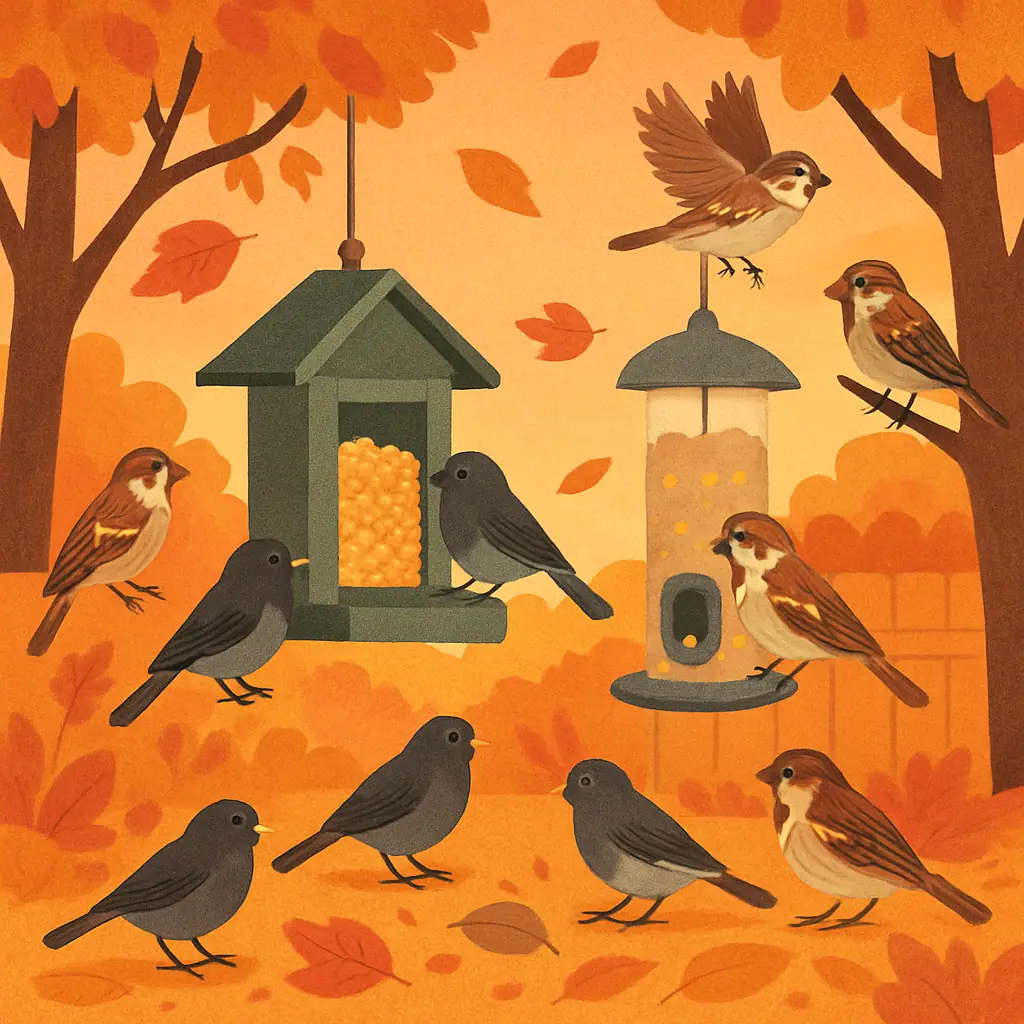
Winter simplifies the cast of characters. Leaves are down, food is scarcer, and the birds that remain often return to the same feeder and shrub line every day. That makes winter one of the best times to build confidence with regular visitors such as chickadees, cardinals, juncos, woodpeckers, and finches.
- Fall clue: Watch for mixed flocks moving together through trees and hedges.
- Winter clue: Focus on food, water, and shelter because birds gather where survival is easiest.
- Cold-weather bonus: Sparse foliage can make bird shapes easier to see.
🗓️ A Simple Month-by-Month Backyard Birding Routine
You do not need a complicated spreadsheet. A notebook, wall calendar, or phone note works beautifully.
- January-February: Track your most dependable feeder birds and notice which species visit during snow, rain, or deep cold.
- March-April: Listen for increased singing, courtship displays, and the first returning migrants.
- May-June: Record nest building, territorial behavior, and birds carrying food.
- July-August: Expect quieter mornings, young birds learning the ropes, and adults in molt.
- September-October: Watch for migration waves, shifting flock behavior, and changing feeding patterns.
- November-December: Refill feeders consistently, offer fresh water, and learn your reliable winter regulars.
Builds confidence steadily
You start recognizing what belongs to each season instead of feeling overwhelmed by random sightings.
Makes your yard more interesting
Even familiar birds feel new when you notice changes in song, plumage, and behavior through the year.
Supports better habitat care
You learn when clean water, feeder hygiene, and native cover matter most for monthly backyard birds.
Some seasons feel slow
Summer afternoons and stormy weeks can seem quiet, but patterns return when you keep watching patiently.
Fall identification is trickier
Young birds and duller plumage can make autumn feel confusing until you build experience.
❓ Frequently Asked Questions
What is the best month for backyard birdwatching?
For many U.S. beginners, May is especially rewarding because migration, singing, and spring color all come together. But every month offers something useful once you know what to look for.
Do I need to birdwatch every day to keep a calendar?
No. Even two or three short sessions a week are enough to reveal seasonal patterns, especially if you record first arrivals, feeding behavior, and weather notes.
Why do birds seem to disappear in late summer?
Many birds become quieter during molt and after nesting, and young birds may roam in less obvious ways. They are often still around, just less showy than in spring.
Should my calendar include weather?
Yes. A note about rain, wind, frost, or a warm front can explain sudden bursts of activity and make your seasonal birding guide more useful over time.
🌤️ Final Thoughts
Planning your birdwatching year does not take the spontaneity out of the hobby. It does the opposite. Once you understand the seasonal rhythm, each surprise sighting becomes even sweeter because you know how it fits into the larger story unfolding outside your window.