Spring migration turns backyards into temporary homes for hundreds of bird species traveling north to breed. Watching tired warblers refuel at your feeder or hearing the first dawn chorus of returning robins offers a front-row seat to one of nature's most determined journeys.
What Is Spring Bird Migration?
Spring migration is the annual movement of birds from southern wintering grounds to northern breeding territories. Unlike fall migration, which happens gradually, spring migration feels urgent—birds race against time to claim the best nesting sites and find mates.
Most migration happens at night when cooler air makes flight easier and predators are less active. Your backyard becomes a pit stop where exhausted travelers rest and eat before continuing north.
Peak activity typically spans late March through early June, with the heaviest traffic concentrated in late April and early May. During this window, even small suburban yards can host a dozen or more species in a single morning.
Why Spring Migration Matters for Backyard Birders
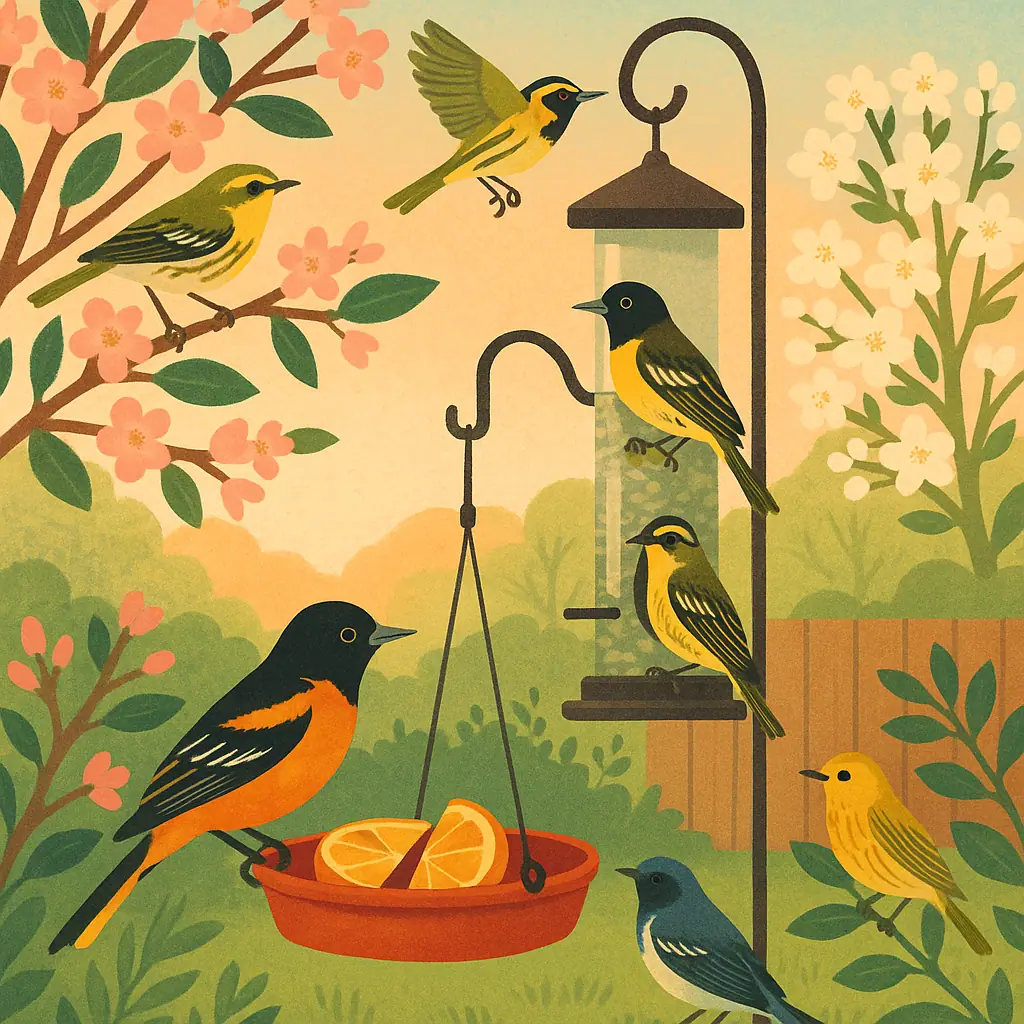
Spring offers your best chance to see colorful warblers, orioles, tanagers, and grosbeaks that spend summers farther north. Many wear vibrant breeding plumage during this window, making identification easier and more rewarding.
Supporting migrating birds also helps conservation. Providing food, water, and safe rest areas increases survival rates during this energy-intensive journey. Every stopover matters when birds are burning through fat reserves at remarkable rates.
Creating a Migration-Friendly Backyard
Three essentials turn any yard into a migration stopover: abundant food, clean water, and protective shelter.
Food variety attracts more species: Offer black oil sunflower seeds for cardinals and finches, suet for woodpeckers, mealworms for bluebirds, and nectar for hummingbirds arriving in late April. Ground feeders help sparrows and towhees that prefer foraging at ground level.
Water sources work like magnets: A simple birdbath with fresh water draws birds that might otherwise pass by. Adding a solar bubbler or dripper creates movement and sound that migrating birds notice from farther away. Change water daily to prevent disease spread.
Native plants provide natural fuel: Early-blooming flowers attract insects—a critical protein source for warblers and vireos. Oak trees, serviceberry, and redbud offer both shelter and insect habitat. Even a single native tree can support thousands of caterpillars that fuel hungry migrants.
When to Watch and What to Expect
- Early migrants (March): Red-winged Blackbirds, Eastern Phoebes, Tree Swallows arrive first, often while snow still covers the ground.
- Mid-migration (April): Warblers, thrushes, and vireos pass through in waves tied to weather fronts. This is when backyards become busiest.
- Late arrivals (May): Baltimore Orioles, Rose-breasted Grosbeaks, Indigo Buntings arrive in full breeding color, announcing themselves with distinctive songs.
Watch for sudden increases in bird activity after warm, southerly winds—these conditions push large numbers of migrants north overnight. Conversely, cold fronts or rainstorms can trigger "fallouts" where exhausted birds land en masse to wait out bad weather.
Pros and Cons of Backyard Spring Birding
Pros
- Maximum species diversity in short window
- Vibrant breeding plumage aids identification
- Active dawn chorus creates memorable mornings
- Easy observation from home
Cons
- Peak activity lasts only 3-4 weeks
- Weather delays can shift timing
- Some species move through quickly
Common Migrant Identification Tips
Warblers confuse many beginners because they move quickly and stay high in trees. Focus on these clues: yellow throat patches (Common Yellowthroat), bold eye rings (Nashville Warbler), or rusty crown stripes (Chestnut-sided Warbler). Learn their chip notes—often your first clue that warblers are overhead.
Orioles and tanagers stand out with brilliant orange and red plumage. Listen for their clear, whistling songs—often easier to detect than visual sightings in dense spring foliage. Orioles announce themselves with loud, flute-like calls from treetops.
Sparrows and thrushes forage on the ground or low in shrubs. Watch for white outer tail feathers in Eastern Towhees or spotted breasts in Wood Thrushes. These birds prefer quiet observation from a distance.
FAQ
Why do I see more birds some mornings than others?
Weather drives migration timing. Warm fronts with south winds bring waves of migrants overnight. Cold fronts or rain cause "fallouts" where tired birds land in large numbers.
Should I keep feeders up all spring?
Yes. Even after residents arrive, late migrants still pass through May. Consistent food availability supports both groups and helps you catch rare species passing through.
Do all migrants stop in backyards?
No. Some species prefer forest edges or wetlands. But offering food, water, and native plants increases your chances of attracting passing birds significantly.
Final Thoughts
Spring migration transforms ordinary backyards into international travel hubs for birds. Simple actions—filling feeders, cleaning birdbaths, planting native flowers—directly improve survival for travelers covering thousands of miles. The reward is watching nature's most colorful parade unfold right outside your window.