The first frost can make a familiar yard feel different by breakfast. The grass looks silver, fallen leaves stiffen, and the birds may seem a little more urgent than they did the day before. If you enjoy watching birds from a window or porch, this is one of the most interesting seasonal shifts to notice.
Birds after first frost are not following a brand-new rulebook overnight, but several things do change quickly. Insects become harder to find. Open water may be colder or partly frozen. Seeds, berries, and sheltered corners suddenly matter more. For a beginner, the good news is simple: you can learn a lot by watching calmly for ten minutes.
Think of first frost as a quiet signal. It tells birds to spend more energy finding food, conserving warmth, and staying close to safe cover. It tells birdwatchers to look for new patterns without rushing to interfere.
Why Birds After First Frost Behave Differently
Frost changes the small resources birds use all day. Many insects hide, slow down, or disappear from easy view. Soft berries may freeze and thaw. Shallow water can become less reliable. A bird that found plenty of food in late summer may now need to check more places before it settles in.
The Cornell Lab of Ornithology's BirdNotes guide on winter feeding explains that many nonmigratory songbirds shift toward fruits and seeds in fall and winter, and that cold days can make food harder to find. Its winter bird feeding guidance is a helpful reminder to watch food sources carefully after frost. Instead of trying to identify every bird at once, ask which resources each visitor seems to be using.
Start With a Slow Frost Morning Scan
The easiest way to understand first frost birdwatching is to look before you act. Make a cup of coffee or tea, sit where you normally watch, and scan the yard in layers: ground, shrubs, feeder area, trees, fence line, and sky.
If you have noticed how birds use the yard after storms, the same patient approach works here. BirdPeep's guide to birdwatching after a rainstorm shows how weather can reshape movement, feeding, and bathing. Frost is another weather event, but it usually pushes birds toward warmth, calories, and protected edges.
Watch the sunny spots
After a cold night, birds may spend time where morning sun reaches branches, fences, bare ground, or leaf litter. Sun can warm a perch, reveal insects, soften frost, and give birds a clearer place to move.
Notice who arrives together
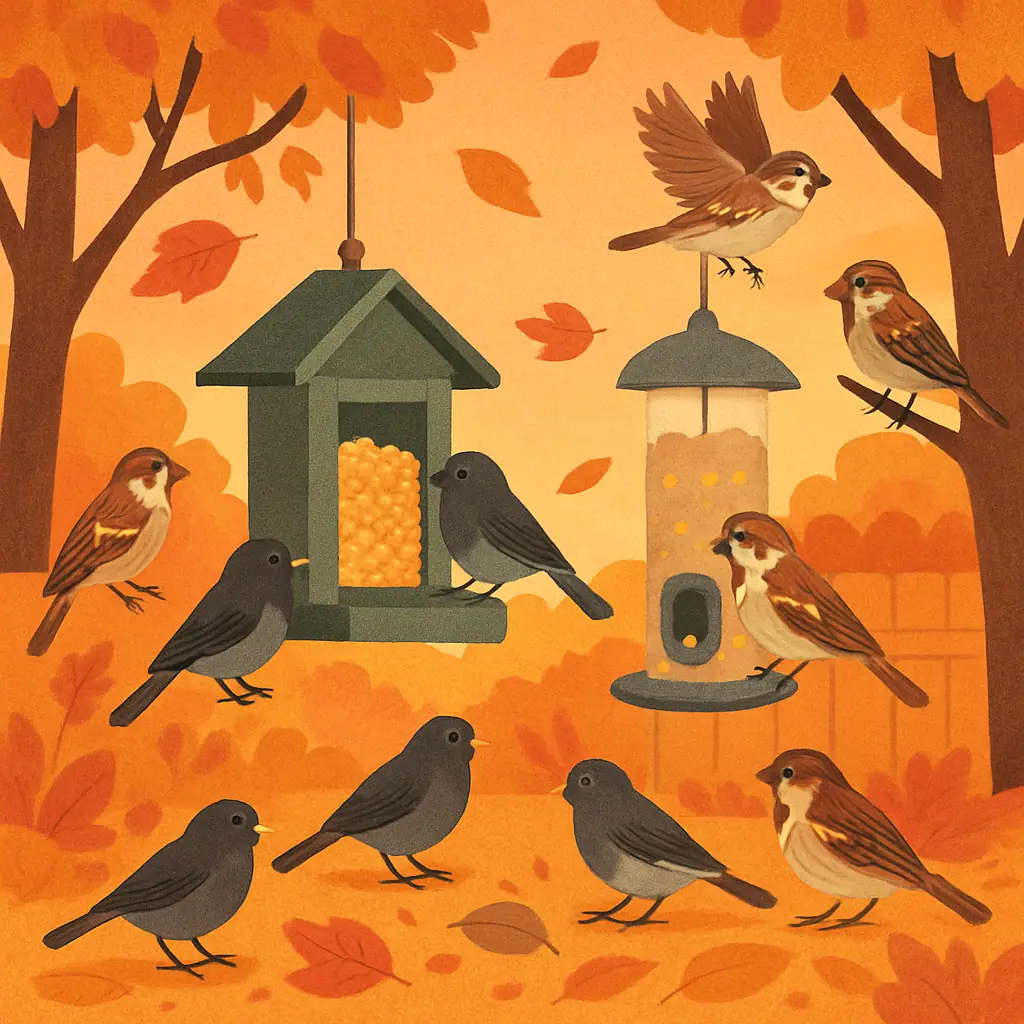
Some birds become easier to see in small mixed groups as weather cools. Chickadees, titmice, nuthatches, woodpeckers, sparrows, and finches may pass through a yard in loose waves. You do not need to name every one immediately. First, notice whether they move alone, in pairs, or as part of a busy little circuit.
- Start with movement: Look for hopping, climbing, scratching, probing, or quick flights between cover and food.
- Check the edges: Shrubs, fence lines, brush piles, and leaf litter often become more active after frost.
- Listen before opening doors: Calls can tell you where birds are gathered before you step outside and scatter them.
- Write one sentence: A short note such as "more sparrows under shrubs after frost" is enough to build memory.
What Food Sources Change Overnight
First frost often makes natural food look different to birds. Insects may be less available on open surfaces, so birds that relied on them may search bark, curled leaves, stems, and protected corners more carefully. Seed-eating birds may spend more time on dried flower heads, grasses, weeds, and spilled seed.
This is also when berry shrubs and native plantings can become especially interesting. If you have been thinking about longer-term habitat, BirdPeep's article on native berry shrubs for backyard birds is a useful next step. Plant choices do not need to happen today, but frost can show you which parts of the yard already feed birds naturally.
If you use feeders, first frost is a good reminder to keep seed dry and fresh. Cold weather does not make dirty seed safe. Damp, clumped, or moldy food should be removed. A smaller amount refreshed more often is usually kinder than filling a feeder and forgetting it.
Water Becomes More Important Than It Looks
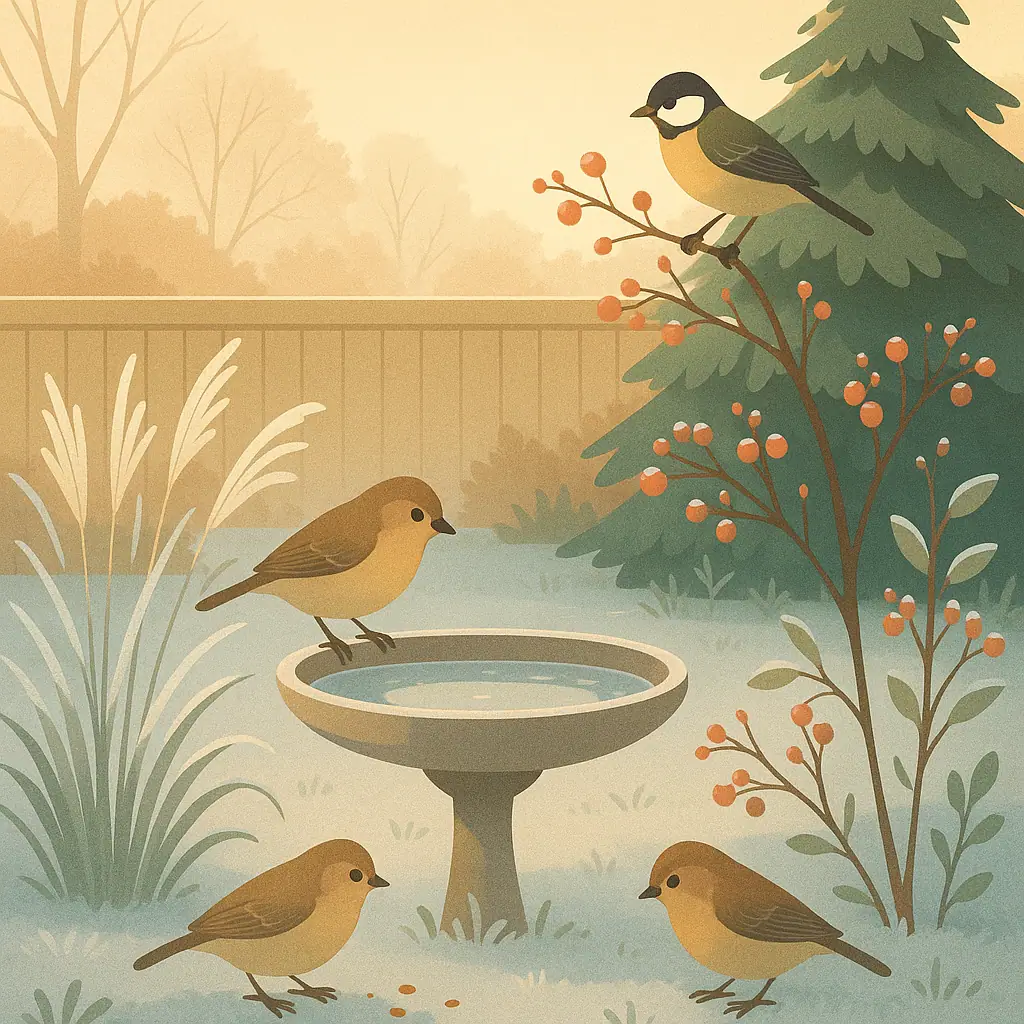
People often think about food first, but water can be surprisingly important after frost. Birds still need to drink and keep feathers in good condition. A shallow bath that was easy yesterday may be icy this morning, or the rim may be slick.
You do not need a complicated fountain to help. Start by checking whether water is clean, shallow, and easy for birds to reach safely. If ice forms, refresh the bath when you can do it without strain. Put water where birds have nearby cover but can still see around them.
Flocking and Shelter Get Easier to Notice
After first frost, some birds seem to move with more purpose. You may see little groups working through shrubs, trees, and feeders in a repeating path. These groups can help birds find food and stay alert. For the watcher, they make the yard feel suddenly lively.
Shelter matters because cold birds need places to pause out of wind and away from danger. Evergreens, dense shrubs, brush piles, and layered plantings can all become more valuable as leaves drop and temperatures fall. A bare yard may still attract birds to a feeder, but nearby cover often makes visits feel safer.
For a broader cold-season feeding perspective, BirdPeep's guide to winter feeding for backyard birds pairs well with this frost-focused routine. First frost is the early signal; winter feeding is the longer habit.
Watch before changing the yard
A calm scan shows which food, water, and shelter birds are already using after the cold night.
Keep food fresh and dry
Small, clean refills are more useful than old seed left to clump, spoil, or collect debris.
Protect quiet cover
Leaving some shrubs, seed heads, leaves, or brushy edges can give birds safer places to forage and rest.
Cleaning the yard too completely
Removing every seed head, leaf patch, and sheltered edge can erase natural food and cover just as birds need them more.
Assuming more food solves everything
Food helps, but birds also need clean water, safe cover, and feeder hygiene after frost.
A Simple First Frost Checklist
Use this checklist on the first frosty morning and again a week later. Repeating the same simple checks teaches you more than trying to do everything at once.
- Food: Are birds using feeders, berries, seed heads, bark, leaf litter, or the ground under shrubs?
- Water: Is the bird bath clean, shallow, and free of hard ice when birds are active?
- Cover: Do birds have shrubs, evergreens, brush, or fence-line shelter near feeding areas?
- Movement: Are birds arriving singly, in pairs, or in small mixed groups?
- Timing: Is activity strongest soon after sunrise, late morning, or near dusk?
- Safety: Are nearby windows visible to birds, and are outdoor cats kept away from feeding zones?
When to Get Extra Help
If you see a bird that looks injured, stuck to ice, unable to fly, or unusually weak, do not guess. Contact a licensed wildlife rehabilitator or local wildlife agency for guidance. Well-meaning help can sometimes cause stress if it is not the right action.
If you are choosing plants, heated water equipment, or major yard changes, ask local experts. A county extension office, native plant nursery, Audubon chapter, or bird club can help you match advice to your region. Frost arrives differently in Maine, Georgia, Colorado, and Oregon, so local knowledge matters.
Frequently Asked Questions
What should I check first when birds act busy after frost?
Start with food, water, and cover. Watch where birds go first, then check whether those places are clean, safe, and easy for them to use.
Should I put out more bird seed after first frost?
You can offer fresh seed if you already feed birds, but do not overfill. Clean feeders and dry seed matter more than simply adding a larger amount.
Do birds need water when it is cold?
Yes. Birds still need drinking water and feather care. A clean, shallow bath is helpful when natural water is frozen or hard to reach.
Can I clean up leaves and seed heads after frost?
Yes, but consider leaving some quiet patches. Leaf litter, dried stems, and seed heads can hold insects, seeds, and shelter for birds.
Final Thoughts
First frost birdwatching is a gentle lesson in paying attention. The yard may look still, but birds are making small decisions all morning: where to feed, where to drink, where to hide, and when to move with others.
Choose one window or porch seat, watch for ten minutes, and write down what changed. If you keep food fresh, water clean, and shelter nearby, you will understand birds after first frost with more confidence each season.