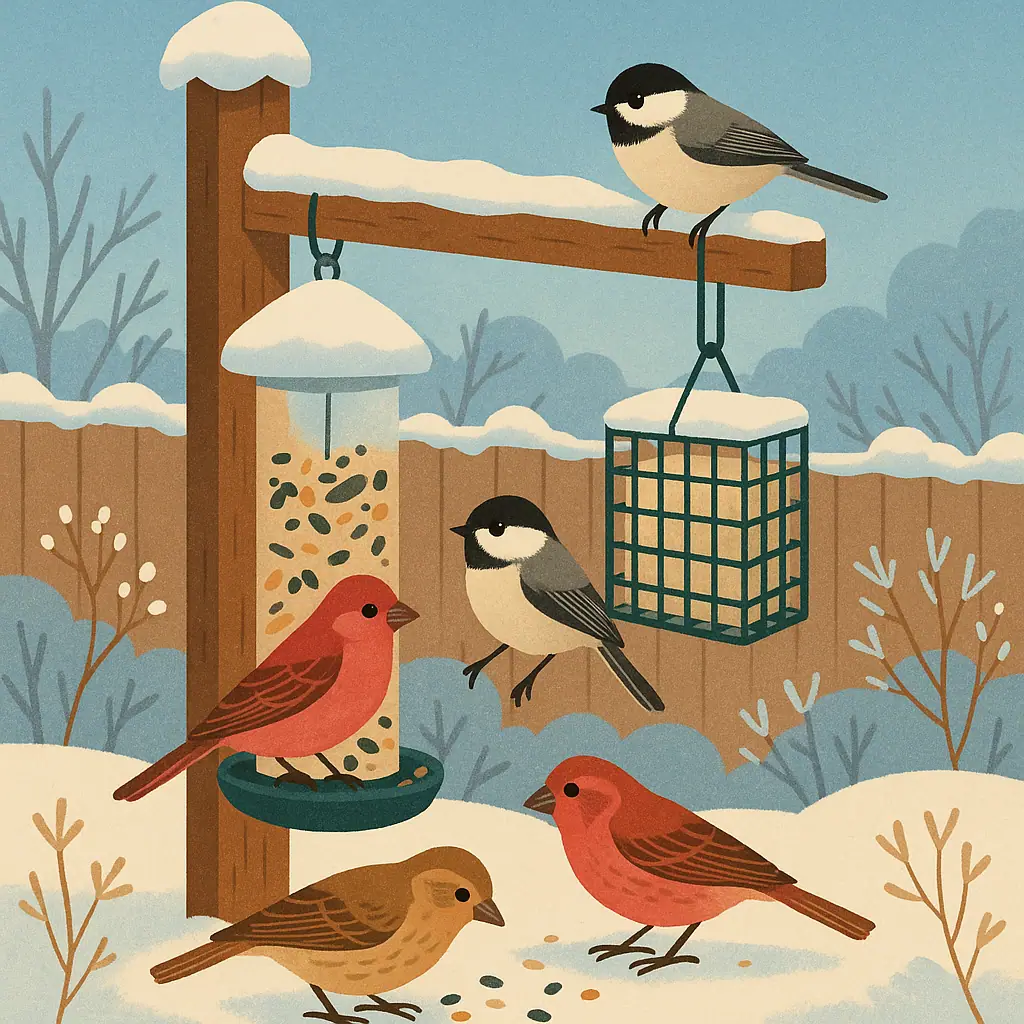
On a cold January morning, when temperatures drop below freezing and snow blankets the ground, a small chickadee needs to consume roughly a third of its body weight in food every single day just to stay warm through the night. That's not a fun fact — it's a matter of survival. And your backyard feeder could make the difference.
Winter bird feeding is one of the most rewarding things you can do as a birdwatcher. It brings birds close when they're most visible against the bare trees and snow, and it gives you the quiet satisfaction of knowing you're genuinely helping your feathered neighbors through the season's hardest stretches.
🌨️ Why Winter Feeding Matters More Than You Think
In spring and summer, birds have an abundance of natural food: insects, berries, seeds, and flowering plants. Winter strips most of that away. Insects disappear entirely. Berries are stripped bare by November. Seeds lie buried under snow and ice.
Birds burn calories at an extraordinary rate in cold weather — maintaining body temperature in a small bird takes enormous energy. A well-stocked feeder isn't just a treat; for many birds, it's a critical supplement that tips the balance from surviving to thriving.
- Dark-eyed Juncos, White-throated Sparrows, and American Tree Sparrows migrate from northern breeding grounds specifically to winter in backyards like yours.
- Black-capped Chickadees, Tufted Titmice, and Downy Woodpeckers are year-round residents that depend on feeders to supplement scarce natural food.
- American Goldfinches change from their brilliant summer yellow to subdued olive-brown — and visit nyjer feeders in large winter flocks.
⭐ The Best High-Energy Foods for Winter Birds
Not all bird foods are created equal. In winter, fat and caloric density matter most. Here are the top choices, ranked by energy value and versatility.
1. Suet — The Winter Lifeline
Suet is rendered animal fat, and it is absolutely the single best winter bird food you can offer. It delivers a concentrated burst of calories — pure fat that converts almost instantly into body heat and energy. Woodpeckers, nuthatches, chickadees, and even some warblers go wild for it.
Suet cakes are widely available in any hardware or garden store, often enhanced with seeds, fruit, or insects for extra appeal. Use a wire suet cage feeder hung from a branch or shepherds hook. An upside-down suet feeder helps deter larger birds and squirrels while still allowing nimble clinging birds like chickadees easy access.
2. Black Oil Sunflower Seeds — The Universal Favorite
If you only offer one seed, make it black oil sunflower. These seeds have a high oil content, thin shells that almost any bird can crack, and they attract the widest range of species — cardinals, chickadees, finches, nuthatches, juncos, and many more. They work in virtually any type of feeder.
3. Nyjer (Thistle) Seed — Finch Gold
Nyjer seed is tiny, oil-rich, and high in fat — nearly as energy-dense as peanuts per gram. It's the preferred food of American Goldfinches, House Finches, and Pine Siskins, and it requires a specialized tube feeder with small ports. In winter, a nyjer feeder can attract flocks of 15–20 goldfinches, which is one of birdwatching's most cheerful sights on a gray January afternoon.
4. Unsalted Peanuts — Protein Powerhouse
Peanuts are rich in both fat and protein, making them exceptional winter fuel. Blue Jays, woodpeckers, nuthatches, and Carolina Wrens are especially fond of them. Offer them in a mesh peanut feeder — never loose on a platform feeder, where large pieces could pose a hazard to smaller birds.
Feeder Setup for Maximum Winter Impact
What you feed matters, but so does how you set things up. A few smart placement choices make your feeding station far more effective.
- Windbreak positioning: Place feeders near a shrub, hedge, or fence — someplace that offers shelter from wind and a quick escape from predators.
- Multiple feeder types: Offer at least a tube feeder (sunflower seeds), a suet cage, and a platform or tray for ground-feeding birds like juncos and sparrows.
- Keep feeders full at dawn: Birds feed most urgently in the morning hours after a cold night. A feeder that runs dry by 8am is missing the peak feeding window.
- Fresh water daily: This is often overlooked. Birds need water even in winter for drinking and feather maintenance. A heated birdbath or a birdbath de-icer keeps water liquid in freezing temps.
Genuinely helps bird survival
Supplemental high-energy food reduces winter mortality, especially for small species during cold snaps and ice storms.
Best birdwatching of the year
Bare trees and white snow make winter birds easy to observe — and species that were hidden in foliage all summer become clearly visible.
Attracts winter visitors
Feeders draw migrating species you won't see any other time of year — Dark-eyed Juncos, White-throated Sparrows, and sometimes rare winter finches.
Birds become dependent if feeding stops suddenly
If you start winter feeding, commit to keeping feeders stocked through March. Abruptly stopping during a cold snap can leave birds that rely on your feeder without their usual food source.
Feeders need more frequent cleaning
Wet weather, snow, and huddling birds mean more disease risk. Clean feeders every 1–2 weeks in winter with a 10% bleach solution, rinse well, and dry before refilling.
Frequently Asked Questions
Should I stop feeding birds in late winter so they don't become dependent?
No — and this concern is largely a myth. Research shows birds maintain their natural foraging instincts regardless of feeder availability. What IS important is not stopping abruptly during a cold spell. Gradually reduce offerings in April as natural food becomes abundant again.
Is suet safe to offer in summer too?
Standard beef suet can go rancid in warm weather. If you want to offer suet year-round, look for "no-melt" or rendered suet formulas specifically designed for warm temperatures — they're much more stable.
What's the minimum setup for helping winter birds?
One tube feeder with black oil sunflower seeds and one suet cage feeder. These two feeders will attract the widest variety of winter species with the least expense and effort. Add fresh water if possible — that may actually matter more than a second feeder type.
Are feeders safe during avian flu outbreaks?
The Cornell Lab of Ornithology advises that backyard feeders pose very low risk during typical avian flu seasons. However, if there are confirmed outbreaks of highly pathogenic avian influenza in your area, temporarily removing feeders to reduce bird crowding is a reasonable precaution. Check your state's wildlife agency for current guidance.
❄️ Final Thoughts
Winter feeding is a quiet act of generosity that ripples through your local bird community in ways you may never fully see. That chickadee that survived a hard January freeze, the goldfinch flock that made it through a February ice storm, the rare winter finch that stopped in your yard on its southern journey — your feeder fed them all.
There's something deeply satisfying about watching birds at a snow-dusted feeder from a warm window. You're not just observing winter — you're participating in it, in the best possible way.