Good bird feeder station ideas begin at the window, not at the store. If you cannot see the feeder clearly from your favorite chair, kitchen table, or sunny breakfast nook, even a beautiful setup can become frustrating. The best station is simple to watch, simple to clean, and calm enough that birds use it naturally.
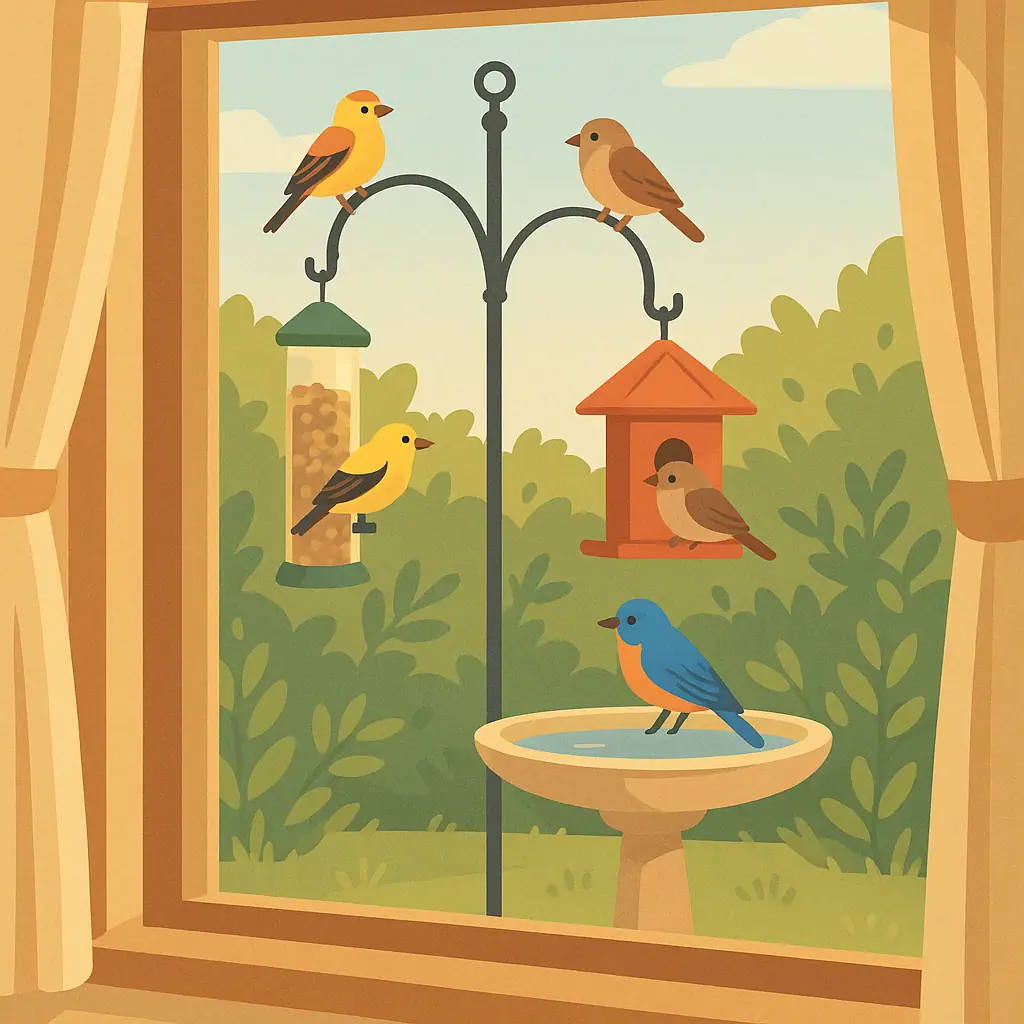
Think of your feeder station as a small outdoor stage. The birds need safe entrances and exits. You need a clear sightline, enough light, and a setup that does not turn every visit into glare, clutter, or guesswork. A few careful choices can make daily birdwatching feel easier without making the yard complicated.
I also checked the Cornell Lab of Ornithology as the research source requested for this topic before using current feeder-safety guidance. For the specific window placement detail, I verified Cornell Lab's All About Birds article on where to put a bird feeder and used it only where the article discusses feeder distance and glass risk.
Why Bird Feeder Station Ideas Matter Indoors
A feeder station that looks fine from the yard may look messy from inside. A hanging feeder might swing behind a porch post. A bath might sit too low for easy viewing. A shrub might hide the exact perch where chickadees, finches, and cardinals pause before feeding.
When you design from indoors first, you notice practical details before they become daily annoyances. You can choose a window with softer light, avoid a screen that blurs the view, and place the feeder where birds are easy to watch without constant walking back and forth.
Start With the Window You Use Most
Choose one main viewing window before choosing poles, hooks, or feeder styles. A living room window may be comfortable, but a kitchen window may catch more morning activity. A bedroom window may offer calm winter watching, but it might face too much afternoon glare.
If you already have feeders outside, observe them from indoors at different times of day. Morning light can reveal colors beautifully, while strong backlight can turn every bird into a dark silhouette. You do not need perfect conditions all day; you need a reliable viewing period you will actually enjoy.
If you are still deciding on a general yard location, our guide to where to place bird feeders walks through the broader safety and access questions that come before fine-tuning the view.
Check the background behind the feeder
A feeder backed by a busy fence, parked car, or bright driveway can make birds harder to identify. A softer background, such as shrubs, trees, or a plain section of garden, helps you see beak shape, tail length, wing bars, and posture more clearly.
Watch for glare and reflections
Glass can fool both people and birds. From your chair, notice whether the window reflects trees, sky, or room lights. If reflections are strong, you may need exterior window markings, a different viewing angle, or a feeder position that reduces sudden flight paths toward the glass.
Place Feeders for Safety and a Clear View
Visibility should never come at the expense of bird safety. Cornell's feeder placement guidance explains that feeders very close to a window can reduce collision speed if a bird startles and flies toward glass. Many birders also use exterior screens, window patterns, or other visible treatments where reflections are a problem.
That does not mean every feeder belongs on the glass. The right answer depends on your window, yard shape, pets, weather, and cleaning access. If a close window feeder is not practical, make the glass more visible and avoid placing feeders in a direct high-speed flight path toward reflective panes.
For smaller yards and patios, the same principle applies in miniature. Our article on making a small patio more welcoming to birds gives ideas for using limited space without crowding the station.
- Keep the line of sight open: Trim only what is necessary so you can see perches, not just the feeder tube.
- Leave room around the station: Birds need space to approach, land, and leave without squeezing through clutter.
- Think about startled flight: If birds flush suddenly, they should not be aimed straight at untreated reflective glass.
- Use nearby shelter thoughtfully: Shrubs and small trees can help birds feel safer, but dense ambush cover too close to the feeder can create problems.
- Make cleaning reachable: If the feeder is awkward to remove, it will be cleaned less often.
Design for Bird Silhouette, Beak, and Tail Clues
From indoors, you may not always see every color. Light changes, rain spots on glass, and distance can make a bright bird look surprisingly dull. That is why shape clues matter so much. A feeder station with a clean viewing angle lets you notice the whole bird first.
Look for silhouette before color: size, posture, head shape, wing shape, and tail length. A chunky beak may point toward a seed-eating finch or cardinal. A longer tail can help separate one visitor from another. A bird that clings vertically to bark or suet is behaving differently from one that hops on the ground.
Give birds a visible pause point
A nearby branch, shepherd's hook, or simple perch can create a short moment of stillness before birds feed. That pause is often when you notice field marks. You are not trying to stage nature; you are giving yourself a clean, respectful view of normal perching behavior.
Keep binoculars close but optional
Binoculars help, especially across a yard, but they should not be required for every visit. If your station is placed well, you can enjoy many common birds with patient observation first, then reach for binoculars when a detail is unclear.
Make the Station Easy to Clean
A clear indoor view is more enjoyable when the station stays tidy. Spilled seed, wet hulls, and dirty feeders can attract unwanted mess and increase disease risk. The U.S. Fish and Wildlife Service summarizes safe feeding advice in its article on whether to feed wild birds, including regular feeder cleaning and removal of old seed.
Place feeders where you can reach them without stepping into slippery mud or dragging a ladder across the yard. If cleaning requires too much effort, the station will slowly become less pleasant for both you and the birds.
Pros and Cons of Window-Friendly Feeder Stations
Easier daily observation
A station designed from your favorite indoor seat helps you notice small visits without standing at the window all morning.
Better identification clues
Clear backgrounds and visible perch points make it easier to study silhouette, beak shape, tail length, and behavior.
More consistent maintenance
When feeders are reachable and visible, you are more likely to notice wet seed, crowding, or cleaning needs promptly.
Window safety needs attention
A good view often involves glass, so reflections, untreated windows, and startled flight paths must be considered carefully.
The best spot may take testing
You may need to move a pole, adjust a hook, or change a feeder height after watching how birds actually use the space.
A Simple Feeder Station Checklist
Use this checklist before you commit to a permanent setup. It keeps the project practical and prevents overwhelm.
- Can I see the main perch clearly? If not, adjust height, distance, or background.
- Is the window treated or safely planned? Look for reflections and add exterior markings or screens where needed.
- Can I remove the feeder easily? Cleaning access matters as much as the first pretty view.
- Is there shelter nearby but not too much crowding? Birds like cover, but the station should not feel boxed in.
- Can I watch without disturbing birds? Avoid tapping the glass, opening doors repeatedly, or walking toward the station during busy feeding times.
- Does the setup work in bad weather? Consider wind, rain splash, snow access, and how the ground below the feeder drains.
When to Adjust the Setup
Give a new feeder station at least several quiet days before judging it. Birds may need time to notice it and trust the area. During that period, take notes from indoors: which perch they use, where they approach from, whether they scatter often, and whether you can identify visitors comfortably.
If the station stays empty, do not assume you failed. Move one thing at a time. Try a clearer approach path, a more visible perch, fresher seed, or a safer-feeling spot. If the feeder is busy but hard to enjoy from indoors, adjust for your viewing comfort rather than buying more equipment.
Frequently Asked Questions
How far should a feeder be from the window?
There is no single distance for every yard. Cornell's guidance notes that feeders placed very close to windows can reduce collision speed, but untreated reflective glass still deserves attention. Match placement with visible window safety measures.
Do I need binoculars for an indoor feeder view?
No. A clear nearby station can be enjoyed with the naked eye. Binoculars are helpful for small field marks, but patient watching usually teaches you plenty before you reach for them.
What should I notice first when a bird lands?
Start with size, silhouette, beak shape, tail length, and behavior. Color is useful, but it can change with light, distance, season, and sex differences.
What if birds seem nervous at my feeder station?
Watch for the cause before changing everything. Outdoor pets, sudden movement near the window, poor cover, or a predator pattern can all make birds hesitate.
Final Thoughts
The best bird feeder station ideas are not fancy. They are thoughtful. Start from the window where you like to sit, give birds a safe and visible place to land, keep the setup easy to clean, and adjust slowly as you learn what your yard is telling you.
Once the station works, birdwatching becomes part of the rhythm of the house. A quick glance over coffee may reveal a cardinal's heavy beak, a chickadee's tidy silhouette, or a sparrow's ground-feeding habit. That is the quiet reward of designing the view before buying more gear.