A Gray Catbird can be easy to miss even when it is close by. It often stays low in shrubs, slips between leafy edges, and gives you only a quick look before disappearing again. For beginners, that can make the bird feel mysterious, especially when the view is brief and the color seems like plain gray at first glance.
The encouraging part is that gray catbird identification gets much easier once you know which clues deserve your attention. You do not need a perfect full-body view right away. A few calm checks such as the dark cap, the rusty feathers under the tail, the long tail, and the catlike call can turn a confusing sighting into a confident one.
Why Gray Catbird Identification Feels Tricky at First
Many backyard beginners expect eye-catching birds to be the easiest ones to identify. Gray Catbirds work differently. Their beauty is subtle, and their best clues often come from behavior and voice rather than bright color patches. Cornell Lab's Gray Catbird overview highlights the bird's catty mew, black cap, and bright rusty feathers under the tail, which are three of the most helpful markers to remember.
That is why the bird can seem plain for a second and distinctive the next. Once you know what to watch for, the whole bird starts to come together much faster.
Shrubs and edges are part of the story
Gray Catbirds often prefer thickets, hedges, vine tangles, and leafy borders instead of sitting out in the open for long. If a bird keeps slipping into cover rather than lingering on a feeder, that shy style is worth noticing.
The sound may come before the view
Sometimes the call is what introduces the bird. A short mewing note can pull your attention toward a shrub before you ever catch the dark cap or long tail.
Start With Shape and Overall Impression
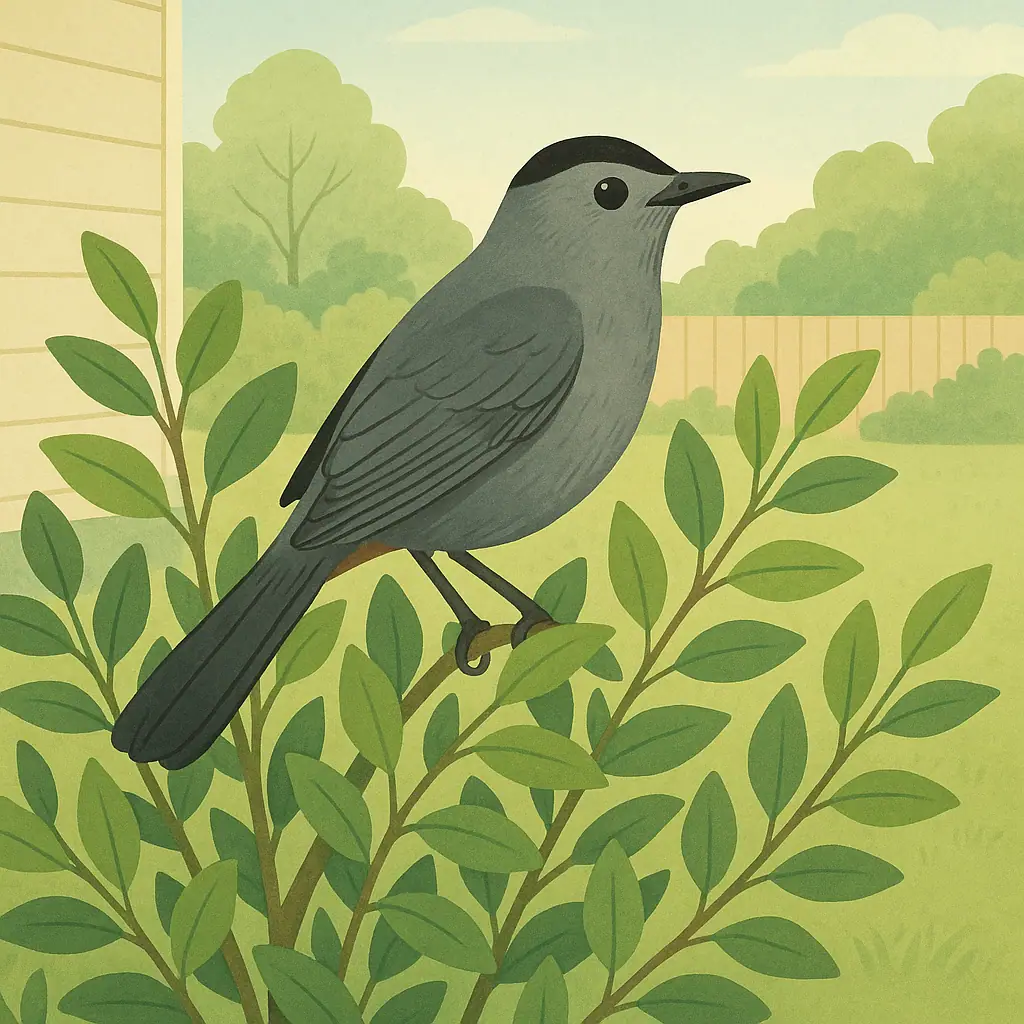
If the plumage details feel hard to catch at first, step back and study the general look. A Gray Catbird is a slim, medium-sized songbird with a long tail and a steady, alert posture. It does not have the chunky feel of a dove or the tiny, compact shape of a chickadee.
This is a helpful moment to borrow the broad-shape habit from BirdPeep's guide to identifying birds by shape before color. When you notice the catbird's length, tail, and smooth gray appearance first, the finer details become less overwhelming.
- Long tail: the tail often stands out even when the body is partly hidden by leaves.
- Smooth gray body: the bird usually looks soft slate-gray rather than boldly patterned.
- Slender build: it feels trim and agile, especially when moving through dense shrubs.
- Dark cap: the top of the head often looks darker than the rest of the bird.
Use the Dark Cap and Rusty Undertail as Your Best Visual Clues
For many beginners, the two easiest visual clues are the dark cap and the rusty area under the tail. You may not see both on every look, but when you do, they are extremely helpful. The cap can show even in partial shade, while the warm undertail color often flashes when the bird lands, turns, or lifts its tail.
If you enjoy comparing shy birds, BirdPeep's article on Brown Thrashers offers a useful contrast. A thrasher is warmer brown and much more boldly patterned, while a catbird usually looks smoother, grayer, and less busy overall.
Do not wait for a perfect side profile
A quick turn, tail flick, or half-open landing can be enough. Many good backyard identifications begin with one short but clear flash of a key field mark.
Light changes the gray more than beginners expect
In bright sun the bird may look paler, and in shade it can appear darker and more uniform. That is normal, so rely on the cap, undertail, and shape together instead of forcing one single clue to do all the work.
The Meowing Call and Mixed Song Can Confirm the Bird
The name Gray Catbird comes from its famous mewing call, and that sound is one of the kindest clues for beginners. You do not need to become an expert in bird songs overnight. Just learning that one voice can make the species much easier to remember.
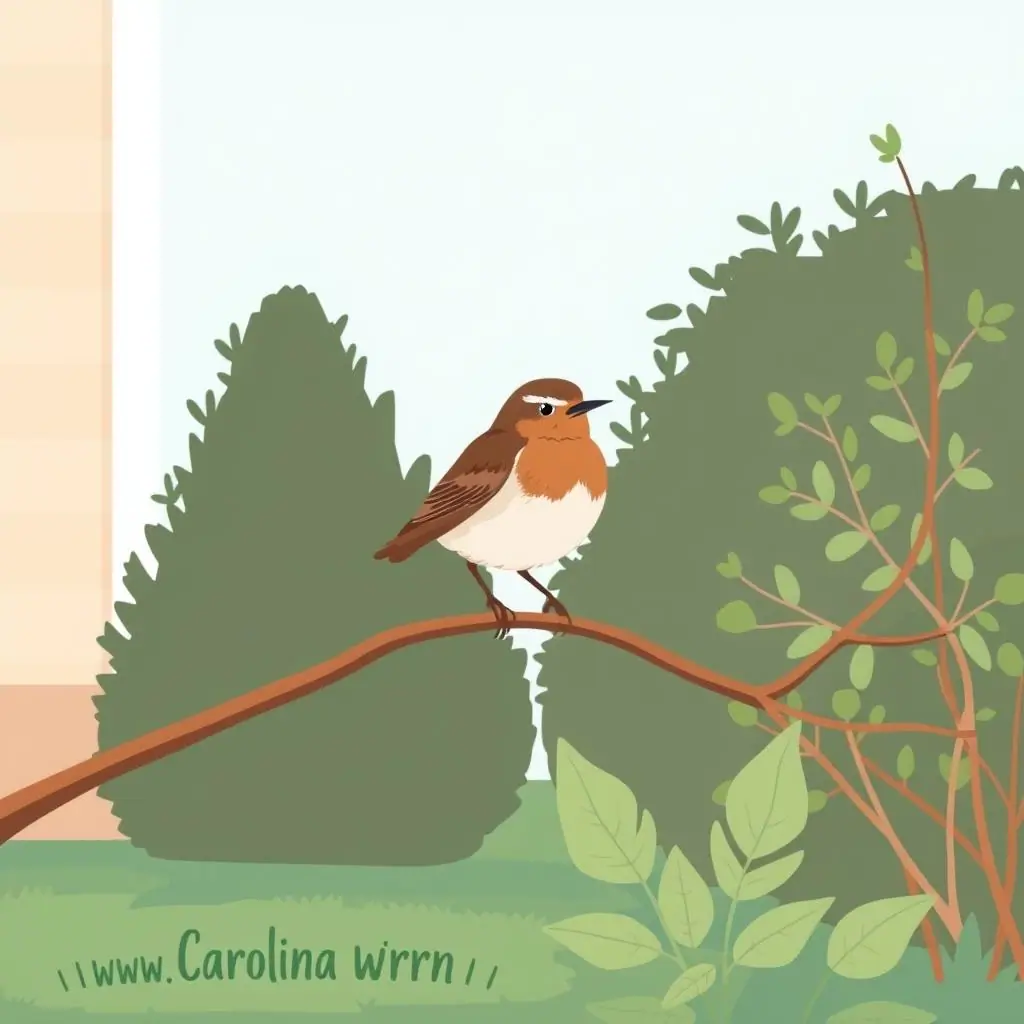
Gray Catbirds also sing longer, varied songs that can sound rich, improvised, and full of copied notes. If you have already enjoyed BirdPeep's piece on Carolina Wrens, this is a nice reminder that different backyard birds can be memorable for very different reasons. A wren often sounds bold and ringing, while a catbird can feel more chatty, secretive, and mixed in style.
Where Gray Catbirds Spend Their Time in a Backyard
A Gray Catbird is not usually the bird you watch marching across the lawn or sitting high on a bare feeder pole. It often prefers edges where cover is close at hand. Shrub lines, berry bushes, vine tangles, and lightly messy corners of the yard can all feel more promising than wide-open spaces.
This is one reason the species pairs nicely with BirdPeep's guide to creating a quiet corner that makes birds feel safe. Yards with layered cover tend to feel friendlier to birds that like to move in and out of shelter instead of staying exposed.
- Check dense shrubs: catbirds often hop just inside the leafy edge instead of sitting in the middle of the open.
- Watch berry-producing plants: fruiting shrubs can become productive places to wait quietly.
- Look near brushy borders: fence lines, hedges, and vine tangles often hold hidden movement.
- Stay patient at one spot: a catbird may reappear several times in the same small area.
Gray Catbird vs Other Familiar Backyard Birds
Comparison is often what turns uncertainty into clarity. A Gray Catbird is slimmer and grayer than a Brown Thrasher, less upright and less openly perched than a Northern Mockingbird, and longer-tailed than many common feeder birds. It can look plain at first, but that plainness is part of the pattern.
If you compare it with BirdPeep's article on Song Sparrows, the difference in body shape becomes especially clear. Sparrows usually feel shorter-tailed, smaller-billed, and more compact, while a catbird looks longer, smoother, and more shrub-gliding than ground-hopping.
- Compared with Brown Thrashers: Gray Catbirds look cooler gray and less heavily patterned.
- Compared with mockingbirds: catbirds are often shyer and spend more time tucked into cover.
- Compared with sparrows: catbirds have a longer tail and a more elongated overall shape.
- Compared with wrens: catbirds are larger, smoother colored, and less compact.
Pros and Cons of Using Voice and Behavior First
It helps during brief sightings
A mewing call, long tail, and shrub-loving behavior can be noticed quickly, even when the bird does not stay fully visible.
It reduces beginner pressure
You do not need to catch every feather detail if the voice and overall style already point strongly in one direction.
It fits ordinary backyard watching
You can practice this approach from a porch, patio, or kitchen window while focusing on one hedge or shrub line.
The bird may stay hidden for long stretches
Gray Catbirds often use cover well, so some sightings remain partial and require patience.
The gray plumage can look plain in poor light
Without the cap, undertail, or voice, beginners may need another look before they feel fully confident.
A Simple Gray Catbird Identification Checklist
Use this checklist the next time a quiet singer slips through shrubs in your yard.
- Check the shape: does the bird look slim and medium-sized with a long tail?
- Check the color impression: does it look mostly smooth gray rather than strongly streaked or spotted?
- Check the head: can you see a darker cap on top?
- Check the undertail: is there a rusty or warm chestnut flash beneath the tail?
- Check the sound: did you hear a catlike mew or a varied, improvised song?
- Check the setting: is the bird using shrubs, hedges, or leafy edges instead of wide-open ground?
Frequently Asked Questions
Why is it called a Gray Catbird?
It is named for its catlike mewing call, which is often one of the easiest clues for beginners to remember.
What is the easiest visual clue if I only get a quick look?
Many beginners find the dark cap and the rusty undertail area the most helpful quick visual markers.
Do Gray Catbirds stay out in the open for long?
Often no. They usually prefer shrubs, edges, and cover, so patience matters more than chasing the bird around the yard.
Can I identify one without hearing the call?
Yes. Shape, smooth gray color, a darker cap, the rusty undertail, and shy shrub behavior can still make a strong identification.
Final Thoughts
Gray catbird identification becomes much calmer once you stop waiting for a dramatic, wide-open view. This is often a bird of hedges, half-seen turns, and short but memorable clues.
Watch for the slim gray shape, the dark cap, the rusty undertail, and that unmistakable mew. With those markers in mind, the next quiet singer in your shrubs may feel less like a mystery and more like a satisfying backyard discovery.