A guided bird walk can sound a little intimidating when you have only watched birds from a porch, kitchen window, or feeder. You may wonder whether the group will move too fast, whether everyone else will already know every bird call, or whether you will slow people down by asking basic questions. Those worries are common, especially for older beginners who want to enjoy birds without turning a morning outside into a race.
The good news is that a guided bird walk for beginners usually works best when you treat it as a calm learning outing, not a performance. You do not need to spot the most birds, memorize every name, or keep up with the quickest person in the group. You only need a comfortable pace, a little preparation, and the confidence to notice what you can notice today.
Why a Guided Bird Walk Can Feel Easier Than Birding Alone
Many beginners imagine a guided walk as a fast-moving group full of experts. In reality, many public walks are designed to welcome curious newcomers. Audubon's guide on how to start birding encourages beginners to build observation skills gradually and to think about safety for both people and birds, which fits the spirit of a relaxed first outing.
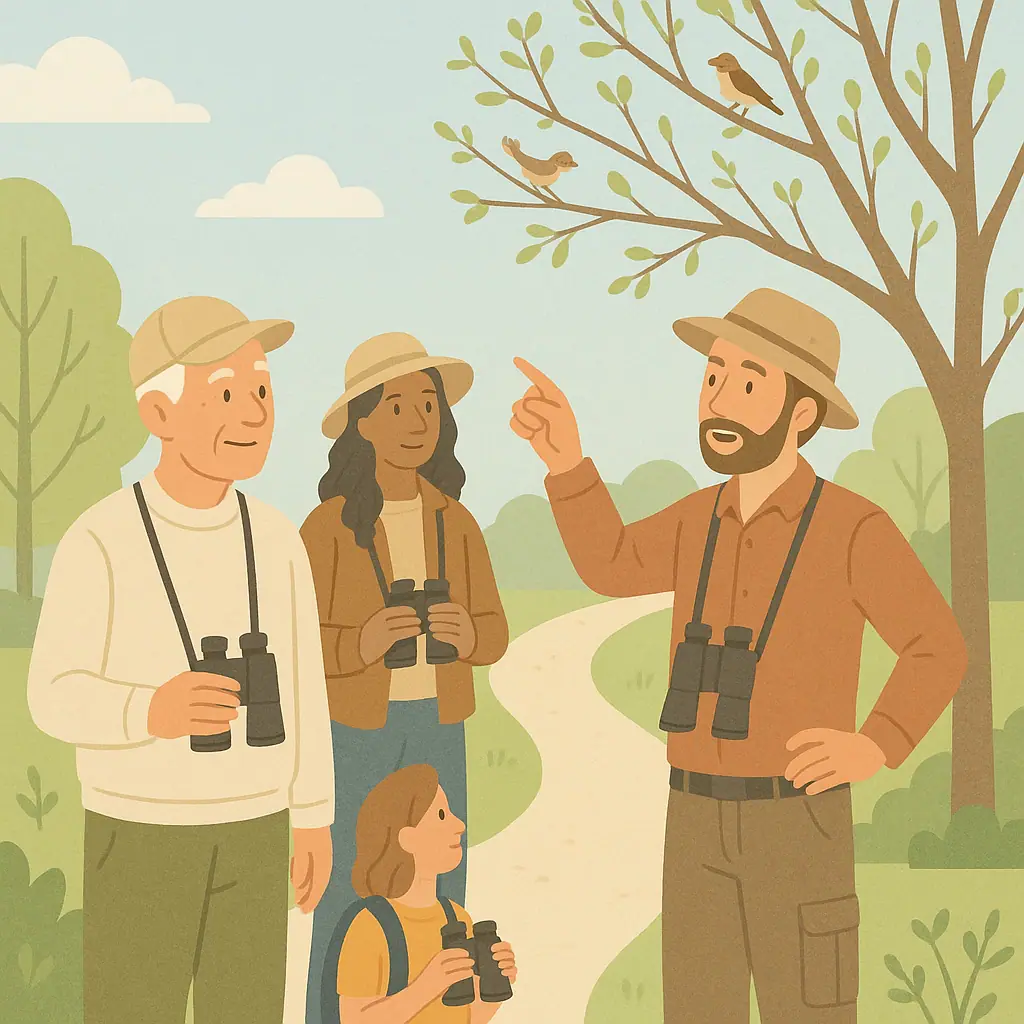
A walk leader often helps by pointing out movement, shape, habitat, and bird behavior before worrying about difficult identification. That takes pressure off you. Instead of scanning every branch alone, you can learn how to follow someone else's calm cues and develop your own rhythm.
You get help noticing the right things
A guide may say, "Look at the top of the dead snag," or "Watch the bird pumping its tail near the path edge." Those small hints make birdwatching feel more manageable because they narrow your attention to one useful clue at a time.
You do not have to know everything before you arrive
A first guided walk is a place to learn simple habits: how to pause when the group stops, how to listen before moving, and how to ask where the bird was instead of pretending you already saw it. If you want another low-pressure way to practice being out with other birders, BirdPeep's post on your first local bird festival can help you picture how beginner-friendly public bird events often feel.
What to Do Before the Walk So You Feel Less Rushed
The easiest way to keep up without rushing is to remove as many little stresses as possible before the walk begins. You do not need elaborate gear. You need comfort, clarity, and enough margin that one small delay does not make you feel behind from the start.
- Ask about the route: if the event page lists distance, trail surface, benches, or restroom access, read it ahead of time. If it does not, it is perfectly fine to ask.
- Arrive a little early: ten or fifteen quiet minutes can help you park, settle your breathing, and meet the leader before the group starts moving.
- Dress for comfort, not style points: choose shoes you trust, a hat if the sun bothers you, and layers you can adjust easily.
- Carry only what you will really use: water, binoculars if you have them, and perhaps a small notebook. Too much gear often creates more fumbling than confidence.
- Set one simple goal: maybe you want to follow the leader's spotting cues better, notice three birds by behavior, or simply finish the outing feeling comfortable.
If you prefer to prepare with a simple comfort checklist, BirdPeep's article on a comfortable half-day birding outing gives a practical way to think about water, shade, medication, and other small details that make longer outings easier.
How to Keep Up Without Trying to Match the Fastest Person
Groups almost always have a range of energy levels. The trick is not to mirror the quickest walker. It is to stay connected to the leader, listen for instructions, and keep your own movements smooth instead of hurried.
Choose a place in the group where you can hear the leader without feeling boxed in. Many beginners do well near the front-middle or middle of the group. That spot is often close enough to hear what is being pointed out but not so close that you feel on display every time you need an extra second.
Use pauses well
When the group stops, stop fully. Look where people are looking, then scan a little wider. Many beginners waste energy by continuing to shuffle around when the best chance to find the bird is simply to stand still and follow one clear direction at a time.
Let the bird come to you mentally
Instead of whipping your binoculars around, first find the branch, stump, feeder, or patch of reeds with your naked eyes. Then lift your binoculars. This slows you down in a useful way and often helps you find the bird sooner.
Birding Etiquette That Helps Everyone Enjoy the Walk
Polite group habits make a guided bird walk feel calmer for everyone. The American Birding Association's Code of Birding Ethics emphasizes minimizing disturbance to birds and habitat, which is especially helpful to remember when a group becomes excited about one good sighting.
That usually means staying on the path when asked, keeping voices low around close birds, and avoiding the urge to push ahead for a better angle. It also means giving nesting birds extra space and not pressuring a leader to get closer when the bird is already visible from a respectful distance.
- Listen before stepping off: if the guide asks the group to hold back, there is usually a bird-safety or habitat reason.
- Keep questions short when the bird is active: longer conversations can wait until the flock moves on.
- Share sightings kindly: a simple "sparrow on the fence to the left of the bench" helps everyone more than pointing vaguely.
- Do not worry about seeing every bird: groups often have a few quick sightings that only part of the line catches.
If you enjoy more relaxed community outings, BirdPeep's guide to planning a gentle birding morning with a friend can help you practice the same patient rhythm on a smaller scale before joining another group walk.
What to Ask the Leader Before the Walk Starts
A brief question or two before the group moves can save you from a lot of unnecessary worry. You are not being difficult by asking. You are helping yourself enjoy the outing in a realistic way.
- Ask about pace: "Is this more of a steady walk or a stop-and-look walk?"
- Ask about footing: "Are there any steep spots, roots, or wet areas I should know about?"
- Ask whether it is okay to stay near the back or middle: most leaders will gladly suggest a spot where you can still hear well.
- Ask about breaks: even knowing whether the group usually pauses at benches or overlooks can help you relax.
Those questions are especially useful if your birdwatching beyond the backyard is still new. BirdPeep's article on birding boardwalks for beginners also shows why flat, predictable routes often make the first outings more comfortable.
Pros and Cons of Joining a Guided Bird Walk First
You learn from other people's eyes and ears
A guide and a small group can help you notice birds, sounds, and behaviors you would probably miss on your own.
You get structure without having to plan everything
The route, timing, and birding focus are usually already chosen, which lowers decision fatigue for beginners.
You can build confidence in a real outdoor setting
A successful first walk often turns beyond-backyard birding into something that feels welcoming rather than complicated.
The group's pace may not match yours perfectly
Even friendly beginner walks can occasionally move faster than your ideal rhythm, especially between birding stops.
You may miss a few quick sightings
That is normal in group birding, and it can feel disappointing until you remember the outing is still teaching useful habits.
A Simple Checklist for Your First Guided Bird Walk
Keep the first outing as light and repeatable as possible.
- Read the event description: check distance, start time, and surface if those details are provided.
- Arrive early enough to settle in: give yourself a few unhurried minutes before the group begins.
- Carry only what helps: water, binoculars, and one or two comfort essentials.
- Choose a hearing-friendly place in the group: close enough to catch directions without feeling crowded.
- Ask one practical question before the start: pace, footing, or where to stand are all fair questions.
- Focus on learning, not collecting: one clear sighting and one new habit are enough for a successful first walk.
When to Get Extra Help
If the first walk feels too fast, too long, or too crowded, that does not mean guided birding is not for you. It may simply mean you need a different kind of event. Some walks are better for true beginners than others. Smaller groups, boardwalk routes, senior-center outings, refuge programs, or short bird-and-coffee mornings may be a better fit.
If you are unsure where to go next, ask the leader whether they know of a slower walk, a more accessible route, or a recurring beginner event. Many birding organizations are happy to point newcomers toward a setting that feels more comfortable.
Frequently Asked Questions
Do I need binoculars for my first guided bird walk?
No. Binoculars help, but many leaders can still help you learn by pointing out shape, movement, habitat, and obvious field marks with the naked eye first.
What if I cannot keep up with the group?
Ask about pace before the walk starts and stay where you can hear the leader well. If a walk still feels too fast, look for a shorter or more beginner-focused outing next time.
Is it rude to ask the leader to point the bird out again?
Not at all. Calm, specific questions are part of beginner birding, and most leaders expect to repeat directions when a sighting is brief.
Should I join another guided walk if I missed a lot on the first one?
Yes. The first outing often teaches pace and attention more than species names. A second walk usually feels much easier because the group rhythm is more familiar.
Final Thoughts
Your first guided bird walk does not have to feel like a test. If you arrive with a little time, ask one or two practical questions, and let yourself move at a steady pace, you can learn a great deal without rushing.
The real success is not whether you saw the most birds. It is whether you came home feeling calmer, more observant, and a little more ready to step beyond the backyard again. That is a wonderful beginning.