Starting a nature journal is one of the gentlest ways to become a better birder. You do not need artistic talent, fancy notebooks, or perfect handwriting. A bird journal simply gives your observations somewhere to land, so the robin on the fence or the chickadee at the feeder becomes more than a passing moment.
Nature-journaling educators such as John Muir Laws often describe the practice as a way to collect observations, questions, and connections. Audubon has also highlighted how nature journaling can make you a better birder because it slows you down enough to notice posture, behavior, weather, and habitat instead of only chasing names on a checklist.
📝 What Belongs in a Bird Journal
A bird journal is not a test. It is a record of what caught your eye. Some people write full paragraphs. Others prefer a few short notes, a date, and a tiny sketch. The important part is consistency, not polish.
In a beginner birding notebook, you might record the species, time of day, weather, where the bird was perched, what it was eating, and one small detail you do not want to forget. Over time, those notes reveal patterns you would never notice from memory alone.
Easy things to record
- Date and weather: Light rain, frost, wind, or sudden warmth can change bird activity.
- Behavior: Was the bird singing, feeding, bathing, chasing, or carrying nesting material?
- Questions: Writing “Why was that finch so quiet today?” keeps curiosity alive.
🎒 Simple Supplies That Make Journaling Easy
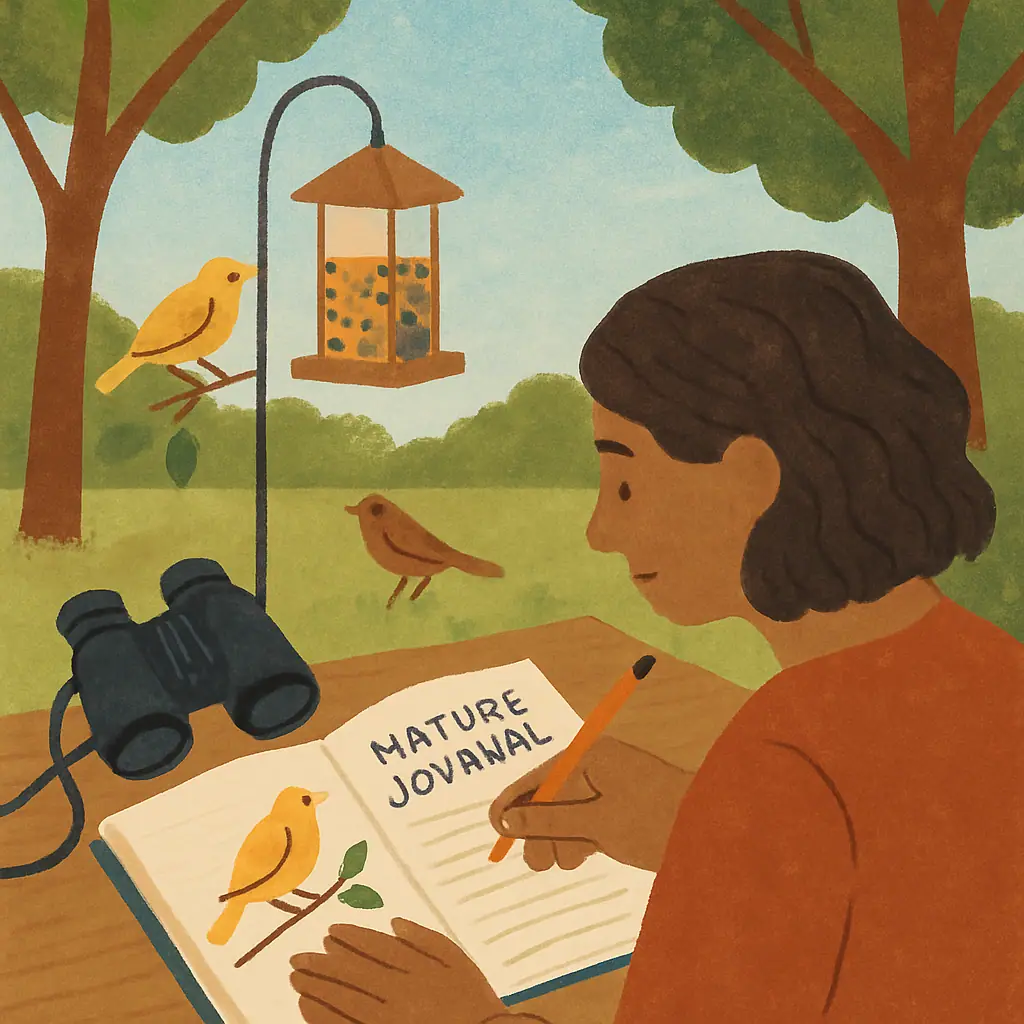
You can begin with a spiral notebook and any pen that feels comfortable in your hand. Some birders like a hard-cover notebook for outdoor walks. Others keep a small birding notebook on the kitchen table so they can jot quick feeder observations after breakfast.
Helpful but optional extras
- Colored pencil: Useful for quick notes about bill color, wing bars, or seasonal plumage.
- Binoculars nearby: A closer look often gives you one memorable detail to record.
- A dedicated sitting spot: A porch chair or window seat encourages regular journaling.
👀 How Journaling Makes You a Better Birder
When you write things down, you move from casual looking to deliberate observation. That shift helps beginners notice shape, behavior, and timing instead of relying only on color. It also builds memory. A bird you journaled last month is easier to recognize when it returns next week.
Many people also find that journaling deepens the emotional side of birdwatching. The habit creates a quieter pace. A simple note like “first cardinal song after snow” can hold a surprising amount of meaning on an ordinary morning.
🌳 A Gentle Routine for Daily or Weekly Entries
You do not have to journal every sighting. A short, realistic rhythm works better than a perfect plan you abandon in a week.
- Daily option: Write down one bird, one behavior, and one question.
- Weekly option: Choose your most memorable sighting and describe it in a few sentences.
- Monthly option: Review your notes to see what changed with weather, migration, or feeder activity.
Sharpens observation
Writing and sketching train you to notice field marks, movement, and habitat with more care.
Builds lasting memories
A bird journal turns fleeting feeder visits into stories you can revisit across seasons.
Keeps wonder alive
Questions and small discoveries make even common backyard birds feel fresh again.
Waiting for perfect pages
If you think every entry must look polished, you may miss the joy of simple, honest observation.
Writing too much at once
Long entries can feel tiring. A few useful notes are often more sustainable than a full diary page.
❓ Frequently Asked Questions
Do I need to draw well to keep a nature journal?
No. Tiny sketches, arrows, color words, and simple shapes are enough. The goal is observation, not fine art.
What is the difference between a life list and a bird journal?
A life list tracks species you have seen. A bird journal records the story around those sightings, including behavior, weather, place, and your own questions.
How often should I write in my bird journal?
As often as feels sustainable. Even one thoughtful entry each week can improve your memory and observation over time.
Can a nature journal help with bird identification?
Yes. Notes about bill shape, movement, song, and habitat often help more than color alone when you look back later.
🌤️ Final Thoughts
A nature journal turns birdwatching into a more personal practice. Instead of letting each sighting drift away, you keep a quiet record of wonder, questions, and seasonal change right beside your daily life.