Your first local bird festival can sound bigger and more intimidating than it really is. The name may suggest expert birders with expensive optics, long species lists, and very early mornings, but many festivals are simply friendly gatherings built around walks, talks, booths, and shared enthusiasm for birds.
For a beginner, that can be wonderful news. A local bird festival gives you a chance to see how other people watch birds, ask questions without pressure, and enjoy a day that feels more like a nature fair than a test. You do not have to know every song, own special gear, or keep up with the most energetic person on the trail.
Why a Local Bird Festival Can Be a Great First Step
A bird festival can make birdwatching feel less solitary and more approachable. Instead of trying to figure everything out alone, you get to see what guided walks look like, what questions beginners actually ask, and how experienced birders move through a habitat without rushing it.
Audubon notes in its article How To Meet Other Birders that birding festivals commonly include field trips, speakers, vendors, workshops, and social events. That is useful beginner context because it shows these gatherings are usually built for many comfort levels, not just for advanced birders chasing rare sightings.
It gives you a clearer picture of the hobby
Reading about birdwatching is helpful, but seeing a room full of people comparing field guides, sharing sightings, and swapping local tips makes the hobby feel real in a different way. You may discover that birdwatching can be social, quiet, educational, or all three at once.
It lowers the pressure to perform
At a good beginner-friendly event, nobody expects you to know everything. In fact, your first festival is a fine place to say, "I mostly watch from my yard," or "I am just learning common birds." That honesty usually opens the door to better conversation, not embarrassment.
What You Can Expect When You Arrive
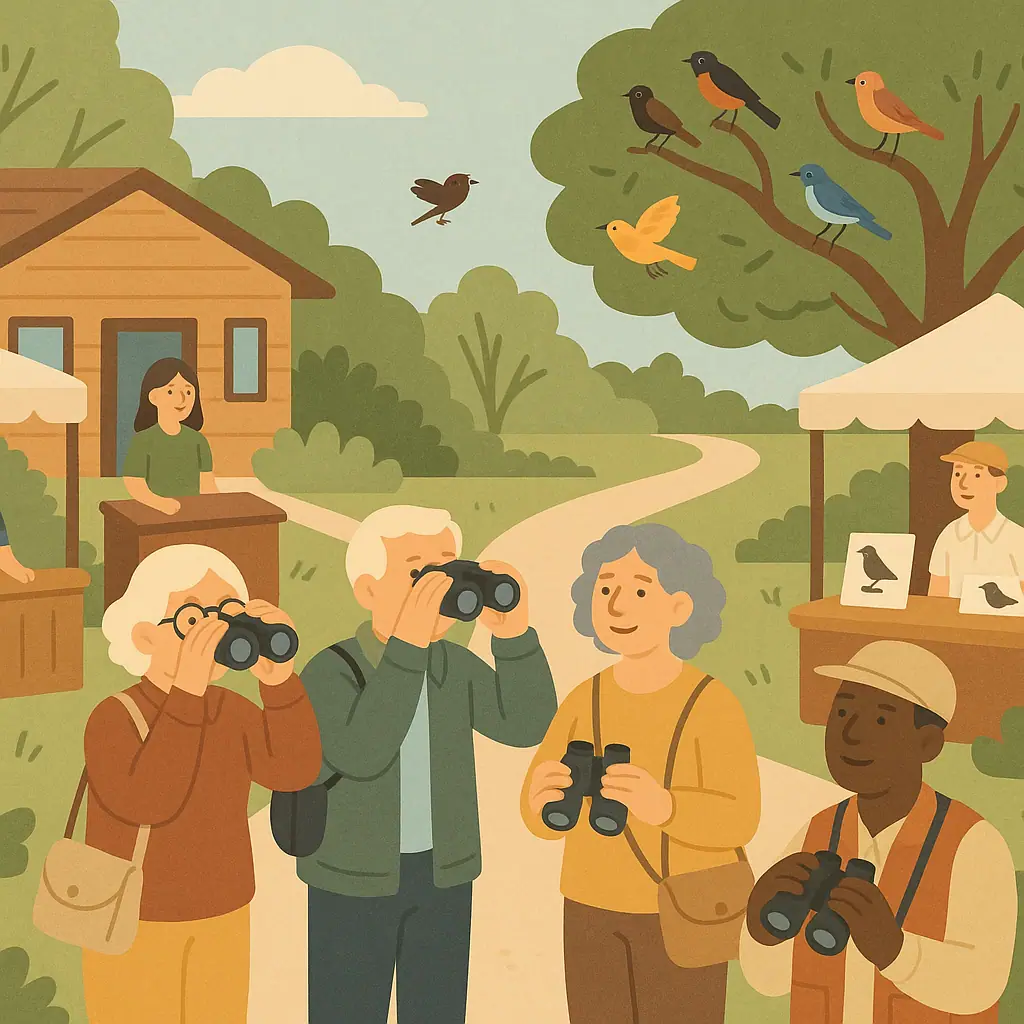
Most local bird festivals have a home base such as a nature center, park lodge, visitor center, refuge building, or community venue. You may check in at a table, receive a schedule, choose one or two activities, and then decide how active or relaxed you want the day to be.
Expect a mix of movement and downtime. Some people go straight to an early walk. Others browse booths, listen to a short talk, or sit with coffee and study a map. If that variety appeals to you, BirdPeep's guide to joining your local birding community can help you see the festival as one gentle doorway into a larger local network.
- Check-in area: Usually the place for schedules, wristbands, maps, trip lists, or last-minute updates.
- Guided walks: Often grouped by habitat, duration, or transportation needs.
- Indoor talks: These may cover bird ID, migration, local hotspots, photography, habitat, or conservation.
- Vendor or organization tables: You might see optics companies, Audubon chapters, refuge friends groups, native plant groups, or nature artists.
- Casual social spaces: Many festivals have a snack area, picnic space, or quiet corner where conversations happen naturally.
How to Prepare Without Overpacking
Your first festival is not the day to carry everything you own. Comfort matters more than gear. Bring what helps you pay attention, stay steady on your feet, and manage weather changes without stress.
If the festival includes a short trail or optional outing, think in the same calm way you would for BirdPeep's article on easy birding trails for seniors: dress for the conditions, protect your energy, and choose the route that suits your body rather than the route with the biggest promise.
- Binoculars if you already use them: Bring them, but do not worry if you are still learning.
- Comfortable shoes: Many festivals mix pavement, grass, gravel, and short nature paths.
- Water and a light snack: Even a short event feels easier when you are not running low on energy.
- Hat, sunscreen, or light layer: Outdoor events can shift quickly between cool shade and bright sun.
- Simple notebook or phone notes: Jot down bird names, speaker tips, or places you want to revisit later.
- Any personal comfort items: Medication, walking stick, seat cushion, or small folding stool if that helps you stay longer.
What Guided Walks Usually Feel Like
Guided walks are often the part beginners worry about most, yet they can be the easiest piece to enjoy. A leader usually points out birds, pauses often, and explains what people are hearing or seeing. You are not expected to keep a perfect list or spot every bird first.
The Cornell Lab of Ornithology visitor programs page lists regular Beginner Bird Walks led by local bird club members, with a simple reminder to bring binoculars and dress for the weather. That kind of structure is a good model for what a beginner-friendly festival walk often feels like: guided, welcoming, practical, and focused on observation rather than performance.
Ask where the walk starts and how long it lasts
A short walk may be the best first choice, especially if you are unsure about pace, footing, or weather. It is perfectly acceptable to choose the easiest outing and spend the rest of your time at talks or booths.
Stand where you can hear the leader
You do not need to be at the front of the line all the time, but try to stay close enough to hear what direction the leader is pointing and what clues they are using. A calm explanation of shape, movement, or habitat is often more valuable than one quick look through binoculars.
How to Enjoy Talks, Booths, and the Vendor Area
Indoor talks and display tables can be the quiet heart of a festival. If you feel shy on walks, spend more time here. You can learn about local migration, nesting habitats, native plants, field guides, and upcoming bird walks without worrying about trail pace.
Booths are also useful because they show you what matters in the local birding community. One group may focus on habitat restoration, another on bird-friendly yards, and another on organized outings. That gives you options for how to stay involved after the festival ends.
If you want a gentle next outing after the festival, BirdPeep's guide to visiting a wildlife refuge for the first time is a good follow-up because it carries the same beginner mindset into a quieter setting.
Simple Festival Etiquette for Beginners
Bird festival etiquette is mostly the same as good everyday birdwatching etiquette, just with more people around. Move quietly, respect space, and remember that everyone sees and hears birds a little differently.
- Arrive a little early: It is easier to settle in before a walk or talk begins than to join while the group is moving.
- Ask simple questions: "What did you hear?" or "Where should I look?" works better than pretending you understood everything.
- Keep voices low on walks: Soft conversation is fine, but loud chatter can spoil the moment for both birds and people.
- Do not crowd the scope: If someone shares a spotting scope view, take a look, thank them, and step aside for the next person.
- Respect the habitat: Stay on paths, obey signs, and do not push closer to a bird that is already being watched from a distance.
- Leave room for your own pace: It is fine to skip a crowded outing and choose a quieter one.
Pros and Cons of Going to a Bird Festival First
You can learn from real people in real time
Festival leaders and attendees often explain birds, locations, and habits in a way that feels more personal than reading alone.
You get several beginner options in one place
Walks, talks, booths, and social spaces let you choose the style of birding that feels most comfortable.
It can build confidence fast
Even one pleasant outing or conversation can make your next local walk or refuge visit feel much easier.
Schedules can feel busy at first
A full event program may look overwhelming until you remember you only need to choose one or two things well.
Group pace may not fit everyone
Some walks move faster than you like, which is why it helps to choose shorter, easier outings when possible.
A Simple First-Festival Checklist
Use this quick checklist before you leave home or while you are standing in the parking lot.
- One realistic goal: Pick one walk, one talk, or one skill you want to learn.
- Weather checked: Dress for sun, wind, or light rain rather than hoping the day stays perfect.
- Comfort packed: Bring water, shoes you trust, and any items that help you stay steady and relaxed.
- Questions ready: Think of one or two simple things to ask a leader or volunteer.
- Exit plan allowed: Give yourself permission to leave early if you are tired or overstimulated.
- Next step noted: Write down one club, place, or future event you may want to try later.
When to Ask for Extra Help or Verification
If you are unsure whether a walk is wheelchair-friendly, bench-friendly, restroom-close, or suitable for limited mobility, ask before you commit. Festival volunteers are usually happy to tell you which outings are easiest, shortest, or most accessible.
If a speaker mentions a local rule, access limit, or current birding condition, verify it with the festival organizer, park staff, refuge website, or local birding group before making plans around it later. Details such as trail closures, parking rules, or special access schedules can change.
Frequently Asked Questions
Do I need binoculars for my first local bird festival?
No. They help, but many beginners attend talks, browse booths, or join easy walks before they feel fully comfortable using binoculars. If you have a pair, bring them. If not, you can still learn a lot.
What if I do not know enough to join a guided walk?
That is exactly why guided walks exist. Choose a short one, stay where you can hear the leader, and ask simple questions. You are there to learn, not to impress anyone.
Should I try to attend every activity?
No. Most beginners enjoy a festival more when they choose a small number of activities and leave time to rest, look around, and absorb what they learned.
What is the best way to keep the experience from feeling overwhelming?
Treat the festival like a sampler, not a final exam. One walk, one talk, one good conversation, and one bird you remember clearly is already a successful day.
Final Thoughts
Your first local bird festival does not have to turn you into an expert birder. It only has to show you that birdwatching can be shared, welcoming, and enjoyable beyond your own yard.
Go in with modest expectations, choose the gentlest parts first, and pay attention to what leaves you curious. That may be a guided walk, a talk on local birds, a conversation at a community table, or simply the feeling of seeing other people light up when a bird appears. That is enough for a very good first festival.