Easy birding trails for seniors can make birdwatching feel peaceful instead of tiring. The right trail does not have to be famous, rugged, or far from home. It simply needs to give you birds, comfort, safety, and a way to turn around before your knees start complaining.
For many beginners, the best birding walk is really a gentle sit-and-stroll. You may walk a short loop, pause on a bench, listen near a pond, and watch the edges of shrubs where birds come and go. That kind of outing can be just as rewarding as a long hike.
If you are planning your first trip away from the yard, our guide to planning your first birding day trip pairs nicely with this trail checklist.
Why Easy Birding Trails for Seniors Are Different
A good birding trail is not only about the birds. It is also about how steady the path feels underfoot, whether there is shade, how far the restroom is, and whether you can stop without blocking other visitors.
Birdability's accessibility guidance reminds birders to look beyond a simple label like accessible and consider details such as distance, surface, signage, transit, parking, benches, and real trail conditions. Their access considerations for birding locations are especially useful when you are deciding whether a place fits your own comfort level.
Start with Short, Flat, and Predictable Routes
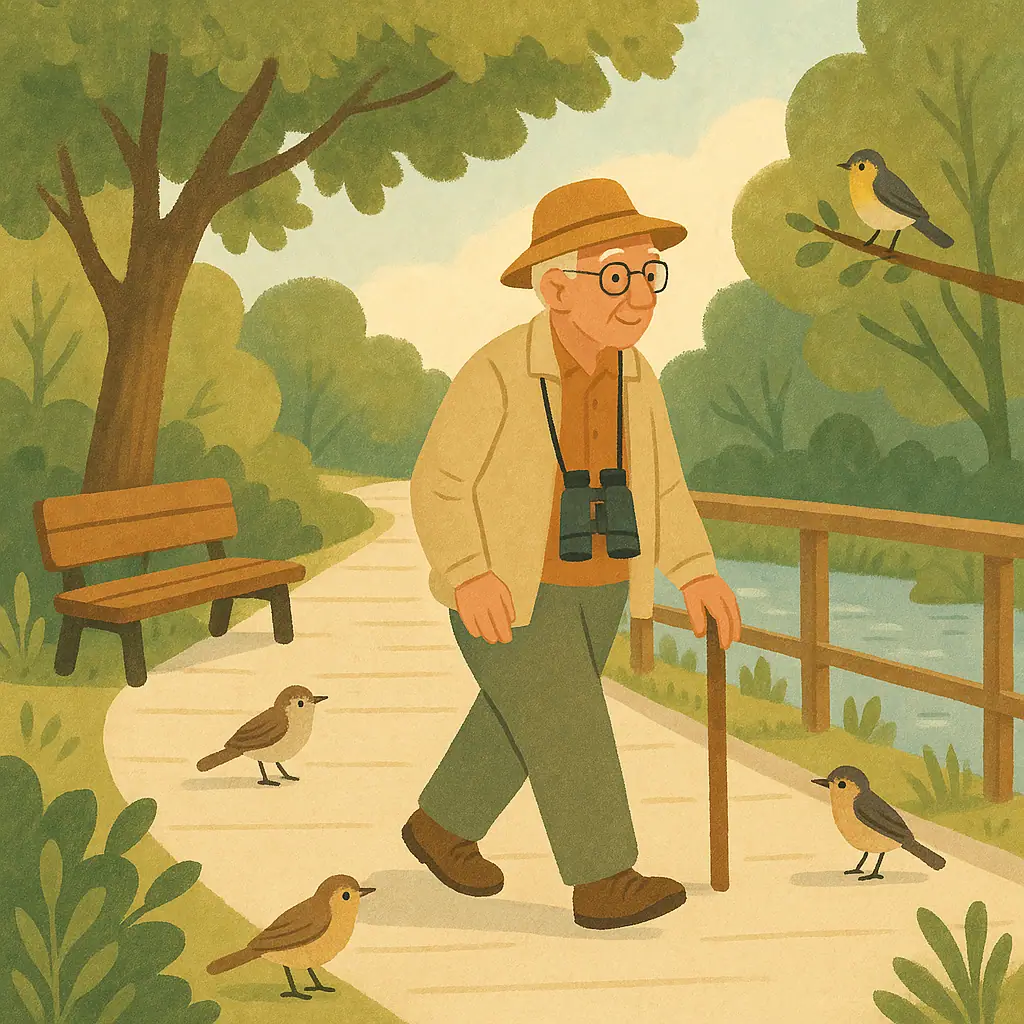
The easiest trail to enjoy is usually the one with a clear beginning, a clear end, and no surprises. Look for park paths, nature center loops, wildlife refuge auto loops with short overlooks, paved greenways, and boardwalks through wetlands.
The National Park Service notes that birding can be low-cost and can happen almost anywhere, from backyards to parks. Their birding for beginners guide is a helpful reminder that the hobby should meet you where you are, rather than pushing you into difficult terrain.
Trail features that make a walk easier
- Flat or gently graded surface: paved paths, packed gravel, and smooth boardwalks are often easier than rooty woodland trails.
- Short distance options: choose places where you can enjoy birds within the first quarter mile.
- Benches or railings: resting spots turn the walk into a calm observation session.
- Shade and wind protection: trees, shelters, and covered overlooks make the outing more comfortable.
- Nearby restrooms: this can be the difference between a relaxing morning and a stressful one.
Before you leave, check a recent park map, call the visitor center if you are unsure, and ask about closures, construction, mud, steep sections, or long distances between benches.
Choose Bird Habitat That Works with Your Knees
The best easy birding trails often sit where two habitats meet. Edges between water and shrubs, woods and meadow, or lawn and brush can be very productive because birds move through them to feed, sing, and hide.
You do not need to cover every mile. Pick one or two good viewing spots and let the birds move through the scene. This is similar to the patient approach we use in watching birds from a kitchen window, just with a wider outdoor view.
Beginner-friendly places to look
- Wetland boardwalks: look for ducks, herons, swallows, red-winged blackbirds, and sparrows along reeds.
- Lake edges: benches near water can give you long views without much walking.
- Nature center gardens: native plants, feeders, and water often attract easy-to-see birds.
- Shaded woodland edges: listen for wrens, chickadees, woodpeckers, and robins.
- Wildlife refuge overlooks: many refuges offer observation decks, short paths, and car-friendly stops.
Use Accessibility Tools Before You Go
Maps and reviews are not perfect, but they can help you avoid unpleasant surprises. Look for photos of the path surface, notes about stairs, recent comments about washouts, and whether the route is a loop or out-and-back.
The Birdability Map is designed around birding locations and accessibility information. Even if there are not many reviewed sites near you yet, it can teach you what details to look for: surface, width, grade, benches, obstacles, parking, and restrooms.
It also helps to practice close to home first. Our first birdwatching walk checklist covers the simple items that keep a short outing comfortable, including water, sun protection, and a small notebook.
Less fatigue
Short, level routes let you spend more energy noticing birds and less energy worrying about the walk back.
Better observation
When you are comfortable, you can sit quietly and notice movement, song, shape, and behavior more clearly.
Easier repeat visits
A trail that feels manageable becomes a familiar place where you can learn seasonal patterns.
Information can be incomplete
Some websites say accessible without giving enough detail about benches, slope, shade, or surface quality.
Popular spots can get busy
Easy trails may have more walkers, dogs, bikes, or noise during peak hours.
A Simple Senior-Friendly Trail Checklist
Use this checklist before any new birding trail. It only takes a few minutes, and it can save you from choosing a route that looks lovely online but feels uncomfortable in person.
- Distance: can you enjoy birds without walking the full route?
- Surface: is it paved, boardwalk, packed gravel, grass, sand, or uneven dirt?
- Rest stops: are there benches, picnic tables, railings, or observation decks?
- Facilities: are restrooms open during the hours you plan to visit?
- Exit plan: can you turn around easily if weather, pain, or fatigue changes your plan?
- Birding promise: are there water edges, shrubs, feeders, meadows, or woods close to the path?
Go early if heat is a concern, but not so early that you feel rushed or unsafe. Tell someone where you are going, bring any medication you may need, and give yourself permission to stop after the first good bird.
Frequently Asked Questions
How long should an easy birding trail be for a first outing?
Start with a route where you can enjoy birds in 20 to 40 minutes. A short loop or out-and-back path is better than a long trail that pressures you to finish.
Are boardwalks always the best choice?
Boardwalks can be excellent because they are often level and close to wetlands, but check for railings, shade, slick boards after rain, and whether benches are available.
What if I use a cane, walker, or wheelchair?
Look for detailed accessibility notes, photos, surface descriptions, parking information, and recent visitor reviews. If possible, call the park or nature center before you go.
Can I birdwatch without walking much at all?
Yes. Overlooks, benches, visitor center gardens, refuge auto loops, and shaded picnic areas can all offer satisfying birdwatching with very little walking.
Final Thoughts
Finding easy birding trails for seniors is really about matching the place to your body, your pace, and your curiosity. The birds do not care whether you walked five miles or sat happily near a pond for half an hour.
Start with short, comfortable routes. Notice which surfaces feel best, which benches give you good views, and which places make you want to return. Over time, you will build a personal list of gentle birding spots that feel like old friends.