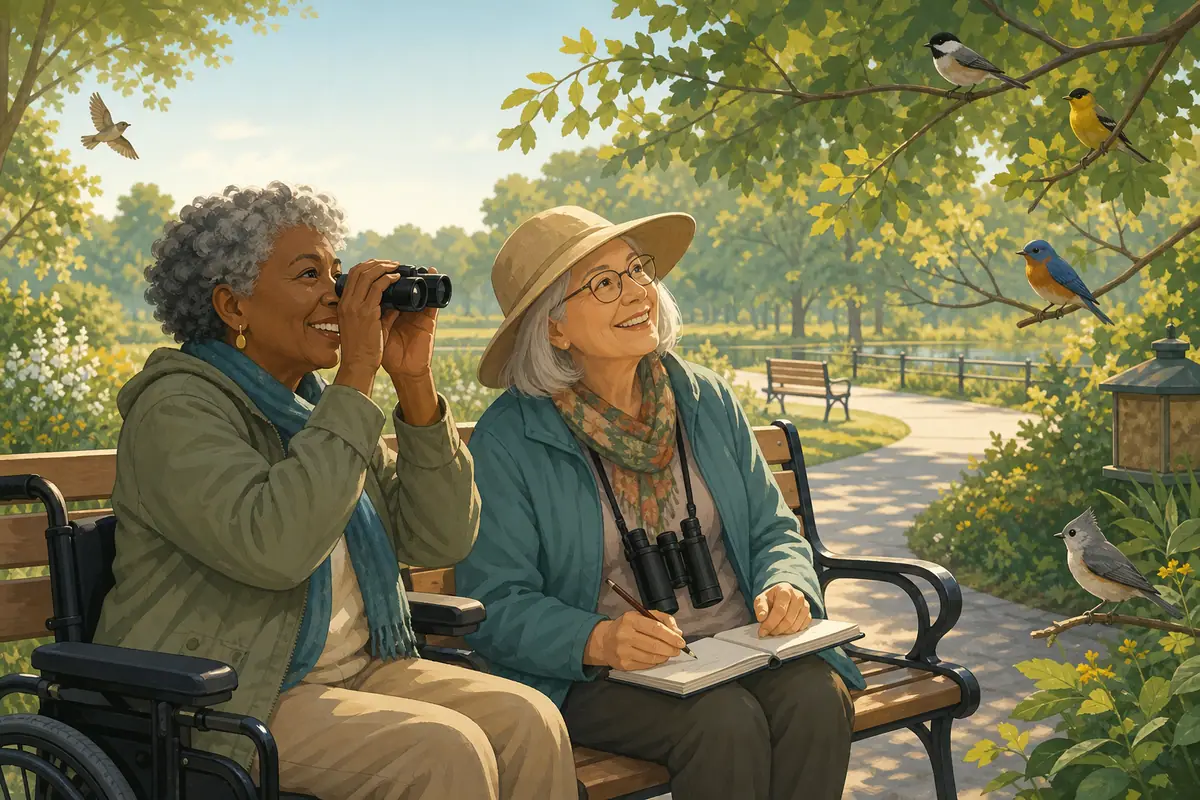
Birdwatching with friends can make an ordinary morning feel warmer. You have someone to notice movement with, someone to laugh with when a bird vanishes behind leaves, and someone to say, "Wait, look over there," at just the right moment.
It can also feel a little uncertain if you are used to watching birds alone. Will one person want to walk faster? Will the outing feel too formal? What if you do not identify many birds? A gentle birding morning solves that by keeping the plan small, comfortable, and low pressure.
Why Birdwatching with Friends Matters
Birdwatching with friends is not only about seeing more birds. It is about making the hobby easier to keep doing. A companion can help you slow down, compare notes, carry a small checklist, and feel more confident visiting a park, refuge, or trail.
Audubon's birding guide frames birding as noticing nearby birds in apartments, backyards, local parks, and lakes, and it describes birding as a source of joy and satisfaction. You do not have to turn a friendly morning into formal science, but that idea is useful: shared attention can make birding more meaningful and more memorable.
Keep the promise simple
Before you choose a destination, agree on what kind of morning you want. It might be a slow bench visit, a half-mile boardwalk, a short refuge drive, or a quiet stop near a pond. The promise is not "we will see rare birds." The promise is "we will enjoy watching together."
Choose a pace both people can enjoy
A good shared outing respects the slower pace. If one friend walks quickly and the other prefers to stop often, decide that stopping often is part of the plan. Birds are easier to notice when nobody feels rushed.
Start With an Easy Beyond-the-Backyard Spot
For a first social outing, choose a place that removes as many decisions as possible. Look for a park with benches, a short loop, a pond edge, a boardwalk, a visitor center, or an auto route. Restrooms, shade, parking, and predictable footing matter more than a long species list.
If walking is tiring, our guide to birdwatching from your car at parks and refuges gives a calm way to enjoy birds without turning the morning into an endurance test. That same idea works for two friends: stop, scan, talk softly, and move only when you are ready.
After you pick the place, check the weather and any official park or refuge updates. Trails can close, boardwalks can be slick, and visitor centers may have seasonal hours. A two-minute check before leaving home can prevent a frustrating start.
What to Check First Before You Go
A gentle plan starts with honest comfort questions. They may sound ordinary, but they shape the whole morning. Ask about walking distance, bathroom access, shade, medication timing, snack needs, and whether either person prefers quiet observation or more conversation.
For a fuller day-trip framework, BirdPeep's guide to planning your first birding day trip can help with route choice and preparation. For this friend-focused morning, keep the checklist even shorter.
- Distance: Choose a route both people can finish comfortably, even if energy runs low.
- Seating: Look for benches, picnic tables, overlooks, or places where you can pause without blocking a path.
- Weather: Morning sun, wind, heat, and rain all affect comfort, especially for older birdwatchers.
- Noise level: Pick a place where conversation can stay soft and birds still feel undisturbed.
- Exit plan: Decide ahead of time that turning back early is allowed.
How to Plan a Gentle Birding Morning Step by Step
Use this simple structure when you want the outing to feel easy rather than overplanned. It works for a neighborhood park, wildlife refuge, nature center, quiet cemetery, lake edge, or accessible trail.
- Pick one main place: Avoid trying three stops in one morning. One good location keeps the outing calm.
- Agree on a start time: Earlier mornings are often pleasant, but comfort matters more than perfect timing.
- Choose a short route: A bench, overlook, boardwalk, or half-loop is better than a long trail that creates pressure.
- Pack lightly: Bring water, a snack, any needed medication, sun protection, binoculars if you use them, and a small notebook.
- Share the noticing: One person can scan trees while the other watches water, fence lines, or shrubs.
- Use a shared list: Write down birds you know, birds you are unsure about, and one behavior that made you smile.
- Pause before moving on: Spend a few quiet minutes at each promising spot before deciding it is empty.
- End while it still feels good: Leave with energy left, not after both people are tired.
Common Mistakes to Avoid
The most common mistake is trying to make a friendly birding morning too impressive. Beginners do not need a famous hotspot, a dawn-to-noon schedule, or a long target list. They need a comfortable place where attention can settle.
- Choosing the hardest trail: A beautiful trail is not the right trail if it leaves one person tense or tired.
- Talking over every sound: Conversation is part of the fun, but leave quiet gaps so calls and movement can come through.
- Correcting too much: If your friend guesses the wrong bird, keep the tone kind. Learning together is better than performing expertise.
- Skipping comfort stops: Water, shade, bathrooms, and benches protect the mood of the outing.
- Expecting perfect identification: A shared "not sure yet" can be more honest and more enjoyable than a rushed guess.
Pros and Cons of Birdwatching with Friends
More eyes notice more movement
Two people can scan different directions, compare small details, and catch birds one person might miss alone.
The outing feels more encouraging
A friendly companion can make a new park, refuge, or trail feel less intimidating for a beginner.
Shared memories keep the hobby alive
Even a common robin or chickadee can become a story when two people notice it together.
Different paces can cause pressure
One person may want to walk farther while the other needs more pauses, so agreeing on a gentle pace matters.
Conversation can distract from birds
Talking is welcome, but too much steady chatter can cover soft calls or movement in nearby shrubs.
A Simple Friend-Birding Checklist
Use this short list before leaving home. It keeps the morning repeatable and prevents the little oversights that can make a calm plan feel harder.
- Place chosen: One easy location with parking, benches, shade, or a short route.
- Comfort confirmed: Water, snack, medication, layers, and restroom needs considered.
- Weather checked: Heat, wind, rain, and trail conditions reviewed before leaving.
- Shared goal named: Enjoy the morning, notice birds, and leave before fatigue sets in.
- List ready: Paper notebook, phone note, or simple checklist prepared for both confirmed and mystery birds.
- Quiet moments planned: Agree to pause silently now and then so birds have a chance to reveal themselves.
When to Get Extra Help
If neither of you knows where to go, ask a local nature center, park office, Audubon chapter, or birding club for a beginner-friendly route. Ask plain questions: Is there a short loop? Are there benches? Is the path level? Are restrooms open in the morning?
If the friend you are inviting prefers a very slow, reflective style, you may enjoy reading about the joy of slow birding before you go. It is a useful reminder that stillness, not distance, often creates the best birding moments.
Frequently Asked Questions
What should I check first when birdwatching with friends?
Check comfort first: walking distance, seating, restrooms, weather, and how long both people want to stay. A comfortable plan makes birding more enjoyable.
How often should we plan a birding morning together?
Once a month is a friendly starting rhythm. If you both enjoy it, try a short weekly walk or a seasonal visit to the same park to notice changes.
What if we are not sure which bird we saw?
Write down size, color, shape, behavior, sound, and where you saw it. You can check a field guide, app, or local birding group later without guessing in the moment.
Can we change the plan if the morning feels too tiring?
Yes. A gentle birding plan should be easy to adjust. Turn back early, switch to a bench, bird from the car, or save the longer route for another day.
Final Thoughts
Birdwatching with friends works best when the morning feels kind to both people. Choose a simple place, move slowly, leave room for quiet, and treat comfort as part of the birding experience.
You may come home with a long list, or you may come home with only one shared highlight: a woodpecker tapping from a dead branch, a goldfinch flashing over weeds, or a quiet laugh over a bird you could not quite name. That is enough. The real gift is learning to notice together.