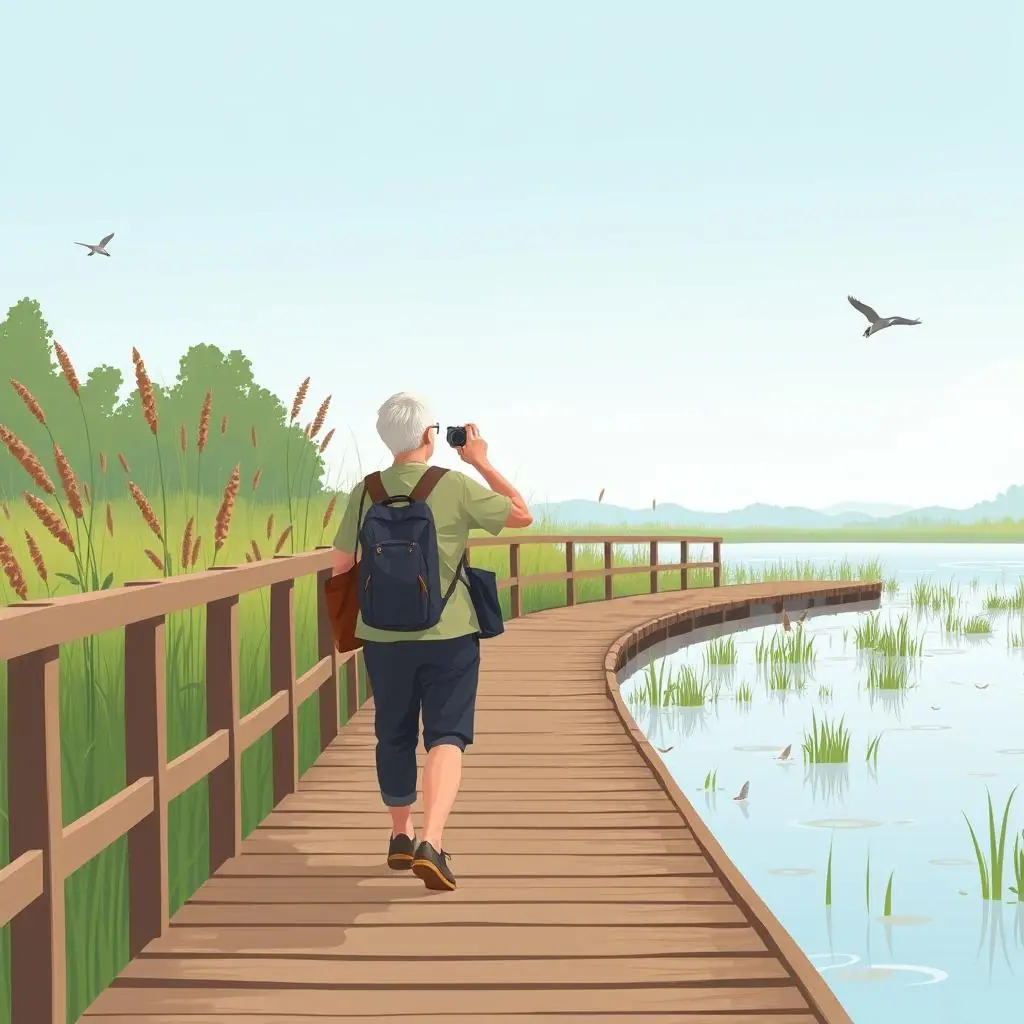
Boardwalk birding is one of the gentlest ways to try birdwatching beyond your own yard. A good boardwalk gives you a clear path, steady footing, and a quiet way to look over water, reeds, shrubs, mud edges, and open sky without stepping into fragile habitat.
For beginners, that combination can feel wonderfully reassuring. You do not need to hike a steep trail or know every bird by name. You can move slowly, pause at railings, listen for splashes and songs, and let the boardwalk bring the wetland closer to you.
Why Boardwalk Birding Matters for Beginners
Boardwalk birding matters because it removes several beginner worries at once. The route is usually easy to follow, the scenery changes often, and wetland edges can be lively with movement. Even when you cannot name a bird right away, you may notice shape, posture, feeding style, or sound.
The National Audubon Society reminds beginners to start with simple observation: notice a bird's color, size, and behavior before worrying about perfect identification. Its How to Start Birding guide supports the same calm approach that makes boardwalks so friendly.
It gives you built-in boundaries
A boardwalk naturally shows you where to walk and where not to walk. That is good for the habitat, and it is good for a new birder who may feel unsure about getting too close. Staying on the path protects wet soil, nesting cover, and shoreline plants while still giving you a fine view.
It slows the morning down
Because boardwalks often have turns, overlooks, benches, and railings, they invite pauses. Those pauses are where many sightings happen. A bird may fly across the water, a wren may rattle from cattails, or a heron may finally move after looking like a gray branch for ten minutes.
Start With a Comfortable Boardwalk Spot
Choose a boardwalk that matches your energy, not the one with the longest species list. For a first outing, look for parking nearby, restrooms if you need them, a short loop or out-and-back route, benches, shade, and railings where you can rest your hands or binoculars.
If you are packing for more than a short stroll, BirdPeep has a simple birding trip packing list that can help you keep comfort items close without overloading your bag.
Before leaving home, check the park or refuge website if one is available. Boardwalks can close after storms, flooding, repairs, ice, or wildlife management work. A quick check keeps the morning peaceful before it even begins.
What to Watch for Along the Rails
Once you are on the boardwalk, resist the urge to march straight to the end. Birds use wetland edges in layers. Some feed low in reeds, some perch on dead snags, some walk along mud, and others pass overhead without landing at all.
- Water surface: Watch for ripples, ducks, floating feathers, or small birds dipping near the edge.
- Reeds and cattails: Listen for hidden songs, chips, rustling, and quick movements between stems.
- Dead branches: Scan exposed perches where swallows, kingbirds, blackbirds, or herons may rest.
- Mud and shoreline: Look for careful walking birds, tracks, feeding marks, and sudden flights.
- Open sky: Pause now and then to notice hawks, swallows, gulls, or geese moving above the wetland.
Simple Boardwalk Birding Steps
A boardwalk makes birding easier, but a little rhythm helps. Use this calm pattern, especially if you are visiting with a friend or trying a new place for the first time.
- Start slowly: Spend a few minutes near the entrance to let your eyes adjust to the light and movement.
- Scan near before far: Look close to the boardwalk first so you do not miss birds tucked beside the path.
- Use railings wisely: Rest elbows or binoculars gently if it helps you hold still, but avoid leaning into plants.
- Listen between steps: Stop walking when you hear a call, then watch the direction the sound came from.
- Share the path kindly: Step aside for other visitors, keep voices low, and avoid blocking narrow sections.
- Take short notes: Record place, weather, bird behavior, and mystery birds you want to check later.
- Turn back early if needed: A successful boardwalk visit can be twenty pleasant minutes, not a long march.
Pros and Cons of Boardwalk Birding
Comfortable access to rich habitat
Boardwalks let beginners view wetlands, ponds, reeds, and shoreline edges without walking through mud or delicate plants.
Easy places to pause and scan
Railings, overlooks, and benches create natural stopping points where new birders can look slowly and compare clues.
Good for learning bird behavior
Wetland edges often show feeding, calling, bathing, perching, and flying patterns that are easier to remember than colors alone.
Weather can affect footing
Rain, frost, algae, or leaves may make boards slick, so sturdy shoes and slow steps matter.
Narrow paths require patience
Busy boardwalks can feel cramped, especially when photographers, families, and birders all stop in the same good spot.
Beginner Safety and Etiquette
Good boardwalk manners are simple: stay on the path, keep voices soft, let faster walkers pass, and give wildlife space. If a bird seems alert, frozen, or repeatedly moving away, enjoy it from where you are instead of trying to get closer.
For a broader first-trip mindset, the BirdPeep guide to planning your first birding day trip pairs well with this boardwalk approach. Boardwalks are often the easiest version of that first trip because the route is already defined.
- Wear shoes with grip: Smooth boards can surprise you after rain or shade.
- Bring sun and insect protection: Wetlands can be bright, buggy, or breezy depending on the season.
- Keep hands free when possible: A light crossbody bag is easier than juggling too many items.
- Use binoculars only when steady: Stop walking before lifting binoculars to your eyes.
- Respect closed areas: Ropes, signs, and barriers usually protect habitat, repairs, or visitor safety.
Frequently Asked Questions
Is boardwalk birding good for complete beginners?
Yes. Boardwalks give you a clear route, open views, and natural stopping points, which makes them friendly for people still learning how to watch birds calmly.
What should I bring for a short boardwalk birding visit?
Bring water, comfortable shoes, sun protection, insect repellent if needed, binoculars if you use them, and a small notebook or phone note for sightings.
What birds might I see from a wetland boardwalk?
It depends on your region and season, but beginners may notice ducks, herons, swallows, blackbirds, wrens, sparrows, gulls, or birds moving through nearby shrubs.
How do I avoid disturbing birds on a boardwalk?
Stay on the path, keep a respectful distance, speak softly, avoid sudden movement, and never step into closed or vegetated areas for a closer look.
Final Thoughts
Boardwalk birding is perfect for beginners because it gives you structure without making the outing feel stiff. You have a path to follow, edges to scan, places to pause, and enough habitat variety to keep every few steps interesting.
Start with one short boardwalk, go at a comfortable pace, and choose one thing to notice well: a call, a feeding behavior, a bird shape, or a place where birds like to perch. That small attention is where the pleasure begins.