American goldfinch identification can feel delightfully easy in summer and surprisingly tricky in the colder months. One week a male looks like a drop of sunshine with black wings, and later in the year the same species may look soft olive, tan, and much quieter.
That change is part of what makes the American Goldfinch such a rewarding backyard bird for beginners. Instead of memorizing one perfect picture, you learn a small set of clues: body shape, wing pattern, bouncing flight, seed-loving habits, and the way its color shifts with the season.
Once you know those clues, you can recognize goldfinches even when they are not wearing their brightest summer feathers.
Why American Goldfinch Identification Matters
The American Goldfinch is common enough for many U.S. backyard birdwatchers to see, but it teaches a lesson that applies to many birds: color is helpful, but it is not the whole story. A beginner who relies only on bright yellow may miss females, young birds, and winter birds.
Audubon's field guide describes American Goldfinches as small seed-eating finches with seasonal color changes and a distinctive bounding flight. Its American Goldfinch field guide is a useful verified reference for field marks, seasonal plumage, feeding, and behavior.
Start With the Summer Male
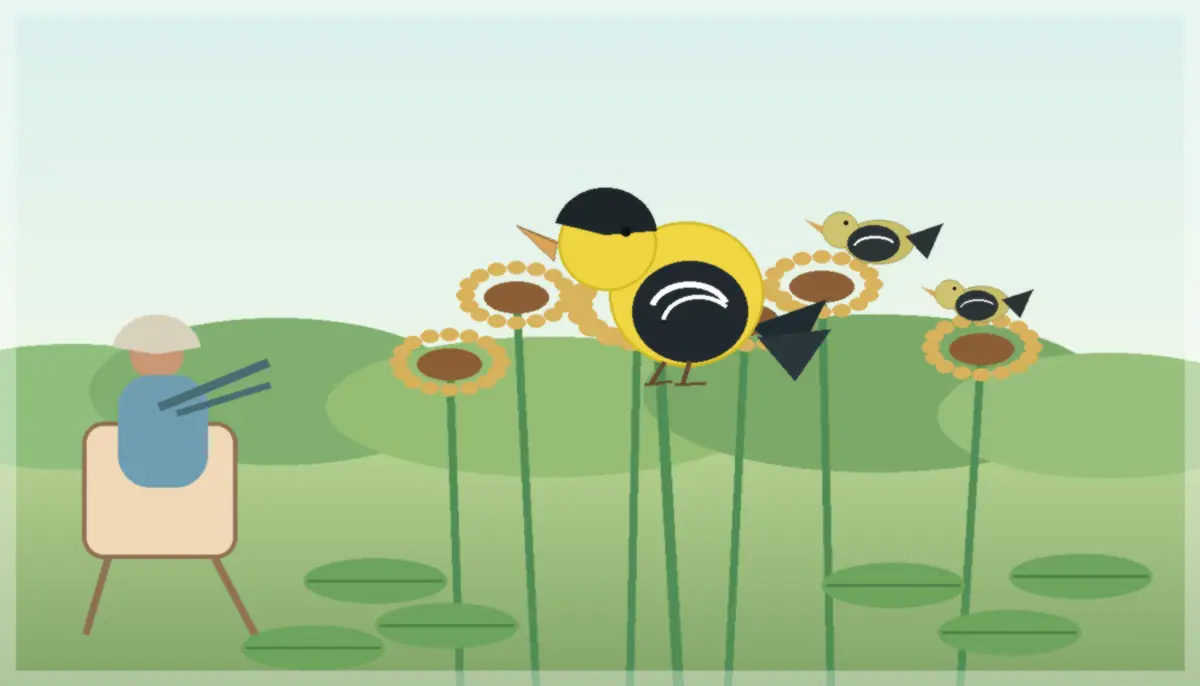
The breeding-season male is the easiest version to learn first. In good light, he looks bright lemon yellow with a black forehead, black wings, and white markings on the wings and tail. That bold contrast is often what makes beginners stop and smile.
Look for the compact finch shape rather than just the color. Goldfinches are small, tidy birds with a short bill made for seeds. They often perch lightly on seed heads, feeder perches, thin branches, and plant stems instead of standing heavily like larger backyard birds.
Notice the black-and-white wing pattern
Even when the yellow body catches your eye first, the wings are the steadier clue. Black wings with pale bars can remain helpful when the body color looks duller, especially in winter or on females.
Do not expect every bird to match the postcard
Females are softer yellow or olive, and nonbreeding birds can look tan, brownish, or muted. If you are unsure, watch longer. Shape, wings, flight, and feeding behavior often settle the question.
Watch the Seasonal Color Change
The American Goldfinch is famous among backyard birders because its wardrobe changes. In spring and summer, males brighten into breeding plumage. In fall and winter, both sexes look more subdued, with less yellow and a quieter overall appearance.
If that idea interests you, BirdPeep's guide to breeding plumage changes explains why some familiar birds look freshly dressed when nesting season arrives.
For goldfinches, the practical lesson is simple: do not remove American Goldfinch from consideration just because the bird looks dull. A winter goldfinch may still show pale wingbars, a small seed bill, and that lively, dipping flight.
- Spring and summer males: bright yellow body, black cap, black wings, and clean white accents.
- Females: softer yellow or olive tones, usually without the bold black cap.
- Fall and winter birds: muted tan, olive, or brownish yellow, but still small and neatly shaped.
- Young birds: often plainer, so behavior and wing pattern become especially useful.
Look for Seed-Loving Habits
American Goldfinches are strongly tied to seeds. They may visit feeders, but they are also wonderful to watch on flowers and seed heads. In a quiet yard, you may see them balancing on coneflowers, sunflowers, thistles, asters, or other plants that offer tiny seeds.
This is where goldfinch watching becomes especially gentle. You do not need to rush toward the bird. Sit still, watch the plant movement, and let the bird reveal itself while it feeds.
Goldfinches can appear near the same feeder area as other colorful visitors. For a useful comparison with a larger orange bird, BirdPeep's Baltimore Oriole identification guide shows how different body size, bill shape, and food habits can be from one bright species to another.
Thistle and sunflower clues
Many backyard birders know goldfinches from nyjer or thistle feeders, but they may also take sunflower chips and natural seeds from garden plants. If several tiny birds are clinging and feeding delicately, pause and check for goldfinch field marks.
Use Flight and Voice as Extra Clues
Goldfinches often fly in a rising-and-falling pattern that feels almost like a small wave. A bird may flap, dip, flap, and dip again across the yard. This bouncing flight can be one of the best clues when the bird is backlit or too far away for color.
They also give light, musical calls while moving. You do not need to memorize the exact sound at first. Just notice whether a small finch is calling as it travels in that dipping flight across open space.
For another familiar bird where shape and sound support color, BirdPeep's article on the Northern Cardinal can help you compare how different common backyard species announce themselves.
Pros and Cons of Learning Goldfinches by Season
Summer males are very memorable
The bright yellow body, black cap, and black wings give beginners a clear first image to learn.
Several clues work together
Wingbars, small bill, bouncing flight, seed feeding, and flock behavior help when color is less obvious.
They reward patient backyard watching
Goldfinches often linger on feeders and seed heads, giving beginners time to compare field marks calmly.
Winter birds can look plain
Muted seasonal plumage can make beginners overlook goldfinches if they expect bright yellow every time.
Females and young birds need practice
Softer colors require more attention to wings, bill shape, behavior, and flight pattern.
A Simple American Goldfinch Identification Checklist
Use this checklist when a small finch visits the feeder, seed heads, or a weedy garden edge.
- Size: Is it a small, tidy finch rather than a bulky bird?
- Bill: Does it have a short, pointed seed-eating bill?
- Wings: Are the wings dark with pale or white wingbars?
- Tail: Does the tail look slightly notched when you get a clear view?
- Color: Is the bird bright yellow, soft olive, tan, or muted yellow depending on season and sex?
- Food: Is it feeding on seeds, nyjer, sunflower chips, or garden seed heads?
- Flight: Does it move in a rising-and-falling, bouncy pattern?
Frequently Asked Questions
Why did my bright yellow goldfinches turn dull?
American Goldfinches change plumage with the season. Males are brightest in breeding season and become more muted in fall and winter, so a duller bird can still be the same species.
Are female American Goldfinches yellow?
Females can show yellow or olive-yellow tones, but they are usually softer and less bold than summer males. Look at the wingbars, bill, size, and behavior too.
What feeder attracts American Goldfinches?
Many goldfinches visit nyjer or thistle feeders, and they may also eat sunflower chips. Natural seed heads from bird-friendly flowers can be just as enjoyable to watch.
What is the easiest goldfinch clue for beginners?
In summer, the bright male is easiest. In other seasons, combine dark wings with pale wingbars, a small seed bill, bouncy flight, and seed-feeding habits.
Final Thoughts
American goldfinch identification becomes easier when you stop expecting one perfect yellow bird. Learn the summer male first, then add the softer female, the muted winter bird, and the lively little finch feeding quietly on seeds.
The next time a small bird bounces across the yard or balances on a flower head, take one slow look at the wings, bill, and movement. The bright summer finch may still be there, even when it has changed clothes.