Baltimore oriole identification can feel like a small reward for patient birdwatchers. One day the trees seem ordinary, and the next day a flash of orange moves high through the leaves like a little spark of sunrise.
These birds are not usually the feeder regulars that sit in plain view all winter. They often arrive with spring warmth, sing from treetops, and move through leafy edges where beginners may hear them before seeing them clearly. That makes them a wonderful bird to learn slowly, one clue at a time.
Why Baltimore Oriole Identification Matters
For many backyard birdwatchers, the first oriole sighting feels special because it is bright, seasonal, and easy to miss if you are not looking up. Learning the main field marks helps you avoid a rushed guess and gives you a better chance of recognizing both males and females.
The Audubon field guide describes the Baltimore Oriole as a spring voice of eastern North America and gives helpful details on size, color, food, and behavior at its Baltimore Oriole species page. It is a useful reference when you want to confirm what you saw after a quiet observation.
Start With Shape, Size, and Posture
A Baltimore Oriole is a medium-sized songbird: not tiny like a chickadee, and not as bulky as a robin. It often looks slim, alert, and slightly long-legged, with a pointed bill that suits fruit, insects, and nectar.
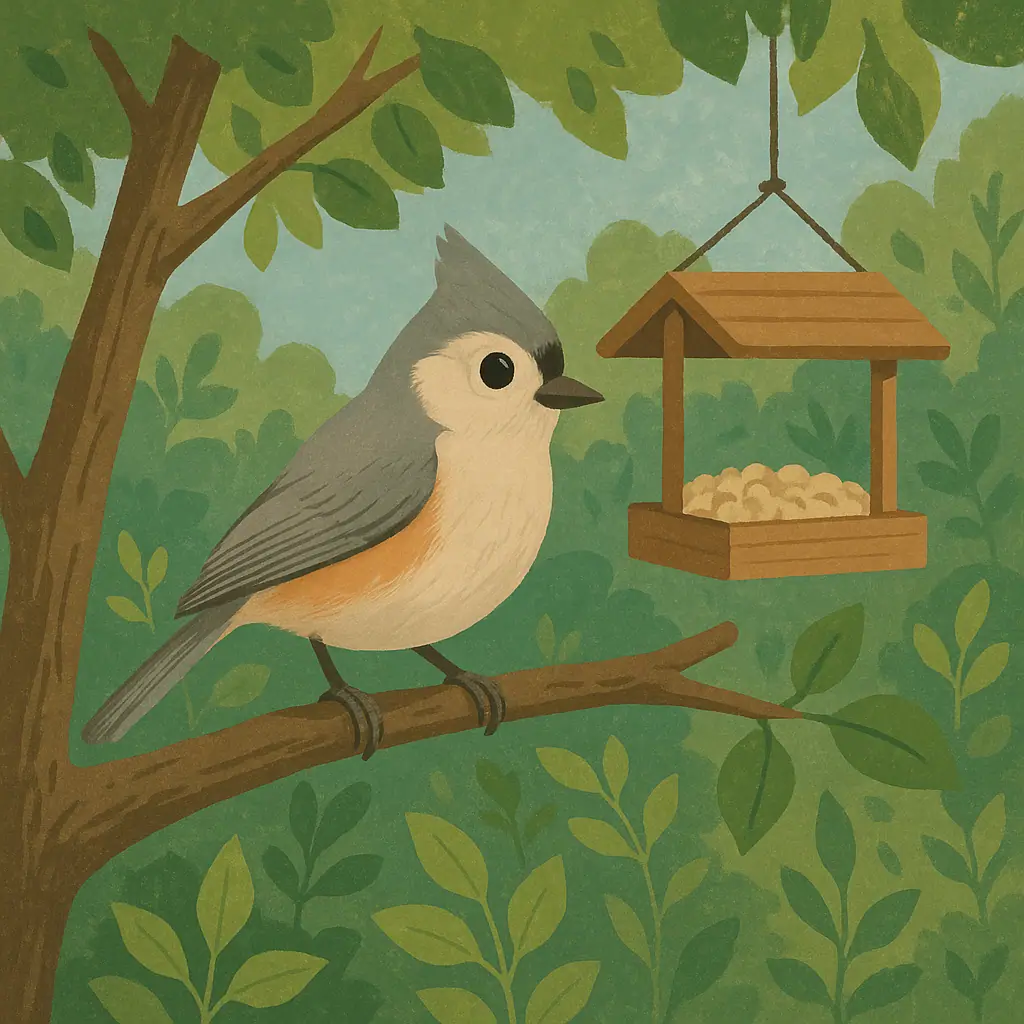
If you have been practicing with other backyard species, compare its overall shape to more familiar birds. BirdPeep's guide to the Tufted Titmouse can help you see how different body shapes create different first impressions, even before color becomes clear.
First Shape Clues to Notice
- Overall size: larger than many small feeder birds, but still slender and active.
- Bill shape: pointed and fairly sturdy, useful for insects, fruit, and nectar.
- Tree position: often higher in trees than beginners expect, especially during singing.
- Movement: active but not frantic, hopping and reaching among leaves and outer branches.
Look for the Orange, Black, and White Pattern
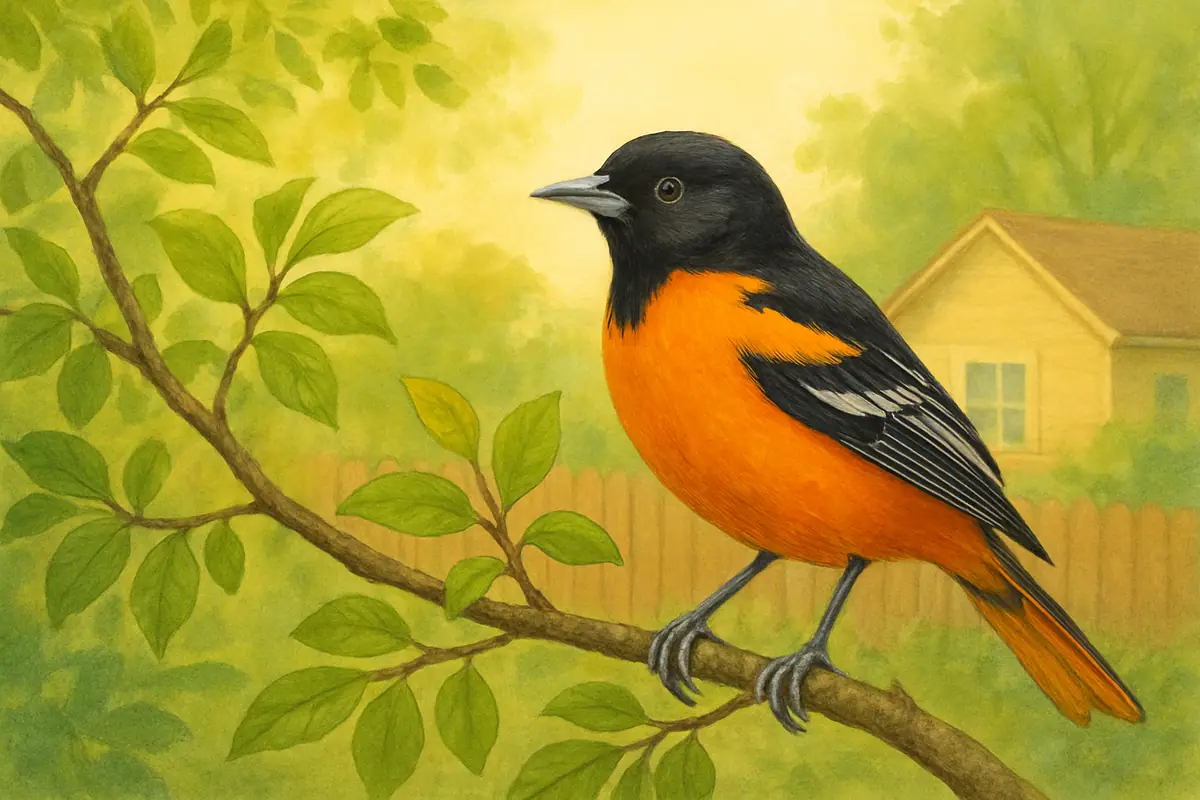
The adult male is the bird most people imagine first: bright orange below, black on the head and back, with dark wings that show white markings. In good light, he can look almost tropical against fresh green leaves.
Females and young birds are subtler. They may show warm yellow-orange tones, grayish or brownish upperparts, and wing markings without the bold black hood of an adult male. This is where patience helps. A quieter bird with yellow-orange underparts can still be an oriole even if it does not match the postcard version.
Color Checks for Beginners
- Adult male: bold orange body with black head and back.
- Female or immature: softer yellow-orange tones, less black, and a gentler overall contrast.
- Wings: dark wings with pale or white wing markings can help confirm the pattern.
- Light matters: shade can mute orange, while strong sun can make it glow brighter than expected.
Listen for a Rich Spring Song
Baltimore orioles are often heard before they are seen. Their song has a clear, whistled quality that carries from treetops, especially during spring and early summer. If you hear a bright, fluting phrase from a leafy canopy, pause before searching with your eyes.
Sound can guide you toward the right part of the tree. Look along the outer branches and high edges rather than only at feeders or low shrubs. A bird that stays partly hidden may still give you enough shape, color, and behavior clues for a careful identification.
Know When and Where to Watch
In much of the eastern United States, Baltimore orioles are most noticeable during spring arrival and breeding season. They favor open woods, woodland edges, parks, shade trees, orchards, and leafy neighborhoods. A mature tree near a yard can be more important than a fancy feeder.
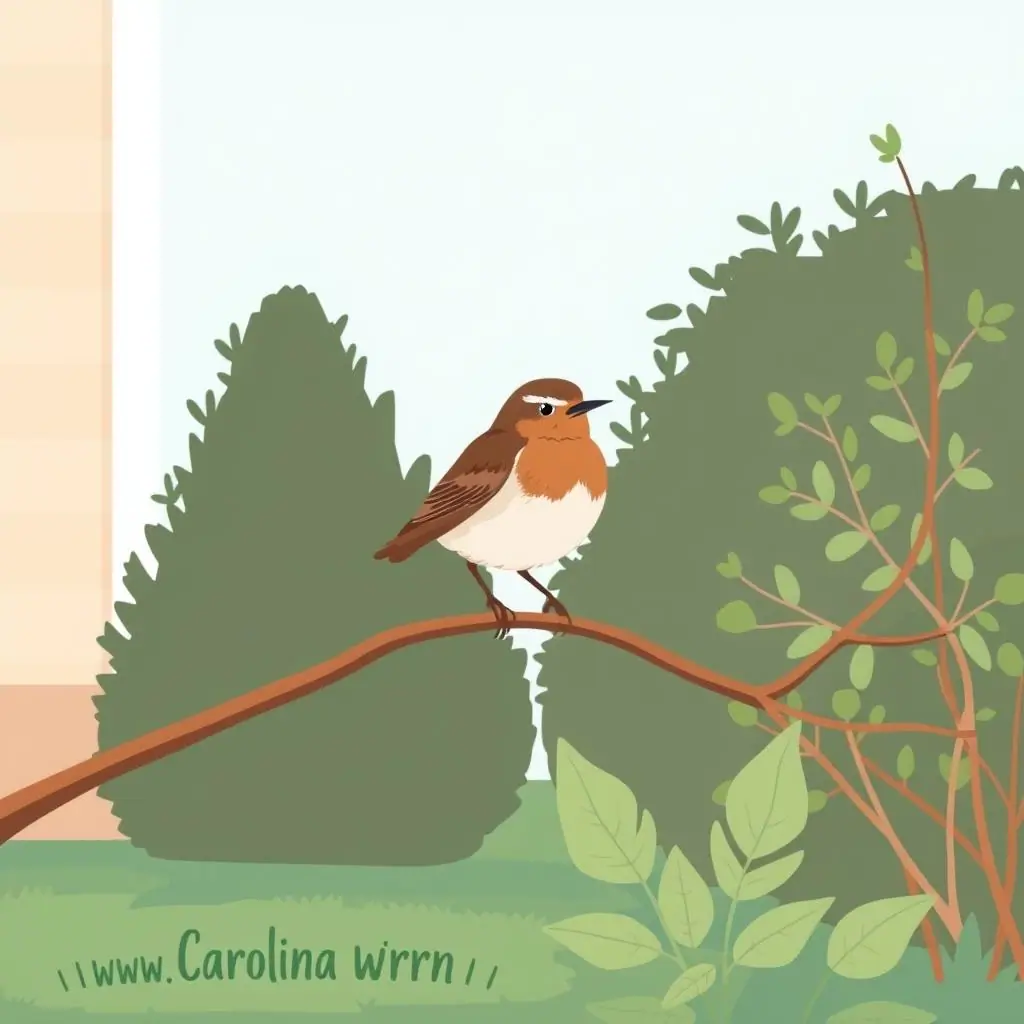
If you enjoy comparing common visitors, BirdPeep's profile of the Carolina Wren shows how voice, posture, and favorite hiding places can all work together in identification. Orioles ask for the same calm method, only with more looking upward.
Understand What Baltimore Orioles Eat
Baltimore orioles eat insects, fruit, and nectar. During nesting season, insects are especially important because growing young birds need protein. That is one reason a yard with trees, native plants, and fewer pesticides can be more inviting than a yard that offers only sugar water.
Some people offer orange halves, grape jelly in small amounts, or nectar in oriole-style feeders. Keep any food fresh and clean, especially during warm weather. Spoiled fruit or sticky feeders can create more trouble than benefit, so simple hygiene matters.
Offer a Beginner-Friendly Oriole Setup
You do not need to redesign the whole yard for one species. A gentle oriole-friendly setup starts with visibility, cleanliness, and natural cover. Place any fruit or nectar where you can watch without walking toward the bird every time it appears.
- Use fresh fruit carefully: replace orange halves before they dry out, spoil, or attract too many insects near the house.
- Keep nectar clean: wash feeders regularly and avoid letting sugar water sit in heat.
- Support natural food: native trees and shrubs encourage insects and berries that birds use throughout the season.
- Watch from a distance: orioles may be shy at first, so a quiet window or porch view works better than frequent approach.
- Skip red dye: plain sugar-water recipes do not need coloring, and cleanliness matters more than color.
Pros and Cons of Attracting Orioles
A memorable seasonal visitor
The bright color and rich song make Baltimore orioles exciting for beginners without requiring difficult travel.
Great for observation skills
They teach you to look high, listen first, compare males and females, and notice seasonal timing.
Habitat improvements help other birds too
Native plants, cleaner water, and reduced pesticide use support many backyard visitors, not only orioles.
They may not stay at feeders long
Orioles can be brief visitors, especially when natural food is abundant or nesting activity keeps them high in trees.
Food needs careful upkeep
Fruit, jelly, and nectar can spoil in warm weather, so they require more attention than a simple dry seed feeder.
A Simple Baltimore Oriole Checklist
Use this checklist when you see a bright orange or yellow-orange bird in spring or early summer. It keeps the moment calm and helps you gather real evidence before naming the bird.
- Location: Is the bird in a tree edge, leafy yard, park, or open woodland setting?
- Size: Does it look larger and slimmer than many small feeder birds?
- Bill: Is the bill pointed and fairly sturdy?
- Color pattern: Do you see orange or yellow-orange with dark wings and pale wing markings?
- Sound: Is there a clear, whistled song from the treetops?
- Behavior: Is it moving among leaves, visiting fruit, taking nectar, or searching branches for insects?
When to Get Extra Help
If you live in an area where similar orioles overlap, or if you are looking at a female or immature bird, use a trusted field guide or birding app before making a firm call. A photo, even a slightly blurry one, can help when paired with notes on date, location, size, and behavior.
When you are uncertain, write the honest version: “orange bird in maple, whistled song, dark wings, May morning.” That kind of note is more useful than forcing a name too soon.
Frequently Asked Questions
What is the easiest Baltimore Oriole identification clue?
For adult males, the bright orange body with a black head and dark wings is the clearest clue. For females and young birds, combine yellow-orange tones with shape, wing markings, song, and season.
When should I look for Baltimore orioles?
They are most noticeable during spring arrival and breeding season in eastern North America. Listen for rich whistled songs from treetops and watch leafy edges carefully.
Will Baltimore orioles come to a regular seed feeder?
Usually they are more interested in insects, fruit, and nectar than standard seed. Some visit orange halves, small amounts of jelly, or clean nectar feeders.
Why did an oriole visit once and then disappear?
That can happen. Orioles move with season, nesting needs, natural food, weather, and local habitat. A brief sighting still counts as a lovely observation.
Final Thoughts
Baltimore oriole identification is a patient spring pleasure. Start with shape and sound, then add color, timing, food habits, and habitat. The more clues you gather calmly, the less pressure you feel to name the bird instantly.
Keep your setup simple: clean water, healthy plants, fresh seasonal food if you offer it, and a quiet place to watch. Then look high into the leaves. That bright orange visitor may be closer than you think.