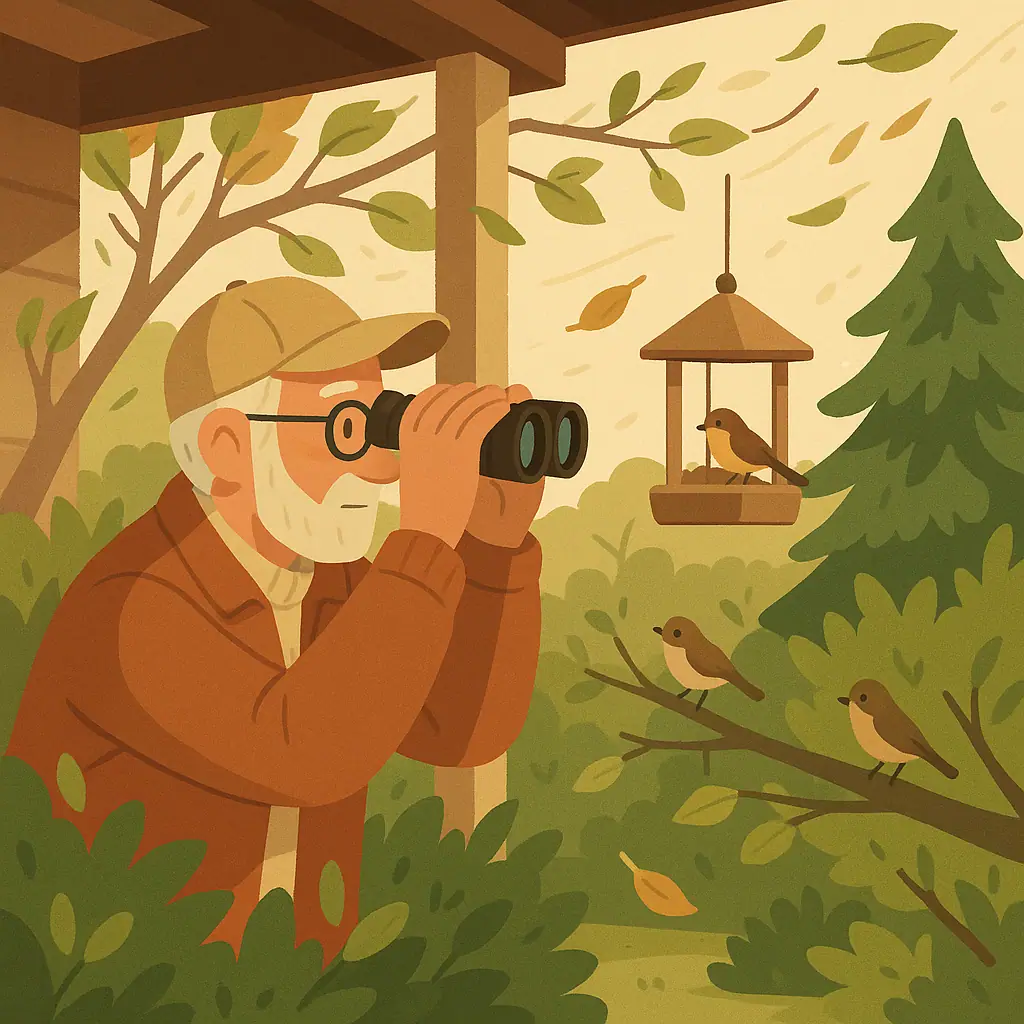
Birdwatching on windy days can feel puzzling at first. The feeder swings, leaves move like tiny birds, and familiar visitors may seem to vanish. A windy yard is not empty, though. Birds are usually making sensible choices about shelter, energy, and safe places to pause.
The trick is to change how you watch. Instead of scanning the most exposed branches, look for quiet pockets: the lee side of shrubs, lower limbs, fence corners, evergreen edges, and ground that is protected from the strongest gusts. Windy day birdwatching rewards patience more than speed.
Think of the wind as a guide. It shows you which parts of the yard are exposed and which parts feel calmer. Once you notice those sheltered places, birds often become easier to find again.
Why Birdwatching on Windy Days Feels Different
Wind changes sound, movement, and comfort for both birds and birdwatchers. Calls can be harder to hear. Small branches move constantly, making quick shapes harder to judge. Birds may avoid high open perches because staying balanced there costs energy.
Project FeederWatch notes that trees and shrubs give birds cover and protection, along with nesting habitat and natural food sources. Its gardening for birds guidance is a helpful outside reference for thinking about cover, food, and calmer yard spaces. On windy days, shelter can be the whole story.
Start With the Sheltered Side of the Yard
The simplest way to begin is to stand or sit where you can see the wind pattern. Notice which branches are thrashing and which shrubs barely move. Birds often choose the calmer side of a hedge, evergreen, garage, fence, or thick planting.
If you have already watched birds after other weather changes, this pattern may feel familiar. BirdPeep's guide to how birds use your yard after a rainstorm shows the same basic lesson: weather rearranges where birds feed, bathe, and rest.
Look low before you look high
On calm days, you may spot birds singing from exposed branches or fence tops. On windy days, begin lower. Check shrubs, low limbs, leaf litter, brush piles, and the protected ground under plantings.
Use movement, not perfect color
Wind makes color and shape harder to read because everything is moving. Watch for bird-like motion instead: a hop, a tail flick, a quick scratch, a short flight from one protected perch to another.
- Check the lee side: Look behind shrubs, fences, sheds, and evergreens where the wind feels softer.
- Watch feeder approaches: Birds may wait in cover, then make short trips to food and back.
- Listen for nearby calls: Wind carries sound unevenly, so a bird may be closer than it sounds.
- Scan in layers: Ground first, then shrubs, then lower branches, then open sky.
What to Check First for Windy Day Birdwatching
Start with three questions: Where is the wind strongest? Where is the yard quietest? Where do birds have both food and cover close together? Those questions are more useful than trying to identify every moving shape at once.
Feeders can still be active during wind, but many birds will approach carefully. They may pause in a shrub, make one quick visit, and return to cover. If a hanging feeder is swinging hard, birds may prefer spilled seed below, a platform in a calmer spot, or natural seed heads near shelter.
For a colder-season version of this same idea, BirdPeep's article on winter feeding for backyard birds explains why food, water, and cover work together when weather makes birds spend energy carefully.
How to Watch Birds in Wind Step by Step
A repeatable method keeps windy day birdwatching calm. Try this routine before deciding that no birds are around.
- Step outside briefly, then choose comfort: Feel the wind direction, then watch from a sheltered porch, window, or stable chair if that is safer.
- Pick one quiet edge: Choose a shrub line, evergreen, brush pile, fence corner, or low tree that moves less than the open branches.
- Wait through the moving leaves: Let your eyes adjust. After a minute or two, bird movement starts to look different from wind movement.
- Follow short flights: A bird may only cross a small gap before ducking back into cover. Track where it disappears.
- Check water and food last: Once you know the sheltered routes, look at feeders, bird baths, berries, and seed heads nearby.
- Write one simple note: Record the wind direction, the sheltered spot, and one bird behavior you noticed.
If strong wind makes walking uncomfortable or footing uncertain, stay indoors. A kitchen window or protected porch can be the better bird blind.
Common Windy Day Mistakes to Avoid
Most windy day mistakes come from expecting the yard to behave like a calm morning. A little adjustment makes the session easier and kinder to the birds.
- Do not chase every flash: Many flashes are leaves. Slow down and look for repeated bird-like movement.
- Do not stand under unstable branches: Your safety matters more than a better view.
- Do not assume feeders are the only place to watch: Birds may use shrubs, ground cover, berries, and sheltered fence lines more.
- Do not make sudden yard changes: If birds are already using a quiet corner, observe first and adjust later.
- Do not force a confident ID: Windy views can be brief. A note like "small sparrow in low shrubs" is honest and useful.
Pros and Cons of Birdwatching on Windy Days
Shelter patterns become clear
Wind shows which shrubs, fences, and evergreens actually protect birds in your yard.
Behavior gets easier to study
You may notice short flights, careful feeder approaches, low foraging, and quiet waiting spots.
Indoor watching still works
A window view can reveal protected routes without asking you to stand in uncomfortable weather.
Identification can be harder
Moving leaves, brief views, and shaky binoculars can make color and field marks less reliable.
Some birds stay hidden
Quiet cover is sensible in wind, so the yard may feel less active than it really is.
A Simple Windy Day Checklist
Use this checklist when the yard seems too restless to read. It turns a confusing weather day into a small observation exercise.
- Wind direction: Which way are branches, grasses, or hanging feeders moving?
- Sheltered edge: Which shrub, fence, wall, or evergreen has the calmest side?
- Low activity: Are birds hopping, scratching, or feeding closer to the ground?
- Short flights: Are birds moving quickly between cover and food?
- Water: Is the bird bath safe, clean, and not splashing too hard?
- Your footing: Can you watch from a stable, comfortable place?
When to Get Extra Help
If wind has damaged a tree, knocked down a nest box, or created unsafe branches, wait until conditions are calm before inspecting the area. For active nests or injured birds, contact a licensed wildlife rehabilitator or local wildlife agency instead of guessing.
For a broader seasonal habit, BirdPeep's seasonal birdwatching calendar can help you compare windy days with frost, migration, heat, rain, and other weather changes across the year.
Frequently Asked Questions
What should I check first when birdwatching on windy days?
Start with sheltered places. Look for the calm side of shrubs, evergreens, fences, sheds, and low branches before scanning exposed perches.
Are birds gone when the feeder is quiet in wind?
Not necessarily. They may be waiting in cover, using natural food, feeding lower to the ground, or visiting only between stronger gusts.
How often should I review my windy day notes?
Look back after a few windy sessions. You may find that the same shrub, fence corner, or evergreen becomes a regular shelter spot.
What if I cannot identify birds clearly in the wind?
Write what you can see: size, movement, location, and behavior. You can check a trusted guide later when the view is calmer.
Final Thoughts
Windy day birdwatching is less about seeing more birds and more about learning where birds feel secure. Once you notice shelter, short flights, low foraging, and quiet waiting places, the yard starts to make sense again.
Next time the branches move, choose one sheltered edge and watch it patiently for five minutes. You may discover that the birds were there all along, simply using the wind wisely.