On a cold, clear night, birds are dealing with two problems at once: dropping temperatures and exposure. That is why the answer to where birds sleep in winter is usually less about a perfect nest and more about finding the safest small shelter they can use until morning.
For backyard birdwatchers, that can make winter evenings more interesting. Instead of wondering whether birds simply vanish after sunset, you can start noticing which shrubs, tree cavities, thick evergreens, and protected corners seem to draw them in before dark.
The goal is not to disturb a roosting bird or search with a flashlight after sunset. It is to understand the pattern gently, from daytime clues and ordinary observation, so winter birdwatching feels calmer and more meaningful.
Why This Matters on Cold, Clear Nights
Clear winter nights can become colder than cloudy ones because heat escapes more easily once the sky opens up. Birds respond by looking for shelter that reduces wind, traps a bit of warmth, and helps them conserve energy until sunrise.
Audubon explains that birds often hunker down inside dense shrubs, tree crooks, cavities, and even sheltered manmade structures when winter weather bites. That makes shelter choice one of the quiet survival skills happening in your yard even when the feeder looks empty.
Birds are usually looking for protection, not comfort
A good roost does not need to look cozy to us. It only needs to block wind, reduce heat loss, and keep the bird less exposed than an open perch would.
Small shelter choices can make a big difference
Even a thick hedge, the downwind side of a trunk, or a narrow cavity can be warmer and safer than a bare branch out in the open air.
Where Birds Sleep in Winter Most Often
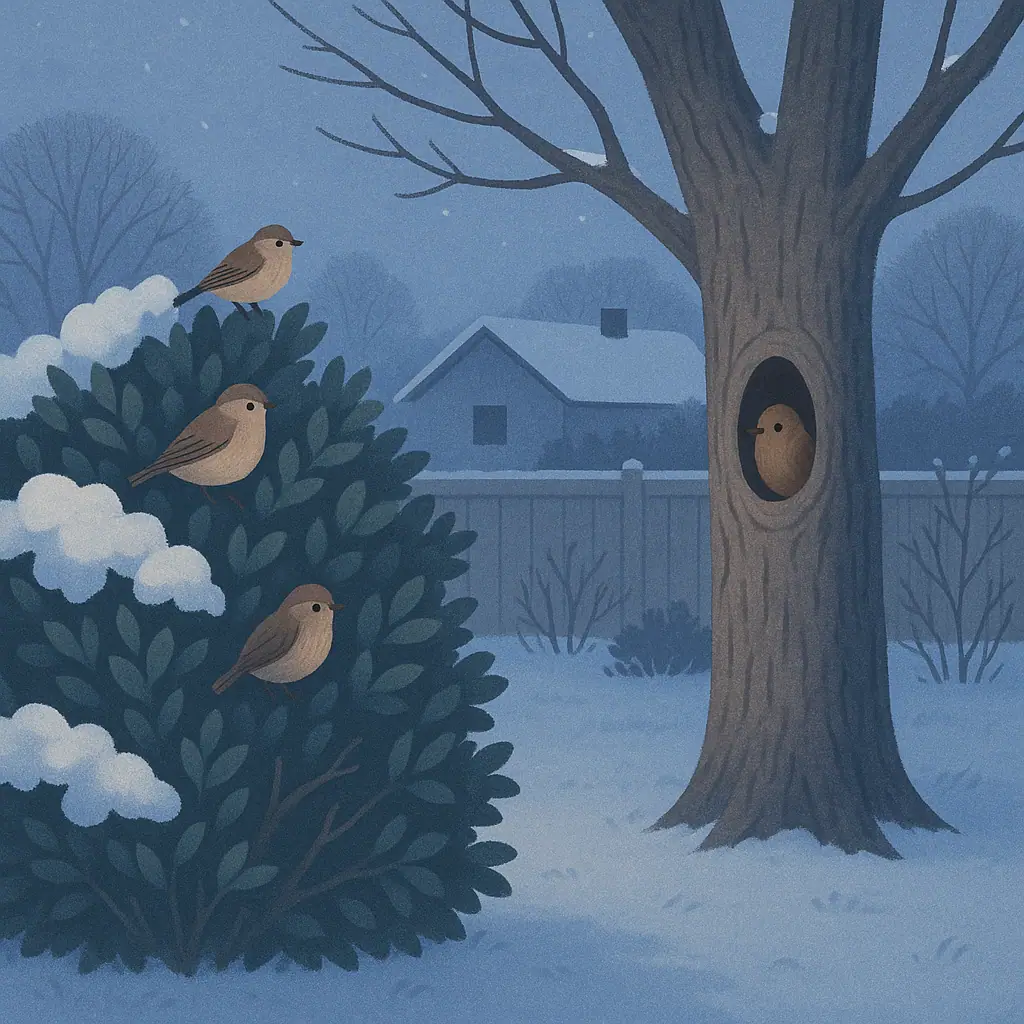
Many backyard songbirds roost in dense evergreens, tangled shrubs, brushy cover, or close to the trunk on a thick branch where wind is weaker. Cornell Lab also notes that cavities can be valuable overnight shelters because a small enclosed space helps birds hold onto warmth more efficiently.
That is one reason winter habitat matters so much. A yard with layers of cover gives birds options instead of forcing them to spend the night fully exposed.
- Dense evergreens: pines, spruces, junipers, and similar plants can block wind and create a more stable little pocket of air.
- Tree cavities: old woodpecker holes and natural hollows can offer some of the warmest overnight shelter available.
- Protected branch perches: many birds roost close to the trunk on the side of the tree that is most shielded from wind.
- Thick shrubs and hedges: these can help smaller birds disappear into cover before sunset.
If you are already feeding birds through rough weather, BirdPeep's guide to winter feeding during the cold months adds useful context, because birds often rely on both dependable food and dependable shelter during the same stretch of weather.
What to Check First Without Disturbing Birds
The safest time to learn about roosting is late afternoon, not after dark. Watch where birds drift during the last active part of the day, and pay attention to the parts of the yard that seem to hold motion for a few extra minutes before everything goes quiet.
- Pick one viewing area: start with a window, porch, or short path where you can watch comfortably.
- Notice late-day traffic: look for repeated movement toward one shrub, one evergreen, or one trunk cavity.
- Watch for hesitation and vanishing: a bird that pauses, checks around, and slips deep into cover may be settling for the night.
- Leave the area quiet: once birds begin choosing shelter, avoid walking close just to confirm the spot.
- Compare over several evenings: repeat the same observation on another cold night before assuming you have found a regular roost.
This kind of slow pattern-watching can pair nicely with BirdPeep's article on where birds hide on windy days, because many of the same protected spots that feel safe in strong wind also become useful nighttime shelter.
Look for structure, not just species
Beginners often focus on the exact bird first. It can be easier to focus on the place: thick cover, a cavity, a sheltered branch, or a tucked-away side of the yard.
Do not assume a nest is the answer
Most birds do not sleep in their nests year-round. Winter roosting is usually about temporary shelter, and that shelter may change with weather, wind direction, or flock behavior.
How to Make Your Yard More Helpful on Cold Nights
You do not need special equipment to make a yard more roost-friendly. In many cases, the best help is simply preserving useful cover and avoiding over-tidying the very places birds use to hide from wind.
Audubon and Cornell both point back to the same practical idea: layered habitat matters. Shelter becomes stronger when cover, food, and a little protection from traffic all work together.
- Keep some evergreen cover: even one dense shrub can matter on exposed winter nights.
- Leave safe brushy edges: not every corner of the yard has to be perfectly open and clipped.
- Protect cavities when possible: old snag features or safe natural hollows can be more valuable than they first appear.
- Reduce late-evening disturbance: repeated noise, lights, or close activity around a likely roost can push birds elsewhere.
Common Mistakes to Avoid
The biggest mistake is trying to prove exactly where a bird is sleeping by getting too close. Roosting works because the bird feels hidden and secure. Turning that moment into a search mission can undo the benefit you were hoping to observe.
Another mistake is assuming open branches are always enough. Some birds do perch out in the open, but during cold, clear weather many species gain a real advantage from thicker cover or a cavity.
- Do not flush birds at dusk: if birds are settling down, let the area stay quiet.
- Do not over-prune winter cover: the tidy look you want may remove the exact shelter birds are counting on.
- Do not guess at every behavior: watch patterns over time instead of building a whole conclusion from one evening.
Pros and Cons of Watching Roosting Clues
Deepens your winter birdwatching
Once you notice shelter choices, a cold evening yard feels more active and understandable instead of empty.
Encourages gentler habitat decisions
You may keep a shrub, cavity, or brushy corner that seems unimportant at first but matters to birds overnight.
Works without expensive gear
A quiet window view and patient repetition are often enough to learn a surprising amount.
Some clues stay indirect
You will not always see the exact final roost, and that is normal when birds are choosing safety.
Weather changes the pattern
A shelter choice that works on one clear night may not be the same on a windy or milder evening.
A Simple Checklist for Your Next Cold Evening
- Choose one comfortable viewing spot: keep the routine easy enough to repeat.
- Watch the last half-hour before dusk: that is often when movement toward shelter becomes easier to notice.
- Mark likely cover mentally: note evergreens, thick shrubs, cavities, and protected trunk-side perches.
- Leave likely roost areas undisturbed: observation is useful only when birds still feel safe.
- Repeat on another cold night: look for patterns before deciding a spot is a regular shelter.
Frequently Asked Questions
Do birds sleep in their nests during winter?
Usually no. Most birds use nests mainly for eggs and young, while winter nights are more often spent in sheltered branches, dense cover, cavities, or other protected roosting spots.
Are cavities always the warmest option?
They can be excellent because a small enclosed space holds warmth better than open air, but birds also use evergreens, shrubs, and protected perches depending on species and conditions.
Should I go outside at night to look for roosting birds?
No. It is better to learn from dusk patterns and daytime clues. Getting close after dark can disturb birds when they most need to conserve energy.
What if I am not sure whether a spot is really being used?
Keep watching gently over several evenings and compare the pattern. If you are unsure, treat the area as useful cover anyway and avoid unnecessary trimming or disturbance there.
Final Thoughts
Where birds sleep in winter is not a mystery solved by one dramatic sighting. More often, it becomes clear through repeated small clues: a junco slipping under a hedge, a chickadee disappearing into cover, or a bird choosing the sheltered side of a trunk just before the light fades.
That is part of the charm of winter birdwatching. The yard stays quiet, but not empty. Once you start noticing how birds choose shelter on a cold, clear night, you begin seeing your familiar plants and corners as part of a living overnight map.