Snowy day birdwatching can make an ordinary backyard feel brand new. Tracks show where visitors have crossed the patio. Seed-eaters arrive with extra purpose. Chickadees, cardinals, juncos, sparrows, and woodpeckers may use familiar trees in slightly different ways when the ground is white and the air is still.
The trick is to keep the morning simple. Put out what is safe and useful, watch from a warm window when conditions are slippery, and notice small clues before you hurry outside. A snowy morning rewards patient eyes more than complicated gear.
I checked the Cornell Lab of Ornithology as the requested source before making current winter birdwatching recommendations. Cornell's winter garden guidance emphasizes food, water, and cover as the main ingredients residential birds seek in cold months.
Why Snowy Day Birdwatching Matters
Snow changes the backyard in ways beginners can actually see. Dark birds stand out against pale ground. Footprints and wing marks may remain for a while. Seed hulls, berry patches, sheltered branches, and exposed water become easier to notice because the background is so plain.
For the birds, winter is not a decoration. Cold, ice, and covered ground can make food and water harder to reach. That does not mean every visitor is helpless, but it does mean your clean feeder, open water, and safe cover can matter more during a stormy stretch.
Start With the Seasonal Basics
Before adding anything new, look at what your yard already offers. Are there shrubs where birds can tuck out of the wind? Is the feeder reachable without you stepping onto icy ground? Is the bird bath frozen solid? Is seed getting wet under a roof edge or snow pile?
If this is your first winter of steady backyard watching, our guide to winter feeding for backyard birds explains the broader cold-weather routine. A snowy morning is simply the moment when those habits become easier to test.
Watch from indoors first
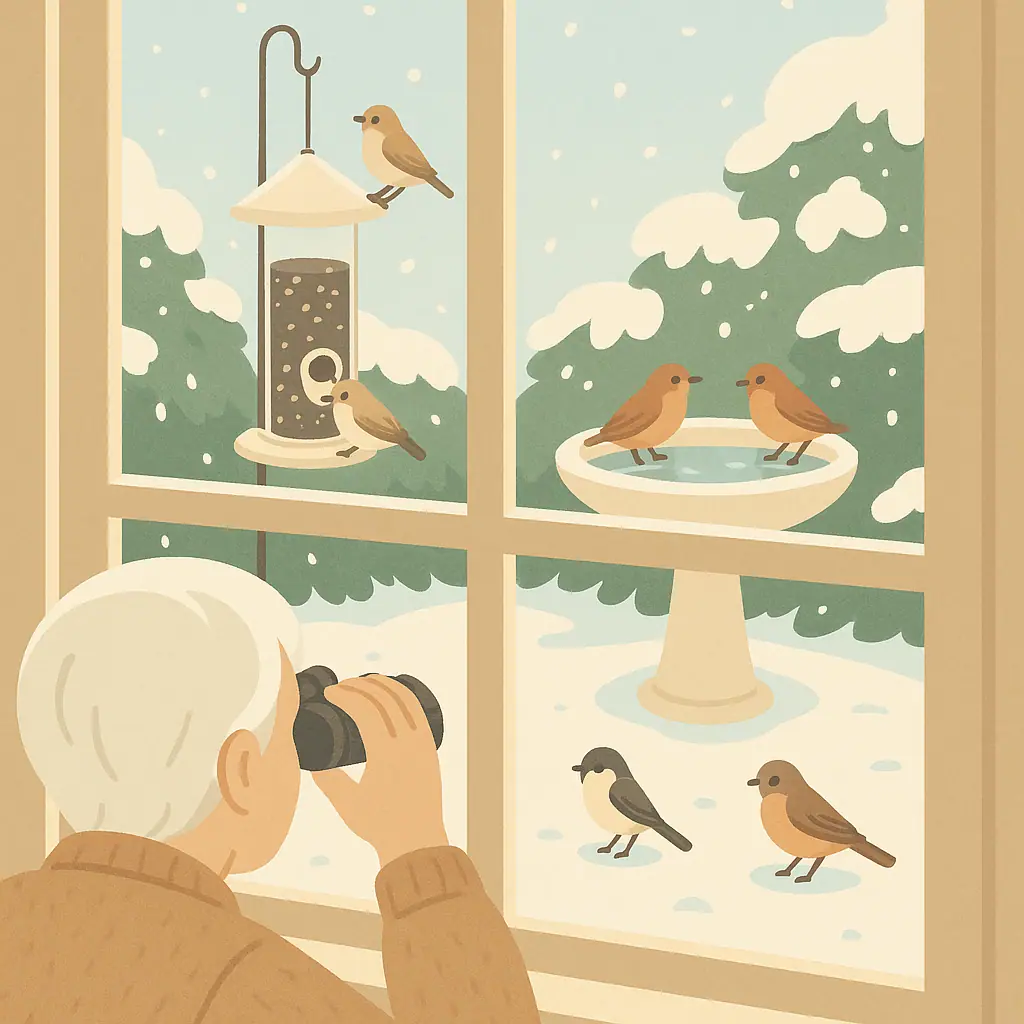
Give yourself permission to begin at the window. You can learn plenty without walking across ice or startling birds from the feeder. Notice which branches they use before feeding, whether they arrive alone or in small groups, and how long they pause before leaving.
Check safety before stepping outside
If you do refill feeders or water, move slowly and use a safe path. Birds can wait a few minutes while you avoid a fall. Keep a small scoop, gloves, and brush near the door so you are not carrying too many things in slippery weather.
What to Put Out on a Snowy Morning
Snowy day birdwatching works best when the offerings are basic, clean, and consistent. Fresh seed is better than a huge amount of old seed. Clean water is better than a decorative bath nobody can use. A sheltered feeder is better than one buried under wet snow.
Cornell's Bird Friendly Winter Gardens notes that residential birds look for food, water, and cover in winter. In a backyard routine, that translates into a few practical choices.
- Fresh seed: Use a modest refill of dry seed rather than packing feeders so full that seed sits wet for days.
- Suet if appropriate: Suet can be useful for woodpeckers, nuthatches, and other winter visitors, especially when it is kept clean and protected from spoilage.
- Open water: If your bath is frozen, replace ice with fresh water or use a safe heated bird bath designed for outdoor use.
- Natural cover: Leave shrubs, evergreens, brushy edges, and seed heads where birds can shelter and forage.
- A clean landing area: Brush heavy snow from feeder tops, trays, and nearby perches so birds can use them safely.
What to Notice Before You Identify Every Bird
Beginners often feel pressure to name every bird immediately. Snowy mornings are a good reminder that behavior can be just as satisfying as identification. Watch how birds approach the feeder. Notice who feeds on the ground, who clings to bark, and who waits in the shrub until the feeder looks quiet.
Tracks can tell a story too. Small hopping marks under shrubs may show where sparrows searched for spilled seed. Wing prints can appear where a bird landed or lifted off from powdery snow. If you enjoyed noticing sudden changes after a frost, our article on first frost birdwatching pairs nicely with this snowy morning routine.
Look for wind shelters
Birds often choose the calmer side of a shrub, fence, or evergreen when snow comes with wind. If one corner of the yard stays busy, ask what it offers: less wind, nearby cover, dry perches, berries, or a clear escape route.
Notice feeding order
Some birds dart in quickly and leave. Others settle in and hold their place. Watching the order of arrivals can teach you the personality of your own yard. You may begin to recognize regular visitors even before you are certain of every field mark.
How to Handle Snowy Morning Birdwatching Step by Step
A repeatable routine keeps the morning calm. You do not need to redesign your feeding station during a storm. You only need to make the safe choices that help birds and help you observe them clearly.
- Look outside before opening the door. Notice feeder activity, ice, wind direction, and where birds are already sheltering.
- Clear only what matters. Brush snow from feeder ports, tray edges, and the bird bath rim without disturbing the whole yard.
- Replace wet or buried food. Toss clumped, soaked, or spoiled seed instead of mixing it with fresh seed.
- Refresh water safely. Offer shallow fresh water if you can reach the bath without risk. Never use antifreeze, salt, or unsafe household shortcuts.
- Step back and watch quietly. Give birds time to return after you go indoors. The best views often come after the yard settles again.
Common Seasonal Mistakes to Avoid
The most common winter mistakes come from good intentions done too quickly. A person may overfill feeders before a storm, leave wet seed in place, pour hot water into a fragile bath, or keep walking outside every few minutes to check whether birds have returned.
Instead, choose steady care. Clean what needs cleaning, offer a practical amount of food, make water available when you can do it safely, and then watch from a respectful distance. Birds need usable resources more than constant human attention.
Pros and Cons of Snowy Morning Birdwatching
Birds are easier to see
Dark shapes, bright plumage, and small movements stand out beautifully against snow, which helps beginners notice details.
Behavior clues become clearer
Tracks, feeding spots, shelter choices, and flight paths can be easier to read when the yard has a clean white background.
A simple routine can help
Fresh food, open water, and safe cover are practical steps that fit a quiet winter morning without needing fancy equipment.
Slippery conditions limit access
Ice and deep snow can make feeder care risky, so some mornings are better watched from indoors.
Food and water need extra attention
Seed can get wet and water can freeze, which means a winter setup may need smaller, more frequent checks.
A Simple Snowy Morning Checklist
Use this checklist when snow is falling or has just stopped. It keeps the morning useful without turning it into a chore.
- Is the feeder usable? Clear snow from ports, trays, and perches.
- Is the seed dry? Remove wet, clumped, or buried seed before adding fresh food.
- Is water available? Replace ice with fresh shallow water when you can do it safely.
- Is cover nearby? Notice shrubs, evergreens, brush piles, and calm corners birds are using.
- Are windows safe? Watch for startled flight toward reflective glass, especially near busy feeders.
- Are you warm and steady? Use indoor viewing when steps, decks, or paths are icy.
- What changed overnight? Look for tracks, wing marks, new visitors, and fresh feeding patterns.
When to Get Extra Help
Check a trusted source when you are unsure about heated water equipment, sick-looking birds, local feeding advisories, or winter yard products. Do not guess with chemicals, salt, antifreeze, or anything that could contaminate food and water.
If you see several birds that look lethargic, fluffed for long periods, unable to fly, or visibly ill, take feeders down temporarily and clean them thoroughly. For local disease concerns or injured wildlife, contact a state wildlife agency, licensed wildlife rehabilitator, or local birding organization.
Frequently Asked Questions
What should I check first on a snowy morning?
Start with safety and usability. Look from indoors, then check whether feeders are clear, seed is dry, water is open, and birds still have nearby shelter.
How often should I review my winter feeding setup?
During snowy or freezing weather, a quick daily look is helpful. You may not need to refill every day, but you should notice wet seed, frozen water, and blocked feeder ports.
What should I do if I am not sure a bird is okay?
Observe calmly from a distance and avoid handling the bird. If it appears injured or several birds seem sick, check a local wildlife agency or licensed rehabilitator before acting.
Can I change what I put out later?
Yes. Winter feeding can be adjusted as weather, bird activity, and cleaning needs change. Make one change at a time so you can see how birds respond.
Final Thoughts
Snowy day birdwatching is not about doing everything perfectly. It is about noticing more: where birds shelter, what food stays dry, whether water is available, and how your yard changes after one quiet snowfall.
Begin with a warm window, a clean feeder, and one small observation. The tracks, pauses, calls, and arrivals will teach you the rest at a pace that feels peaceful and manageable.