A Red-bellied Woodpecker can surprise beginners because its name points you toward the wrong detail. Most people notice the red on the head first, while the faint wash on the belly is easy to miss from a porch, patio, or kitchen window. That can make the bird feel confusing even when it stays in view for a good long moment.
The reassuring part is that red bellied woodpecker identification becomes much easier once you stop hunting for the belly and start watching the bird's back, head pattern, call, and climbing style. A few calm checks usually tell the story faster than one perfect close look.
Why the Name Feels Misleading at First
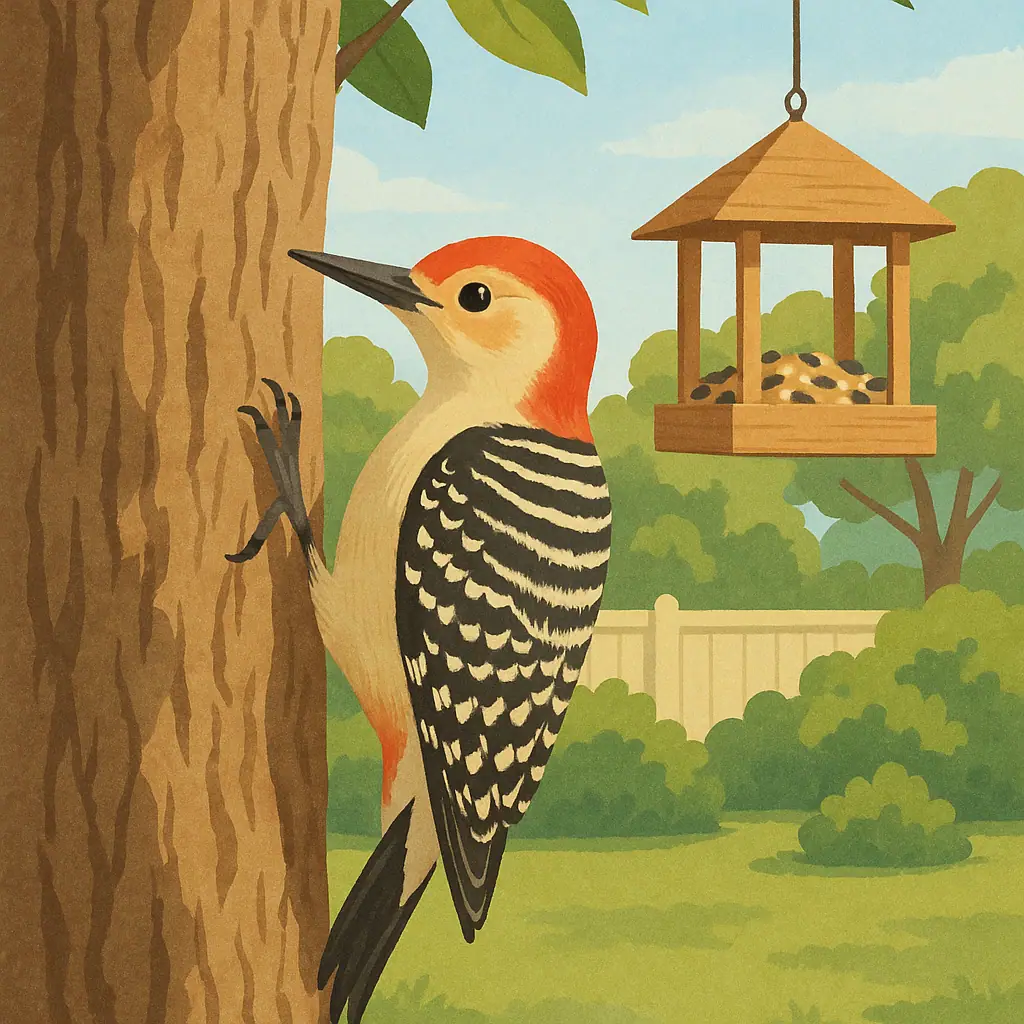
Many beginners expect a bird called Red-bellied to show a bright red belly. Instead, the feature that stands out most is usually the red on the head and nape, along with the zebra-like black-and-white barring across the back. Cornell Lab's Red-bellied Woodpecker overview describes the species as a pale, medium-sized woodpecker with a striking barred back and a rolling call, which matches what backyard birdwatchers often notice first.
That small naming mismatch is also why the bird can be mixed up with other woodpeckers. Once you expect the striped back instead of a flashy belly patch, the whole bird starts to make more sense.
Do not wait for a bright belly patch
The reddish wash on the belly is often subtle and may not show clearly in ordinary backyard light. If you keep chasing that one mark, you can miss the easier clues right in front of you.
Let the overall impression come first
Think pale face, long bill, striped back, and red head markings. That combination is much more helpful than trying to force one tiny detail to settle the identification.
Start With the Striped Back and Smooth Climbing Style
The back is often the friendliest field mark for beginners. A Red-bellied Woodpecker usually shows bold horizontal barring across the back and wings, almost like the bird is wearing a neatly striped jacket. Even if the bird turns away from you, that pattern can stay visible while it moves along a trunk or large branch.
This is a nice place to borrow the broad-shape habit from BirdPeep's guide to identifying birds by shape before color. The bird often looks longer and smoother than a stubby feeder visitor, with the kind of upright tree-clinging posture that instantly suggests woodpecker.
- Striped back: the barred black-and-white pattern is often the clearest clue.
- Long bill: the bill looks sturdy and purposeful for probing bark and feeder edges.
- Upright posture: the bird often braces itself against trunks or larger branches.
- Measured movement: it tends to climb in steady hops instead of fluttering nervously from perch to perch.
Use the Head Pattern and Rolling Call Together
The head markings help beginners once the bird turns sideways or pauses. Males show red from the bill over the crown and down the nape, while females usually show red farther back on the head with more gray on the crown. You do not have to sort the sex right away, but noticing where the red sits can still strengthen the identification.
The call helps just as much. Cornell's sound page for the species notes a shrill, rolling call often described as a kwirr or churr, and that sound often alerts you to the bird before you catch the red on the head.
Listen for a voice with a little roll to it
Beginners often remember the sound better than the exact word written on a page. Think of a ringing call with a rolling quality rather than a soft chirp or a sweet song.
Watch where the red appears
If the red seems concentrated on the back of the head, do not panic. That can still fit a Red-bellied Woodpecker, especially on a female seen in ordinary yard light.
Where Red-Bellied Woodpeckers Spend Time in a Yard
These woodpeckers often like tree trunks, larger limbs, suet feeders, peanut feeders, and the edges of wooded neighborhoods. They may pause on a trunk, move around to the hidden side, then reappear a few feet higher in a way that feels deliberate instead of rushed.
If you enjoy comparing confident backyard visitors, BirdPeep's article on Blue Jays offers a useful contrast. Blue Jays often announce themselves with open, bold movement, while a Red-bellied Woodpecker can feel more tied to bark, trunks, and climbing routes.
- Check mature trees: trunks and thicker branches are often more useful than tiny twiggy perches.
- Check suet and peanut stations: the bird may pause there long enough for a calm look.
- Check wooded edges: backyards near tree lines often get more regular visits.
- Check for looping movement: a bird that disappears around a trunk and then peeks out again fits the pattern nicely.
How to Separate It from Similar Woodpeckers
Comparison is often what turns uncertainty into confidence. A Red-bellied Woodpecker is larger and smoother-looking than a Downy Woodpecker, and it usually shows much stronger barring across the back. BirdPeep's guide to Downy vs Hairy Woodpeckers can help you reset your eye for the smaller black-and-white woodpeckers first.
It also helps to remember what this bird is not. A Red-headed Woodpecker has a far bolder, solid red head and a much more blocky black-and-white pattern overall. A Northern Flicker usually spends more time on the ground and shows a very different body shape and behavior.
- Compared with Downy or Hairy Woodpeckers: Red-bellied Woodpeckers look larger, paler-faced, and more boldly barred across the back.
- Compared with Red-headed Woodpeckers: the red is not an all-over helmet, and the back is much more striped.
- Compared with Northern Flickers: Red-bellied Woodpeckers cling to trunks more neatly and often look less elongated overall.
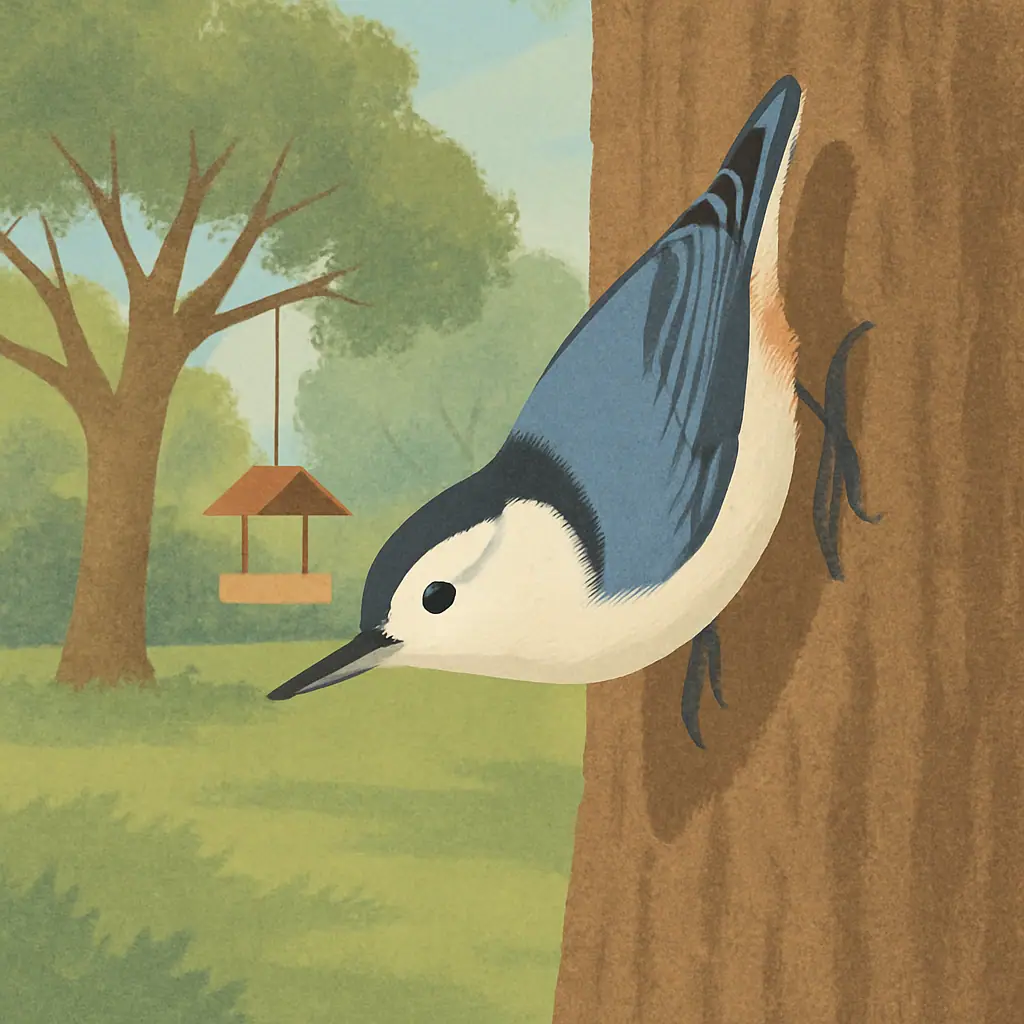
- Compared with nuthatches: the bill is heavier, the body is larger, and the whole impression is more clearly woodpecker-like.
Pros and Cons of Using Behavior and Voice First
It works during partial views
A striped back, trunk-climbing style, and rolling call can all be noticed even when the bird does not sit still in the open.
It lowers the pressure on beginners
You do not need to prove every detail of the belly if the broader pattern already points clearly in one direction.
It fits normal backyard watching
These clues are practical from a window, porch chair, or feeder area instead of requiring a perfect close-up view.
The bird may stay on the far side of the trunk
Even a confident visitor can keep making you wait for the angle you want, especially in leafy trees.
The name can send attention to the wrong place
Beginners sometimes doubt themselves because they cannot see much red on the belly, even when all the better clues are already present.
A Simple Red Bellied Woodpecker Identification Checklist
Use this short checklist the next time a striped visitor lands on a trunk or feeder near your yard.
- Check the back: do you see bold black-and-white barring?
- Check the head: is there red on the crown or nape rather than a plain gray head?
- Check the shape: does the bird look medium-sized with a sturdy bill and upright tree-clinging posture?
- Check the sound: did you hear a rolling call instead of a simple chirp?
- Check the behavior: is the bird climbing trunks, pausing on bark, or visiting suet and peanut feeders?
- Check your first impression: did the bird feel more striped-back than red-belly?
Frequently Asked Questions
Why is it called a Red-bellied Woodpecker if the belly does not look very red?
The reddish wash on the belly is usually faint, while the red on the head and the barred back are easier to notice in everyday birdwatching conditions.
What is the easiest clue for beginners to watch first?
Many beginners do best by starting with the boldly striped back and the upright trunk-climbing posture before worrying about smaller details.
Do Red-bellied Woodpeckers visit feeders?
Yes. They often visit suet and peanut feeders, especially in yards with mature trees or wooded edges nearby.
How can I tell one from a Downy or Hairy Woodpecker?
A Red-bellied Woodpecker usually looks larger and paler-faced, with much stronger barring across the back and more red on the head.
Final Thoughts
Red bellied woodpecker identification gets easier the moment you stop expecting the name to do the work for you. This is a bird you understand through pattern, posture, and sound more than through one bright belly mark.
Look for the striped back, notice the red on the head, listen for the rolling call, and trust the steady trunk-climbing style. Once those clues click together, this beautiful backyard visitor becomes much easier to recognize with confidence.