Among North America's most recognizable birds, the Blue Jay stands out not just for its striking appearance, but for its remarkable intelligence and complex social behaviors. These brilliant blue birds bring drama, beauty, and endless entertainment to any backyard lucky enough to host them.
During my 25 years as a park ranger, I've had countless opportunities to observe Blue Jays in various settings. What continues to amaze me is their problem-solving abilities, family dynamics, and the sheer personality each individual bird displays. Today I'll share what makes these birds truly special and how you can better appreciate their presence in your own backyard.
🔍 Blue Jay Identification: Key Features
Blue Jays are among the easier birds to identify once you know their distinctive characteristics. Their combination of size, color, and behavior makes them unmistakable.
Physical Characteristics
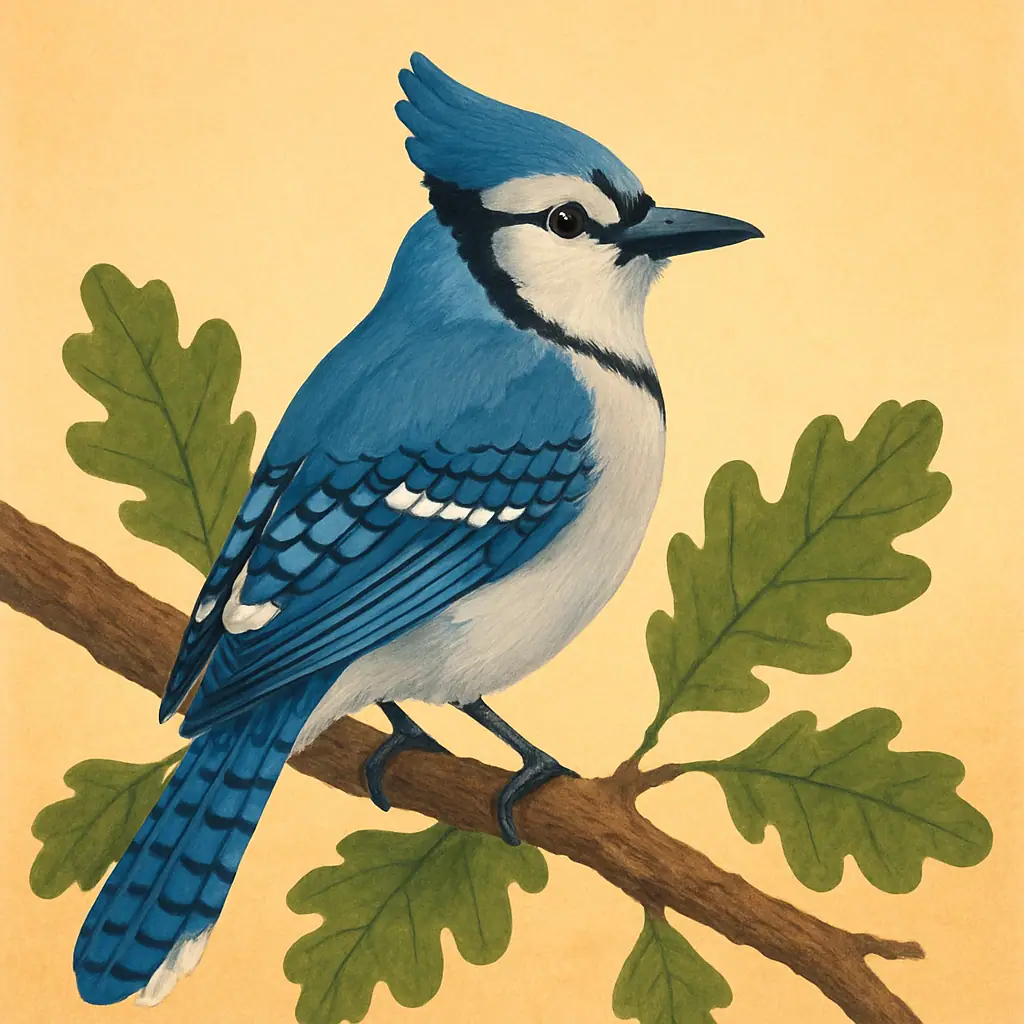
- Size: 11-12 inches long with an 13-17 inch wingspan — larger than most songbirds
- Brilliant blue coloring: Bright blue on back, wings, and tail with white markings
- Gray-white underparts: Clean white chest and belly with blue collar around neck
- Prominent black necklace: Distinctive black band across chest and around head
- Blue crest: Pointed head feathers that can be raised or lowered
- Black bill: Strong, pointed beak perfect for their varied diet
Blue Jay Facts: Intelligence and Behavior
Blue Jays belong to the corvid family, which includes crows, ravens, and magpies — birds renowned for their intelligence. Their cognitive abilities rival those of some primates, making them endlessly fascinating to observe.
Problem-Solving Abilities
Blue Jays demonstrate remarkable intelligence through various behaviors:
- Tool use: They've been observed using twigs to extract insects from bark crevices
- Memory mastery: Can remember thousands of cache locations where they've hidden acorns
- Tactical deception: Will give false alarm calls to scare other birds away from food sources
- Mimicry skills: Can imitate hawk calls so accurately they fool other birds (and sometimes people!)
Social Intelligence
Blue jay behavior within family groups and larger flocks reveals sophisticated social structures:
- Family cooperation: Young birds often help parents raise subsequent broods
- Mob behavior: Groups will band together to drive away predators like owls and hawks
- Communication complexity: Use over 20 different calls to convey various messages
- Seasonal flocking: Form large groups during migration and winter feeding
Diet and Feeding Behavior
Blue Jays are omnivores with catholic tastes, adapting their diet seasonally based on available food sources.
Natural Diet Throughout the Year
Spring and Summer (60% insects, 40% plant matter):
- Caterpillars, beetles, grasshoppers, and other insects for protein-rich diet during breeding season
- Tree saps, particularly from maples and birches
- Fruits and berries as they ripen
Fall and Winter (80% nuts and seeds, 20% other foods):
- Acorns are their absolute favorite — a single jay can cache up to 5,000 acorns per season
- Other nuts: beechnuts, hickory nuts, hazelnuts, and pine seeds
- Leftover fruits, dried berries, and stored insects
Peanuts (in shell or out)
Their favorite feeder food — provides essential fats and protein
Sunflower seeds
Both striped and black-oil varieties are readily accepted
Cracked corn
Especially popular in winter when energy needs are highest
Platform feeders work best
Their size makes small tube feeders difficult to use comfortably
They can be feeder bullies
May monopolize feeders — offer multiple feeding stations to accommodate all birds
🏠 Habitat Preferences and Range
Blue Jays adapt well to various habitats but show distinct preferences that influence where you're most likely to encounter them.
Preferred Habitats
- Mixed woodlands: Especially areas with oak trees for acorn production
- Forest edges: Transition zones between woods and open areas
- Mature suburban neighborhoods: Well-treed areas with diverse landscaping
- Parks and large gardens: Spaces with both trees for nesting and open areas for foraging
Blue Jays show particular affinity for oak trees, which provide both nesting sites and abundant acorn crops. If you want to attract more jays to your property, planting native oak species is one of the most effective long-term strategies.
Nesting and Family Life
Blue Jay family dynamics are particularly interesting, with complex behaviors that extend well beyond the typical breeding season.
Breeding Season Behavior
Blue Jays typically breed once per year, from April through July, with some regional variation:
- Nest construction: Built 10-25 feet high in tree crotches, using twigs, bark, and roots
- Clutch size: Usually 3-6 eggs, incubated by the female for 17-18 days
- Parental care: Both parents feed nestlings for 17-21 days until fledging
- Extended family care: Young may stay with parents for 1-2 months after leaving the nest
Interesting Family Behaviors
What sets Blue Jays apart from many other species is their extended family cooperation:
- Helper birds: Previous offspring often assist parents in raising new broods
- Territorial cooperation: Family groups may work together to establish and defend larger territories
- Knowledge transfer: Young birds learn complex behaviors like cache locations and predator recognition from experienced adults
Migration Patterns and Seasonal Behavior
Blue Jay migration is one of their most mysterious behaviors, with patterns that still puzzle ornithologists.
Partial Migration
Unlike birds that are either migratory or non-migratory, Blue Jays show "partial migration":
- Some populations migrate: Northern birds may travel hundreds of miles south for winter
- Others stay put: Many individuals remain in their breeding territories year-round
- Individual variation: Even within the same population, some birds migrate while others don't
- Irregular timing: Migration timing varies greatly from year to year
This means you might see large flocks of jays moving through in fall, or notice your resident birds suddenly joined by newcomers from farther north.
Frequently Asked Questions
Are Blue Jays aggressive toward other birds?
Blue Jays can be assertive at feeders and will chase away smaller birds, but they're not unusually aggressive. They do provide valuable services by alerting all birds to predators and mobbing threats.
Do Blue Jays really destroy other birds' nests?
While Blue Jays occasionally take eggs or nestlings, studies show this represents less than 1% of their diet. They're much more beneficial to other species than harmful.
Why do Blue Jays mimic hawk calls?
They use hawk mimicry for multiple reasons: to clear feeders of competition, to warn other jays of real threats, and possibly to communicate information about different types of danger.
How can I tell male and female Blue Jays apart?
Blue Jays are sexually monomorphic, meaning males and females look identical. Males are typically slightly larger, but this difference is only apparent when birds are side-by-side.
Conservation and Ecological Impact
Blue Jay populations are currently stable across most of their range, but they face some environmental pressures worth noting.
These intelligent birds play crucial ecological roles as seed dispersers, particularly for oak trees. Their habit of caching thousands of acorns helps establish new oak groves, making them important partners in forest regeneration.
Climate change may affect Blue Jay populations by altering the distribution of oak forests and changing migration patterns. However, their adaptability and intelligence serve them well in adjusting to environmental changes.
By maintaining bird-friendly landscapes with native trees, clean water sources, and chemical-free feeding areas, backyard birders contribute to Blue Jay conservation while enjoying these remarkable birds' presence.
Blue Jays remind us that intelligence comes in many forms. Their problem-solving abilities, complex social structures, and adaptability make them fascinating subjects for observation and appreciation. Every encounter with these brilliant blue birds offers an opportunity to witness the remarkable cognitive abilities of our avian neighbors.