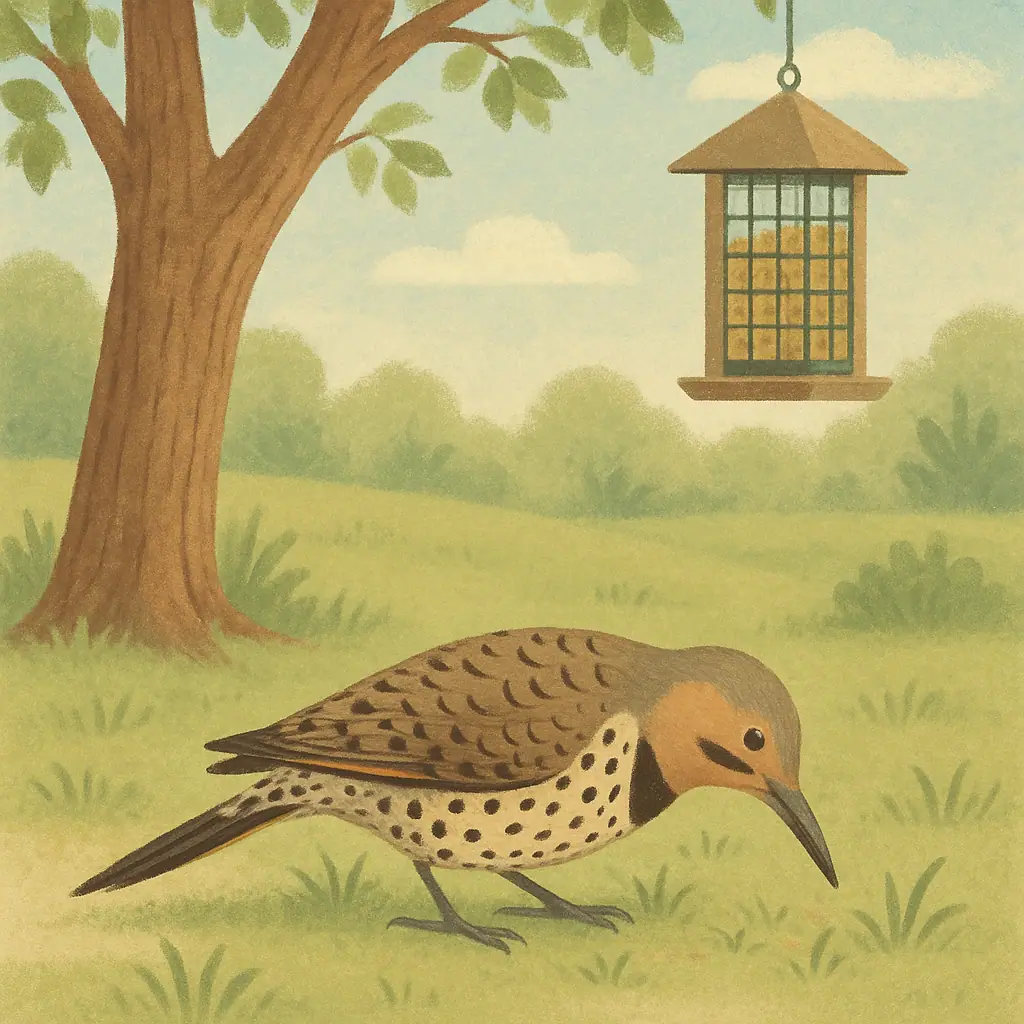
A Northern Flicker can confuse beginners because it does not always behave like the woodpecker they expected. Instead of clinging to a trunk for long stretches, it may land right on the lawn, hop through the grass, and look almost like a large brown songbird from a distance. That is often the moment when a new birdwatcher wonders whether they are looking at a woodpecker at all.
The good news is that northern flicker identification becomes much easier once you know which clues matter most. You do not need to memorize every feather detail. A few calm observations such as the spotted belly, the black bib, the bright white rump in flight, and that surprisingly ground-loving behavior can carry most of the work.
Why Northern Flickers Surprise Backyard Birdwatchers
Many beginners picture woodpeckers as birds that stay on trunks and hammer at bark. Flickers do use trees, but they also spend a lot of time on the ground. Cornell Lab's Northern Flicker overview notes that they are frequently seen on the ground and that the white rump patch is a strong clue when the bird takes off.
That combination explains why the bird can feel so memorable. It looks woodpecker-like in shape, yet its lawn-feeding habit makes it stand out from the other backyard woodpeckers many people know first.
They often feed where you would expect robins
A flicker may walk across open grass, stop, probe the soil, and move forward again in a steady rhythm. If you are used to seeing robins hunt on the lawn, the overall scene may feel more familiar than tree-based woodpecker watching.
They reveal themselves best when they move
At rest, the bird can blend into bark, dry grass, or leaf litter. In motion, the pattern becomes clearer, especially when it flies and shows that bright rump patch and flashes of color in the wings.
Start With the Biggest Field Marks First
If you try to identify a flicker by tiny details at the beginning, the bird can feel overwhelming. Start large. Notice the overall size, the brownish body, the dark spots on the belly, and the black crescent across the chest. Those marks are usually easier to catch than fine facial patterns.
The bird also tends to look longer and leaner than many feeder visitors. If you have already practiced broad shape comparisons in BirdPeep's guide to common backyard bird families, this is a nice place to use that habit. A flicker feels more like a long-bodied woodpecker than a compact feeder bird.
- Large woodpecker shape: longer body and longer bill than a chickadee, finch, or nuthatch.
- Brown overall color: softer and more patterned than the sharper black-and-white look of some other woodpeckers.
- Spotted underparts: dark round spots help the belly stand out when the bird turns sideways.
- Black bib: a bold patch across the upper chest often shows even from a moderate distance.
Watch the Lawn Behavior Before You Chase Plumage Details
One of the kindest ways to identify a Northern Flicker is to trust behavior first. These birds often forage on the ground, where they search for insects with a focused, deliberate manner. If the bird keeps returning to the lawn instead of staying high in the tree canopy, that behavior is part of the identification story, not a distraction from it.
This is also a helpful contrast with BirdPeep's article on Eastern Towhees, another ground-using backyard bird. A towhee scratches through leaf litter like a tiny chicken, while a flicker usually looks larger, longer, and much more woodpecker-shaped.
Look for purposeful ground feeding
Flickers often pause, probe, and move again instead of pecking bark in one spot for long. That steady lawn work is one reason they surprise people.
Notice where the bird returns after flying
Some flickers pop from the lawn to a nearby fence, trunk, or branch, then drop back down to feed again. That short loop between ground and perch is very typical-looking once you have seen it a few times.
The White Rump and Wing Flash Can Seal the Identification
When a flicker takes flight, the most memorable clue may last only a second. Many beginners remember the sudden bright white rump even if they missed every other detail. That flash can be much easier to notice than the finer pattern on the head or back.
Another useful clue is the color in the wings and tail. In much of the East, Northern Flickers show yellow flashes below the wings and tail, while in much of the West they show red or salmon-colored flashes. You do not need to force that detail if the bird flies too quickly, but it is a helpful bonus clue when the light is good.
How Northern Flickers Compare With Other Familiar Backyard Birds
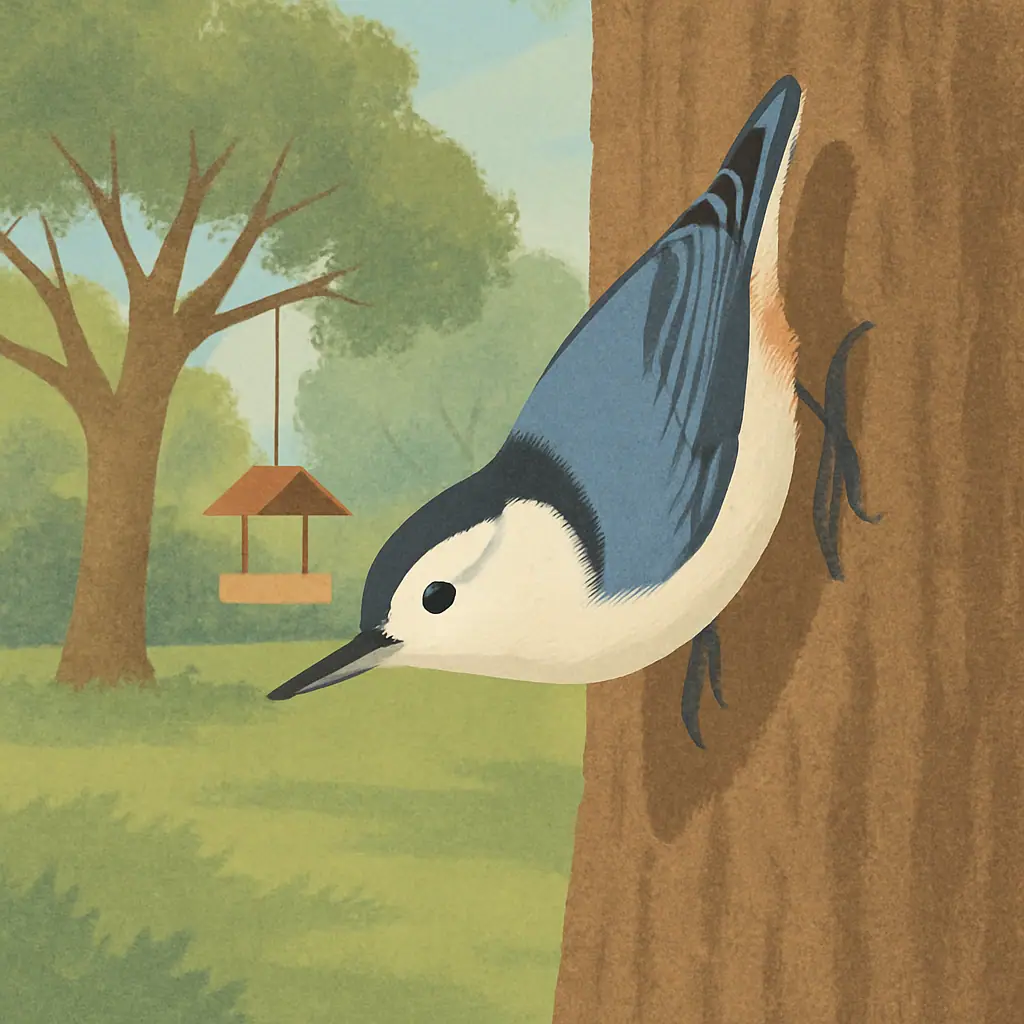
Comparison can calm the process. A Northern Flicker is usually much larger than a White-Breasted Nuthatch, longer-bodied than an American Goldfinch, and less trunk-bound than many people expect from a woodpecker. It may share some lawn space with robins, but the long bill, spotted belly, and upright woodpecker posture give it away.
If you have seen BirdPeep's article on American Goldfinches, that comparison is especially useful in summer and early fall. Goldfinches are much smaller, lighter-looking, and feeder-oriented, while a flicker feels sturdier and more grounded even before you study details.
- Compared with robins: flickers look longer-billed and more patterned underneath.
- Compared with nuthatches: flickers are far larger and spend more visible time on the lawn.
- Compared with goldfinches: flickers are much heavier, less delicate, and not built like small seed-eaters.
- Compared with towhees: flickers look taller, longer, and more obviously woodpecker-like.
What Beginners Often Miss First
Most beginners do not miss the flicker because it is rare. They miss it because they are looking in the wrong place or expecting the wrong style of bird. If you only scan trunks, you may overlook the bird entirely. If you see it on the lawn, you may decide too quickly that it must be something else.
A calmer approach helps. Start with where the bird is, then ask what features support that scene. You are not trying to force the bird into a woodpecker stereotype. You are simply letting this particular woodpecker show you its own habits.
- Do not assume lawn birds are never woodpeckers: flickers are one of the best reminders that behavior can surprise you.
- Do not wait for a perfect view: size, shape, posture, and habitat often narrow the answer quickly.
- Do not ignore the takeoff moment: the white rump flash may be your clearest clue of the whole sighting.
- Do not rush the comparison: one simple contrast with a robin or nuthatch can make the scene much clearer.
Pros and Cons of Using Behavior First for Northern Flicker Identification
It works even during short sightings
Lawn feeding, body shape, and the white rump flash can be noticed quickly without waiting for a perfect still pose.
It reduces beginner overwhelm
Starting with a few big clues makes the bird feel friendlier than chasing tiny head markings right away.
It fits ordinary backyard watching
You can identify many flickers from a porch, kitchen window, or patio without special gear or a long outing.
The bird may fly before you catch every detail
Some sightings are brief, so you may need more than one look before all the clues come together.
Ground feeding can initially mislead beginners
If you expect every woodpecker to stay on bark, you may talk yourself out of the right answer too quickly.
A Simple Northern Flicker Checklist
Use this quick routine the next time a large bird appears on the grass or flies up from the lawn.
- Check the setting: is the bird feeding on open ground or near the yard edge?
- Check the shape: does it look like a large, long-bodied woodpecker with a fairly long bill?
- Check the underparts: can you see dark spots on the belly and a black bib across the chest?
- Check the flight clue: did the bird flash a bright white rump when it took off?
- Check the wing color if possible: did the underwings seem yellow in the East or red in the West?
- Check your confidence level: if you saw only one clue, wait for the next sighting instead of forcing certainty.
Frequently Asked Questions
Is it normal to see a Northern Flicker on the ground instead of on a tree?
Yes. That is one of the species' most distinctive beginner-friendly clues. Flickers often feed on the ground, so lawn behavior should not rule them out.
What is the easiest clue to remember if the bird flies away fast?
For many beginners, the easiest clue is the bright white rump patch that flashes as the bird takes off.
Do all Northern Flickers show the same wing color?
No. Birds in much of the East usually show yellow flashes in the wings and tail, while birds in much of the West usually show red or salmon-colored flashes.
Should I wait for a perfect close view before trying to identify one?
No. A calm combination of lawn behavior, large woodpecker shape, spotted underparts, and the white rump flash is often enough to make a strong beginner identification.
Final Thoughts
Northern flicker identification feels much less mysterious once you accept that this woodpecker may greet you on the lawn instead of on a trunk. That single expectation shift helps the rest of the clues fall into place.
Watch for the ground-feeding habit, the spotted belly, the black bib, and that bright white flash when the bird lifts away. With those few markers in mind, the next flicker that visits your yard may feel less like a puzzle and more like a small, satisfying discovery.