Eastern towhee identification often begins with a sound before it begins with a clear view. You may be standing near a brushy edge, hearing dry leaves kick and rustle, and wondering what small creature is working so busily under the shrubs. Then a chunky, long-tailed bird hops into view for just a second.
That scratchy leaf sound is one of the friendliest clues a beginner can learn. Eastern Towhees spend much of their time low to the ground, turning over leaf litter with a two-footed backward scratch that can look a little like a tiny chicken working the soil.
If you have already enjoyed learning quieter brown birds like the Carolina Wren, the towhee gives you another backyard mystery to solve by behavior first. Colors help, too, but the habit of scratching under shrubs is often the first doorway into recognizing this bird.
Why Eastern Towhee Identification Feels Tricky at First
The Eastern Towhee is not usually a bird that poses politely on an open feeder rail. It prefers thickets, brushy corners, woodland edges, overgrown hedges, and leaf litter. For beginners, that means many sightings are partial: a flash of white in the tail, a rusty side, or a dark head vanishing behind stems.
The National Wildlife Federation describes Eastern Towhees as ground sparrows and highlights the shared white chest and orange sides that help connect males and females in your mind. Their species page is worth keeping handy when you want a plain-language reference from a conservation organization: National Wildlife Federation's Eastern Towhee guide.
Do not worry if your first view feels incomplete. With towhees, behavior, location, and sound carry as much weight as color. The goal is not to name the bird instantly. The goal is to gather a few calm clues until the pattern feels familiar.
Start With the Scratching Behavior
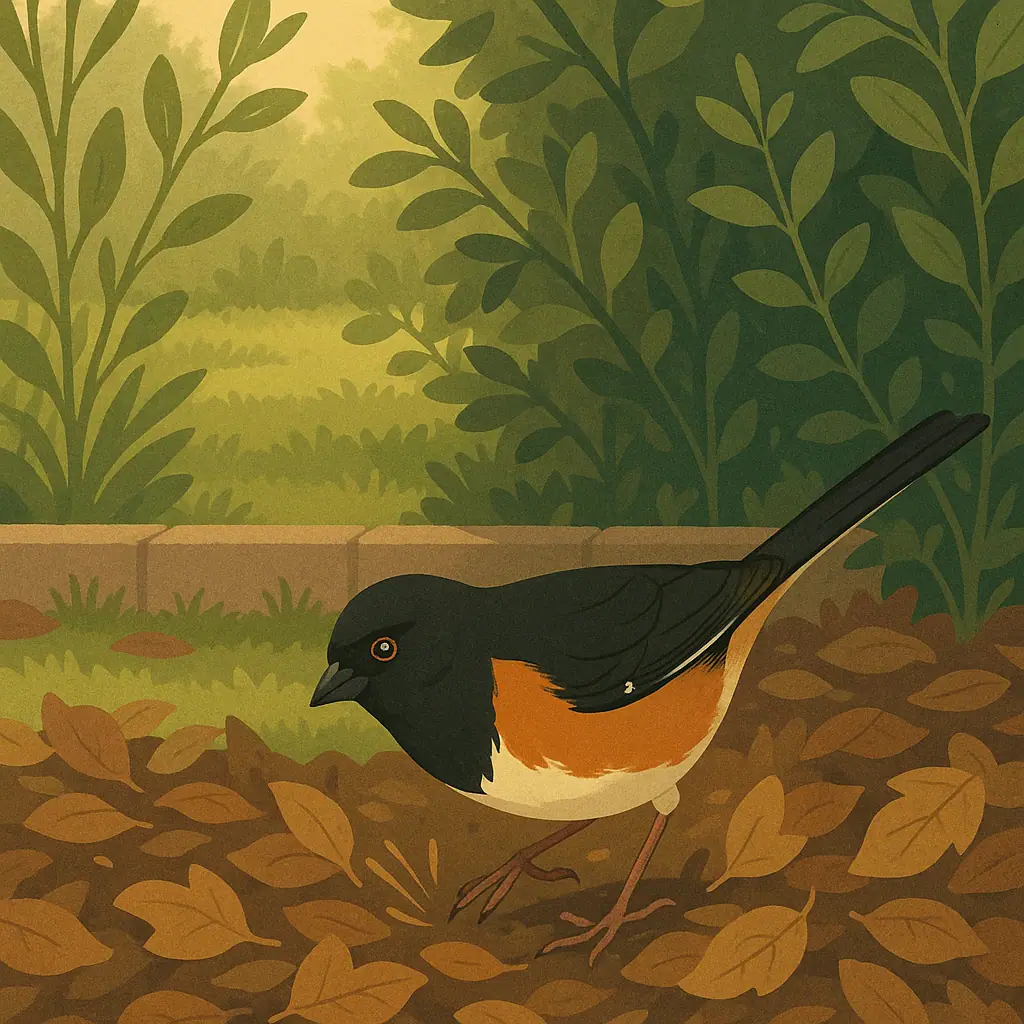
The easiest clue is the towhee's ground work. Watch for a bird that hops backward and kicks both feet through dry leaves. This is not a casual shuffle. It can sound surprisingly loud for a bird of its size, especially on a quiet morning near a fence line or wooded corner.
That behavior matters because many backyard birds feed on the ground, but not all of them scratch with the same energy. Doves stroll. Robins pause and tug. Sparrows peck and hop. Towhees often dig into leaf litter, then pause to look for seeds, insects, and other small food items uncovered by the motion.
Where to look first
Begin near the messy, useful edges of a yard rather than the neat open lawn. A towhee is more likely near shrubs, native plantings, brushy borders, woodland edges, or a quiet pile of leaves than in the middle of a bare patio.
- Listen before you move: dry leaf scratching can point you toward the bird before your eyes find it.
- Scan low: look under shrubs, not just in branches.
- Expect short glimpses: towhees often hop into cover before you get a perfect view.
- Use patience: if you stay still, the bird may return to the same patch of leaves.
This is similar to learning other backyard regulars by habit. A Tufted Titmouse may announce itself with bold movement near feeders, while an Eastern Towhee often asks you to slow down and watch the ground.
Look for the Bold Color Pattern
Once you get a better view, Eastern Towhee identification becomes easier. Adult males are striking: dark head, throat, and upperparts, warm rusty sides, and a white belly. Females are softer brown in the dark areas but keep the same general pattern of warm sides and pale belly.
The long tail is another helpful clue. When the bird flicks or flies, white tail corners may show. Beginners sometimes notice that flash before they notice the full color pattern.
Male, female, and young birds
Do not expect every towhee to look like a field guide cover. A female can appear brown rather than black, and young birds may look streakier and less cleanly marked. The combination of a large sparrow shape, thick bill, long tail, rusty sides, and ground-scratching behavior is more reliable than one color clue alone.
In the eastern United States, this pattern separates Eastern Towhee from many smaller sparrows. In parts of the West, birders may encounter Spotted Towhee instead, which is a close relative with white spotting on the wings and back. If you travel or live near an overlap area, check a range map or a trusted local guide.
Listen for the Chewink Call and Song
Eastern Towhees can be easier to hear than to see. Many birders learn the sharp call often written as chewink or drink-your-tea for the song. Written bird sounds are imperfect, but they give your ear a starting point.
If you hear a clear call from dense shrubs, pause and watch the lower branches and leaf litter. The bird may stay hidden, but it often moves enough to give you a tail flash or a side view.
Noisy leaf scratching
The two-footed backward scratch is one of the most useful first clues because it can be heard before the bird is seen.
Bold side-and-belly contrast
Rusty sides with a pale belly stand out once the bird turns sideways in decent light.
Long tail with white corners
A quick tail flick or short flight may reveal white flashes that help confirm the identification.
Often hidden in cover
Towhees prefer brushy places, so beginners may need several short glimpses before feeling certain.
Females look less dramatic
Brown female towhees can be overlooked if you are expecting the darker male pattern every time.
Separate Towhees from Other Backyard Birds
A towhee is technically in the sparrow family, but it looks larger and chunkier than many small sparrows at a feeder. Compared with a Song Sparrow or Chipping Sparrow, an Eastern Towhee has a heavier body, longer tail, and stronger color blocks.
Compared with a robin, the towhee is smaller and usually much more secretive. Robins often walk upright on lawns. Towhees stay lower in cover and scratch through leaves. Compared with juncos, which many readers know from winter yards, towhees look warmer on the sides and often feel more tied to brush. If you want a gentle comparison point, the Dark-Eyed Junco guide can help you separate another ground-feeding bird from this more hidden, rusty-sided visitor.
Make Your Yard Easier for Towhees to Visit
You do not need a fancy setup to make towhees feel welcome. Because they like low cover and leaf litter, a yard that is slightly too tidy may offer fewer places for them to forage. A quiet shrub border, native plants, and an undisturbed patch of leaves can do more than an expensive feeder.
- Leave a small leaf area: a corner under shrubs gives ground-feeding birds a natural place to search.
- Keep cover nearby: dense shrubs or brushy edges help shy birds feel protected.
- Offer clean water: a shallow bird bath near cover can help many backyard birds, including ground visitors.
- Avoid heavy chemical use: insects and natural food are part of a healthy bird-friendly yard.
- Watch from a distance: towhees are easier to observe when the yard feels quiet.
If your yard already attracts seed-loving and shrub-loving birds such as the Blue Jay, you may already have some of the structure that supports a wider backyard bird community. Towhees simply use the lower, quieter layer of that habitat.
A Simple Eastern Towhee Identification Checklist
When you hear scratching or catch a quick look, use this short checklist. You do not need every clue, but the more that line up, the more confident you can feel.
- Location: brushy edge, shrub base, woodland border, or leaf litter.
- Behavior: strong backward scratching with both feet.
- Shape: large sparrow-like bird with a thick bill and long tail.
- Color: dark or brown upperparts, rusty sides, white belly.
- Tail: possible white flashes at the corners.
- Sound: sharp call or clear song coming from dense cover.
Write down two or three clues in a notebook rather than trying to force an instant answer. Over time, your notes will make the bird feel less mysterious.
Frequently Asked Questions
Do Eastern Towhees come to bird feeders?
They may visit food on or near the ground, but many sightings happen in leaf litter and brushy areas rather than on a feeder perch. Watch below shrubs and near edges.
Is the scratching sound enough to identify an Eastern Towhee?
Not by itself, but it is an excellent clue. Combine the sound with location, long tail, rusty sides, white belly, and a glimpse of the bird's shape.
What is the difference between a male and female Eastern Towhee?
Males show darker black areas on the head and upperparts. Females replace much of that black with brown, while keeping the warm sides, pale belly, and towhee shape.
Why do I only see towhees for a second?
They spend a lot of time in thick cover. Short glimpses are normal, especially in busy yards. Stay still, watch the low shrubs, and let the bird return to its routine.
Final Thoughts
Eastern towhee identification becomes much easier when you stop looking only for a perfect color view. Listen for the leaf scratching, scan low cover, notice the long tail, and then look for rusty sides and a white belly.
A towhee can turn an ordinary brushy corner into a small discovery. Give yourself permission to observe slowly, confirm with a trusted guide when needed, and enjoy the moment when that hidden leaf-scratcher finally steps into view.