Buying binoculars can feel like a bigger decision than many beginners expect. One pair may feel light and easy in your hands, while another feels heavy after only a few minutes. Some focus quickly. Others seem harder to steady. If you are curious about birdwatching but not ready to spend money yet, borrowing a pair first is one of the gentlest ways to begin.
That approach gives you something every new birder needs: real time looking through real binoculars in a calm setting. You can learn whether you prefer a lighter pair, a wider view, or a softer neck strap before you commit. For many older beginners, that borrowed first experience removes pressure and turns shopping into a more confident next step.
Why Borrowing Binoculars First Makes Sense
When you borrow birdwatching binoculars, you get to test comfort as well as image quality. Cornell's guide to choosing binoculars explains that fit, steadiness, field of view, and focusing feel matter just as much as the numbers printed on the body. That is helpful because a beginner often cannot know those preferences until the binoculars are actually in hand.
Borrowing also protects you from rushing into a purchase that sounds right on paper but feels wrong in daily use. A pair that seems perfect online may feel too bulky for your shoulders, too fiddly around the focus wheel, or too dim in the shaded spots where you like to watch.
It lowers the pressure
You can enjoy the first experience without worrying about getting your money's worth. Instead of thinking like a shopper, you can think like a curious observer and pay attention to what makes birds easier to see.
It helps you notice your real needs
Some readers discover they mostly birdwatch from a porch or kitchen window and do not need a large, expensive pair. Others learn they want something comfortable enough for a park walk or guided outing. That kind of clarity usually comes after use, not before.
Where to Borrow Birdwatching Binoculars
One of the nicest surprises for beginners is that borrowing options often show up in ordinary community places. Audubon's article about borrowing binoculars from libraries describes how libraries around the United States have created birding kits and backpack programs that let people try birding without buying gear first.
Some local libraries now treat binoculars the same way they treat other hobby equipment. The Lewis & Clark Library's official Library of Things page is a good example, showing a birdwatching kit with binoculars and field guides available for checkout. If your own town does not advertise a birding kit, it is still worth calling and asking whether they lend outdoor gear or participate in a Library of Things program.
Borrowing opportunities also appear at nature centers, bird clubs, and public programs. The National Park Service page for a bird walk at Hopewell Culture National Historical Park notes that a limited number of binoculars are available for loan, which is exactly the kind of small, low-pressure event that works well for beginners.
- Public libraries: ask about birdwatching kits, outdoor discovery backpacks, or a Library of Things collection.
- Nature centers: many centers keep a few pairs on hand for walks, classes, or family programs.
- Bird clubs and Audubon chapters: guided walks sometimes have spare loaner pairs for newcomers.
- Parks and refuges: ranger-led events may offer loaners, especially during seasonal counts or beginner programs.
If you want a comfortable way to use borrowed binoculars once you find a pair, BirdPeep's guide to birdwatching from your car at parks and refuges can help you choose a low-effort first outing with good views and easy breaks.
What to Check First Before You Borrow
Not every borrowing situation works the same way, so a few questions up front can save frustration. You do not need to interrogate the staff. Just think in terms of comfort, timing, and basic care.
- Ask how long you can keep them: a one-day loan may be enough for a park walk, while a one- or two-week checkout lets you test the pair in different light and weather.
- Ask whether a strap, case, or guide is included: those extras make the first outing calmer and reduce the chance of drops.
- Check whether the binoculars feel manageable: hold them for a minute rather than only lifting them once. Your neck, wrists, and shoulders will tell you a lot.
- Make sure the focus wheel turns smoothly: you want a pair that adjusts without a fight.
- Ask about cleaning expectations: borrowed gear should go back dry, capped, and treated gently.
How to Test Borrowed Binoculars Step by Step
Once you have a borrowed pair in hand, resist the urge to judge everything in the first thirty seconds. Give yourself one quiet outing and one short home session. That combination usually tells you more than a rushed first impression.
Start at home or close to home
Look out a kitchen window, sit on a porch, or stand near a familiar feeder. A calm setting lets you learn the focus wheel and eye position without also trying to navigate a trail or keep up with a group. If you already enjoy slow, restful observation, BirdPeep's post on the joy of slow birding pairs nicely with this kind of gentle first test.
Then try one simple outing
Take the binoculars to a nearby park bench, refuge pullout, or easy nature center path. Notice whether they still feel comfortable after ten or fifteen minutes. Pay attention to whether you can lift them smoothly when a bird appears, or whether you begin to feel arm or neck strain.
- Focus on something still first: a feeder, signpost, tree trunk, or fence line is easier than a moving bird.
- Test how quickly you can find the bird again: a wide, steady view helps more than extra magnification when you are new.
- Notice the weight after a few lifts: comfort matters more than bragging rights.
- Try them in shade and sun: some pairs feel very different once the light changes.
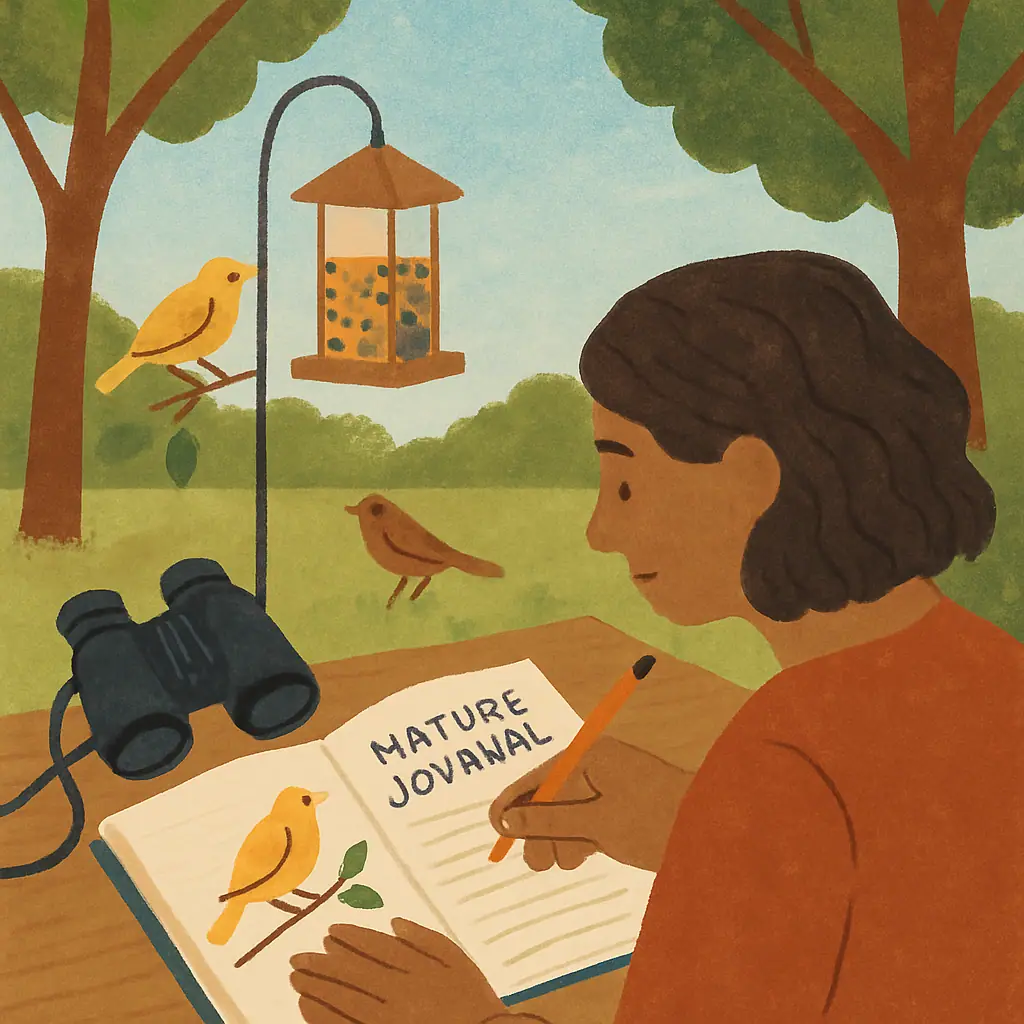
- Write down one or two likes and dislikes: simple notes make later shopping much easier.
Common Mistakes When Borrowing Before Buying
The biggest mistake is treating one borrowed pair as the answer to every question. Borrowing is for learning your preferences, not for proving that one specific model is perfect or useless.
- Judging too quickly: first impressions can improve once your hands and eyes settle into the movement.
- Ignoring comfort: sharp-looking optics do not help much if the pair feels tiring after ten minutes.
- Testing only indoors: birdwatching happens in mixed light, so try the binoculars outside too.
- Borrowing without a plan: even one short porch session and one easy outing give you better information than carrying them around aimlessly.
- Feeling embarrassed to ask beginner questions: library staff, naturalists, and walk leaders hear those questions all the time.
If you enjoy community events and want another relaxed place to try borrowed gear, BirdPeep's article on your first local bird festival can help you picture what a low-pressure beginner event feels like before you go.
Pros and Cons of Borrowing Binoculars First
You learn your comfort preferences before spending money
A borrowed pair quickly shows whether weight, grip, focus feel, and steadiness match the way you like to watch birds.
You can begin birdwatching right away
Borrowing removes the feeling that you must finish shopping before the hobby can start.
You often get a calmer first experience
Loaner programs at libraries, parks, and guided walks are usually designed to welcome beginners, not impress experts.
You may not get a long test period
Some programs lend binoculars only during an event or for a short checkout window.
The available pair may not match your future budget or style
Loaner binoculars are useful for learning, but they do not always represent the exact size or design you will want later.
A Simple Borrow-Before-Buy Checklist
Keep this checklist short and practical so the process stays friendly.
- Find one borrowing source: library, nature center, club, park, or guided walk.
- Ask about loan time and included gear: strap, case, guide, or cleaning cloth.
- Test the weight honestly: hold the binoculars long enough to notice comfort.
- Try one home session and one short outing: that is usually enough for a first opinion.
- Note what felt easy and what felt awkward: focus speed, steadiness, brightness, and neck comfort.
- Use your notes when you shop later: you are shopping from experience, not guesswork.
When to Get Extra Help
If you borrow a pair and still feel unsure, that does not mean you failed the test. It usually means you need one more calm comparison or a little guidance from someone who has handled a few models before.
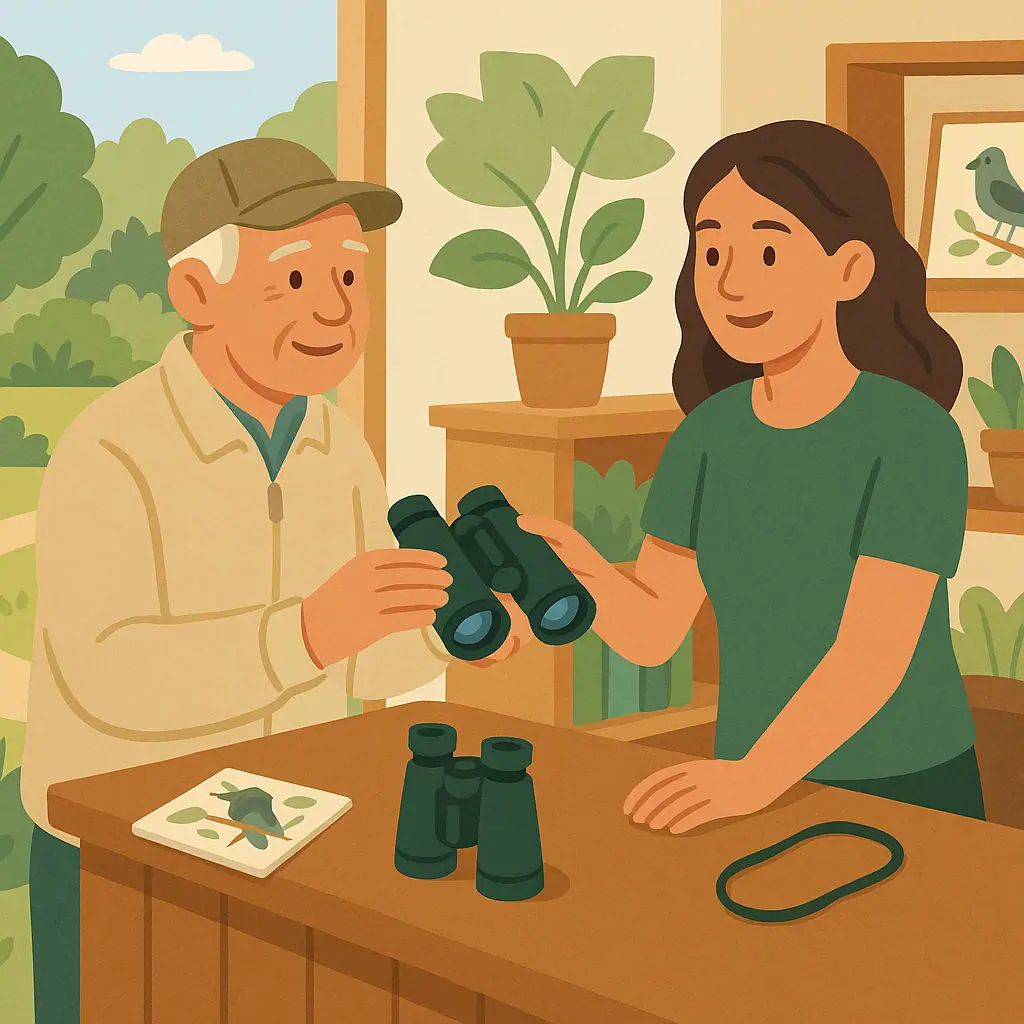
A naturalist on a guided walk, a bird club volunteer, or even a helpful librarian may be able to show you simple differences between a lighter compact pair and a more traditional full-size pair. The goal is not to memorize technical language. It is to leave knowing what feels comfortable in your own hands.
Frequently Asked Questions
Can I really start birdwatching with borrowed binoculars?
Yes. Borrowing is one of the easiest ways to begin because it lets you practice the habit before you commit to a purchase.
What if the borrowed pair feels heavy?
That is useful information. Write it down, shorten the outing, and remember that lighter or more compact options may suit you better later.
Should I borrow more than one pair before buying?
If you can, yes. Even a quick comparison between two sizes or styles can make your future choice much clearer.
Do I need to know binocular terms before I borrow?
No. A beginner only needs to notice whether the pair feels comfortable, focuses easily, and helps birds feel easier to find and follow.
Final Thoughts
Borrowing binoculars before buying your own is a kind, practical way to enter birdwatching. It gives you a chance to learn what feels good, what looks clear, and what fits the pace of your outings without pressure.
One borrowed pair will not answer every question, but it can answer the most important one: whether birdwatching feels more welcoming once you can bring the birds a little closer. For many beginners, that small borrowed step is exactly what turns interest into a lasting hobby.