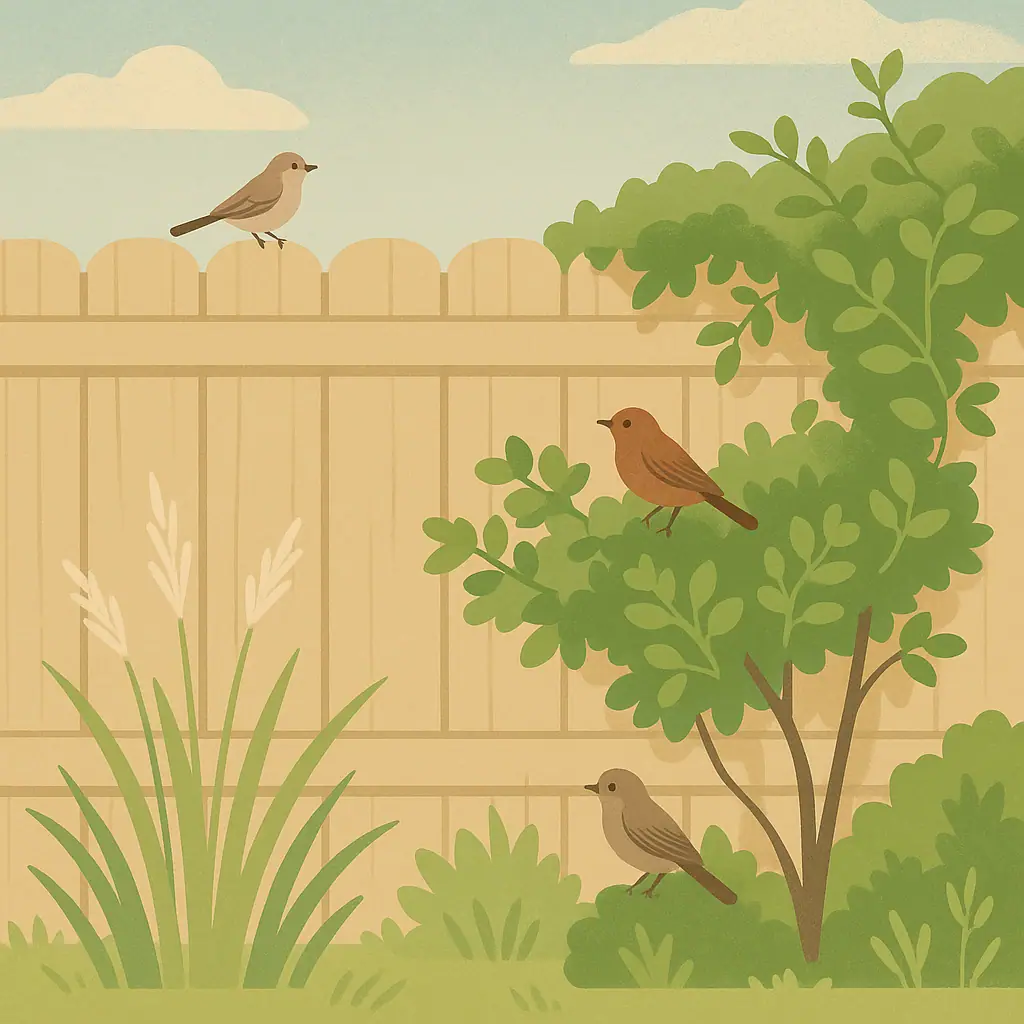
A fence line can feel like dead space in a backyard until birds start using it. What looks like a simple boundary to us can become a travel lane, a hiding place, a lookout, and a gentle feeding edge when it offers more than one layer of cover. That is why a bird friendly fence line is often less about adding one dramatic feature and more about arranging a few calm, useful layers that make birds feel protected.
The good news is that this does not have to become a big landscape project. A beginner-friendly fence line can start with one low layer near the ground, one middle layer of shrubs or branching plants, and a few vertical elements that create shelter without turning the whole yard dark or crowded.
Why a Layered Fence Line Helps Birds Feel Safer
Birds often avoid wide, exposed stretches where they have nowhere to duck if something startles them. A fence line with low plants, medium cover, and a few taller stems or vines gives them short, safe hops instead of one long risky crossing. Audubon's article on creating vertical layers for bird habitat is helpful here because it explains how multiple layers of vegetation make a yard more useful to birds than a simple lawn-and-fence setup.
That idea works especially well along a property edge because birds already use borders to move between cover. If your yard has felt too open lately, BirdPeep's guide to creating a quiet corner that makes birds feel safe pairs nicely with this approach and shows why sheltered edges matter so much.
Think in short hops, not one big hedge
You do not need a tall solid wall of plants from one end to the other. Birds often respond well to a rhythm of cover: a tuft of low growth, a branching shrub, a small opening, then another protected spot. That pattern lets them move, pause, and scan without feeling trapped.
Leave room for your own routine
A bird-friendly space that is hard for you to manage will not stay bird-friendly for long. Leave a narrow walking or reaching lane so you can refill water, pick up debris, and trim lightly without stepping into the planting area itself.
Build the Fence Line in Three Simple Layers
The easiest way to plan a bird friendly fence line is to build from the ground up. Start low, then add middle cover, then finish with a few vertical accents that create depth without making the fence feel heavy.
- Low layer: use grasses, native groundcovers, or low flowering plants that soften the base of the fence and create insect activity close to the ground.
- Middle layer: add shrubs or branching perennials that give birds the kind of side cover they actually use for quick hiding and short waits.
- Upper layer: use vines, taller stems, or a light trellis section where appropriate so birds have a few higher perches without losing the open feel of the yard.
If you want ideas that naturally support berries, shelter, and seasonal food, BirdPeep's post on native plants birds love by U.S. region is a good next read before you choose specific species.
Audubon's Native Plants database is also worth checking once you know your ZIP code, because it helps you find bird-friendly plants that fit your exact area instead of relying on a generic national list.
Choose Plants That Make the Edge Useful All Year
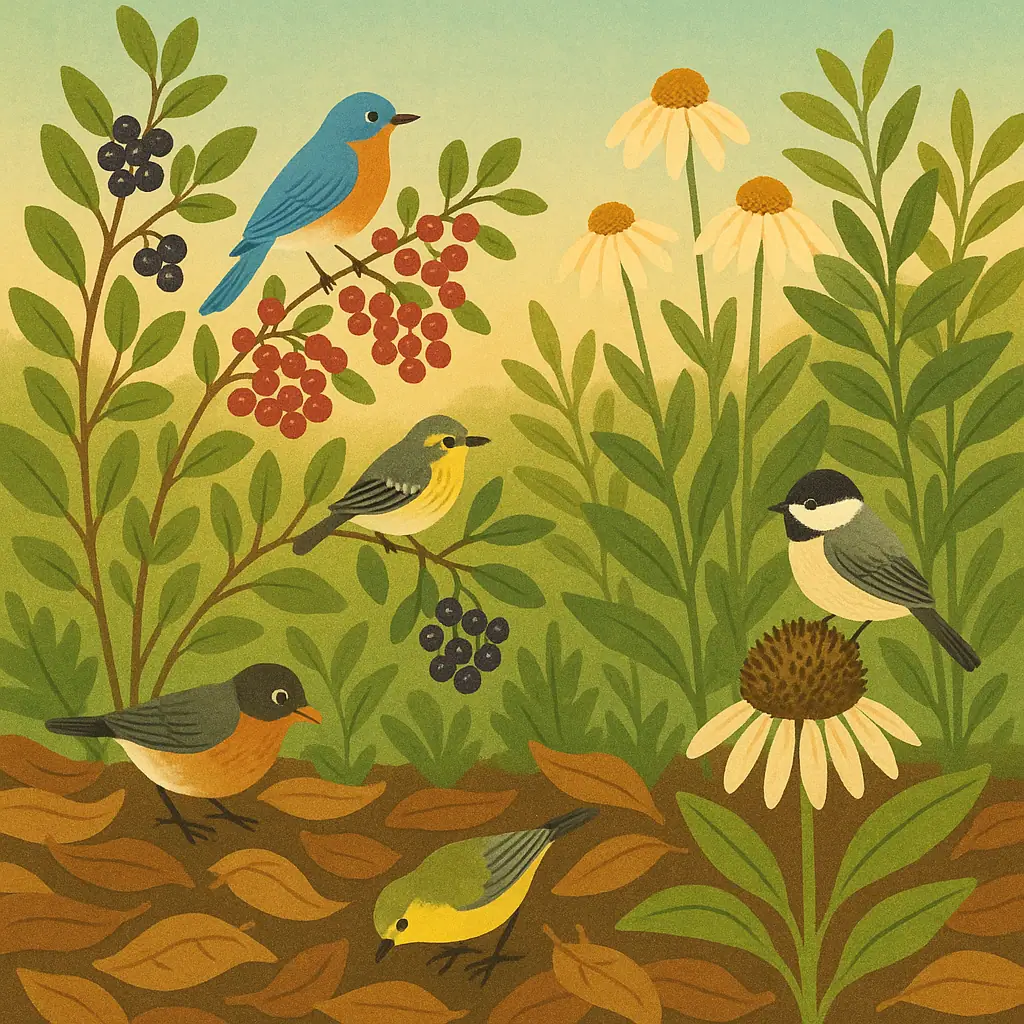
A fence line works best when it does more than look good for one month. Try mixing plants that offer different benefits across the year: spring flowers for insects, summer cover for nesting and shade, fall berries or seedheads, and winter structure that still breaks wind and hides movement.
This is also where restraint helps. Instead of packing every foot with dense growth, choose a few reliable plant groupings and repeat them. Birds notice usable structure more than fancy variety, and repeated clusters are easier for most people to water, prune, and understand over time.
If your yard already has a feeder area nearby, BirdPeep's article on safe shelter for birds with shrubs, evergreens, and brush piles can help you connect the fence line to the rest of the habitat instead of treating it like a separate project.
Keep the Fence Line Bird-Friendly Without Letting It Get Messy
Many beginners worry that a habitat-style edge will always look unruly. It does not have to. A simple routine of light cleanup, fresh water nearby, and careful trimming usually does more good than constant reshaping.
- Trim in small sections: avoid cutting the entire fence line at once, especially during nesting season, so birds do not lose all of their cover in a single day.
- Keep a clear access strip: a narrow path or stepping space makes it easier to check for litter, refill a bird bath, and notice broken branches.
- Leave some natural texture: seedheads, leaf litter under shrubs, and a few twiggy stems can support insects and ground-feeding birds.
- Skip pesticides when possible: birds benefit more from a lively edge than a perfectly polished one.
If the fence line sits near a patio or seating area, BirdPeep's guide to making a small patio more welcoming to birds can help you soften the transition so the space still feels inviting for people.
Pros and Cons of Using a Fence Line as Bird Habitat
It turns overlooked space into real cover
A fence line already marks a natural edge, so even modest planting can quickly become useful for short hops, hiding, and resting.
It connects feeders, shrubs, and open yard space
Birds often move more confidently when they can travel between protected spots instead of crossing bare ground all at once.
It can stay manageable for beginners
Because the project follows one narrow line, it is easier to expand slowly and maintain in sections instead of redesigning the whole yard.
Too much density can become hard to reach
If every inch fills in at once, watering, cleanup, and careful trimming become more awkward than they need to be.
Plant choices still need to match your region
A beautiful idea on paper can disappoint if the plants are not suited to your local conditions, light, or soil.
A Simple Fence Line Checklist Before You Plant
Use this short checklist to keep the project calm and practical.
- Check sun and moisture: notice whether the fence line stays dry, shaded, or windy for most of the day.
- Check bird traffic: look for places where birds already perch, enter the yard, or tuck into nearby shrubs.
- Check access: make sure you can still reach the area safely for watering and light maintenance.
- Check layers: plan for low, middle, and upper structure instead of one flat row of identical plants.
- Check seasonal value: include at least some plants or stems that still offer cover when flowers are gone.
- Check restraint: start with a short section first so you can learn what your yard and routine handle well.
Frequently Asked Questions
Does a bird-friendly fence line need to be very dense?
No. Birds usually respond well to layered cover with short protected gaps, not necessarily one thick wall of growth from end to end.
What is the easiest first plant layer to add?
Many beginners start with a few low native plants or grasses at the base of the fence, then add one or two shrubs after watching how the area behaves for a season.
Can I make a fence line bird-friendly in a small yard?
Yes. Even a short edge can become useful if it offers one or two layers of cover, nearby water, and a calm route between sheltered spots.
How do I avoid turning the space into extra work?
Start with a small section, repeat a few reliable plants, and leave enough reach-in space so ordinary cleanup and watering stay easy.
Final Thoughts
A bird friendly fence line does not need to be fancy to work well. It just needs to feel safer and more useful to birds than a bare edge felt before.
If you begin with one short section and build it in layers, you can create a gentler path through your yard for birds and a more satisfying place to watch them from home. Small structure changes often lead to the biggest feeling of life returning to a backyard.