Learning how to attract goldfinches is mostly about offering the kind of quiet, seed-rich yard they already understand. These cheerful little finches are not looking for anything fancy. They want small seeds, safe perches, clean water, and enough cover nearby to feel comfortable.
The good news is that a goldfinch-friendly yard can be gentle on the gardener too. A few seed heads left standing, a clean finch feeder, and a shallow bird bath can do more than a complicated setup that is hard to maintain.
If you recently learned to identify American Goldfinches, this next step helps you make your yard more welcoming without turning birdwatching into a chore.
Why Goldfinches Like Seed-Rich Yards
Goldfinches are small finches built for seeds. Audubon's field guide describes American Goldfinches as seed-eating finches that use thistles, weeds, grasses, sunflower, and feeders. Its American Goldfinch field guide is a useful verified source for food, habitat, nesting, and basic field marks.
That seed-loving habit is what makes them such satisfying backyard visitors. Instead of trying to lure them with scraps or complicated treats, you can focus on the simple foods they naturally use: flower seeds, native plant seeds, nyjer, and sunflower.
Start with Flowers That Go to Seed
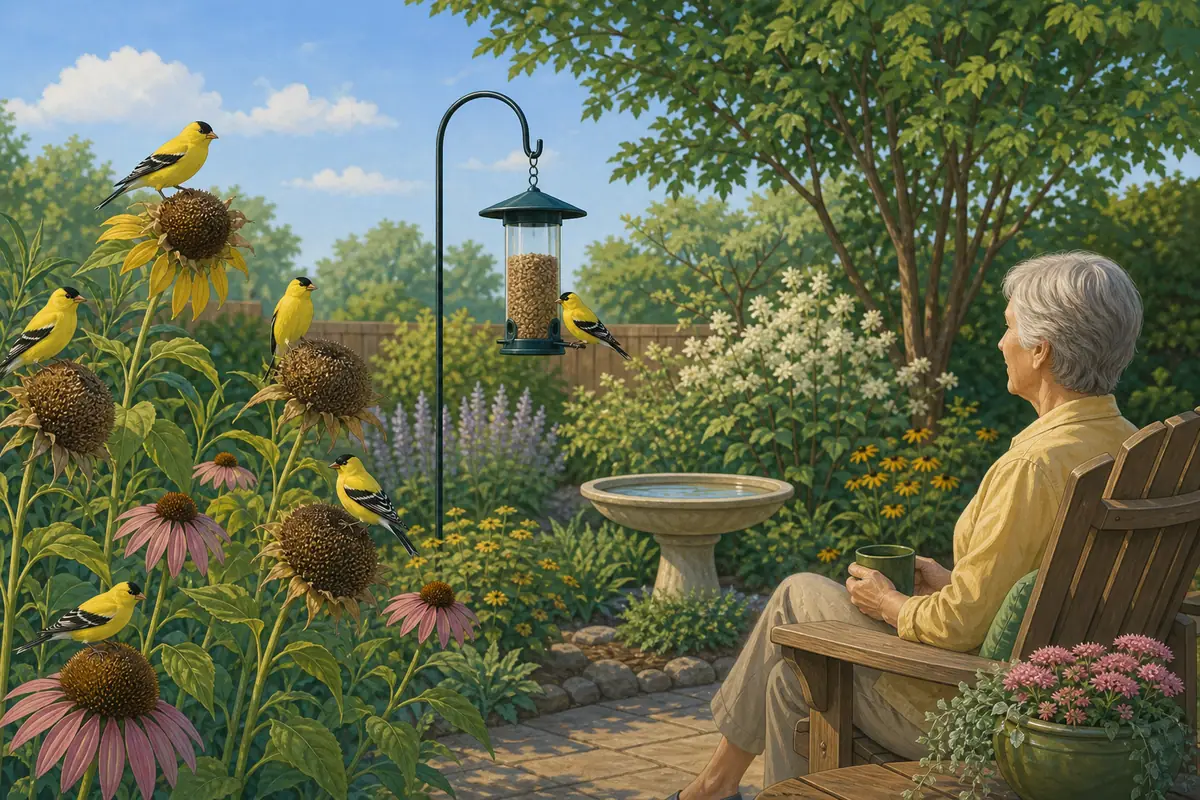
Flowers help goldfinches in a different way than a feeder does. A feeder offers a steady station. A flower bed gives them a natural place to perch, cling, and pick at seed heads while you watch from a chair or window.
For a beginner, the best flower choices are the ones you can leave standing after bloom. Sunflowers, coneflowers, black-eyed Susans, asters, cosmos, zinnias, and native thistles can all support the kind of small-seed feeding goldfinches enjoy. What grows best depends on your region, so local native plant lists are worth checking before you buy.
BirdPeep's guide to native plants birds love by U.S. region can help you think beyond one flower and build a yard that offers food, cover, and seasonal interest.
Leave some seed heads standing
A tidy garden does not have to be stripped bare. If a plant is healthy and not causing a problem, let a few seed heads remain into late summer and fall. Goldfinches may balance on them with surprising grace, bending stems while they feed.
Plant in small clusters
One lonely flower can help, but a small cluster is easier for birds to notice and easier for you to watch. Even a modest sunny corner with several seed-bearing plants can become a regular goldfinch stop.
Offer the Right Seed in the Right Feeder
Feeders can help you attract goldfinches more reliably, especially when natural seed is scarce or your garden is still young. Nyjer seed and sunflower chips are two beginner-friendly choices for finches. The most important rule is freshness. Tiny oily seeds can spoil or dry out, and birds often ignore seed that has been sitting too long.
If you are still choosing equipment, BirdPeep's complete guide to bird feeders for beginners explains common feeder styles in plain language so you can avoid buying something frustrating to fill or clean.
- Use a finch feeder for nyjer: Small ports or mesh help reduce waste and make it easier for finches to feed.
- Try sunflower chips: Hulled sunflower is easier for many small birds to eat, but it must stay dry because it can spoil quickly.
- Avoid old seed: If seed smells musty, looks wet, or clumps together, discard it instead of topping it off.
- Start small: Fill only part of the feeder until you know how quickly your birds are eating.
Keep Seed Fresh and the Area Calm
Goldfinches may avoid a feeder that feels exposed, crowded, dirty, or unreliable. Place the feeder where you can see it, but give birds nearby shrubs, small trees, or taller plants they can use as a waiting spot. They often approach in short, cautious movements before settling in.
Freshness matters just as much as placement. A clean feeder with a modest amount of fresh seed is better than a full feeder that sits untouched through rain and heat. For more detail on storage and moisture, see BirdPeep's article on keeping bird seed fresh and dry.
Add Water and Safe Cover Nearby
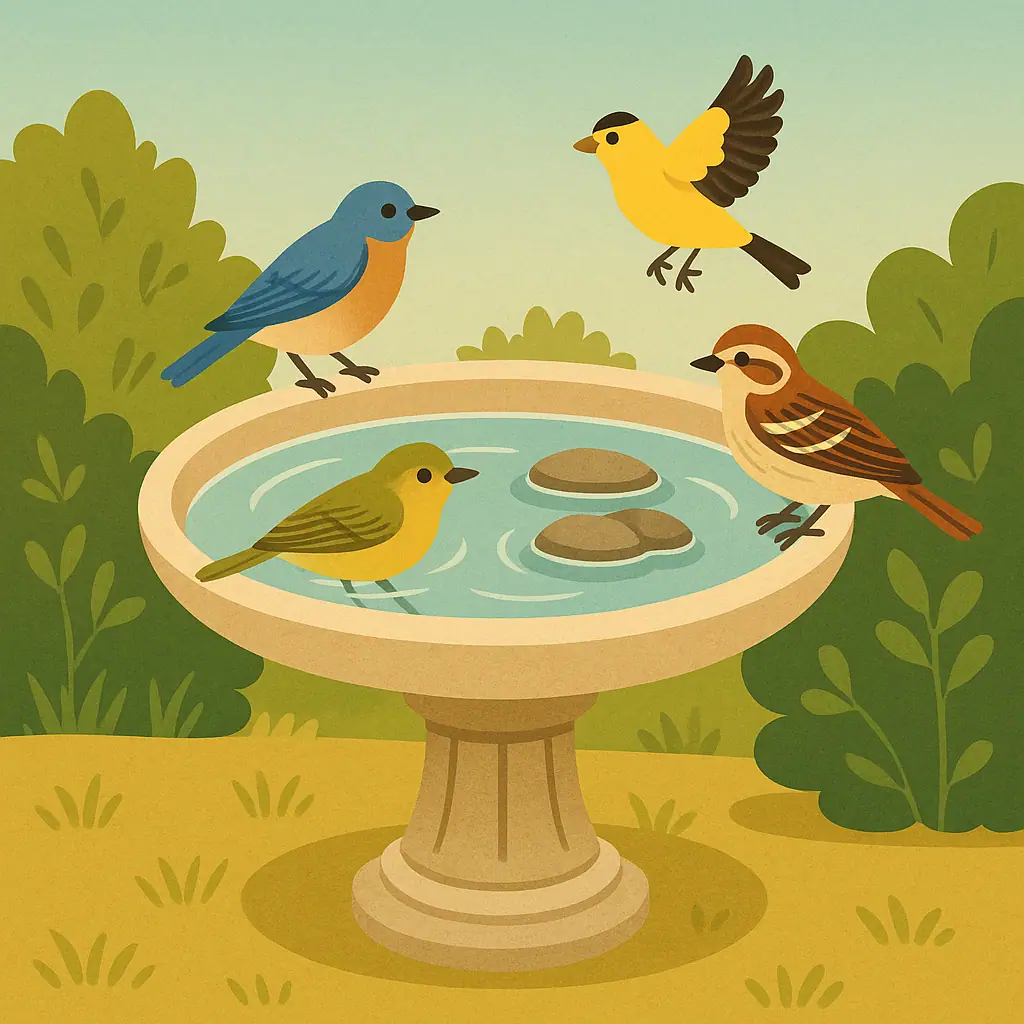
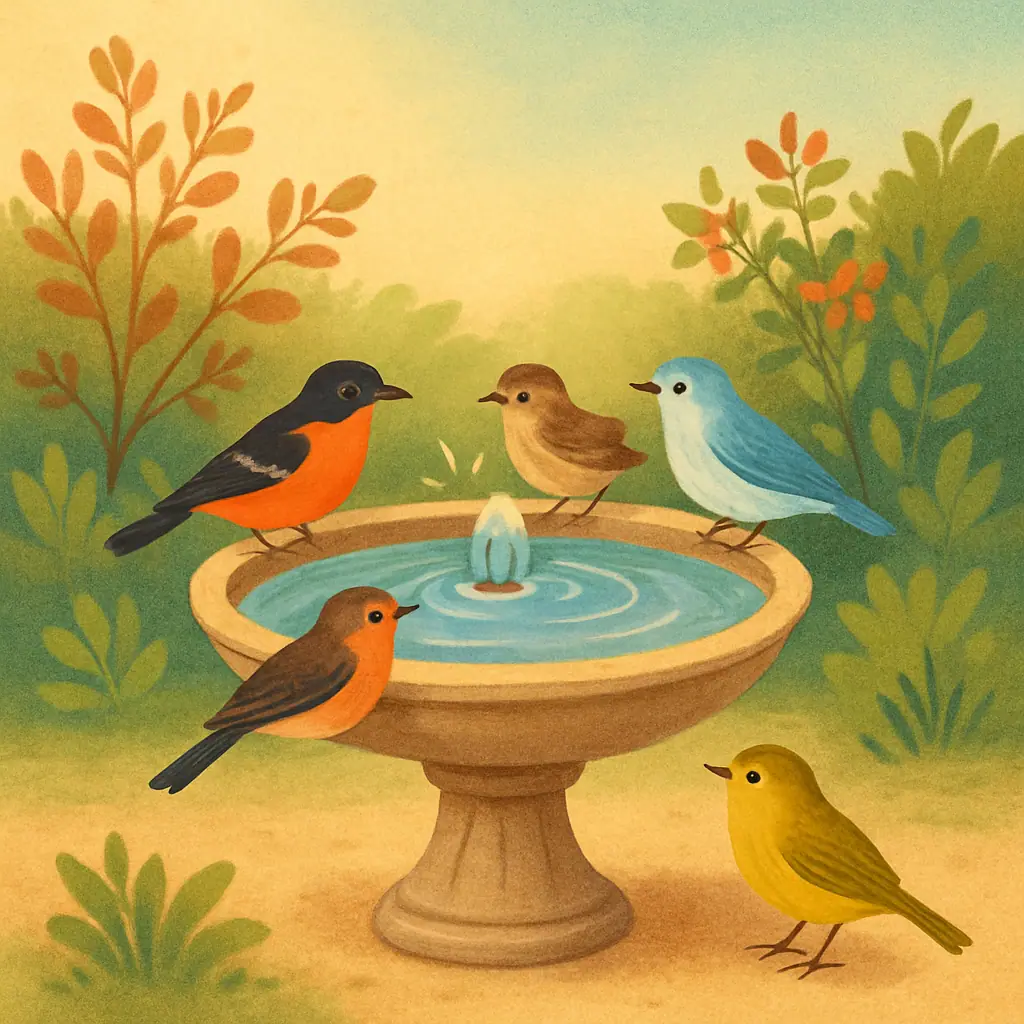
A shallow bird bath can make a seed-focused yard more complete. Keep the water fresh, place the bath where you can clean it safely, and avoid making it so deep that small birds struggle to use it. A few small stones can give birds steady footing.
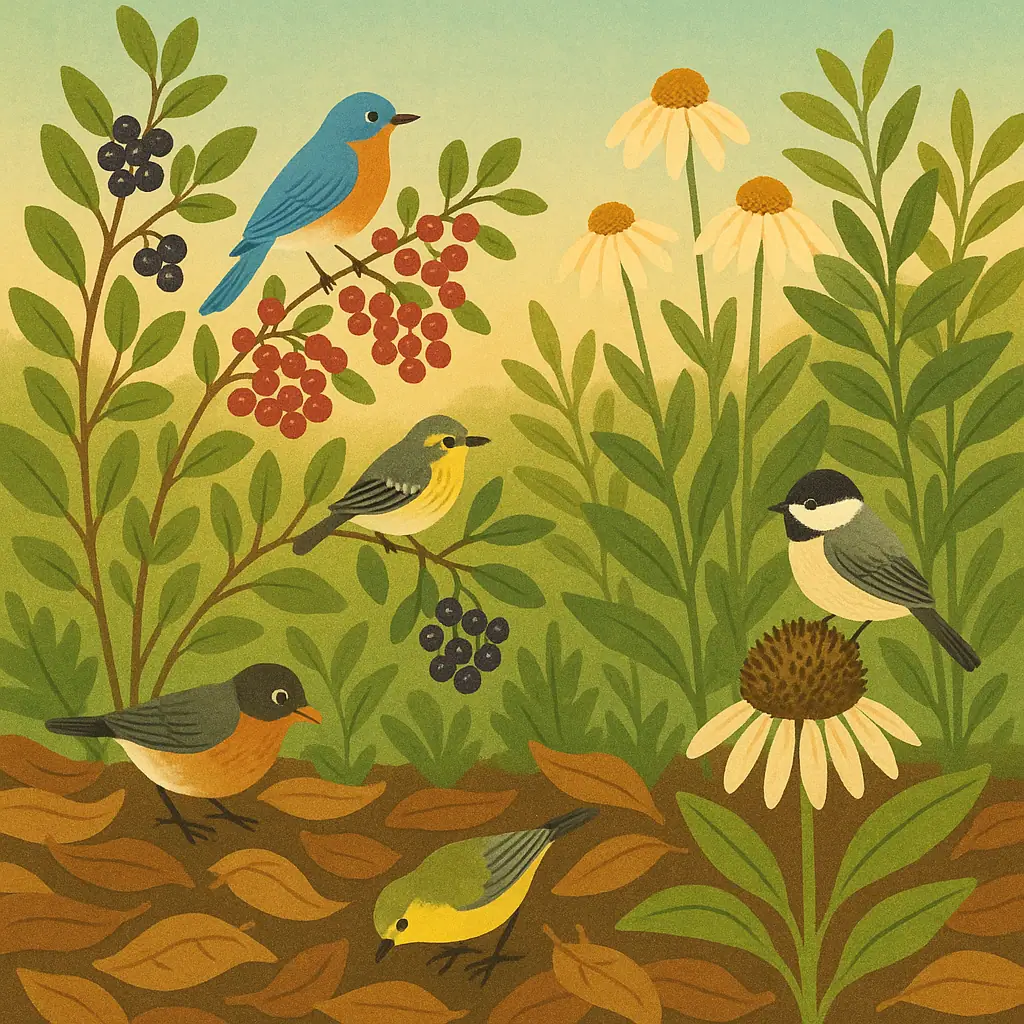
Cover is the quiet partner to food and water. Shrubs, small trees, native grasses, and layered plantings give birds a place to pause before visiting the feeder. They also make the yard feel more natural than a single feeder standing in open lawn.
Watch for window reflections
If your feeder or flower patch is near a window, think about reflections. Screens, exterior decals, or moving the feeder can reduce collision risk. A feeder very close to a window or much farther away is often safer than one placed at a confusing middle distance, but each home layout is different.
Keep pets away from feeding spots
Goldfinches feed low, cling to stems, and sometimes gather on the ground beneath plants or feeders. Keeping cats indoors and giving birds open sight lines around the feeding area helps make the space less risky.
Pros and Cons of Attracting Goldfinches with Flowers and Feeders
Natural flowers create lovely watching moments
Goldfinches feeding on seed heads are easy to enjoy from a chair, window, or patio without needing to get close.
Feeders give beginners a steady starting point
A small finch feeder with fresh seed can make sightings more predictable while the garden matures.
The same habitat helps other birds too
Native flowers, water, cover, and clean feeding routines can support many seed-eating backyard visitors.
Seed freshness takes attention
Nyjer and hulled sunflower can become stale or damp, so small refills and regular cleaning are important.
Flowers need patience
A new planting may not draw birds immediately, especially before the plants bloom and form useful seed heads.
A Simple Goldfinch Yard Checklist
Use this short checklist before you buy more supplies. Often, one or two changes are enough to make the yard more inviting.
- Fresh seed: Is the nyjer or sunflower dry, clean, and recently replaced?
- Clean feeder: Can you wash and refill it without strain or awkward reaching?
- Seed flowers: Do you have at least one sunny patch where flowers can go to seed?
- Safe cover: Are shrubs, small trees, or taller plants close enough for birds to pause?
- Clean water: Is there a shallow bath you can refresh easily?
- Window safety: Are nearby reflections reduced with screens, decals, or safer placement?
- Quiet viewing spot: Can you watch without walking directly toward the feeder each time?
Frequently Asked Questions
What is the best seed for attracting goldfinches?
Nyjer seed and sunflower chips are both common choices for goldfinches. Start with a small amount, keep it fresh, and notice which one your local birds prefer.
What flowers attract goldfinches?
Goldfinches often use flowers that produce small seeds, such as sunflowers, coneflowers, black-eyed Susans, asters, cosmos, zinnias, and native thistles. Choose plants suited to your region.
Why are goldfinches ignoring my feeder?
The seed may be stale, wet, or unfamiliar; the feeder may feel too exposed; or natural food may be abundant nearby. Clean the feeder, refresh the seed, and give the birds time.
Do goldfinches need a bird bath?
They can visit without one, but clean shallow water makes a yard more useful. Keep the bath easy to reach for cleaning and avoid letting water sit dirty for long periods.
Final Thoughts
Learning how to attract goldfinches is not about making the busiest feeder on the block. It is about creating a calm place with fresh seed, seed-bearing flowers, clean water, and enough cover for small birds to feel at ease.
Start with one simple improvement this week. Leave a few flower heads standing, refresh a small finch feeder, or clean the bird bath. Then sit back and watch. Goldfinches often reward patient yards, not complicated ones.