Learning how to store bird seed is one of those small backyard habits that quietly improves everything. Fresh, dry seed is easier for birds to eat, less wasteful for you, and much less frustrating than finding a feeder clogged with damp seed after a storm.
The good news is that you do not need a fancy storage system. A sturdy container, a dry location, and a simple refill routine can keep your seed in better shape through humid summers, rainy weeks, cold snaps, and everyday backyard surprises.
Why Store Bird Seed Carefully?
Bird seed is still food. Once a bag is opened, moisture, heat, insects, rodents, and time can all make it less useful. Seed that smells stale, looks clumped, or has been sitting wet in a feeder is not something to save for later.
Project FeederWatch, a Cornell Lab and Birds Canada program, explains why keeping feeder seed dry matters, especially in warm and wet conditions. Their guidance is a helpful reminder that clean, dry feeding habits protect both the birds and the joy of watching them.
Start With the Right Storage Container
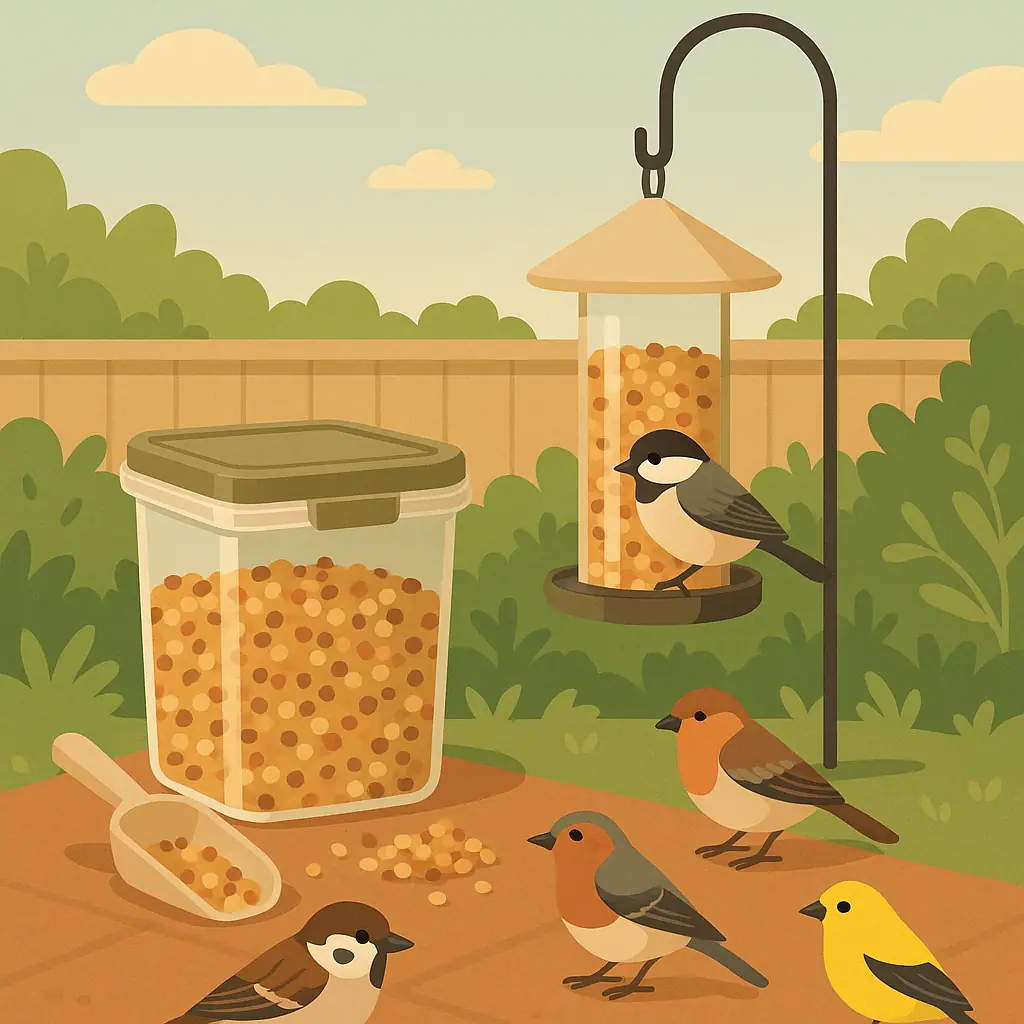
The easiest upgrade is to move seed out of a torn paper bag and into a lidded container. For many beginners, a hard plastic bin, metal can, or small handled bucket with a tight lid is enough. The goal is simple: keep moisture out, make pests work harder, and make refilling easy on your hands and back.
If you already use several feeder types, BirdPeep's guide to cleaning and maintaining your bird feeding station pairs well with this storage routine. Storage and cleaning are two sides of the same calm habit.
Container Features That Help
- Tight lid: Choose a lid that closes firmly and does not pop open when the container is moved.
- Manageable size: A smaller bin is often easier than one huge container, especially for seniors carrying seed from a garage or pantry.
- Hard sides: Sturdy plastic or metal protects better than a soft bag once the original package is open.
- Clean interior: Wipe out dust, old hulls, and crumbs before adding a new batch.
Choose a Cool, Dry Storage Spot
A good container still needs a sensible location. Store bird seed away from direct rain, hose spray, damp concrete corners, and full afternoon sun. A dry garage shelf, mudroom corner, utility closet, or covered storage area can work if the container stays sealed and easy to reach.
Try not to keep the seed right beside an outdoor bird bath or dripping water source. Splash and humidity can creep into opened bags and feeder tools. If water is part of your backyard setup, this guide to an easy-clean bird bath for seniors can help you keep water care and seed storage as two separate routines.
Season-by-Season Storage Checks
- Spring: Watch for rain, damp air, and seed that clumps after a stormy week.
- Summer: Buy smaller amounts more often if heat and humidity make seed spoil faster.
- Fall: Check for pests as temperatures change and rodents look for easy food.
- Winter: Keep lids tight so melting snow, wet gloves, or condensation do not dampen the seed.
Fill Feeders With Smaller Amounts
It is tempting to fill every feeder to the top, especially when a flock is visiting daily. But smaller amounts often stay fresher. If seed is eaten within a day or two, it has less time to sit through rain, humidity, droppings, and temperature swings.
This habit also helps you notice bird activity more clearly. If a feeder suddenly goes untouched, you can check the seed before blaming the birds. Sometimes the problem is not migration or mystery; it is seed that has gone stale, damp, or unappealing.
- Use a light refill: Add only what your regular visitors usually finish quickly.
- Shake tube feeders gently: If seed stops flowing, check for damp clumps near the ports.
- Empty after soaking rain: Wet seed in warm weather should be replaced rather than saved.
- Dry the feeder before refilling: Fresh seed poured into a damp feeder can spoil faster.
Keep Pests Out Without Making It Complicated
Good seed storage also discourages unwanted visitors. Rodents, insects, and squirrels are quick to notice easy food, especially when seed spills on the floor or sits in open bags. A tidy storage area makes your bird feeding routine feel calmer and safer.
If squirrels are already part of your feeder story, BirdPeep's article on squirrel-proofing bird feeders can help with the outdoor side of the problem. Indoors, the best first steps are sealed containers, swept floors, and smaller seed purchases that do not sit around for months.
Rotate Seed Like Pantry Food
Think of bird seed the way you might think of flour, rice, or cereal. Newer seed should not bury older seed forever. When you buy a fresh bag, finish the older supply first unless it looks or smells questionable.
One simple habit is to tape the purchase date or open date to the storage container. You do not need a strict spreadsheet. Just knowing which seed came first helps you avoid forgotten leftovers at the bottom of a bin.
Pros and Cons of Buying Bird Seed in Bulk
Fewer shopping trips
Bulk buying can be convenient if you feed many birds and have a dry, pest-resistant place to store seed.
Often better value
Larger bags may cost less per pound, especially for common seed such as black oil sunflower.
Less chance of running out
A steady supply is useful during cold snaps or busy feeder periods when birds eat quickly.
More storage responsibility
Large bags need better containers, more space, and regular checks for moisture or pests.
Seed may sit too long
If your feeder traffic is light, a small fresh bag may be wiser than a bargain bag that lingers for months.
A Simple Bird Seed Freshness Checklist
Use this quick check before refilling, especially after rain, humid weather, or a long gap between feeder visits.
- Smell: Fresh seed should not smell sour, musty, or oily in a stale way.
- Texture: It should pour freely instead of sticking in damp clumps.
- Look: Watch for mold, webbing, insects, droppings, or unusual dust.
- Container: The lid should close tightly and the inside should be dry.
- Feeder: Ports and trays should be clean and fully dry before seed goes back in.
- Ground below: Sweep or rake old hulls and spoiled seed so pests are not invited to stay.
When to Get Extra Help
If you notice sick birds, repeated mold, heavy insect activity, or rodents around your storage area, pause feeding long enough to clean up and understand the problem. Do not keep adding fresh seed to a setup that is clearly struggling.
You can ask a local bird store, extension office, wildlife rehabilitator, or bird club for practical local advice. Conditions differ by region, and a humid Gulf Coast yard may need a different routine from a dry mountain town.
Frequently Asked Questions
What is the best way to store bird seed?
Use a clean, hard-sided container with a tight lid, then keep it in a cool, dry place away from rain, sun, pests, and damp floors.
Can I use bird seed after it gets wet?
If seed has been soaked, clumped, warmed, or left wet in a feeder, it is safer to discard it, clean the feeder, and refill with dry seed.
How much seed should I put in a feeder?
For many backyard feeders, a smaller amount that birds finish quickly is better than a full feeder that sits through several wet or humid days.
Should I buy bird seed in bulk?
Bulk seed can make sense if birds eat it quickly and you have dry storage. If visits are light, smaller fresh bags are usually easier to manage.
Final Thoughts
Keeping bird seed fresh and dry is not about perfection. It is about a few steady habits: sealed storage, smaller refills, clean feeders, and a quick look before you pour. Those little checks protect your budget and make your feeder station more inviting.
Start with one simple change today. Find the driest storage spot you have, move the open seed into a lidded container, and refill with only what your backyard birds can enjoy while it is still fresh.