
Good shelter for backyard birds is one of those quiet gifts that does not always look dramatic from the kitchen window. It may be a dense shrub near the fence, a small evergreen by the patio, or a tidy brush pile tucked into a back corner. To a cautious bird, those places can mean a safer pause between feeding, drinking, nesting, and moving through the neighborhood.
If you have already put out a feeder or bird bath, shelter is the next gentle question to ask: where can birds go when they need to feel hidden? The answer does not have to make your yard messy. It simply needs to give birds a few calm edges, layered plants, and escape routes that are easy for you to maintain.
For a related small-yard setup, BirdPeep’s guide to creating a quiet corner for backyard birds shows how one protected edge can make a big difference. In this article, we will focus specifically on cover: shrubs, evergreens, brush, and the safety details that keep shelter helpful instead of hazardous.
Why Shelter for Backyard Birds Matters
Birds visit yards for more than seed. They need food, water, places to rest, places to hide, and safe routes between those resources. A feeder in the middle of open lawn may be easy to see, but it can also feel exposed. A bird that can feed, then quickly slip into a shrub, is often more comfortable returning.
Project FeederWatch’s Gardening for Birds guidance notes that trees and shrubs can provide cover and protection from predators, while brush piles can serve as hideaways where birds can forage for seeds and insects. That outside reference is a useful reminder that shelter is not decoration. It is part of a working backyard habitat.
Start With the Cover You Already Have
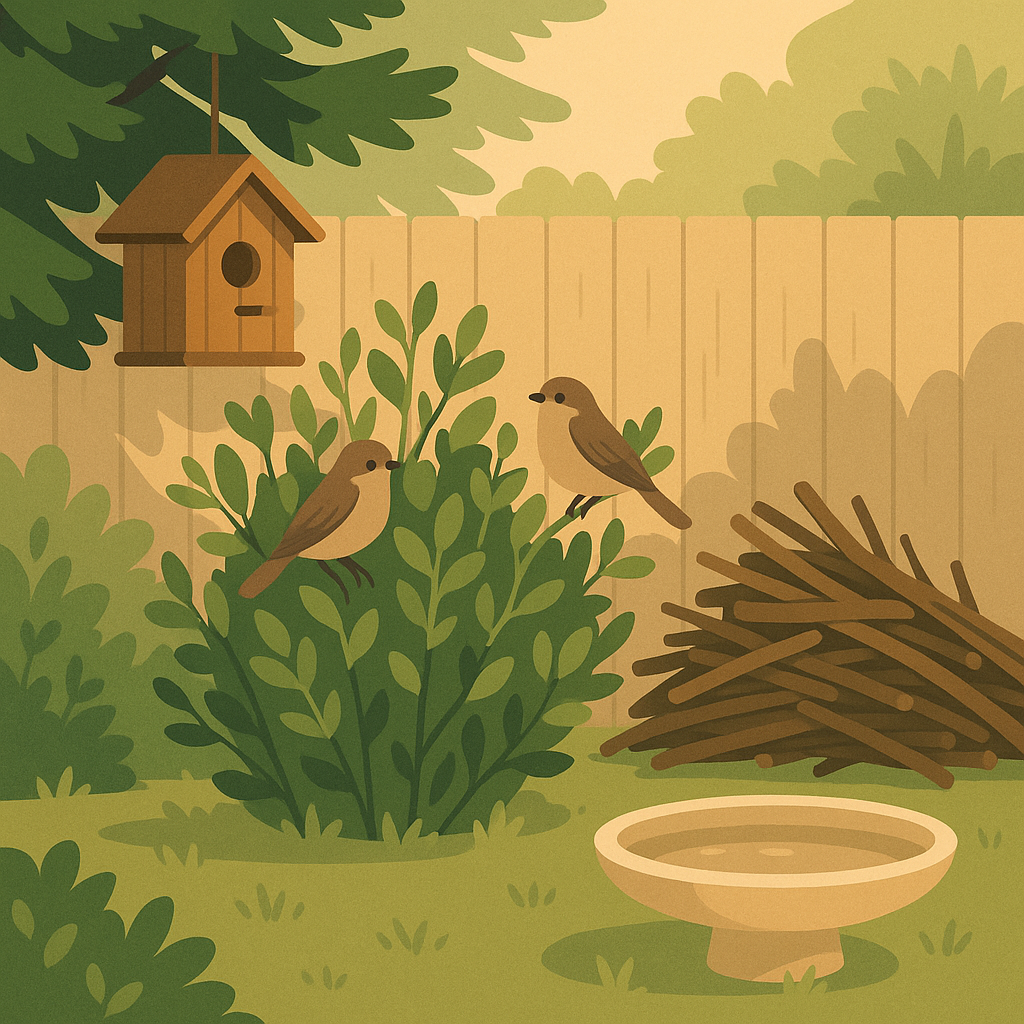
Before planting or stacking anything new, take a slow walk around the yard. Look for spots that already feel sheltered: a hedge, a fence line, a low evergreen, a group of tall perennials, a leafier corner, or a brushy area you usually overlook.
Stand where you normally watch birds. Then ask where a small bird could disappear if a hawk passed overhead, a cat walked nearby, or a noisy lawn tool started up. This simple observation helps you improve what is already working instead of buying plants or materials that do not fit your space.
Notice safe edges
Many birds like edges: the place where lawn meets shrubs, patio meets planting bed, or open view meets protective branches. Edges let birds watch, feed, and retreat. A yard with only open lawn and hard surfaces can feel bare, even if it has plenty of seed.
Look for hidden risks
Shelter should not create a trap. Avoid putting feeders so close to dense cover that outdoor cats or other predators can ambush birds easily. A little distance and clear visibility matter. The goal is nearby refuge, not a blind corner where birds cannot see danger coming.
- Check sight lines: Birds need cover, but they also benefit from being able to see what is approaching.
- Keep paths open: Make sure you can clean feeders, refresh water, and inspect the area without stepping through tangled growth.
- Watch the windows: If shelter encourages birds near glass, make nearby windows more visible to prevent collisions.
- Respect nests: Avoid trimming active nesting areas and observe from a distance if birds are using a shrub.
Use Shrubs and Evergreens as Living Shelter
Shrubs are often the most natural way to add shelter for backyard birds. They soften open space, offer perches at different heights, and may provide flowers, berries, seeds, insects, or nesting cover depending on the species. Evergreens add another benefit: they hold structure when deciduous plants lose leaves.
If you are choosing new plants, start with native shrubs that fit your region, light, and soil. Native plants often support insects and seasonal foods that local birds recognize. BirdPeep’s article on native berry shrubs for backyard birds can help you think about shelter and food together, especially if you want a plant that works beyond one season.
Do not worry about creating a perfect garden plan in one weekend. One well-placed shrub near a viewing area can be more useful than several random plants scattered around the yard.
Layer plants when you can
Birds use different heights. A low shrub, a medium evergreen, and a taller tree give more choices than one flat row of identical plants. Even a small yard can have layers if you combine a container shrub, a permanent planting, and a nearby fence or tree.
Build a Brush Pile That Looks Intentional
A brush pile can sound untidy, but it does not have to be a heap of yard waste. Think of it as a small wildlife stack in a quiet corner. Thick branches form the base, smaller twigs fill the middle, and leafy pieces or stems can rest on top. Leave small gaps so birds can move through it.
Choose a place away from doorways, play areas, and heavy foot traffic. Keep it low enough that you can see its shape and notice if it needs adjustment. If your neighborhood has rules about yard debris, use a smaller, neater version or rely more on shrubs and evergreens.
Native shrubs
They can provide cover while also supporting insects, berries, seeds, or flowers that birds may use.
Evergreen structure
Evergreens keep branches and needles through cold months, giving birds a place to tuck away from wind and weather.
Small brush piles
A tidy pile of branches can create protected gaps where birds can hide, pause, and forage near the ground.
Cover too close to ambush spots
Dense hiding places right beside a feeder can make it easier for outdoor cats or other predators to surprise birds.
Letting brush become neglected
A pile that blocks paths, collects trash, or becomes hard to inspect may stop feeling useful for you and the birds.
Place Food and Water Near Shelter, Not Inside It
Feeders and water work best when birds have cover nearby but enough open space to watch for danger. A feeder set a short distance from shrubs can feel safer than one hung deep inside branches. Water can sit where birds can approach, drink or bathe, then move back toward cover.
If you are planning water along with shelter, the BirdPeep guide to adding moving water safely for backyard birds is a helpful next read. Water and shelter are strongest when they support each other without creating clutter.
- Keep water shallow: Birds need easy footing and fresh water more than a deep decorative basin.
- Clean routinely: Shelter nearby should not become an excuse to ignore dirty water or spoiled seed.
- Watch traffic patterns: If birds rush nervously from feeder to cover, adjust the distance or reduce disturbance.
- Keep cats away: Indoor cats are safest for birds; do not create feeding areas where cats can hide nearby.
Make Windows and Patio Areas Safer
Adding shrubs near the house may bring birds closer to windows. That can be lovely for watching, but it also means glass safety deserves attention. Birds may see reflected sky or branches instead of a solid barrier.
Use outside window treatments where possible: screens, netting, closely spaced decals, tape patterns, or other products made to make glass visible. A single decorative sticker usually leaves too much open-looking space around it.
A Simple Shelter Checklist
Use this quick checklist before you add new plants or rearrange the yard. It keeps the project calm and practical.
- Cover: Is there a shrub, evergreen, brush pile, or layered planting within easy reach of feeding and water areas?
- Visibility: Can birds see danger approaching instead of being trapped in a blind corner?
- Maintenance: Can you clean, trim, sweep, and inspect the shelter area without strain?
- Windows: Are nearby glass doors or windows treated so birds can notice them?
- Nesting: Are you avoiding trimming areas where birds may be actively nesting?
- Predators: Are cats kept away from the feeding, water, and shelter zone?
When to Get Extra Help
If you are unsure which shrub is native in your region, ask a local native plant nursery, county extension office, Audubon chapter, or bird club. Local advice matters because a plant that works beautifully in one state may be wrong for another climate or yard size.
Also ask for help if a tree, snag, or large limb looks unstable. Dead wood can be valuable for wildlife in the right place, but safety around homes, paths, driveways, and neighbors comes first. When in doubt, let a qualified arborist or local expert look at it.
Frequently Asked Questions
What is the easiest shelter for backyard birds to add first?
Start with what you can maintain. For many yards, that means one native shrub, one small evergreen, or a tidy brush pile in a quiet corner.
Should a feeder be hidden inside shrubs?
Usually no. Keep cover nearby, but leave enough open space for birds to see danger and for you to clean spilled seed or droppings.
Are brush piles safe in a small yard?
They can be if they are small, intentional, away from busy paths, and allowed by local rules. If a pile feels too messy, use shrubs or container plants instead.
Can I trim shrubs during nesting season?
Be cautious. Watch for active nesting, calling adults, or repeated visits into the same shrub. If birds are using the plant, wait and observe from a distance.
Final Thoughts
Safe shelter for backyard birds is not about making the yard wild overnight. It is about adding a few calm, protective places where birds can pause, watch, hide, and move through your space with more confidence.
Begin with one corner this week. Notice the cover already there, make nearby windows safer, and choose one small improvement you can maintain. When shelter feels simple for you, it becomes more dependable for the birds too.