Fledgling bird safety begins with a little patience. A young bird hopping in the grass can look abandoned at first glance, especially if it flutters awkwardly or calls from a low branch. In many cases, though, this is a normal and important stage of growing up.
A fledgling has usually left the nest before it can fly well. It may hop, perch low, flutter short distances, and wait quietly while parent birds return with food. Your job as a backyard birdwatcher is not to rush in, but to notice the clues and make the area safer.
Why Fledgling Bird Safety Matters
Fledgling season is one of the easiest times to misunderstand what you are seeing. Young birds often spend time on the ground or in low shrubs while they practice balance, short flights, and begging calls. That can feel worrying, but it does not always mean the bird needs rescue.
When you need a quick reality check, NestWatch gives clear guidance on what to do if you see a young bird out of the nest. Its advice reinforces the main idea here: first decide whether you are seeing a fledgling or a nestling, then avoid unnecessary intervention.
The goal is safe observation, not quick rescue
For a beginner, the safest habit is to slow down. A few minutes of quiet watching can tell you whether parent birds are nearby, whether the young bird is moving normally, and whether there is an immediate danger such as a cat, dog, driveway, or footpath.
Fledglings are not the same as nestlings
A fledgling is usually feathered and mobile. A nestling is often bare or sparsely feathered, weakly mobile, and not ready to be out of the nest. That difference matters because the best response can change completely.
What to Check Before You Step In
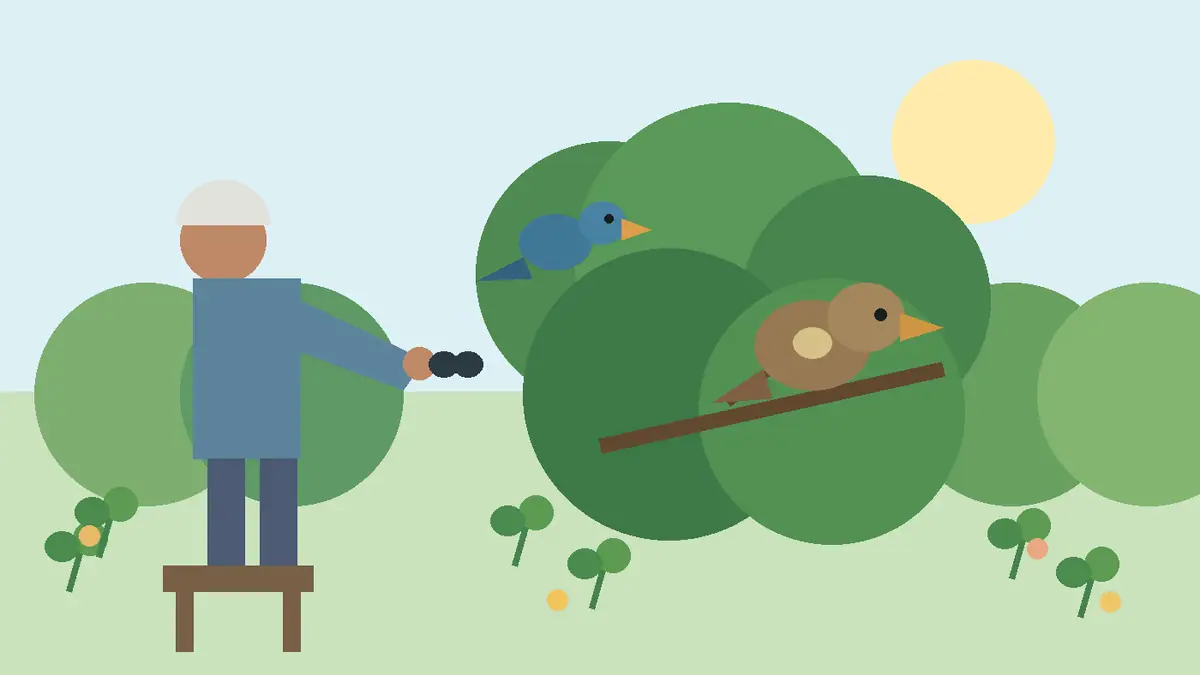
Start by looking at the bird from several yards away. If you stand too close, the parents may stay hidden, and you may accidentally create the very problem you are trying to solve. Sit near a window, porch chair, or shaded spot where you can watch without hovering.
This kind of careful distance is similar to the approach in late spring nesting behaviors you can watch from a distance. The best views often come when you make yourself quiet and predictable.
- Feathers: A fledgling is mostly feathered, even if it looks fluffy or has a short tail.
- Movement: Look for hopping, gripping a twig, short fluttering, or alert head turns.
- Parent activity: Watch for adult birds bringing food or calling from nearby cover.
- Immediate danger: Notice pets, roads, lawn equipment, direct sun, or heavy foot traffic.
How to Watch Fledglings Safely Step by Step
Once you have the first clues, use a simple routine. It keeps you from making a rushed decision and gives the bird room to continue its natural learning process.
- Pause and observe: Give the scene several quiet minutes. Do not assume a bird is abandoned just because you do not see a parent immediately.
- Move danger away: Bring cats and dogs indoors, ask children to give the area space, and pause mowing or trimming nearby.
- Move only if necessary: If the fledgling is in a walkway, driveway, or exposed spot, gently place it on a nearby low branch or under a shrub close to where you found it.
- Do not feed or water it: Well-meaning food or water can cause harm. Parent birds know the right diet, and injured birds need trained care.
- Call a rehabilitator if signs are serious: Blood, obvious injury, a dangling wing, a cat attack, severe weakness, or no normal movement are reasons to seek expert help.
Use the nearest safe spot
If you must move a healthy fledgling, keep it close to the original location. Parent birds are searching that area. A low branch, dense shrub, or shaded patch a few feet away is usually better than carrying the bird across the yard.
Give the parents time to return
Parent birds may be feeding several young birds spread around the yard. You might only see one youngster, but the adults may be making a quiet circuit. Watching from indoors or from a distance gives them a better chance to resume care.
Common Mistakes to Avoid
The most common mistake is treating every young bird on the ground as an emergency. Another is standing too close for too long, which can keep parents from approaching. A third is feeding the bird because it looks hungry.
Seasonal birdwatching asks for a little restraint. If you enjoy observing breeding season, this guide to summer birding and breeding season behaviors pairs well with fledgling watching because it explains how much bird family activity happens quietly around us.
Pros and Cons of Helping a Fledgling
Protects birds from immediate hazards
Moving pets indoors or shifting a fledgling a few feet out of a driveway can reduce danger without interrupting parental care.
Builds better observation habits
Watching first teaches you to notice feathers, movement, calls, parent visits, and other useful clues.
Creates confidence for next time
A calm routine helps you respond more wisely during the busy nesting and fledgling weeks.
Too much help can disrupt care
Hovering, carrying the bird far away, or repeatedly checking on it can make it harder for parents to return.
Guessing can delay expert care
An injured, cold, weak, or pet-caught bird may need a licensed rehabilitator rather than backyard treatment.
A Simple Fledgling Safety Checklist
Use this short checklist when you are unsure what to do. It is not a replacement for a rehabilitator, but it can help you choose a safer first response.
- Mostly feathered and alert? Likely a fledgling. Watch from a distance.
- Bare, weak, or unable to move normally? It may be a nestling or injured bird. Look for the nest or call for advice.
- In immediate danger? Move it a few feet to nearby cover, then step away.
- Pets nearby? Bring them indoors and keep the area quiet.
- Blood, drooping wing, cat contact, or severe weakness? Contact a licensed wildlife rehabilitator promptly.
When to Get Extra Help
Get help when the bird is visibly injured, has been caught by a pet, cannot stand, seems cold or limp, or is a very young nestling whose nest cannot be found. In those cases, a licensed wildlife rehabilitator is the right next call.
If the bird seems healthy but you feel uncertain, take a photo from a respectful distance and call a local rehabilitator, wildlife center, or animal care hotline for guidance. Describe what you see instead of trying to diagnose the bird yourself.
Frequently Asked Questions
Should I put a fledgling back in the nest?
Usually no. A healthy fledgling has already left the nest and is learning on the ground or low branches. If it is in danger, move it to a safer nearby spot instead.
Will parent birds reject a baby if I touch it?
No, that common worry is overstated. Still, touching should be limited to necessary safety moves, because distance helps the parents return to normal care.
How long should I watch before deciding it is abandoned?
Watch quietly from a distance for a reasonable stretch, often 30 minutes or more if the bird is safe. Parent birds may visit quickly and leave again, so avoid standing close.
Can I give a fledgling water or birdseed?
No. Do not give food or water. Healthy fledglings are fed by their parents, and birds that need human help should be handled by trained rehabilitators.
Final Thoughts
Watching fledglings safely is mostly about giving young birds space while removing obvious hazards. Step back, keep pets away, look for normal movement, and let parent birds do the work they are already prepared to do.
When something looks truly wrong, do not guess. Reach out to a licensed wildlife rehabilitator and explain what you see. That balance of patience and timely help is the heart of fledgling bird safety.