Spring bird nesting behavior can make late spring feel wonderfully alive. One day your yard is quiet, and the next you notice robins tugging worms from the lawn, wrens carrying grass into shrubs, and parent birds making quick trips back and forth with food.
The lovely part is that you do not need to find a nest to enjoy the season. In fact, the safest and kindest birdwatching often happens from a chair, window, porch, or path where the birds can continue their work without feeling watched too closely.
If you enjoyed our early spring bird checklist, think of this as the next gentle step: noticing what birds do after courtship begins, while giving them the space they need to raise young.
Why Late Spring Nesting Behavior Is Worth Watching Carefully
Late spring is when many backyard birds are busy with pairing, nest building, incubation, feeding nestlings, or guiding fledglings. The exact timing depends on your region, weather, and species, but the general pattern is easy to notice once you slow down.
The goal is not to inspect a nest. The goal is to read the wider scene. A bird carrying a caterpillar, a male singing from the same post each morning, or a pair disappearing into thick cover can tell you plenty without a single step closer.
The Cornell Lab of Ornithology offers helpful public education around nesting season through its nesting season and NestWatch resources. For a beginner, the practical takeaway is simple: watch with curiosity, but make the bird's comfort more important than your view.
Start With Distance, Not the Nest
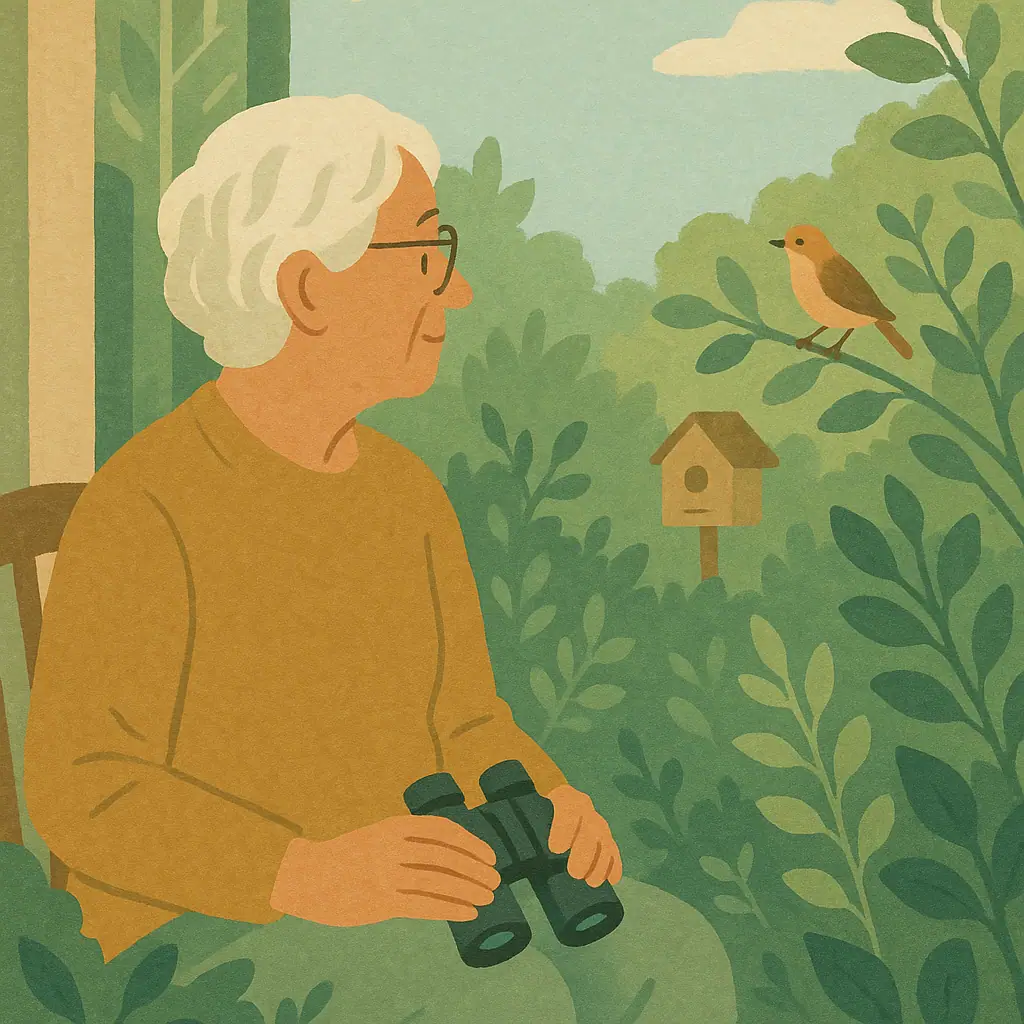
The most respectful way to observe nesting birds is to choose one comfortable watching spot and let the activity unfold. A kitchen window, shaded patio chair, or bench near the edge of the yard is usually better than walking toward shrubs or trees where birds may be nesting.
Use binoculars if you have them, but do not feel pressured to stare directly at one place for a long time. Sometimes a relaxed side glance shows more than intense searching. Birds often reveal patterns when you stop trying to force the moment.
Choose a calm observation station
- Stay predictable: sit or stand in the same general area so birds can adjust to your presence.
- Keep visits short: ten quiet minutes is often enough to notice useful behavior.
- Avoid nest paths: do not stand between an adult bird and the place it keeps trying to reach.
- Use cover naturally: a window, porch railing, or garden chair can make you less alarming without hiding in a sneaky way.
Our guide to birdwatching etiquette for beginners is a good companion here, because nesting season is when small courtesies matter most.
Behaviors You Can Watch Without Getting Too Close
Many nesting behaviors are visible from a respectful distance. You are watching the rhythm of the yard rather than trying to see eggs, chicks, or the inside of a nest.
Adult birds carrying food
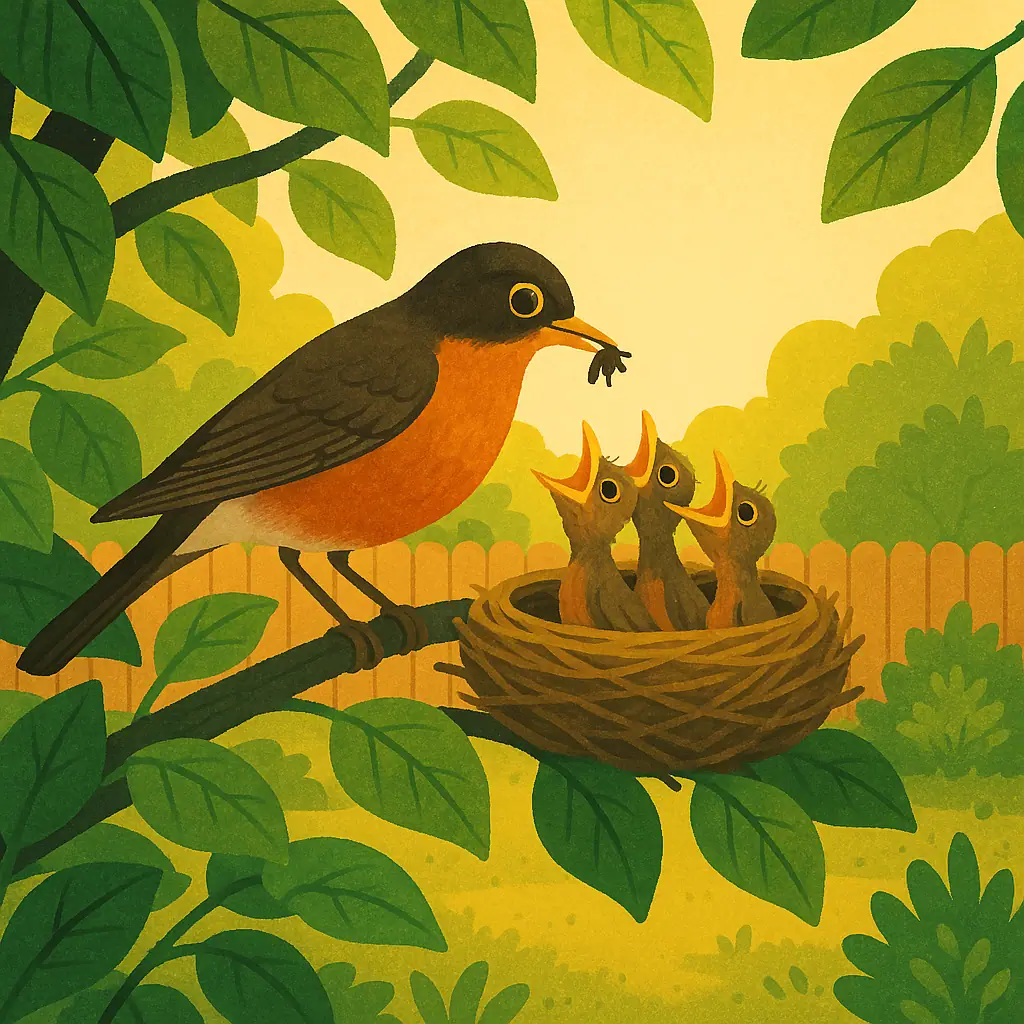
When adults begin carrying insects, worms, or small food items in the same direction again and again, they may be feeding nestlings or fledglings. You do not need to follow them. Notice the direction, then look away for a while so they can keep working.
Territorial songs and watch posts
A male bird may sing from a familiar branch, fence, or roofline. In late spring, this can help defend territory or communicate with a mate. Repeated singing from the same area is often more useful to observe than a hidden nest.
Fledglings learning the yard
Young birds that have recently left the nest can look awkward. They may flutter low, sit quietly in shrubs, or beg for food. In many cases, the parents are nearby even if you do not see them right away. Give the youngster space and keep pets indoors.
If you want to get better at interpreting these moments, review our guide to reading bird body language. It helps you notice whether a bird seems relaxed, alert, or alarmed.
Signs You Are Too Close
Ethical nesting-season birdwatching depends on noticing when your presence is causing stress. Birds may not always fly away. Sometimes they freeze, call, or hover near you because they are worried about returning to young.
Audubon gives practical reminders for ethical nest photography and disturbance avoidance in its guide to nest photography do's and don'ts. Even if you are not taking photos, the same attitude applies: the bird's safety comes before the perfect look.
- Sharp alarm calls: repeated scolding may mean you are too close to an important area.
- Repeated fly-bys: a bird passing near you again and again may be trying to move you away.
- Adults refusing to return: if a bird waits with food but will not approach, back up immediately.
- Distraction behavior: some birds act injured or unusually dramatic to pull attention away from young.
- Silence after activity: sudden quiet near a suspected nesting area can be a warning sign, too.
Gentle learning
You can understand real bird behavior without handling birds, nests, or eggs.
Better backyard awareness
You begin to notice safe routes, shrubs, cover, and feeding patterns in your own yard.
Requires restraint
The most responsible choice is often to stay back even when you feel curious.
Not every behavior is obvious
Some nesting clues are subtle, and beginners may need several quiet sessions to recognize them.
A Gentle Backyard Routine for Nesting Season
A simple routine keeps birdwatching peaceful. Pick a time of day when you feel comfortable, bring water for yourself, and sit where you can see part of the yard without blocking bird movement.
Keep cats indoors, avoid trimming dense shrubs when birds may be nesting, and postpone any close inspection of a suspicious nest site. The U.S. Fish and Wildlife Service explains the broader legal protection framework for native migratory birds through the Migratory Bird Treaty Act. For homeowners, the safest habit is to avoid disturbing active nests and contact a qualified local wildlife rehabilitator or agency if you face a real conflict.
Use a notebook rather than a camera close-up. Write down what you saw, where you sat, how the bird reacted, and whether your presence seemed to change its behavior. Over time, these gentle notes become a private nesting-season diary.
Frequently Asked Questions
Can I look inside a nest if the adult bird is away?
It is better not to. A quick look can still leave scent, create disturbance, or keep adults away longer than you realize. Watch behavior from a distance instead.
What should I do if I find a young bird on the ground?
Step back first. Many fledglings spend time on the ground while parents continue feeding them. Keep pets and people away, and contact a local wildlife rehabilitator if the bird appears injured or in immediate danger.
Is it safe to photograph nesting birds?
Only from a respectful distance, and never if the bird reacts to you. Avoid flash, drones, repeated approaches, or sharing sensitive nest locations publicly.
How far away should I stand?
There is no single distance for every species or yard. Let the bird answer: if it alarms, freezes, dives, or avoids returning, increase your distance right away.
Final Thoughts
Late spring offers some of the most tender birdwatching of the year. You may see adults carrying food, fledglings testing their wings, and familiar birds using your yard in new ways.
The quiet secret is that the best nesting-season birdwatcher is not the one who gets closest. It is the one who notices carefully, backs away when needed, and lets the birds finish the important work of raising the next generation.