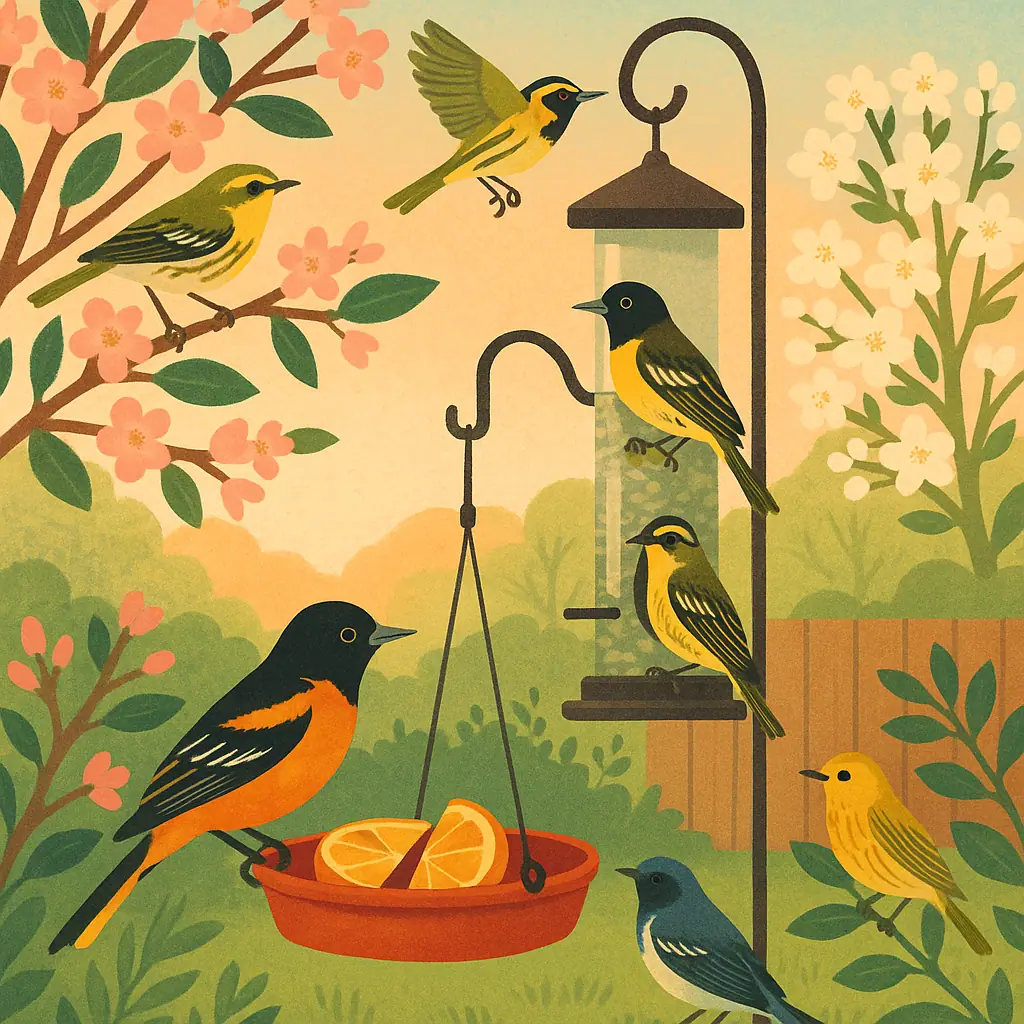
Migration stopover birds can make an ordinary morning feel brand new. One day your yard looks familiar, and the next day a warbler, tanager, sparrow, or thrush seems to appear out of nowhere, pauses for a short while, and then moves on.
That sudden visit usually is not random. During migration, many birds need safe places to rest, refuel, drink, and wait out weather before continuing their journey. Your yard may be only one small patch on the map, but to a tired bird it can be a useful little rest stop.
Why Migration Stopover Birds Matter
Migration asks a great deal from birds. Audubon notes in Spring Is Migration Time For 5 Billion North American Birds that migrating birds need places to rest and refuel, with native plants, clean feeders, and fresh water helping backyard spaces become more useful. That is why a quiet yard with cover, clean water, and fewer hazards can matter more than it looks.
If you enjoy the seasonal movement itself, our guide to spring birdwatching and migration magic in the backyard gives a broader view of what changes as birds move north or south. This article focuses on the short pauses: the stopovers that make new birds suddenly appear.
A stopover is a pause, not a permanent move
A stopover bird may stay for a few hours, a day, or several days. It may feed quietly in shrubs, drink from a bird bath, rest in a tree, or vanish the moment the weather improves. Beginners sometimes worry that they did something wrong when the bird leaves, but leaving is part of the plan.
Weather often explains surprise visitors
Rain, wind, cold fronts, heat, and nighttime travel can all affect where birds pause. After rough weather, a yard with insects, berries, seed heads, brush, and water may suddenly become more interesting to birds passing through.
Start by Noticing What Changed
The easiest way to understand migration stopover birds is to compare today with yesterday. Did the wind shift? Did rain come through overnight? Are there more birds in the shrubs than at the feeder? Are unfamiliar calls coming from a tree you usually ignore?
A simple notebook helps here. Write down the date, weather, time of day, bird size, colors, behavior, and where the bird spent most of its time. You do not need a perfect identification right away. You are training your attention first.
- Look low and high: Some migrants feed near the ground, while others move through treetops and shrub edges.
- Watch behavior: A bird flicking leaves, gleaning insects, or resting quietly may be using your yard as a refueling stop.
- Notice groups: Several unfamiliar birds appearing together can be a clue that migration is active in your area.
- Check water: A clean bird bath can reveal visitors that never come to feeders.
What Stopover Birds Need in a Backyard
Most stopover help is simple. Birds need food, water, shelter, and safety. You do not have to turn your yard into a formal sanctuary. A few calm choices can make the space easier for tired birds to use.
For an early-season checklist, our early spring bird checklist for backyard beginners pairs well with this habit. It gives you a practical yard scan before bird activity gets busy.
Food is not only seed
Many migrating birds are looking for insects, berries, nectar, or natural seed heads. Feeders can help some species, but shrubs, native plants, leaf litter, and pesticide-free corners often do quiet work that a feeder cannot replace.
Cover gives birds a safe pause
Dense shrubs, small trees, evergreens, brush piles, and unmowed edges give birds places to hide from predators and wind. A stopover visitor may spend more time in cover than in open view, so patience often brings the best look.
Make Windows and Patio Areas Safer
Stopover birds may not know your yard. A reflection of trees in glass can look like open habitat, especially when birds are moving quickly or startled. Cornell Lab's Seven Simple Actions to Help Birds highlights making windows safer, keeping cats indoors, planting natives, and avoiding pesticides as practical ways people can reduce common risks.
Between that outside source and your own yard walk, choose one easy safety improvement first. Window decals, external screens, tempera patterns, cords, or other visible treatments work best when they break up reflections across the glass rather than sitting as one lonely sticker in the corner.
- Treat problem windows: Start with panes near feeders, shrubs, bird baths, or reflected trees.
- Keep cats indoors: Migrating birds are tired and unfamiliar with the yard, so outdoor cats add serious risk.
- Reduce sudden disturbance: Move slowly near resting birds and delay noisy yard work when a visible movement wave is happening.
- Keep water shallow and clean: Refresh bird baths often, especially after leaves, droppings, or seed hulls collect.
Pros and Cons of Helping Stopover Birds
Creates better observation moments
A safer, calmer yard gives beginners more chances to notice temporary visitors before they continue migration.
Supports birds without complicated gear
Clean water, native cover, safer windows, and fewer pesticides can help even when you do not add another feeder.
Builds seasonal awareness
Watching stopovers teaches you how weather, plants, and bird movement fit together through the year.
Visitors may not stay long
A migrant can disappear quickly, which may feel disappointing if you expected it to become a regular backyard bird.
Identification can be tricky
Many migrants move fast, perch in leaves, or show dull seasonal plumage, so beginners may need time and repeated looks.
A Simple Stopover Checklist
Use this short routine when migration is active or when you suddenly notice new birds in the yard. It keeps the focus practical and avoids overreacting.
- Scan quietly: Watch shrubs, trees, water, and ground edges for five to ten minutes before moving around.
- Refresh water: Empty, rinse, and refill bird baths so passing birds have a clean drink.
- Check feeder seed: Remove wet or spoiled seed and wipe obvious mess from feeding areas.
- Leave cover in place: Delay trimming dense shrubs or brushy corners when birds are using them.
- Mark the date: Record the visitor, weather, and behavior so you can compare future migration days.
When to Get Extra Help
Most stopover watching is peaceful and hands-off. Get extra help only when you see an injured bird, a bird that hit a window and cannot recover, or a bird caught by a pet. In those cases, contact a licensed wildlife rehabilitator or local wildlife center instead of trying to treat the bird yourself.
If you are unsure what you saw, a clear photo, a short note, and a bird identification app can help. You can also compare your notes with our article on how birds use your yard differently after a rainstorm, because weather often explains sudden changes in bird activity.
Frequently Asked Questions
How long do migration stopover birds stay in a yard?
Some stay only a few hours, while others may linger for a day or several days if food, cover, water, and weather make the yard useful. A short visit can still be completely normal.
Should I put out extra seed when new birds appear?
You can keep feeders clean and stocked, but many migrants want insects, berries, nectar, or natural cover more than seed. Fresh water and a quiet yard are often just as helpful.
Why do new birds appear after storms?
Weather can slow migration, push birds lower, or encourage them to rest and feed before continuing. After a storm, watch sheltered shrubs, puddles, bird baths, and edges with fresh insect activity.
Do I need to identify every stopover bird?
No. Identification is fun, but observation comes first. Note size, shape, behavior, sound, and where the bird fed or rested. Those details make identification easier over time.
Final Thoughts
Migration stopover birds remind us that a backyard is connected to a much larger journey. The unfamiliar bird in your shrub may be resting between faraway places, using your quiet corner for one small but important pause.
Start with one habit: watch calmly when new birds appear, refresh clean water, and make the most obvious window safer. Those modest steps can make migration season more welcoming for birds and more rewarding for you.