Mealworms for birds can feel like a special treat, especially when you are hoping to bring bluebirds, wrens, chickadees, or other insect-loving visitors a little closer. They can help in the right setting, but they are not magic, and they are not something every yard needs every day.
Think of mealworms as a small side dish, not the whole meal. Used gently, they can support observation and variety. Used carelessly, they can make a feeding station messy, expensive, or too dependent on one food.
Why Mealworms for Birds Can Help
Mealworms are the larvae of the mealworm beetle, and they are a protein-rich food that many insect-eating birds recognize quickly. The Cornell Lab's Project FeederWatch notes that mealworms are enjoyed by birds such as chickadees, titmice, wrens, and nuthatches, and that they are one of the few feeder foods that reliably attract bluebirds. You can read their short reference on mealworms for feeder birds for a helpful baseline.
For a beginner, the best reason to try mealworms is observation. A small dish can show you which birds in your yard are actively looking for insect food instead of seed. That is useful during cool mornings, nesting season, or times when natural insects are harder to find.
They are especially useful for insect eaters
Seed feeders often favor finches, sparrows, cardinals, and doves. Mealworms can shift your view toward birds that glean insects from bark, shrubs, and lawn edges. Bluebirds, Carolina wrens, chickadees, titmice, robins, and some woodpeckers may investigate them, depending on your habitat.
They work best when the yard already feels safe
If your yard is wide open, noisy, or close to a busy cat path, mealworms may not solve the problem. Birds still need cover, quiet approach routes, and clean water. For a broader habitat approach, pair food with shelter ideas from safe shelter for backyard birds.
Live vs Dried Mealworms: What Beginners Should Know
Live mealworms often get the strongest response because they move and look like natural prey. Dried mealworms are easier to store, cleaner to handle, and less startling for people who do not want live insects in the house. Both can work, but individual birds can be surprisingly picky.
If you start with dried mealworms, offer a tiny amount first. Some birds learn them quickly; others ignore them unless they are softened slightly with water. If you soften dried mealworms, put out only what birds can eat soon and discard leftovers before they spoil.
- Live mealworms: More attractive to many birds, but they need careful storage and a smooth-sided dish so they do not crawl away.
- Dried mealworms: Easier to buy and keep, but they may be ignored until local birds recognize them as food.
- Soaked dried mealworms: Softer for birds, but they spoil faster and should not be left out for long.
When to Offer Mealworms and When to Skip Them
Mealworms are most useful when birds are already visiting your yard and you want to add a small, high-interest food. They can be helpful during cold snaps, migration pauses, or nesting season observations, but they should never replace natural foraging.
Skip them when the weather is wet and warm, when ants or rodents are finding the dish, or when aggressive birds are taking over. Also skip them if you cannot clean the dish regularly. A clean feeding habit matters more than adding a fancy food.
A small serving is enough
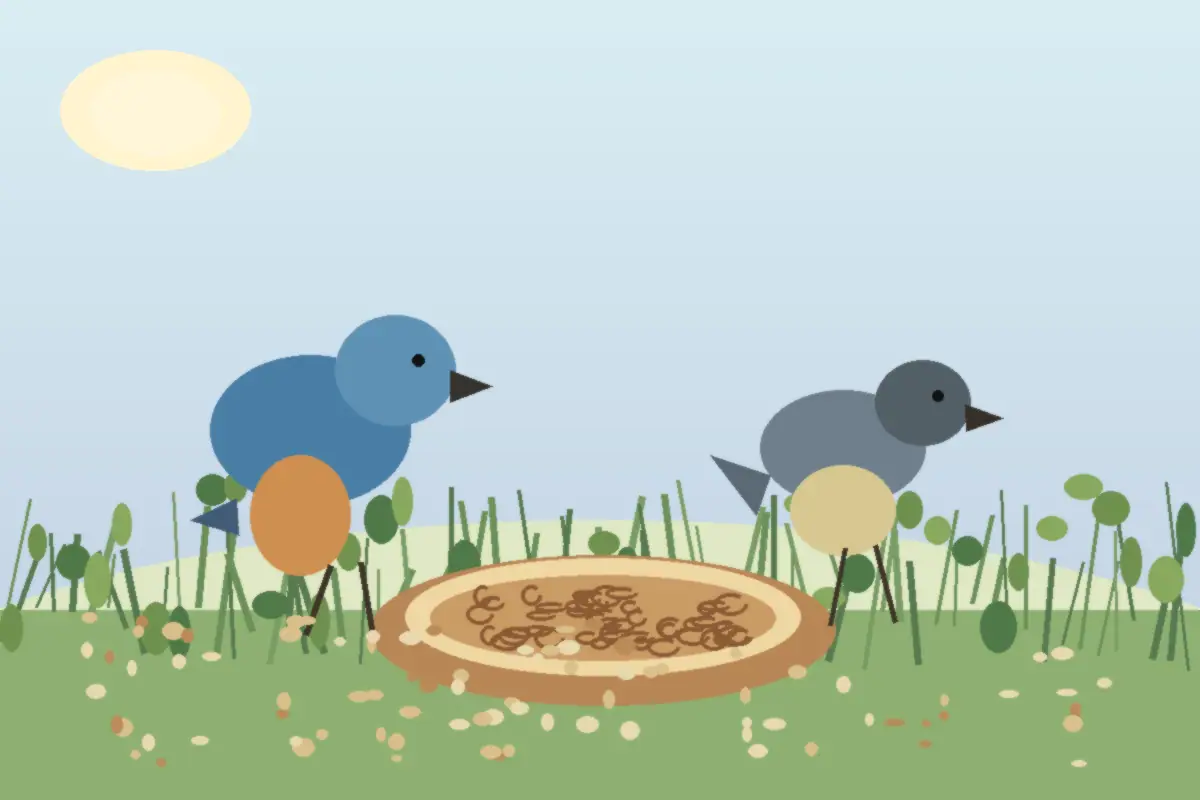
Begin with one or two spoonfuls in a shallow dish or mealworm feeder. Watch for 20 to 30 minutes if you can. If nothing comes, remove the leftovers and try again another day in a quieter spot.
Use placement to protect the routine
A covered dish, small tray, or dedicated mealworm feeder keeps the food visible without scattering it through the grass. Keep it away from dense hiding spots where outdoor cats could stalk birds. If your setup includes water, keep it clean and shallow; this guide to moving water for backyard birds explains why simple, manageable water features often help more than extra food.
Pros and Cons of Feeding Mealworms
Attracts different birds
Mealworms can bring insect-eating species closer, giving beginners a wider view than seed alone.
Easy to test in small amounts
You do not need a big feeder station. A small clean dish is enough to learn whether local birds are interested.
Helpful for quiet observation
Because the food is served in one place, it can create a calm viewing spot from a window or patio chair.
Can spoil or attract pests
Wet leftovers, scattered food, and dirty dishes can draw ants, rodents, or unwanted mess.
Not every bird will use them
Some yards do not have the right habitat, and some birds simply prefer natural insects or other foods.
A Simple Mealworm Routine
Start with a short trial instead of a permanent station. Choose a calm morning, place the dish where birds already feel comfortable, and make a note of what happens. If the food disappears quickly, repeat with the same small amount. If it sits untouched, move the dish once or skip mealworms for a while.
- Keep portions small: Put out only what birds can finish in a short visit.
- Clean the dish: Wash and dry it often, especially after rain or warm afternoons.
- Watch the visitors: Note which species come, how they behave, and whether one bird is dominating the dish.
- Support natural food: Native shrubs, leaf litter, and pesticide-free corners help birds find insects on their own.
If you want mealworms to be only one part of a healthier yard, native plants are the better long-term foundation. This guide to native berry shrubs for backyard birds gives a gentle next step for building food and cover over time.
Frequently Asked Questions
Are dried mealworms safe for backyard birds?
Yes, when they are fresh, clean, and served in small amounts. Soaked dried mealworms should be removed sooner because moisture makes them spoil faster.
Which birds eat mealworms?
Bluebirds, chickadees, titmice, wrens, nuthatches, robins, and some woodpeckers may eat them. The exact visitors depend on your region, season, and yard habitat.
Should I feed mealworms every day?
Usually no. Treat them as an occasional supplement or observation tool. Birds still need natural insects, seeds, fruit, water, shelter, and safe space.
What should I do if mealworms attract pests?
Stop for a few days, clean the area, and try a smaller portion in a raised dish. If pests keep returning, skip mealworms and focus on plants and water instead.
Final Thoughts
Mealworms for birds can be useful, but they work best when you treat them as a careful experiment. Offer a little, watch what happens, and let the birds tell you whether this food fits your yard.
If the routine stays clean and calm, mealworms may become a pleasant occasional treat. If they create mess or stress, skipping them is perfectly fine. A safe, natural backyard will always matter more than any single feeder food.