Learning to identify birds in different light is one of those quiet skills that makes backyard birdwatching feel less confusing. A familiar bird can look surprisingly strange when it is sitting in deep shade, facing the sun, or glowing in warm evening light.
The good news is that you do not have to decide from color alone. Light changes color first, but it changes shape much less. When you slow down and check silhouette, beak, tail, behavior, and setting, the mystery bird often becomes familiar again.
Why Light Can Fool Even Careful Watchers
Bird color is beautiful, but it is not always reliable from a kitchen window or shaded porch. A cardinal in backlight may look almost black. A brown sparrow in golden light can seem warmer and brighter than usual. A blue jay in dull shade may lose much of its blue flash.
That does not mean you are bad at identification. It means your eyes are doing exactly what eyes do: adjusting to brightness, contrast, and glare. Beginners often make better progress once they treat color as one clue, not the whole answer.
Audubon notes that field identification can include size and shape, bill structure, plumage, and actions, and that tricky lighting or distance can make plumage harder to judge. Their guide on how to identify birds is a helpful outside reference because it supports the same balanced approach: do not lean on one clue when several are available.
Start With the Bird's Silhouette
When a bird is shaded or backlit, imagine you are looking at a simple outline. Is it round and plump, long and slim, upright like a robin, or compact like a chickadee? Silhouette is often easier to read than color when the sun is difficult.
Look at the head, body, tail, and posture before you reach for the field guide. A thick-bodied dove, a long-tailed grackle, and a tiny wren can all turn dark in shadow, but their outlines still feel different.
If you want to practice this skill separately, BirdPeep's guide to identifying birds by shape before color walks through the same beginner-friendly habit in more detail. In tricky light, that shape-first habit becomes especially useful.
Simple silhouette checks
- Overall size: Compare the bird with a familiar feeder, fence rail, flowerpot, or branch.
- Posture: Notice whether it sits upright, crouches low, clings vertically, or leans forward.
- Head shape: Look for a crest, round head, flat crown, or long neck.
- Wing shape: Watch whether the wings look broad, pointed, rounded, or short against the body.
Use Beak and Tail Clues Next
Beaks and tails can stay readable even when color disappears. A thick cone-shaped beak suggests a seed-eating bird such as a finch, grosbeak, cardinal, or sparrow. A long thin beak may point you toward a wren, thrasher, or insect-hunting visitor.
Tail clues are just as useful. Some birds flick their tails. Some hold them cocked upward. Some have long narrow tails that change the whole balance of the body. A bird in shadow may hide its markings, but it usually cannot hide the way it is built.
Watch for repeatable shapes
Try not to memorize every possible mark at once. Instead, pick one clue and follow it for a few sightings. If the bird has a very thick beak, note that. If the tail is longer than the body seems to need, note that too. Small repeatable clues build confidence.
Watch Behavior Before Reaching for a Guide
Behavior is often the clue that settles the question. A nuthatch creeping headfirst down a trunk feels different from a woodpecker bracing with its tail. A towhee scratching through leaves looks different from a robin tugging at the lawn. A chickadee darts in and out; a dove often settles and stays.
When color is uncertain, behavior gives the bird back its personality. Notice whether it hops, walks, clings, hovers, probes, flocks, bathes, or feeds on the ground.
Sound can also help, especially when shade hides field marks. If a bird sings or calls, this guide to understanding bird sounds for beginners can help you use your ears without feeling overwhelmed by every chip and whistle.
Keep Distance and Avoid Disturbing Birds
The best view is not always the closest view. If moving nearer makes the bird freeze, flick its wings nervously, give alarm calls, or leave the area, back up and let it return to normal behavior. A calm bird teaches you more than a startled bird.
This matters even more around nests, fledglings, and dense shrubs where birds may be feeding young. Watch from inside, from a porch chair, or from a quiet path. Avoid tapping windows, flushing birds for a better look, or trimming vegetation just to see more clearly.
Pros and Cons of Using Color in Tricky Light
Color can confirm a likely match
Once shape and behavior point toward a species, color patches can help confirm what you are seeing.
Bright marks are memorable
Wing bars, eye rings, crests, and bibs can become easy landmarks after you learn where to look.
Good light makes practice easier
Morning or open-shade viewing can reveal patterns that are harder to see at noon or near sunset.
Backlighting can erase color
A colorful bird may turn into a dark outline when the sun is behind it.
Warm light can exaggerate color
Late-day light can make browns, oranges, and yellows look richer than they do in neutral light.
A Simple Checklist for Difficult Light
When you are not sure what the light is doing, use the same quiet checklist each time. It keeps you from guessing too quickly and gives you a better note to check later.
- Where is the sun? Behind the bird, in your eyes, overhead, or behind you?
- What is the outline? Round, slim, upright, long-tailed, crested, or compact?
- What does the beak suggest? Thick for seeds, thin for insects, long for probing, or short and delicate?
- What is the tail doing? Flicking, cocked upward, braced on bark, fanned, or held still?
- How does it move? Hopping, walking, clinging, flocking, bathing, or ground feeding?
- Can you wait for a better angle? Sometimes the bird solves the puzzle by turning around.
If size is the clue giving you trouble, this guide to estimating a bird's size with familiar backyard objects pairs nicely with light-and-shadow practice. Size, shape, and behavior together are much sturdier than color alone.
When to Get Extra Help
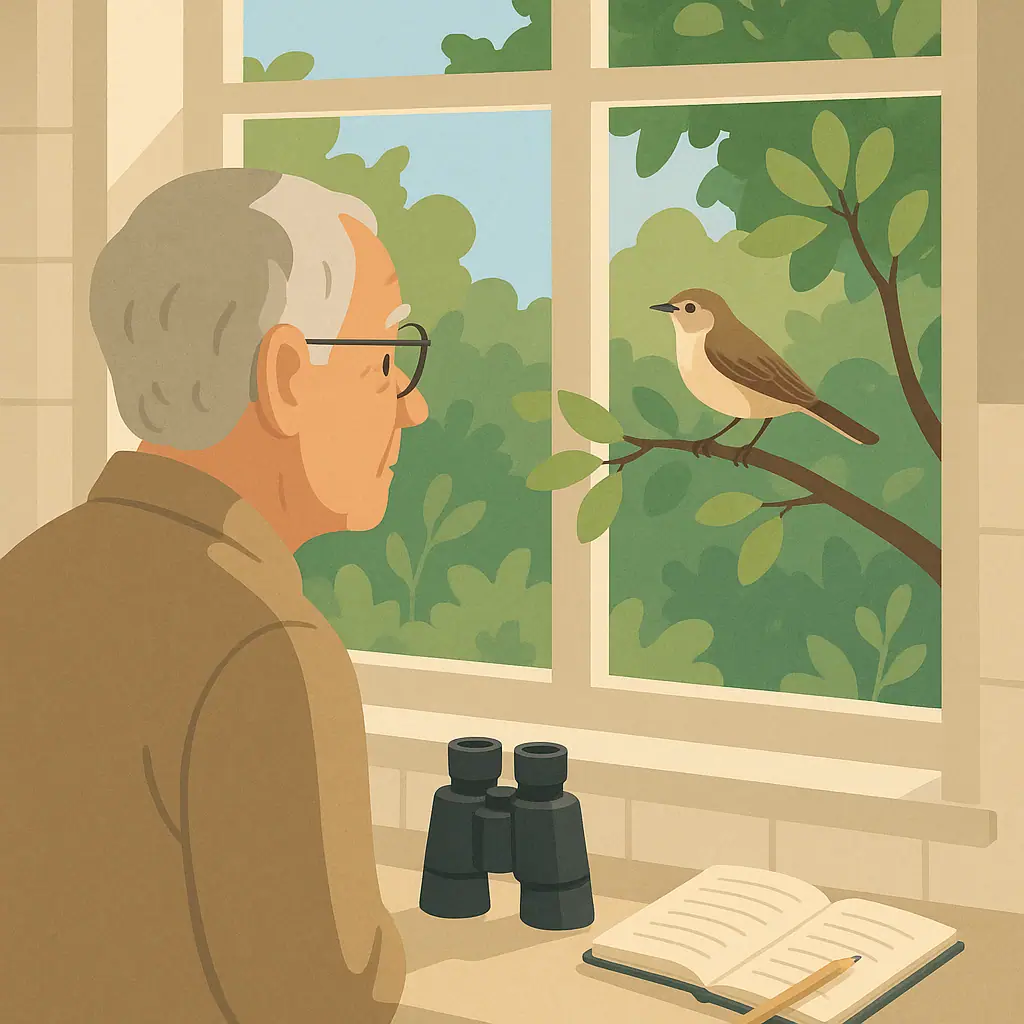
There is no shame in leaving a bird unidentified. In fact, writing "small bird in backlight, thick beak, hopped near feeder" is more useful than forcing a name that might be wrong. Honest uncertainty is part of good birdwatching.
Take a short note, sketch the outline if you like, and check later against a trusted field guide, a local birding group, or a reputable identification resource. If you use a photo, remember that cameras can also struggle with shadow and glare, so keep your written clues too.
Frequently Asked Questions
What should I note first when identifying a bird from a window?
Start with size, silhouette, beak, tail, and behavior. Those clues often stay useful even when color changes because of shade, glare, or distance.
Do I need binoculars to identify backyard birds?
No. Binoculars help, but patient observation from a comfortable spot can teach you a great deal. Begin with posture, movement, size, and simple notes.
Why is color not always the best clue?
Color can shift with backlighting, shade, warm evening light, distance, and the bird's angle. Use color with shape and behavior instead of using it alone.
How close should I get to a bird?
Stay far enough away that the bird keeps acting normally. If it freezes, alarm-calls, or leaves, give it more space and continue watching quietly.
Final Thoughts
To identify birds in different light, think like a patient observer instead of a hurried judge. Let color be helpful, but let shape, beak, tail, behavior, and distance carry the harder work.
The next time a bird looks unfamiliar in shadow, take one breath before naming it. Ask what the light is changing, then look for the clues that stay steady. That calm pause is often where better identification begins.