Hot weather birdwatching can still be peaceful, but summer asks for a little extra care. Birds change their routines when the day turns hot, and people should do the same. A good summer birding day often starts earlier, moves slower, and pays close attention to water, shade, and comfort.
You do not need to be outdoors for hours to enjoy the season. A cool seat near a window, a shaded porch, or ten quiet minutes in the early morning can show you plenty. The goal is to keep birds safe, keep yourself comfortable, and let the hottest part of the day belong to rest.
Why Hot Weather Birdwatching Matters
Summer heat affects the whole backyard. Birds may drink and bathe more often, spend more time in shade, and become less active during the strongest sun. At the same time, older birdwatchers need to think about hydration, footing, glare, and how long they stay outside.
The U.S. Fish and Wildlife Service explains that birds use water, shade, bathing, and adjusted activity patterns to keep cool in summer. Their overview of how birds keep cool in the summer is a helpful outside reference for understanding why shallow clean water and shade matter so much.
For a broader conservation perspective, Cornell Lab also keeps beginner-friendly guidance on everyday ways people can support birds around homes, yards, and neighborhoods. Their resource on ways to help birds is a useful place to continue after setting up a safer summer routine.
Start With the Coolest Part of the Day
The easiest way to make hot weather birdwatching more comfortable is to shift your timing. Early morning is often better than midday because the air is cooler, birds are more active, and the light is softer on your eyes.
If summer bird behavior feels confusing, BirdPeep's guide to summer birding and breeding season behaviors can help you separate normal seasonal activity from signs that birds are simply avoiding the heat.
Good Times to Watch
- Early morning: birds often feed, sing, bathe, and move before the day becomes uncomfortable.
- Late evening: some activity returns as shade spreads and temperatures ease.
- After a gentle rain: damp soil, insects, and puddles can bring birds into view.
- From indoors: a kitchen window or sunroom can be the best viewing spot on very hot days.
Keep Water Helpful, Shallow, and Clean
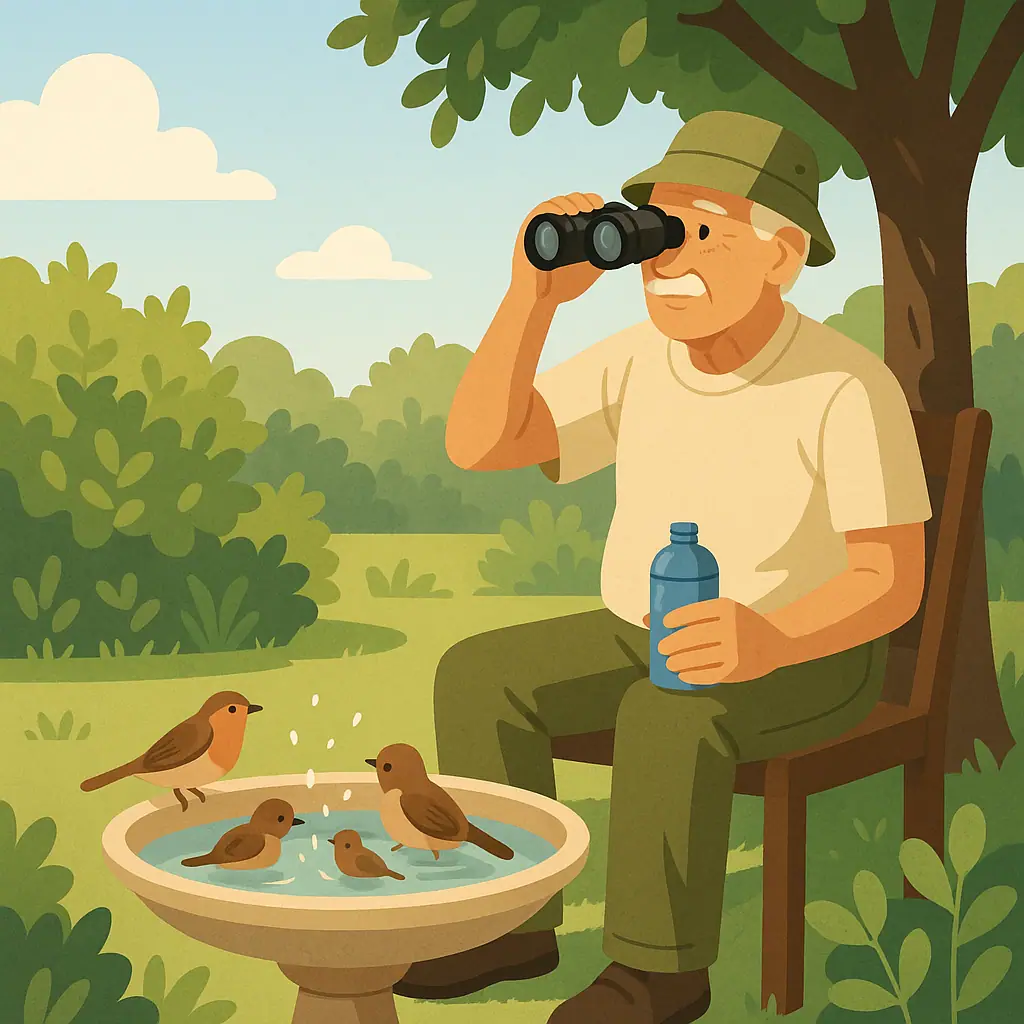
Water is one of the most useful things a backyard can offer during hot weather, but it should stay clean and easy for birds to use. A shallow bird bath is better than a deep bowl. Birds need secure footing, a way to approach calmly, and water that is refreshed often.
Cornell Lab's All About Birds notes that birdbath water should be changed at least every three days and more often in warm weather, especially because stagnant water can grow algae and attract mosquitoes. Their short guide on what to do about algae in a birdbath is worth reading before summer heat settles in.
Water Checks for Hot Days
- Keep it shallow: one or two inches of water is often more inviting than a deep basin.
- Refresh often: change the water more frequently during hot spells, especially if it looks cloudy.
- Scrub when needed: algae, droppings, or a slick surface mean the bath needs cleaning.
- Use partial shade: shade keeps water cooler and gives birds nearby cover.
- Watch for crowding: if many birds use one bath, clean it more often.
Protect Yourself While You Watch
Summer safety is not only for the birds. A comfortable birdwatcher notices more and enjoys the yard longer. Before you step outside, think about shade, water, a stable chair, sunscreen, and whether the path is dry and even.
For a year-round view of seasonal planning, BirdPeep's seasonal birdwatching calendar can help you match your observation routine to weather, migration, nesting, and winter feeding patterns.
A Safe Personal Setup
- Bring water for yourself: keep it within reach, not back inside the house.
- Choose a shaded seat: a porch chair, covered patio, or window view is enough.
- Use a hat and sunglasses: glare can make identification harder and watching less pleasant.
- Set a short timer: ten to fifteen minutes can be plenty on very warm days.
- Skip risky footing: avoid wet grass, loose gravel, and uneven steps when carrying binoculars.
How to Handle Hot Weather Birdwatching Step by Step
A repeatable routine keeps the day calm. Try this method whenever the forecast looks hot or humid.
- Check the forecast first: note the expected high, humidity, and any heat advisory before making outdoor plans.
- Pick one cool viewing window: choose early morning or late evening instead of standing outside at midday.
- Refresh the bird water: empty, rinse, refill, and place the bath where birds have nearby cover.
- Prepare your own spot: set a chair in shade with drinking water, a notebook, and binoculars if you use them.
- Watch behavior, not just color: notice bathing, open-mouth breathing, shade seeking, and quiet resting.
- Stop early: end the session while you still feel comfortable, then review notes indoors.
When the yard seems quieter than usual, that may be normal. Birds often reduce activity in the hottest hours. Instead of worrying, look for where shade, water, and cover meet.
Common Hot Weather Mistakes to Avoid
Most summer birdwatching mistakes come from trying to do too much at the wrong time of day. Slowing down is better for you and often better for the birds.
- Do not leave water stagnant: warm, still water can quickly become unhelpful.
- Do not trim shade during a heat spell: shrubs and trees offer resting places when the sun is strong.
- Do not overfill deep baths: many small birds prefer shallow edges where they can stand securely.
- Do not chase activity: if birds are resting, let them rest and watch from a distance.
- Do not ignore your own limits: dizziness, fatigue, headache, or heavy sweating are signs to go inside and cool down.
Pros and Cons of Summer Birdwatching
Water brings close observation
A clean, shallow bath can create gentle moments for watching drinking, bathing, and feather care.
Early mornings feel rewarding
Short cool sessions often show more activity than long uncomfortable walks later in the day.
Behavior becomes easier to notice
Shade seeking, bathing, and quiet resting teach you how birds respond to weather.
Heat can limit activity
Birds may disappear into cover during midday, so patience matters more than constant movement.
Water needs more maintenance
Bird baths and feeders may need closer attention during warm, humid spells.
A Simple Hot Weather Checklist
Use this checklist before each summer watching session. It keeps the routine clear and prevents small problems from becoming tiring.
- Is my viewing spot shaded? If not, move indoors or choose another time.
- Do I have water nearby? Bring your own drink before you begin.
- Is the bird bath clean? Refresh it if the water is cloudy, warm, or low.
- Is the water shallow? Add stones or reduce depth if birds seem hesitant.
- Are birds using shade? Watch shrubs, low branches, and quiet corners.
- Am I still comfortable? Stop early if the answer is no.
When to Get Extra Help
If you see a bird that appears injured, trapped, unable to fly, or in immediate distress, do not guess at treatment. Contact a local licensed wildlife rehabilitator or local wildlife agency for guidance. For ordinary hot-weather behavior, distance and calm observation are usually best.
If you want to compare summer heat with later seasonal change, BirdPeep's article on fall migration and birds preparing for winter shows how bird routines shift again as temperatures cool.
Frequently Asked Questions
What should I check first during hot weather birdwatching?
Check your own comfort first, then check water. A shaded seat, drinking water, and a clean shallow bird bath are the best starting points.
How often should I review my summer bird bath routine?
Look at it daily during hot spells. If the water is low, cloudy, dirty, or full of debris, refresh and clean it before birds use it again.
What should I do if I am not sure a bird is overheated?
Watch from a distance and avoid handling the bird. If it seems injured or unable to move normally, contact a local licensed wildlife rehabilitator for advice.
Can I change my birdwatching plan later in the summer?
Yes. Adjust your timing, shade, water setup, and observation spot as the weather changes. A flexible routine is safer than a fixed schedule.
Final Thoughts
Hot weather birdwatching works best when it feels unhurried. Watch early, keep clean shallow water available, protect your own comfort, and let the birds decide how active they want to be.
This week, choose one cool morning and spend ten quiet minutes watching the water, the shade, and the edges of your yard. You may learn more from that gentle session than from an hour in the heat.