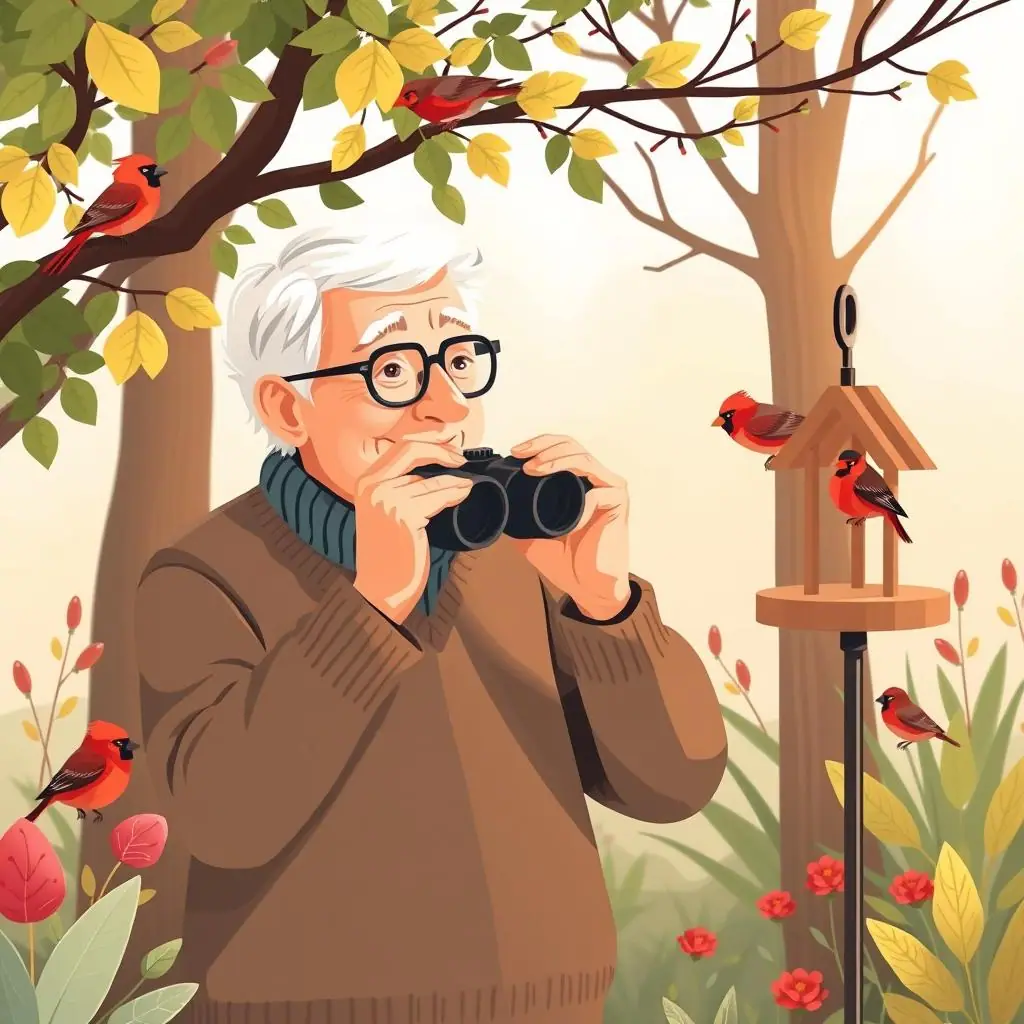
Most beginners freeze when they see a bird they do not recognize. The moment feels small and exciting, but when someone asks, "What did it look like?" the answer can suddenly shrink to, "It was little... and fast." That is completely normal. Bird identification becomes much easier when you learn a calm order for noticing details instead of trying to remember everything at once.
If you want to describe a bird for identification, start with the broad clues that stay visible even when the light is poor or the bird does not sit still for long. Size, silhouette, beak shape, tail shape, behavior, and sound usually help more than trying to chase the exact shade of brown on the wing.
The Cornell Lab's guide to size and shape for bird ID explains why silhouette and posture often narrow the possibilities faster than color alone. That makes this skill especially helpful for backyard beginners watching from a porch, feeder, or kitchen window.
Why This Matters
Good descriptions save you from guessing. Instead of saying only that a bird was gray or small, you can give someone a few clues that actually sort birds into useful groups. Was it sparrow-sized or robin-sized? Did it cling to bark, hop on the lawn, or sit upright on a wire?
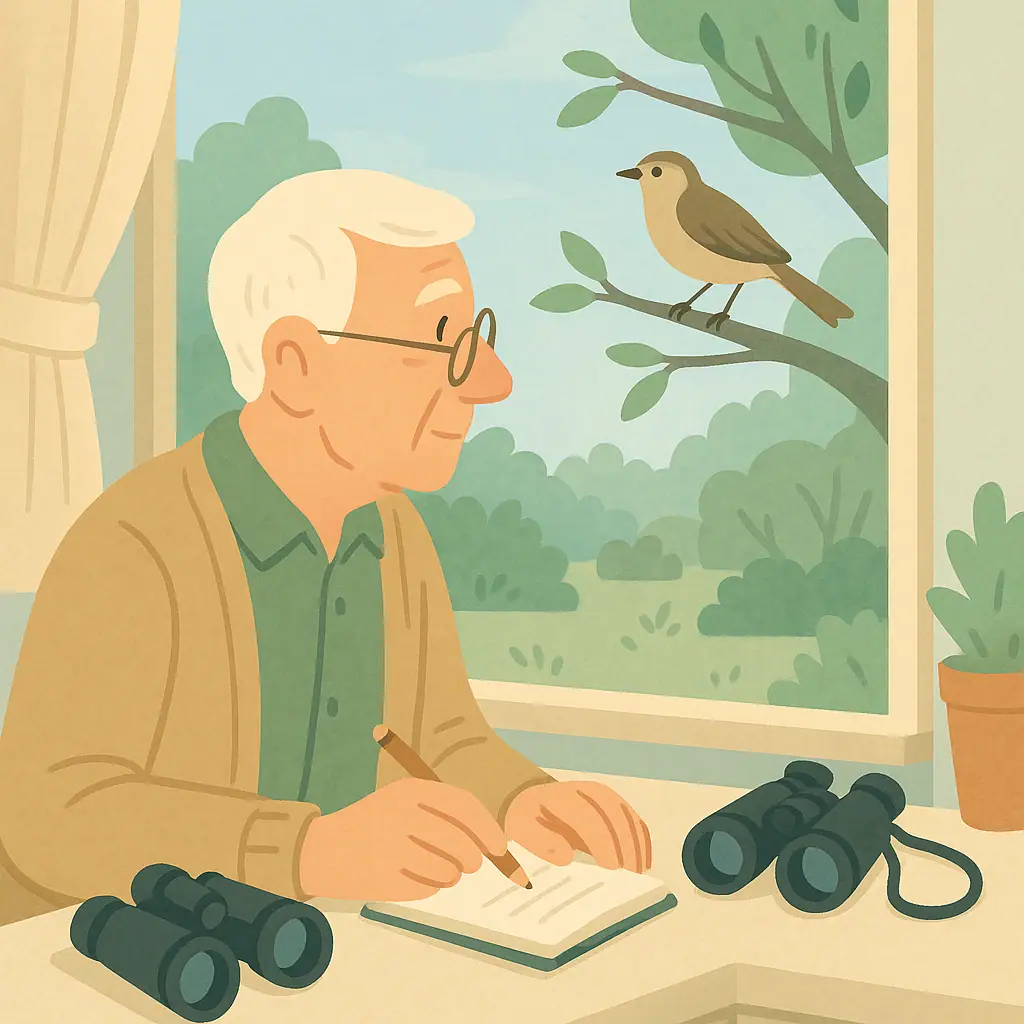
Those questions matter because many birds share similar colors. Behavior and structure often separate them better. If you are still getting comfortable with watching birds without extra gear, BirdPeep's post on birdwatching without binoculars shows how much you can learn from patient observation alone.
Start With a Calm Getting-Started Habit
Before you worry about field marks, pause and look for the easiest clues first. Think of it as a simple order, not a test. You are trying to capture what stays true even if the bird turns away or flies after a few seconds.
Ask where you saw it
Start with the place. Was the bird on the ground, at a tube feeder, in a shrub, on tree bark, or over open water? Habitat and position often guide the rest of the description.
Notice what felt most obvious
Sometimes the first useful clue is not color at all. It may be a long tail, a thick seed-eating beak, a woodpecker-like way of clinging, or a nervous flocking style. That first impression is worth keeping.
If you like writing things down right away, our guide to using a simple notebook for bird identification can help you build a repeatable habit without making the hobby feel complicated.
Start With the Bird's Silhouette
Silhouette is the bird's overall shape before fine details. That means size, posture, head shape, neck length, wing shape, and how the body is balanced. A finch-like bird, a dove-like bird, and a woodpecker-like bird may all be different colors, but their basic shapes point you in very different directions.
Compare size to a familiar bird
Ask whether it looked closer to a sparrow, robin, dove, crow, or goose. You do not need an exact measurement. A rough comparison is enough to help another person narrow the list.
Look at posture
Some birds sit upright and alert. Others look horizontal, rounded, hunched, or long-bodied. Those posture clues stay useful even when the bird is partly shaded or facing away.
If shape feels like the easiest clue for you, BirdPeep already has a related guide on identifying birds by shape before color, which pairs well with this article.
Use Beak and Tail Clues
Beak and tail details are especially helpful because they often stay visible even from a window. You do not need to count feathers or know technical terms. Simple comparisons work well.
- Beak thickness: Was it short and thick like a seed-eater, slender like an insect hunter, or long and pointed?
- Tail length: Did the tail look stubby, medium, or long compared with the body?
- Tail shape: Did it look rounded, pointed, forked, or constantly flicking?
A thick beak and a compact body can suggest a finch or sparrow type. A slim beak and a more delicate posture may point somewhere else. These clues do not finish the identification alone, but they make your description far more useful.
Watch Behavior Before Reaching for a Guide
The Cornell Lab's page on bird behavior as an identification clue highlights posture, movement, and feeding style as practical ways to sort unfamiliar birds. That is good news for beginners, because behavior is often easier to notice than tiny feather markings.
Movement can be a clue
Did the bird hop along a branch, walk on the ground, cling to bark, or swoop out to catch insects? Even a few seconds of motion can say a lot.
Feeding style matters too
Some birds scratch in leaves, some peck at bark, some visit feeders briefly and dart away, and some stay in noisy groups. Those habits often help someone else picture the bird more clearly than color alone.
If you are unsure how to judge size while watching movement, BirdPeep's article on estimating a bird's size with backyard objects gives a practical way to steady your eye before you ask for help.
Keep Distance and Avoid Disturbing Birds
A useful description should never come at the bird's expense. The best observations usually happen when the bird stays relaxed enough to keep acting naturally. That often means staying inside, backing away from the window, or resisting the urge to rush closer.
Never tap on glass, crowd a bird at a feeder, or move toward a nest just to get a better answer. If the bird stops feeding, freezes, or flies because of you, that is a sign to give it more space.
A Simple Checklist
When you see an unknown bird, try to collect these clues in order:
- Place: Where was it when you saw it?
- Size: What familiar bird was it closest to?
- Shape: Did it look chunky, slim, upright, long-tailed, or short-necked?
- Beak and tail: Were they thick, thin, long, short, pointed, or rounded?
- Behavior: Was it hopping, clinging, flocking, scratching, or feeding on the ground?
- Sound: Did you hear a whistle, chatter, chip, trill, or harsh call?
You do not need every answer. Even three or four of these clues can make identification help much easier.
When to Get Extra Help
Once you have your notes, you can ask a birding friend, compare a field guide, or use a trusted app. The key is to share the details in a calm order instead of leading with a guess. Guessing first can make you ignore better clues.
If the bird still seems confusing, say so plainly. "I saw a robin-sized bird with a long tail, slim beak, and upright posture in a shrub" is more helpful than forcing a name you do not trust. That same careful approach also works when you compare look-alike groups, like the families in our post on recognizing common bird families in your backyard.
Pros and Cons of Describing Before Guessing
You notice stronger clues
Shape, size, and behavior usually stay reliable even when color is hard to judge.
You make it easier for others to help
A clear description gives a friend, guide, or app a much better starting point.
You build your own birding confidence
Each careful description trains your eye and makes the next unknown bird feel less overwhelming.
It can feel slow at first
Beginners sometimes want the name immediately, so the observation process may feel deliberate in the beginning.
You may miss one or two details
Fast birds do not always stay long, which means you sometimes have to work with an incomplete description.
Frequently Asked Questions
What should I note first when identifying a bird from a window?
Start with size, overall shape, beak, tail, and behavior. Those clues are usually easier to trust than color alone.
Do I need binoculars to identify backyard birds?
No. Binoculars help, but patient watching from a window, porch, or feeder can still give you strong clues.
Why is color not always the best clue?
Light, shadow, distance, and seasonal plumage can all change how color looks. Shape and behavior are often steadier clues.
How close should I get to a bird?
Stay far enough away that the bird keeps acting normally. Never crowd a nest, tap on windows, or push a bird to move for a better look.
Final Thoughts
The next time an unknown bird appears, you do not need to panic or grab for the perfect name. Just notice where it was, how big it seemed, what shape it had, how it moved, and whether you heard a sound.
That small habit turns a fuzzy memory into a useful description. And the more often you do it, the easier it becomes for someone else to help you solve the mystery.