A Cooper's hawk backyard visit can stop a peaceful morning in its tracks. One moment the feeder is busy with chickadees, doves, finches, and sparrows. The next moment everything goes quiet, a long-tailed hawk flashes through the yard, and you may wonder if you should do something right away.
The calm answer is usually this: pause, watch, and understand what you are seeing. A Cooper's Hawk is not visiting for seed. It is a native predator following the same small birds that gather around shrubs, trees, and feeders.
The Cornell Lab of Ornithology's All About Birds material helped verify this article's feeder guidance. For a second public source that responds cleanly to our publishing validator, the Audubon Field Guide entry for Cooper's Hawk also describes this species as a woodland hawk that feeds mostly on birds and small mammals. That outside context is helpful because it frames the visit as natural behavior, not a backyard emergency.
Why a Cooper's Hawk Backyard Visit Matters
For many beginners, the hard part is emotional. You put out seed because you enjoy helping small birds, then a predator appears and the scene suddenly feels less gentle. But predators are part of a healthy bird community too. They remind us that a backyard is not a decoration; it is a living habitat.
That does not mean you have to turn your feeder station into a hunting lane. It means your best response is thoughtful rather than panicked: identify the hawk, reduce easy ambush points if needed, and give feeder birds a break when a hawk starts lingering.
How to Recognize a Cooper's Hawk Near Feeders
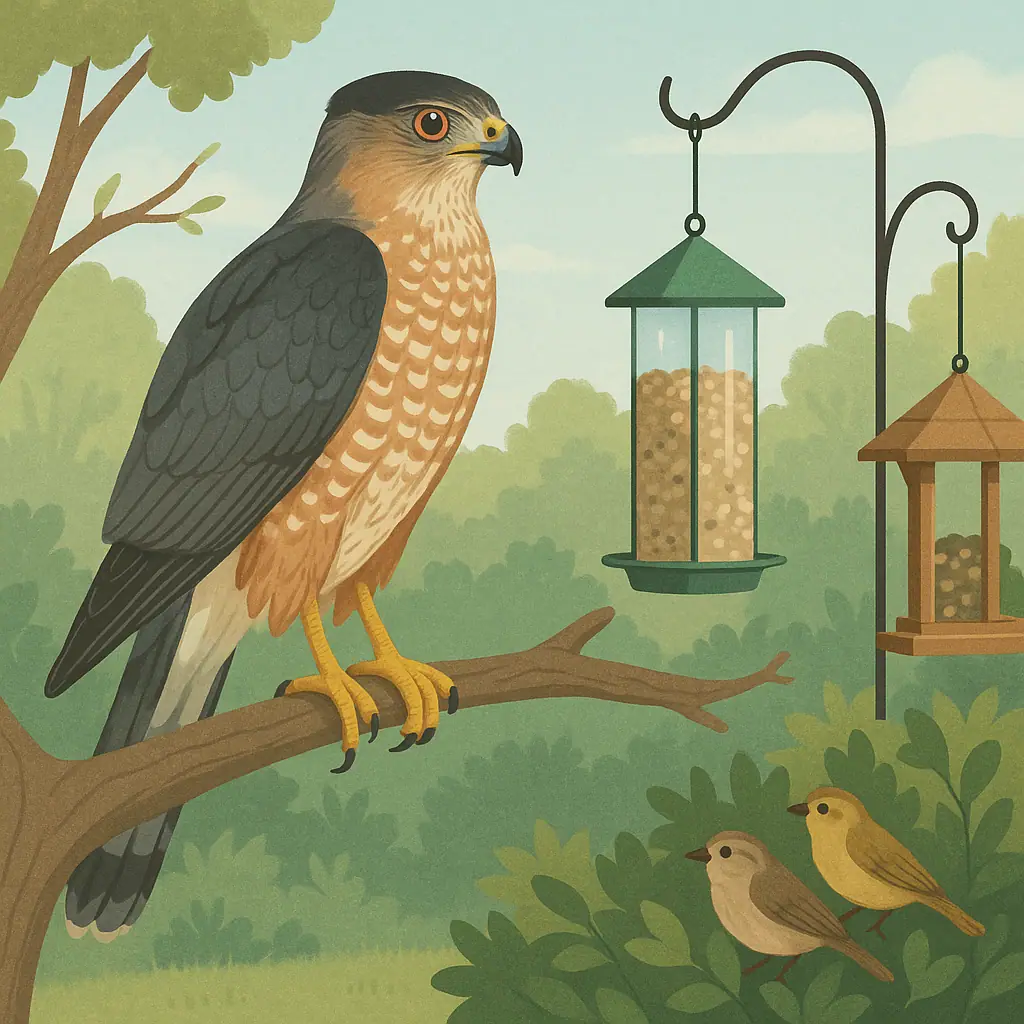
A Cooper's Hawk is built for quick turns through trees. Look for a medium-sized hawk with a long tail, rounded wings, and a fast flap-flap-glide flight style. Adults often look bluish-gray above with reddish barring below, while younger birds are browner with streaking on the chest.
Because feeder visits happen quickly, do not expect a perfect field-guide view. Instead, notice the shape. A long tail, rounded wings, and a large-headed look are more useful than trying to study every feather while the bird is moving.
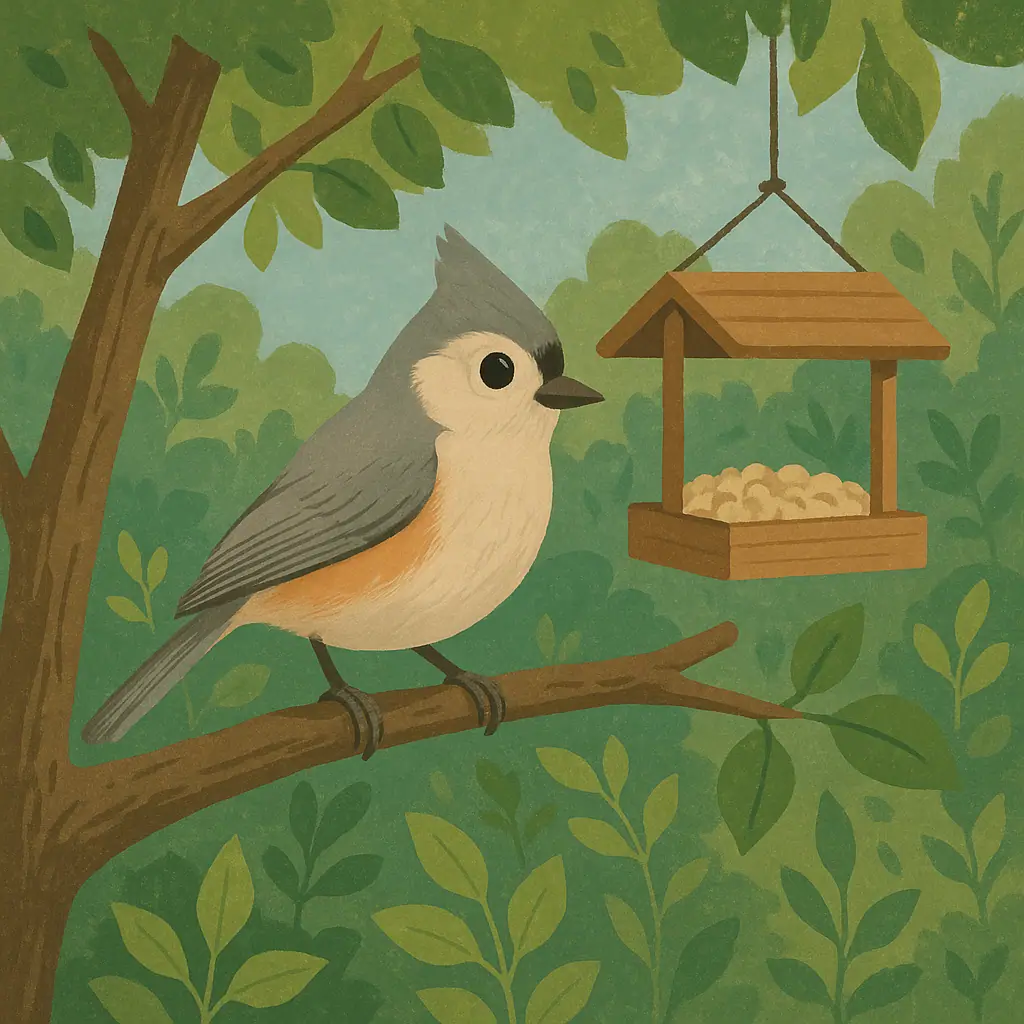
If you enjoy comparing backyard species, the same slow-observation habit helps with quieter visitors too. For example, our guide to the Tufted Titmouse shows how posture, behavior, and repeated views can make identification feel less rushed.
What the Hawk Is Doing at Your Feeder Station
Bird feeders concentrate activity. Small birds come in to eat, wait in nearby shrubs, and fly back and forth along familiar routes. A Cooper's Hawk notices that pattern. It may perch quietly, rush through low cover, or make a sudden pass that scatters every bird in the yard.
It is hunting birds, not your birdseed
This distinction matters because changing the seed mix will not solve the problem. The hawk is responding to bird traffic. A feeder that is easy for songbirds to use can also become a predictable hunting spot if there is too little escape cover or if the hawk learns the routine.
It may only be passing through
Many visits are brief. A hawk may check the yard, miss a catch, and move on. In that case, you do not need to redesign the whole feeding station. Give the small birds time to return, then keep watching for patterns over the next few days.
Should You Take Down Your Feeders?
If a Cooper's Hawk makes one quick pass, leaving feeders up is usually fine. If the hawk starts perching close to the feeders repeatedly, taking feeders down for several days is a simple, non-harmful way to break the pattern. The smaller birds will spread out to natural food sources, and the hawk will often search elsewhere.
While the feeders are down, clean them, discard damp seed, and refresh the bird bath. That turns an uneasy moment into a useful maintenance pause.
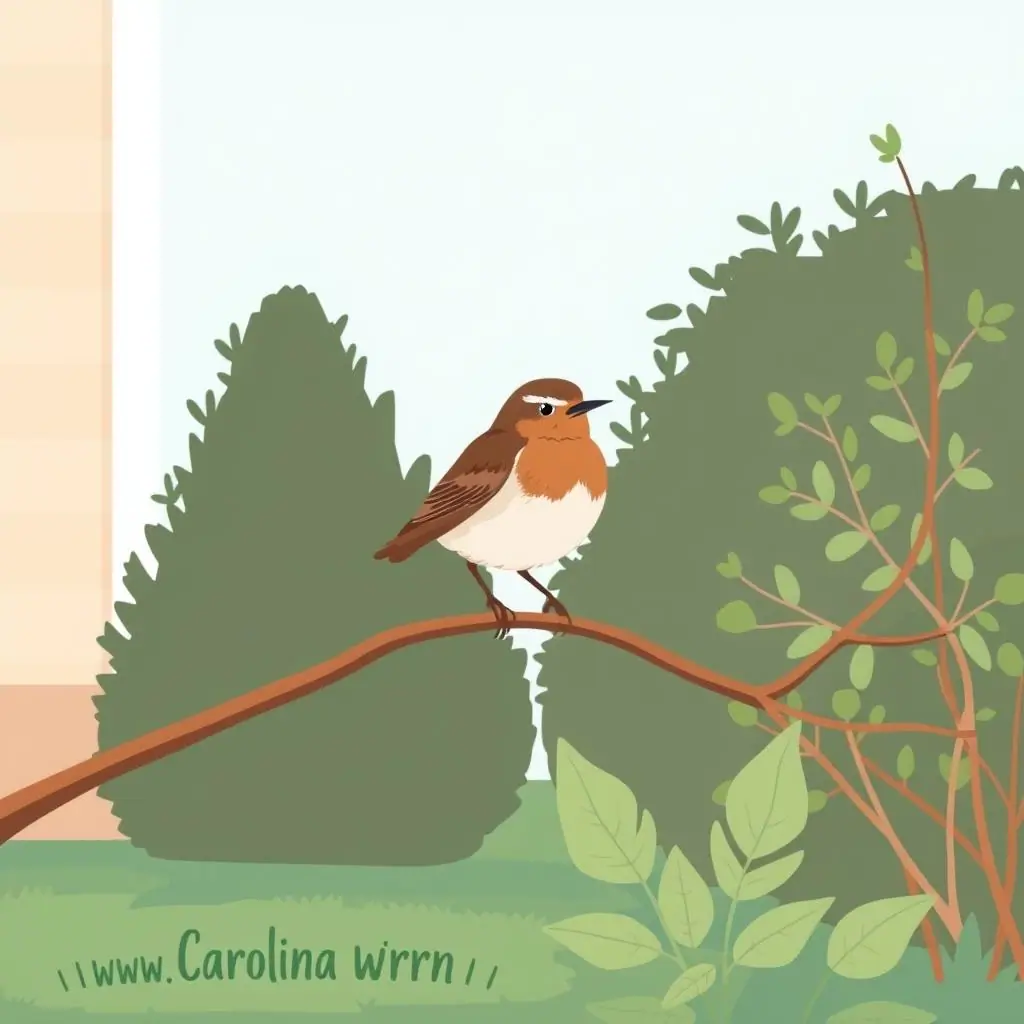
During the break, you can still enjoy your yard. Watch for birds that forage naturally in shrubs and trees, such as wrens. Our Carolina Wren identification guide is a good reminder that many backyard birds are easiest to notice by sound and movement, not only by feeder visits.
Make the Yard Safer Without Fighting Nature
Your goal is not to punish the hawk or remove all risk. Your goal is to avoid creating an unfair trap. A good feeder area gives small birds food, visibility, and nearby escape cover without placing them directly beside hidden ambush spots.
- Move feeders slightly into the open: Keep them near shelter, but not tucked so deeply into dense shrubs that a hawk can launch from only a few feet away.
- Provide layered cover: Native shrubs and small trees give birds places to retreat, especially when they are not forced into one crowded feeder path.
- Keep cats indoors: A hawk is a natural predator. Outdoor cats add a separate, preventable risk around feeders and bird baths.
- Reduce window danger: When birds flush in panic, reflective glass becomes more hazardous. Screens, exterior decals, or other visible patterns can help birds see the barrier.
- Clean during quiet periods: If you take feeders down temporarily, use that window to wash feeders and replace spoiled seed.
Pros and Cons of Taking Feeders Down Briefly
Discourages a repeated hunting pattern
Removing the feeder crowd for a few days makes the yard less predictable for a hawk that has started waiting nearby.
Gives small birds room to disperse
Instead of gathering in one busy place, feeder birds spread out to natural food and cover around the neighborhood.
Creates a natural cleaning break
You can scrub feeders, refresh water, and inspect the feeding station before putting everything back.
The yard may feel quiet for a little while
If you enjoy daily feeder watching, the pause can feel disappointing until birds return to their normal routine.
It does not remove predators permanently
Hawks are part of the local bird community, so the goal is reducing an easy pattern rather than preventing every visit.
What Not to Do When a Hawk Appears
Do not throw objects, chase the hawk, use sticky deterrents, or try to trap it. Cooper's Hawks are protected native birds, and harsh reactions can harm wildlife without solving the feeder pattern. It is also unhelpful to blame the small birds for being vulnerable; they are simply using a food source you provided.
If identification still feels uncertain, compare the hawk with common feeder birds by size and behavior. A Blue Jay, for instance, can look bold and dramatic at a feeder, but it does not have the long-tailed raptor shape or hunting flight of a Cooper's Hawk. You can review those differences in our Blue Jay backyard guide after the yard settles down.
A Simple Cooper's Hawk Backyard Checklist
Use this quick checklist the next time a hawk visits. It keeps the response practical and calm.
- Identify the shape: Long tail, rounded wings, large head, and quick woodland-style flight point toward Cooper's Hawk.
- Notice the pattern: One fly-through is different from a hawk waiting near feeders every day.
- Pause feeding if needed: Take feeders down for several days when the hawk keeps returning to hunt the same station.
- Refresh the setup: Clean feeders, remove spoiled seed, and check the bird bath before restoring food.
- Improve safety: Add visible window protection and keep feeder traffic away from obvious ambush corners.
- Observe respectfully: Enjoy the hawk from a distance without trying to scare, catch, or harm it.
Frequently Asked Questions
Is a Cooper's Hawk in my backyard a bad sign?
No. It usually means your yard has enough bird activity to attract a natural predator. The visit can feel startling, but it is part of normal wildlife behavior.
Will taking feeders down make small birds leave forever?
Usually no. A short break of several days may make the hawk move on, and many regular birds return when feeders are cleaned and put back up.
Should I scare the hawk away?
Avoid chasing or harassing it. The safer approach is to change the feeder pattern, watch from a distance, and let the hawk continue its natural behavior elsewhere.
How can I tell a Cooper's Hawk from a Sharp-shinned Hawk?
They are famously similar. Cooper's Hawks often look larger-headed, longer-tailed, and more crow-sized, but quick views can be difficult. Use repeated observations rather than one rushed guess.
Final Thoughts
A Cooper's hawk backyard visit is not a failure of your feeding station. It is a reminder that your yard is connected to a larger web of bird life. With a calm pause, a few safety checks, and a willingness to let nature be nature, you can protect your feeder birds without treating the hawk as a villain.
The next time the yard suddenly goes silent, take a breath before you react. Watch the shape, note the behavior, and decide whether this is a passing visit or a pattern that needs a short feeder break.