Common grackle identification can feel tricky at first because this bird often looks like a plain black shape moving through the yard. Then it turns its head in sunlight, flashes a blue or purple shine, gives a loud creaking call, and suddenly seems much more interesting.
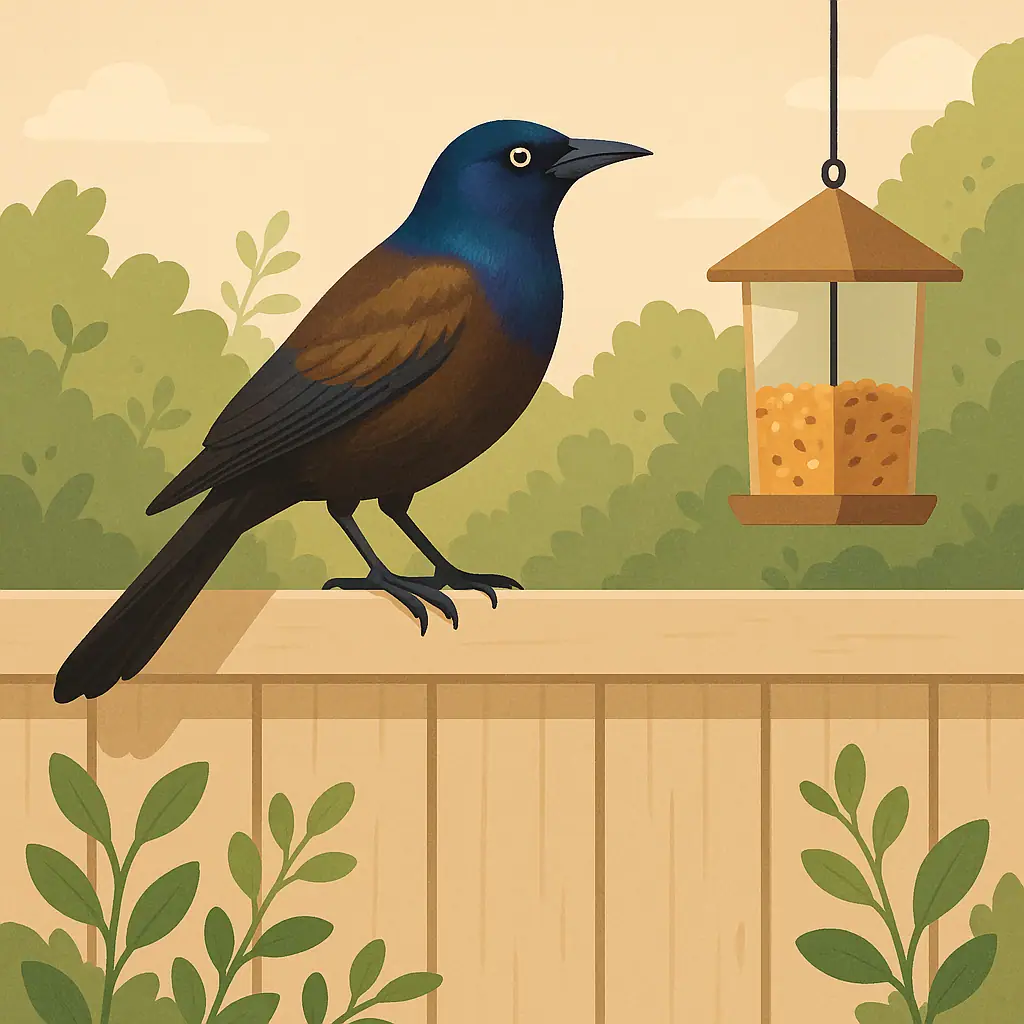
The Cornell Lab of Ornithology's Common Grackle guide describes this bird as a large, lanky blackbird with long legs, a long tail, a longer bill than many blackbirds, and a pale yellow eye. Those simple clues are enough to give beginners a reliable starting point.
This guide keeps the tone fair. Grackles can be noisy and bold around feeders, but they are also intelligent native birds with beautiful glossy feathers and lively social behavior. The goal is to recognize them clearly, understand what they are doing, and manage your backyard calmly when needed.
Why Common Grackle Identification Matters
A common grackle is not quite a crow, not quite a starling, and not quite a red-winged blackbird. It sits in that confusing middle ground where many beginners say, "I saw a big black bird, but I am not sure what it was." Learning a few steady marks makes the whole group less overwhelming.
Start with structure before color. Look for a long body, a long tail that can seem keel-shaped or folded, a strong dark bill, and an alert, stretched posture. If the bird is walking on the lawn with a confident stride, that is another clue.
Start With Shape, Shine, and Voice
Shape comes first
Common grackles look longer and lankier than many backyard blackbirds. The tail is especially helpful. On the ground or on a fence, the bird often appears stretched from bill to tail, with a posture that feels more upright than a robin and more slender than a crow.
When you compare it with other familiar backyard visitors, the body can look around mourning-dove sized, but the shape is very different. The head is flatter, the bill is stronger, and the tail draws your eye backward.
Shine appears in good light
From the kitchen window, a common grackle may look simply black. In sun, the head may glow blue, purple, or greenish, while the body can show a bronzy sheen. Females and young birds may look duller, so use several clues together.
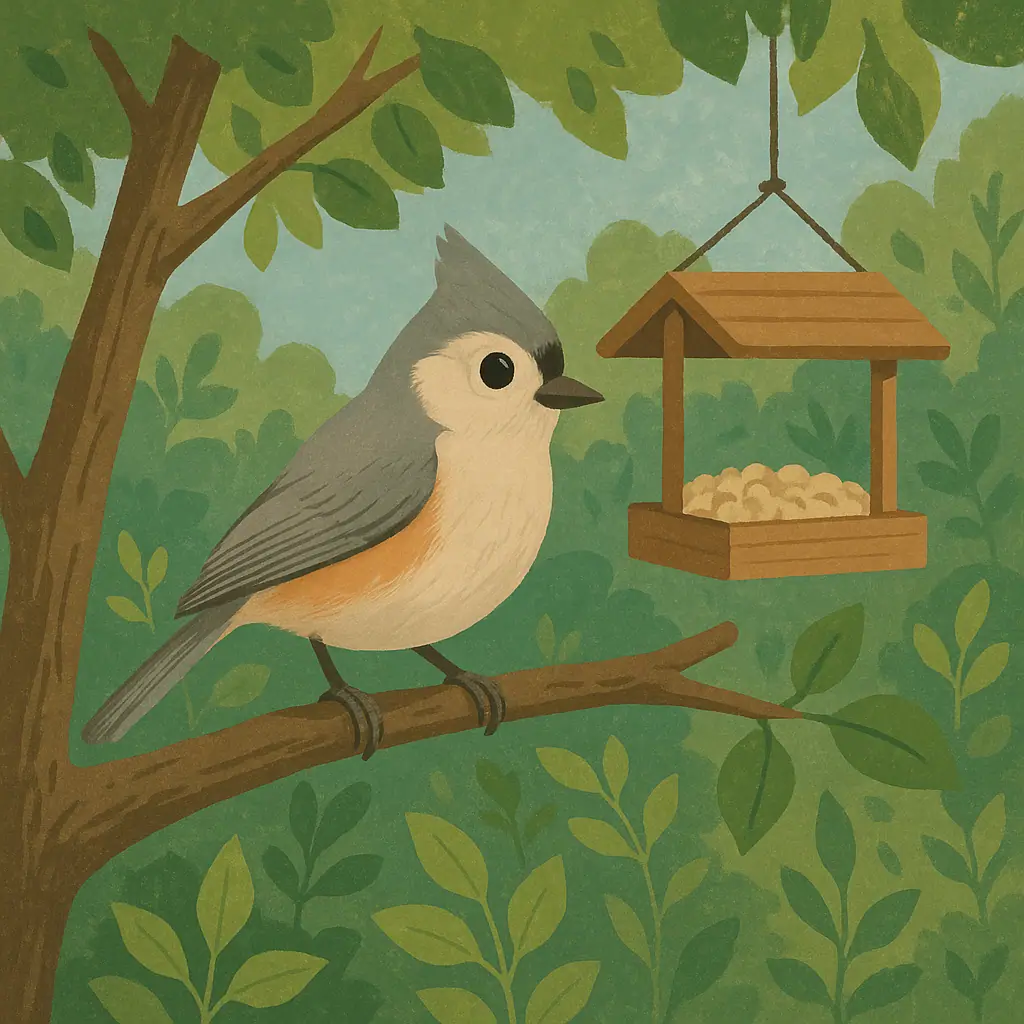
If you enjoy learning one backyard bird at a time, the same patient approach works well with other species too. BirdPeep's guide to the tufted titmouse as a backyard identification bird shows how small shape details can make a common visitor easier to name.
How Grackles Behave in the Backyard
Grackles often arrive with confidence. They may walk across grass, investigate spilled seed, perch in groups, or call from high trees. Their voices can sound squeaky, harsh, creaky, or metallic, which is part of their personality.
They are also social birds. In some seasons, you may see one or two. At other times, a larger flock may move through quickly. That flocking behavior can make them feel more dramatic than they really are, especially near a feeder.
- On the lawn: Watch for a long-tailed bird walking rather than hopping.
- At the feeder: Notice whether the bird is taking seed, checking the ground, or simply passing through.
- In trees: Listen for loud, creaky calls from exposed branches.
- In sunlight: Look for blue-purple gloss on the head and a bronzy body sheen.
- In groups: Expect more noise and motion, but avoid assuming the birds are a problem.
Common Grackle vs Other Dark Birds
The easiest comparison is with birds you already know. A crow is much larger, heavier, and more powerful looking. A European starling is shorter-tailed and often more speckled in nonbreeding plumage. A red-winged blackbird is smaller and shaped differently, with the male's shoulder patches giving a strong clue when visible.
House sparrows and house finches can also cause confusion from a distance, but they are smaller and browner. If that pair gives you trouble, this BirdPeep article on house sparrow vs house finch identification can help sharpen your eye for size and shape before you return to larger blackbirds.
Easy to notice
Common grackles are bold, visible birds, so beginners often get several chances to study them.
Strong identification clues
The long tail, pale eye, glossy head, and loud voice create a useful combination of marks.
Interesting behavior
Flocking, ground walking, calling, and feeder visits give careful watchers plenty to observe.
Can dominate small feeders
A group of grackles may crowd smaller birds or empty seed faster than expected.
Looks plain in poor light
Without sunlight, the glossy colors may disappear, making the bird seem like any dark silhouette.
Humane Feeder Management When Grackles Visit
If grackles visit now and then, you may not need to change anything. Enjoy the observation. If a large group empties a feeder every day, make small adjustments rather than treating the birds as enemies.
Try cleaning up spilled seed, using smaller feeder openings, offering seed types that fit the birds you most want to attract, or pausing a feeder briefly if the station becomes too crowded. Keep water clean and avoid sticky, messy scraps that can create hygiene problems.
For a broader feeder routine, the guide on cleaning and maintaining a bird feeding station pairs well with grackle management because cleanliness helps all backyard birds.
A Simple Identification Checklist
- Long tail: The bird looks stretched out behind the body.
- Strong bill: The bill appears longer and heavier than many small blackbirds.
- Pale eye: Adults often show a noticeable yellowish eye.
- Glossy head: Sunlight may reveal blue, purple, or green shine.
- Confident walk: The bird often walks across lawns and open ground.
- Loud voice: Calls can sound creaky, harsh, or metallic.
When to Get Extra Help
If you are unsure, take one clear photo or write down five notes: size, tail, eye, bill, and behavior. Then compare your notes with a trusted field guide or bird identification source. Avoid making a firm call from one blurry glimpse.
You can also ask a local bird club or nature center for help, especially if you are trying to separate common grackles from similar dark birds in your region. A calm second opinion is better than guessing.
Frequently Asked Questions
Are common grackles the same as crows?
No. Common grackles are blackbirds, and they are much smaller and slimmer than crows. Their long tail, pale eye, and glossy head are helpful clues.
Why do grackles look blue or purple sometimes?
Their dark feathers can show iridescent color in sunlight. In shade, the same bird may look mostly black.
Should I scare grackles away from my feeder?
Usually no. If they overwhelm the feeder, adjust the setup calmly with cleaner ground, smaller openings, or short feeding pauses instead of harassing wildlife.
Do common grackles visit yards alone or in flocks?
Both can happen. You may see a single bird walking through the grass or a noisy group passing through together.
Final Thoughts
Common grackle identification gets easier when you stop looking for one perfect mark and start watching the whole bird. Long tail, strong bill, pale eye, glossy shine, confident walking, and big voice all work together.
The next time a dark, loud visitor lands near your feeder, take a quiet minute before judging it. You may find that the glossy grackle is one of the more memorable characters in the backyard.