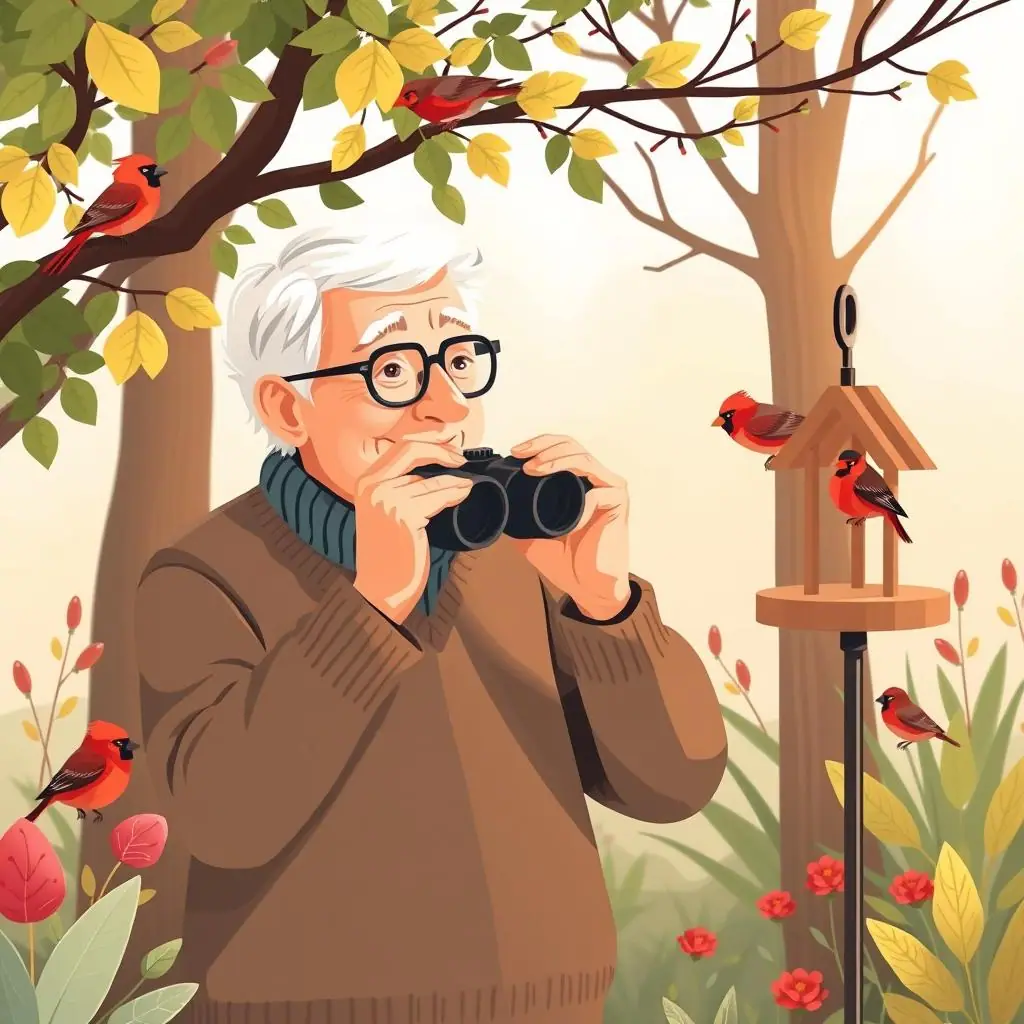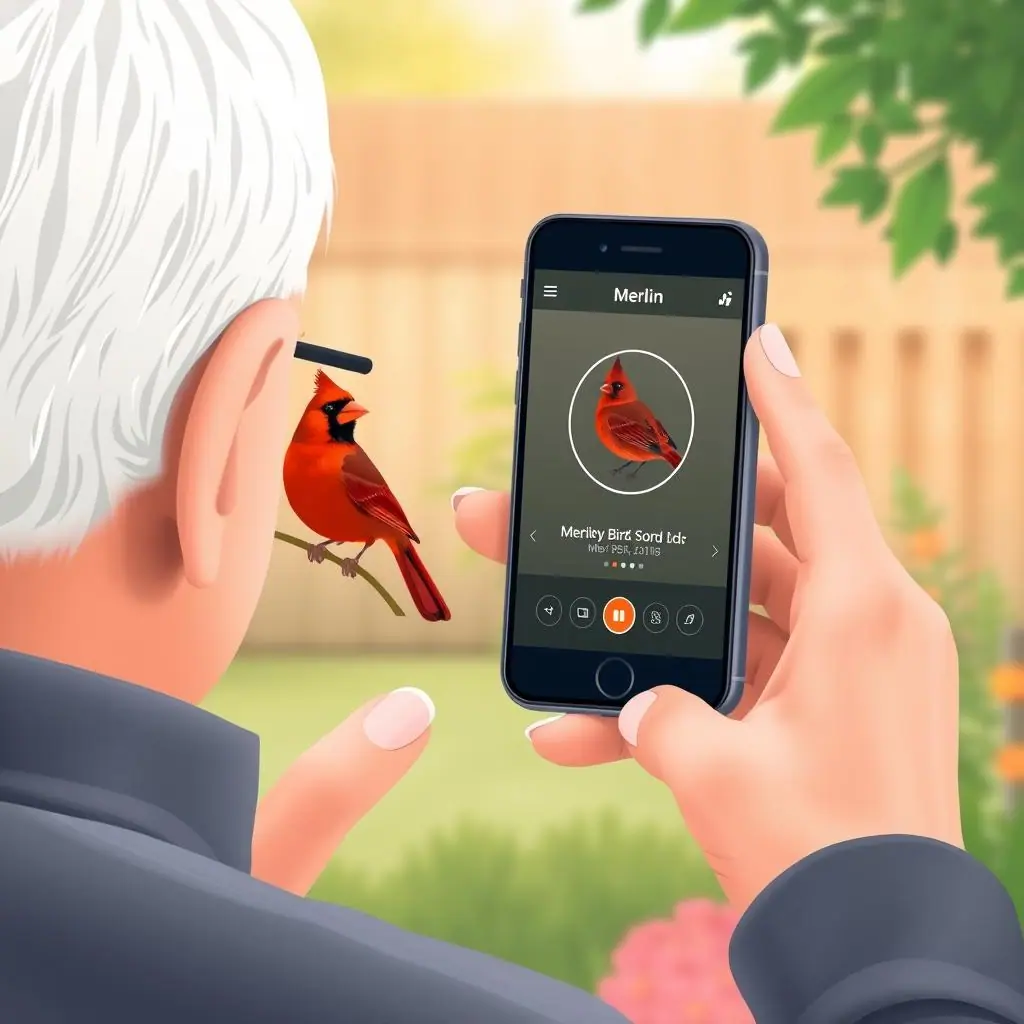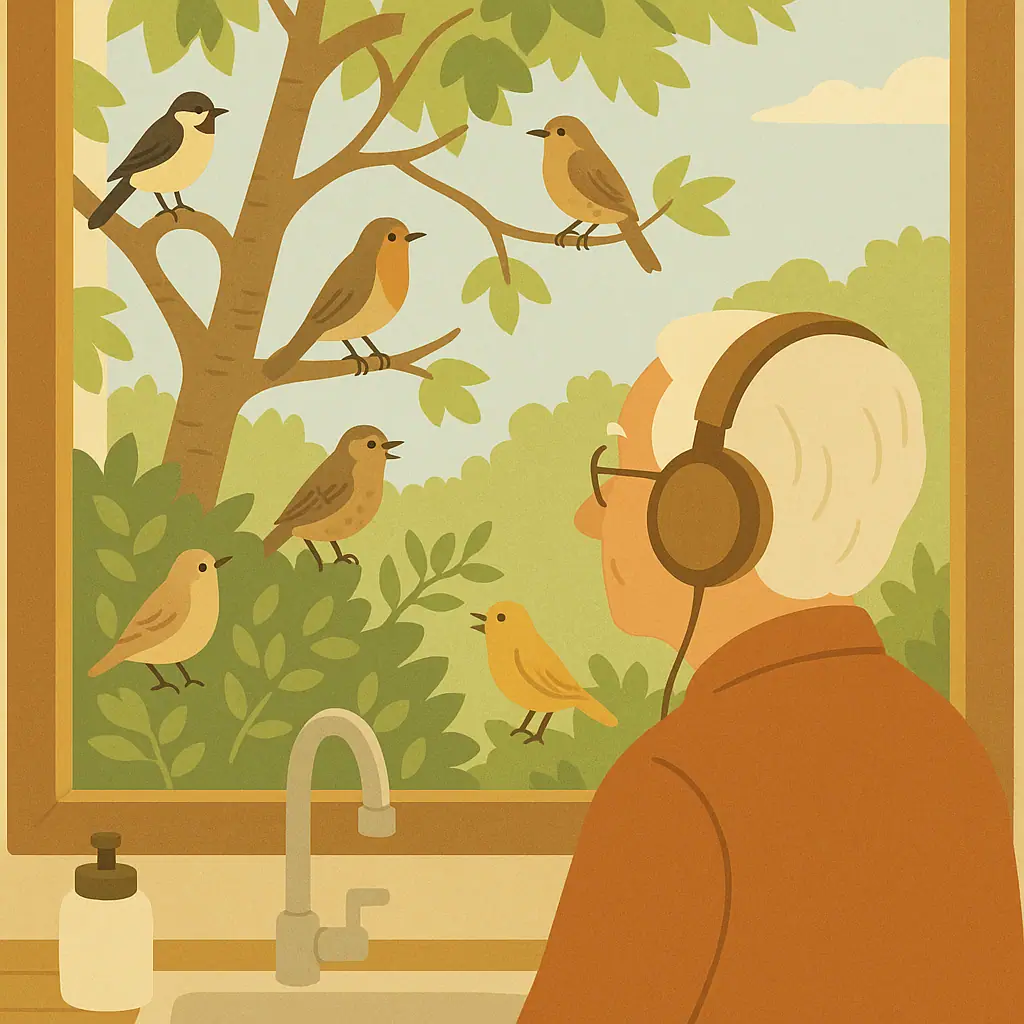
Many beginners assume birdwatching by ear starts with memorizing dozens of species. That idea can make listening feel harder than it needs to be. In a real backyard, the first helpful step is usually much simpler: notice the kind of sound before you try to decide who made it.
When you sort a sound into a small pattern such as a whistle, trill, buzz, or repeated phrase, you give your brain something calm and concrete to hold onto. That makes the next look through the window, the next note in your notebook, and the next comparison in a field guide feel much less rushed.
Why Bird Sound Patterns Matter
Bird color can change with light, distance, and angle. Sound often reaches you first, especially when a bird stays high in a tree or hidden in leaves. Cornell Lab's guide to learning bird songs and calls encourages beginners to notice the basic types of sounds birds make before diving into deeper identification, which fits beautifully with a slower backyard routine.
That approach lowers pressure. Instead of trying to catch every detail at once, you begin by listening for the broad pattern. Once that pattern feels familiar, naming the singer becomes a smaller and more realistic next step.
Listening gives you a clue before the bird appears
A bird may stay behind leaves, move in the shade, or sing from the far side of the yard. Sound still reaches you, and that early clue can prepare your eyes for what to watch next.
Simple categories are easier to remember
Most beginners can remember four sound shapes much more easily than a long list of species names. That small win keeps the habit enjoyable.
Start With Whistles
A whistle usually sounds clear, clean, and easy to separate into individual notes. Some whistles rise, some fall, and some stay nearly even. When you hear a whistle, listen for how many notes there are and whether the sound feels sweet, sharp, slow, or quick.
If you are also working on visual clues, BirdPeep's guide to identifying birds by shape before color pairs nicely with this method. Shape and sound together are often enough to narrow your attention without overwhelming you.
- Listen for spacing: are the notes separated cleanly or packed tightly together?
- Listen for direction: does the whistle rise, fall, or stay level?
- Listen for pace: is the bird taking its time or delivering notes quickly?
Notice Trills Before You Chase Details
A trill feels more like a fast rolling stream of sound than a set of separate notes. It can seem buzzy at first, but the texture is usually lighter and more musical than a harsh rasp. Beginners often do best when they simply notice, "That bird rolled the sound," instead of trying to count everything happening inside it.
This is also a good moment to stay patient and keep your distance. A bird that continues normal singing, feeding, or perching is giving you a better lesson than one that flies because you moved too close.
Trills are about texture
Ask yourself whether the sound feels smooth and rolling, almost like a tiny spinning wheel. That texture matters more than perfection.
Short trills and long trills feel different
A short trill may sound like a quick burst, while a long trill can fill a few seconds. Noticing that difference is useful even if you never name the bird on the spot.
Learn the Difference Between Buzzes and Repeated Phrases
A buzz usually sounds rougher, drier, or more insect-like than a whistle. A repeated phrase, on the other hand, gives you a short pattern that comes back again and again. One may sound scratchy, while the other feels organized and memorable.
If you want another no-pressure listening habit, BirdPeep's article on birdwatching without binoculars is a helpful reminder that careful attention still counts as real birdwatching, even when you are relying more on ears than gear.
- Buzz: rough, dry, or insect-like texture.
- Repeated phrase: a short pattern that returns in nearly the same shape.
- Helpful question: did the bird sound scratchy, or did it sound patterned?
Watch the Bird's Behavior While You Listen
Sound becomes much more useful when you connect it to behavior. Is the bird staying high and singing from one open perch, or hopping through shrubs while calling briefly? Is it alone, in a pair, or moving with a loose flock? Those clues help you remember the moment and compare it later with more confidence.
BirdPeep's piece on recognizing common bird families in your backyard can help here because families often share posture and movement patterns that make sound notes easier to place.
Normal behavior means you are far enough away
If the bird keeps singing, feeding, preening, or shifting naturally on a branch, you are probably watching ethically. If it freezes, scolds, or flies because of you, back up and reset.
Movement adds memory
A repeated phrase from an open perch feels different from a dry buzz coming from brush at ground level. Small context details make later identification easier.
Keep a Four-Part Sound Note
You do not need a complicated journal entry. A tiny four-part note is enough: type of sound, pace, perch or location, and what the bird was doing. That habit keeps the memory fresh long after the song fades.
If you want a routine gentle enough to repeat every day, BirdPeep's 10-minute daily birdwatching routine works well with this listening practice because it encourages short, calm, repeatable sessions.
- Sound type: whistle, trill, buzz, or repeated phrase.
- Pace: slow, medium, quick, or rolling.
- Location: treetop, shrub edge, fence line, feeder area, or ground.
- Behavior: singing, hopping, clinging, flocking, or feeding.
Pros and Cons of Learning Sounds by Pattern First
It feels less intimidating
Four simple sound patterns are easier to remember than a long list of bird names and recordings.
It works from a window or porch
You can practice from home without special gear, long walks, or perfect views.
It improves later identification
Pattern notes give you better questions to ask when you open an app, guide, or article afterward.
Some birds do not fit neatly into one box
A sound can feel halfway between a trill and a buzz, especially when you are new.
Background noise can blur the pattern
Wind, traffic, and other birds may make a short listening moment harder to sort out.
A Simple Checklist for the Next Bird You Hear
Use this quick list the next time a song reaches you before the bird does.
- First question: did it sound like a whistle, trill, buzz, or repeated phrase?
- Second question: was the pace slow and separated, or fast and rolling?
- Third question: where was the bird when you heard it?
- Fourth question: what was the bird doing while it made the sound?
- Final check: did the bird stay relaxed, letting you observe without disturbance?
When to Get Extra Help
If the sound still feels confusing, do not guess. Compare your notes with a trusted guide, or use a sound tool after the moment has passed. The goal is not to force certainty. The goal is to build calm, accurate habits.
That is also where BirdPeep's article on understanding bird sounds for beginners can help you keep building vocabulary without turning the hobby into homework.
Frequently Asked Questions
What should I listen for first when a bird starts singing?
Start with the broad pattern. Ask whether the sound feels like a whistle, trill, buzz, or repeated phrase before you worry about the species name.
Do I need binoculars to learn bird sound patterns?
No. Binoculars can help later, but patient listening and a few simple notes are enough to begin.
Why is color not always the best first clue?
Light, distance, and moving leaves can make color misleading. Sound often reaches you sooner and stays more useful when the bird is partly hidden.
How close should I get when I am trying to hear better?
Stay far enough away that the bird keeps acting normally. Never tap windows, crowd perches, or approach active nests.
Final Thoughts
Learning bird sound patterns does not have to begin with perfect identification. A calmer starting point is to notice how the sound is shaped and how the bird behaves while making it.
When you can sort a backyard voice into whistles, trills, buzzes, or repeated phrases, you are already becoming a better listener. That quiet skill makes every future ID feel a little more welcoming.