

Learning how to attract birds to small patio spaces begins with a kind thought: birds do not need a large yard to feel invited. They need a few trustworthy signs that your space is safe, clean, and worth checking during their daily rounds.
A patio, balcony, townhouse corner, or small paved sitting area can become a pleasant birdwatching spot when you work with what you have. Instead of trying to copy a big garden, focus on three simple gifts: a little cover, a little water, and a calm place to pause.
If you already enjoy watching what birds eat in a larger yard, BirdPeep’s guide to what backyard birds eat naturally can help you think beyond seed. On a small patio, that same idea becomes even more important because every pot, perch, and feeder needs to earn its place.
Why Small Patio Bird Habitat Matters
Small spaces matter because birds move through neighborhoods as a patchwork. One patio with clean water, one balcony with native flowers, and one quiet corner with shelter may not seem dramatic by itself. Together, these little places can make a neighborhood feel more useful to birds.
The Cornell Lab’s All About Birds explains that native plants support birds by offering insects, seeds, fruit, nectar, and shelter. Their article on gardening with native plants for birds is a helpful outside reference when you want to understand why even a container plant can be more than decoration.
Start With the Safest Patio Layout
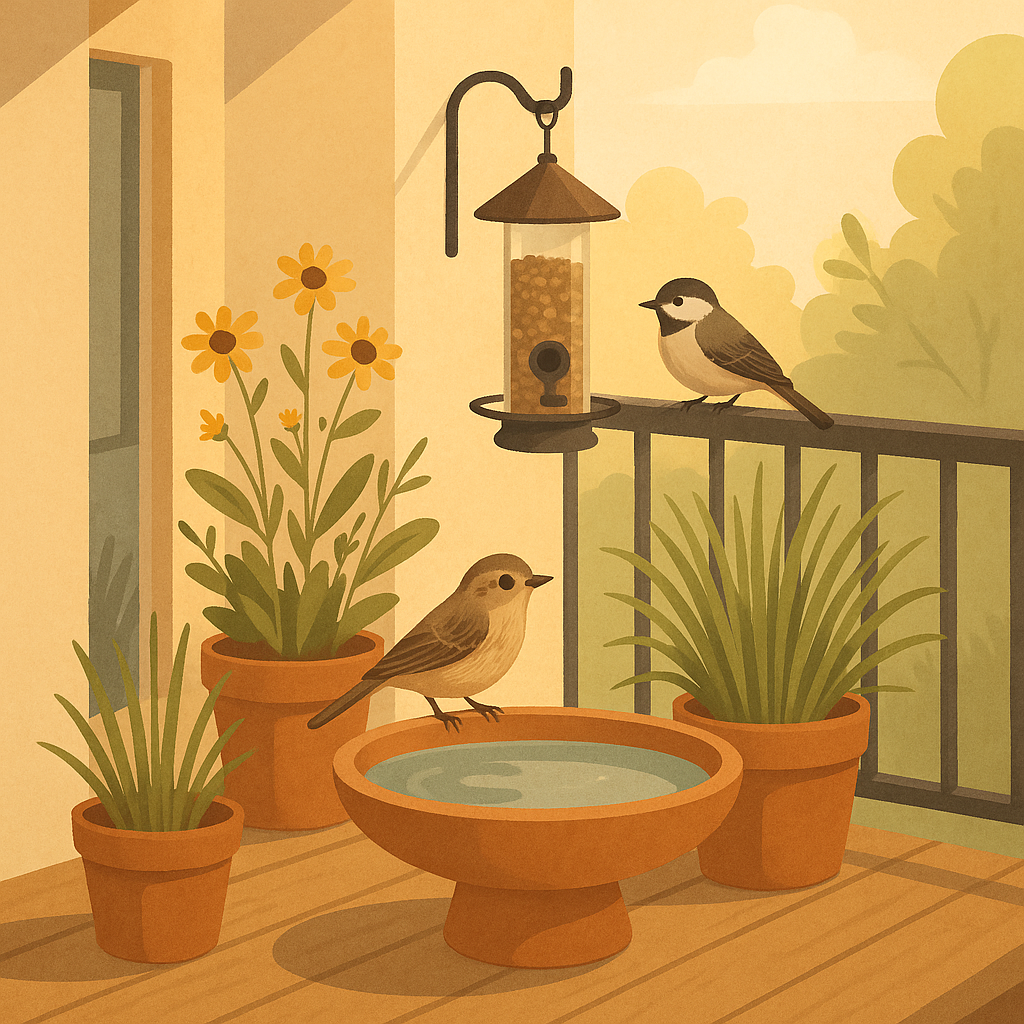
Before you buy anything, stand in the doorway and look at the patio the way a cautious bird might. Where is the nearest shrub, railing, tree, or quiet corner? Where do people walk most often? Where does afternoon sun make water too warm? Where could a feeder be seen from a window without putting birds in danger?
This first look helps you avoid clutter. A small patio can become hard to use if every idea turns into another hook, pot, or stand. Choose one main bird zone that is easy for you to reach and easy for birds to approach.
Choose one calm corner
A calm corner does not have to be hidden. It simply needs less foot traffic, a little space from doors that slam, and enough room for you to clean without bending awkwardly. If your patio is open on all sides, a few potted shrubs or tall grasses can make the area feel less exposed.
- Keep a clear path: Leave room for walking, sitting, and carrying water without stepping around too many objects.
- Watch sun and wind: Place water where it stays visible but does not bake all afternoon.
- Use sturdy bases: Choose heavy pots, stable stands, and feeder poles that will not tip in a gust.
- Think about cleanup: Put seed and water where sweeping or rinsing the patio is simple.
Add Clean Water Before Adding More Feeders
Water is often the easiest first upgrade for a small patio. A shallow dish, low bird bath, or compact basin can invite birds to drink, especially during warm weather. The key is not size. The key is cleanliness, shallow depth, and steady maintenance.
If you want more detail about water setups, BirdPeep has a separate guide to creating a bird-friendly water feature. For a patio, start even simpler: a shallow container with fresh water, a few small stones for footing, and a spot you can reach daily.
Make water easy to refresh
Small bird baths get dirty quickly, especially near feeders or potted soil. Empty and rinse the water often. In hot weather, a small basin may need attention every day. If that sounds like too much, choose a smaller setup you can clean comfortably rather than a decorative bath that becomes a chore.
Shallow clean water
A simple basin can help birds drink without requiring a large garden or complicated fountain.
Native plants in containers
Potted native flowers, grasses, or small shrubs can offer food clues, cover, and a softer landing place.
One tidy feeding spot
A single well-kept feeder is easier to clean and observe than several crowded feeders in a tight space.
Mess builds up faster
Seed hulls, droppings, and spilled water are more noticeable on pavement, so cleanup needs to be part of the plan.
Glass may be close
Patios often sit near windows or sliding doors, so collision prevention needs attention before birds visit regularly.
Use Plants to Create Soft Cover
Plants make a patio feel less bare to birds. Even a few containers can change the mood from exposed pavement to gentle stopping place. Choose plants that match your region, light, and container size rather than buying the prettiest label at the garden center.
Native plants are especially useful because they can support insects, seeds, fruit, and shelter in ways birds recognize. In a small space, you might use one native flowering perennial, one grass, and one compact shrub if your patio can support them. If you rent or have weight limits, lighter containers and smaller plant choices may be wiser.
For readers who want a broader yard version of this idea, the article on creating a quiet corner for backyard birds explains how shelter and calm edges help shy visitors. A patio version simply scales that idea down.
Choose One Feeder You Can Keep Clean
Feeders can work on a small patio, but more feeders are not always better. Start with one feeder that is easy to open, easy to scrub, and easy to move if the location is not working. A small tube feeder, a tidy seed feeder, or a modest suet cage may be more practical than a large station.
BirdPeep’s beginner guide to bird feeder types can help you compare options. On a patio, the best feeder is usually the one you will actually clean, refill lightly, and monitor for spilled seed.
- Fill lightly: Add only what birds finish before seed gets damp or stale.
- Sweep below: Clear hulls and spilled seed so pests are not encouraged.
- Move if needed: If droppings, squirrels, or window risks increase, adjust the setup.
- Pause during problems: If birds look sick or seed spoils repeatedly, take the feeder down and clean thoroughly.
Make Windows and Doors Safer
Small patios often sit close to sliding doors, picture windows, or glass railings. That makes window safety part of the habitat plan. Birds may see reflections of sky, trees, or plants instead of solid glass.
Project FeederWatch, a Cornell Lab and Birds Canada program, notes that birds do not see glass as a barrier and studies collisions at homes and smaller buildings as well as larger structures. Their bird-glass collision study page is a useful reminder to treat patio glass as a real safety detail, not an afterthought.
Use visible window treatments on the outside surface when possible, such as closely spaced decals, tape patterns, screens, netting, or other bird-safe products made for glass. A single decorative sticker is usually not enough because birds may try to fly through the open-looking spaces around it.
A Simple Small Patio Checklist
Use this checklist before adding more items. It keeps the patio comfortable for you and safer for birds.
- Water: Is the water shallow, fresh, and easy to rinse?
- Cover: Is there a potted plant, shrub, or nearby safe perch?
- Food: Is there only as much seed as birds can finish while fresh?
- Glass: Are nearby windows or doors treated so birds can notice them?
- Cleanliness: Can you sweep spilled seed and wash feeders without strain?
- Predators: Are cats kept away from the patio bird zone?
When to Get Extra Help
If your patio has strict apartment rules, weight limits, shared walkways, or frequent squirrels, ask before installing hooks, poles, or heavy containers. A property manager, local nursery, bird store, or bird club may help you find options that fit your space without creating trouble.
Also check local guidance before trimming plants during nesting season. If you find an active nest in a patio plant, observe from a respectful distance and avoid moving it. When in doubt, contact a licensed wildlife rehabilitator or local birding organization rather than guessing.
Frequently Asked Questions
Can I attract birds to a small patio without a yard?
Yes. Start with clean shallow water, one or two suitable plants, and a quiet observation spot. Keep the setup simple so it stays clean and safe.
What is the best first feeder for a patio?
Choose a small feeder that is easy to clean and refill lightly. The exact style matters less than hygiene, stable placement, and your ability to manage spilled seed.
Are potted plants enough to help birds?
They can help, especially when they are regionally appropriate native plants. Even containers can offer insects, seeds, nectar, shelter, or a calmer place to pause.
How do I keep birds safer near patio windows?
Make glass visible with outside window treatments such as screens, decals, or close patterning. Watch the area and adjust if birds seem confused by reflections.
Final Thoughts
A small patio can become more welcoming to birds when you keep the promise modest: fresh water, soft cover, clean feeding, safer glass, and a calm place to watch. You do not need to turn the whole space into a garden overnight.
Begin with one change this week. Set out a shallow, easy-to-clean water dish or choose one container plant that fits your light. Then sit quietly for a few minutes and notice who comes near. Birdwatching often grows from that kind of small invitation.