
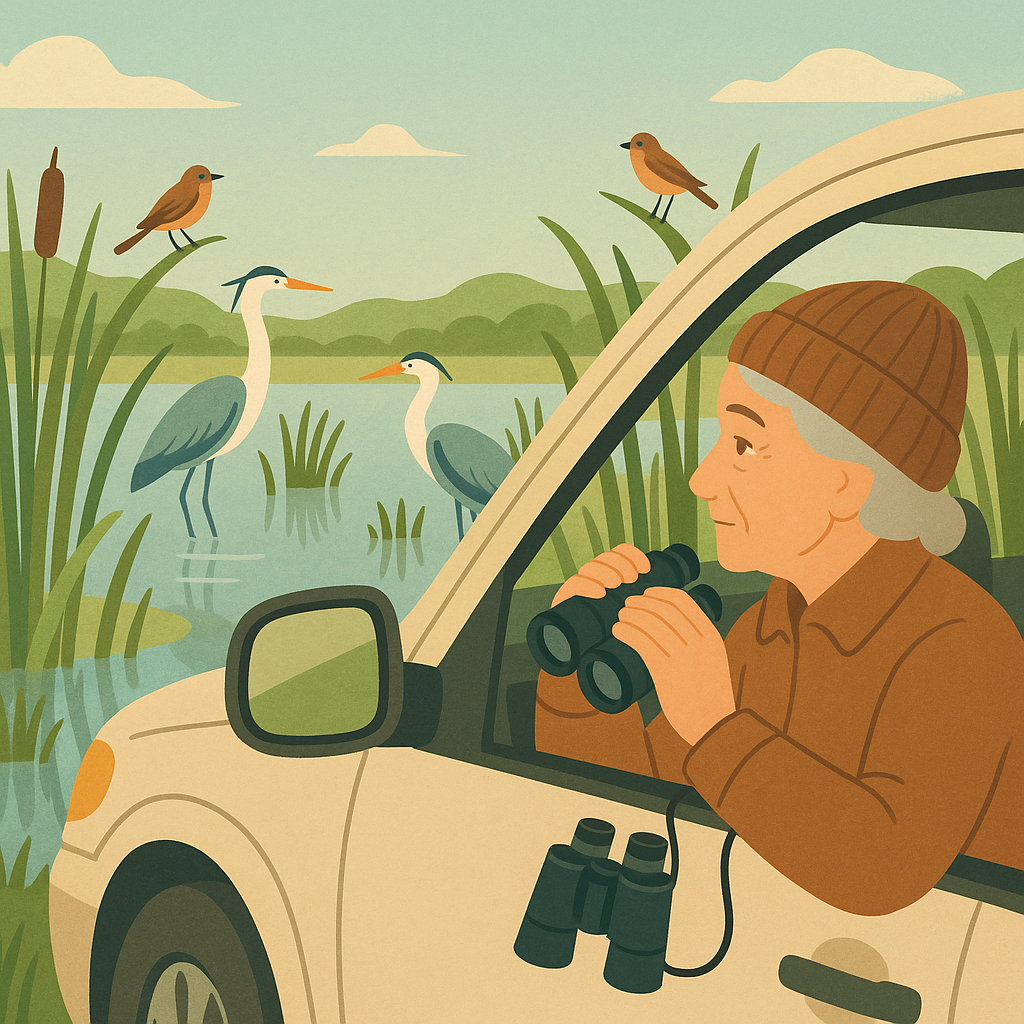
Birdwatching from car can feel like a quiet little doorway into bigger nature. You are beyond the backyard, but you still have a seat, shade, water, and a place to rest. For many beginners, especially anyone who prefers shorter walks or steadier footing, the car can make parks and refuges feel much more approachable.
The idea is not to rush from stop to stop. It is to use your vehicle as a calm observation spot, move slowly, and let birds settle into view. A refuge drive, park road, or overlook can offer ducks, herons, hawks, sparrows, shorebirds, and songbirds without asking you to hike farther than feels comfortable.
Why Birdwatching from Car Matters
Some of the best birding places have long roads, open wetlands, gravel pullouts, and viewing platforms spread far apart. That can be discouraging if knees, balance, heat, or fatigue make a long walk feel uncertain. Car birding gives you a gentler way to participate.
It also helps you watch wildlife with less disturbance when you follow local rules and stay on approved roads. Audubon has a helpful article on how birders can learn to bird from a car, including the reminder that staying in the vehicle can sometimes be less disruptive than repeatedly getting in and out near sensitive birds.
Start With a Simple Beyond-the-Backyard Plan
Before you choose a destination, look for places designed for easy wildlife viewing. National wildlife refuges, state parks, lake drives, wetland boardwalk areas, and county parks often list auto loops, observation decks, visitor centers, restrooms, and accessible trails on their websites.
If you are planning your first outing away from home, BirdPeep’s guide to planning your first birding day trip pairs nicely with car birding because it keeps the morning simple, comfortable, and realistic.
Pick one place, one route, and one time of day. Early morning is often pleasant, but a late afternoon drive can also be rewarding, especially near water. The goal is not a long species list. The goal is a calm first experience.
What to Check First at Parks and Refuges
Every park and refuge has its own rules, road conditions, seasonal closures, and wildlife protection areas. Check the official page before you leave, especially if the road is gravel, one-way, gated, or only open during certain hours.
The U.S. Fish and Wildlife Service page for the Sacramento National Wildlife Refuge Complex describes auto tours that provide wildlife viewing from the comfort of a vehicle. That kind of official auto tour and trail information is exactly what you want to look for before choosing a refuge drive.
A Quick Pre-Trip Check
- Road type: look for paved, gravel, one-way, seasonal, or high-clearance notes.
- Hours: confirm opening time, closing time, and any gate rules.
- Facilities: check for restrooms, benches, visitor centers, and shaded stops.
- Parking: look for pullouts or overlooks where stopping is allowed.
- Weather: avoid heavy rain, high wind, extreme heat, or icy roads.
- Local rules: stay on public routes and follow posted wildlife protection signs.
How to Handle Birdwatching from Car Step by Step
A simple routine helps you avoid both overwhelm and unsafe stops. Think of the drive as a series of short listening and looking pauses.
- Prepare before you enter the route: set binoculars, water, phone, notebook, and field guide within easy reach while parked.
- Drive slower than normal traffic: only where it is safe and permitted, and use pullouts when another vehicle needs to pass.
- Scan before opening a door: many birds flush at sudden movement, so look through the windshield and side windows first.
- Use the windows gently: lower the window slowly, rest your elbows comfortably, and avoid sudden gestures.
- Watch edges: check fence posts, mudflats, reeds, dead snags, pond edges, and low shrubs.
- Stop for behavior: feeding, preening, calling, hovering, flocking, or repeated movement can be easier to identify than color alone.
- Write one note at each stop: record place, habitat, size, behavior, and any sound you noticed.
- Leave before you are tired: a shorter comfortable outing is better than pushing through the whole route.
If you enjoy a slower pace, BirdPeep’s article on the joy of slow birding is a good reminder that a quiet ten-minute stop can be just as meaningful as covering more ground.
Comfort and Safety Make Better Birding
Car birding is easier when the small comforts are handled before you arrive. Bring drinking water, sunglasses, a hat, any needed medication, a light snack, and a plan for restrooms. If you use a cane or walker, choose destinations where you do not need to unload equipment often.
For beginners who are choosing routes around comfort and access, BirdPeep’s guide to birding trails that are easy on the knees can help you compare short walks, boardwalks, overlooks, and driving routes.
Small Setup Details That Help
- Park with the sun in mind: glare makes birds harder to see and can tire your eyes.
- Use both sides of the car: one person can scan left while another scans right.
- Keep the engine quiet when safe: turning it off at a pullout reduces noise and vibration.
- Respect traffic flow: never stop in a lane where vehicles cannot pass safely.
- Bring a small towel: it can cushion elbows on the window edge.
- Use voice notes: if writing is awkward in the car, record a short spoken note instead.
Common Car Birding Mistakes to Avoid
Most car birding mistakes come from excitement. A bird appears, the door opens too quickly, the car stops in a poor spot, or everyone tries to see the same bird at once. Slowing down solves many of these problems.
- Do not block roads: use pullouts, overlooks, and designated parking areas.
- Do not play bird sounds from the car: recorded calls can disturb birds, especially during breeding season.
- Do not approach nests: watch nesting behavior from a distance and keep moving if birds seem alarmed.
- Do not assume every road is public: refuges and parks may have service roads or closed areas.
- Do not chase a bird with the vehicle: if it moves away, let it go.
BirdPeep’s guide to respectful birdwatching etiquette is worth reading before your first refuge visit, especially if you will share narrow roads or popular overlooks with other visitors.
Pros and Cons of Birdwatching from Car
It is easier on the body
You can enjoy parks and refuges without committing to a long walk, steep trail, or uncertain footing.
The car can act like a blind
When you stay quiet and still, some birds may continue feeding or resting while you observe from a respectful distance.
Weather is easier to manage
Shade, a seat, water, and a quick way to leave can make the outing feel safer and more flexible.
Views can be limited
You may miss birds hidden behind brush, signs, railings, or the wrong side of the road.
Road rules matter
You need to know where stopping is allowed and avoid blocking traffic or entering closed areas.
A Simple Car Birding Checklist
Use this quick checklist before each outing. It keeps the day calm and prevents last-minute decisions on unfamiliar roads.
- Do I know the official route? Check the park or refuge page before leaving home.
- Is the weather comfortable? Choose another day if heat, wind, storms, or road conditions look poor.
- Are essentials within reach? Water, binoculars, phone, notes, and glasses should be ready before the drive begins.
- Can I stop safely? Use only pullouts, overlooks, parking lots, or permitted roadside stops.
- Am I watching behavior? Movement, posture, feeding, and calls often identify more than color.
- Do I know when to turn back? Fatigue is a good reason to end on a pleasant note.
When to Get Extra Help
If a route description is unclear, call the visitor center or check the official park or refuge page again before you go. Do not guess about closed roads, private roads, fees, accessibility, or seasonal restrictions. These details change, and local staff know the current conditions better than any general article can.
If you want a broader beginner refresher before leaving home, Audubon’s guide on how to start birding covers basic habits such as using field marks, staying safe, and building confidence gradually.
Frequently Asked Questions
What should I check first before birdwatching from car?
Check the official park or refuge page for open hours, road conditions, pullouts, fees, restrooms, and any seasonal closures.
How long should a first car birding trip be?
Start with one short route or one comfortable overlook. Forty-five minutes to two hours is plenty for a first gentle outing.
What should I do if I am not sure stopping is allowed?
Keep driving until you reach a signed pullout, parking area, or visitor center. It is better to miss one bird than stop unsafely.
Can I get out of the car during an auto tour?
Sometimes, but only where signs or official rules allow it. Some wildlife drives ask visitors to stay in vehicles except at marked stops.
Final Thoughts
Birdwatching from car is not a lesser version of birding. It is a practical, peaceful way to see more habitat while protecting your comfort and respecting wildlife. With a little planning, a slow pace, and a habit of using official route information, parks and refuges become much easier to enjoy.
For your first trip, choose one nearby refuge drive, park loop, or lakeside road. Bring water, keep the windows quiet, and give yourself permission to stop after a few good sightings. A gentle outing is still a real birding day.