
Birdwatching with limited mobility does not have to feel like a smaller version of the hobby. In many ways, it can be one of the gentlest and most satisfying ways to notice birds, because you are not rushing down a trail or trying to keep up with anyone else. You are letting the birds come into view at a pace your body can enjoy.
If walking far, standing long, carrying gear, or handling binoculars is difficult, you can still build a rich birdwatching routine from a window, porch, patio, parked car, garden bench, or favorite indoor chair. The goal is not to see the most species in one morning. The goal is to create a comfortable place where noticing one chickadee, robin, wren, or cardinal feels like a small daily gift.
Why Birdwatching with Limited Mobility Still Counts
Birding begins with attention, not distance. A person sitting quietly at a kitchen window may notice patterns that a fast walker misses: which birds arrive first, which branch becomes a favorite perch, how feeder visitors take turns, and how the yard changes after rain or wind.
Birdability, an organization focused on accessible birding, reminds readers that accessibility is personal and that a location may work well for one birder but not another. Their access considerations for birding locations are a useful reminder to judge comfort, surfaces, seating, slope, shade, restrooms, and real-life barriers instead of assuming every “easy” place is easy for everyone.
Start with One Comfortable Birdwatching Spot
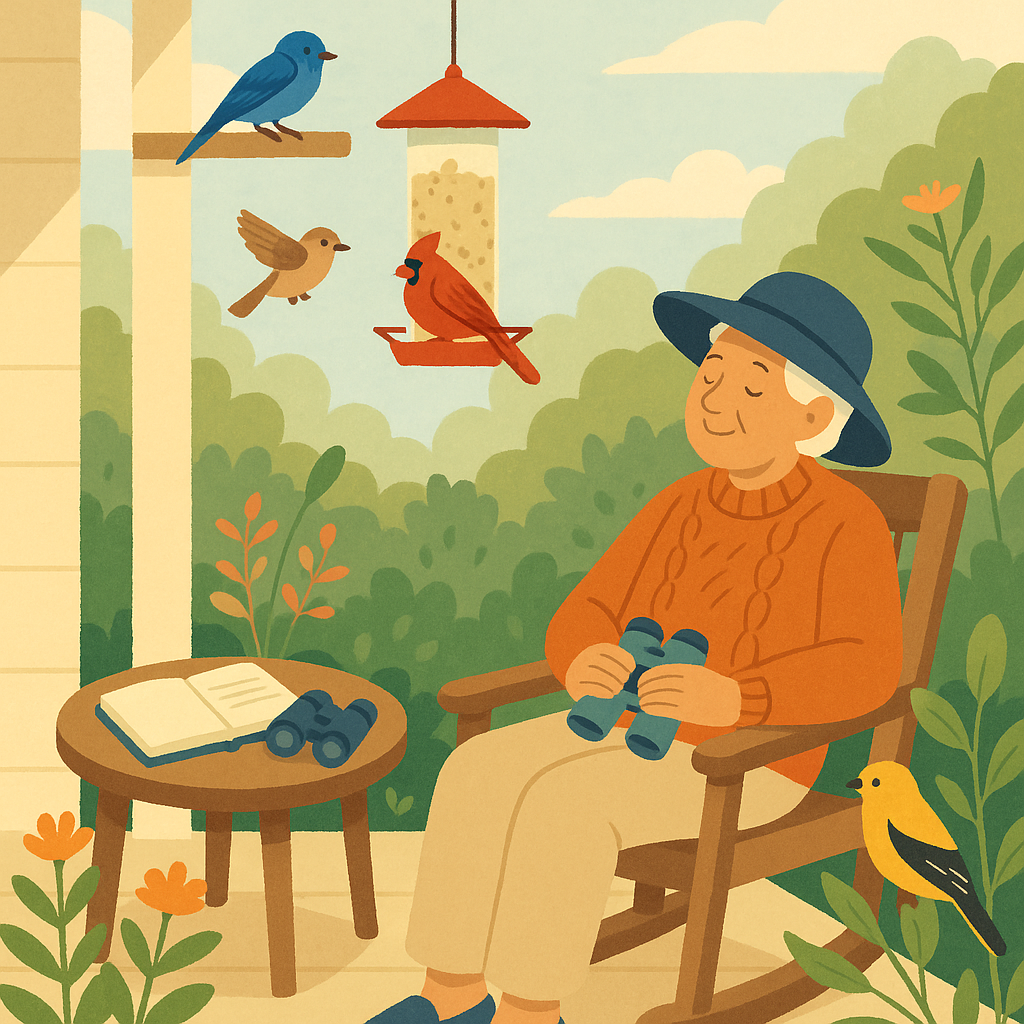
The best first step is to choose one seat that already works for your body. It might be a recliner near a window, a sturdy patio chair, a shaded porch rocker, a scooter parked near the garden, or a car pulled into a quiet overlook. The easier the spot feels, the more likely you are to return to it.
If indoor viewing sounds appealing, the ideas in watching birds from a kitchen window without disturbing them can help you think about curtains, glare, quiet movement, and notebook habits. A window setup is especially useful on hot, cold, windy, or high-pollen days when outdoor time is not comfortable.
Once you choose your spot, look for three things: a clear line of sight, a place to rest your arms, and something nearby that birds already use. That may be a shrub, fence rail, birdbath, feeder, flower bed, small tree, or patch of leaf litter. You do not need a perfect backyard. You need one dependable viewing lane.
Make the Seat Work for You
Comfort often decides whether birdwatching becomes a habit. Keep a small basket or tray nearby with water, reading glasses, a notebook, pencil, phone, sunscreen, light blanket, or any medication you may need during a short session. If holding binoculars bothers your neck or shoulders, try using them only for brief looks, resting your elbows on a table, or simply watching without optics.
Keep Sessions Short at First
Ten calm minutes can teach more than an uncomfortable hour. Try watching at the same time for several mornings, then jot down simple notes: time, weather, bird shape, behavior, and where it landed. This turns your usual seat into a tiny observation station.
Low-Effort Ways to Bring Birds Closer
You can make birds easier to see without creating a lot of extra work. Start with changes that are safe, reachable, and simple to maintain. If a feeder or bath is too heavy, too far away, or too awkward to clean, it will become a chore instead of a pleasure.
- Place water where you can monitor it: A shallow birdbath or saucer should be visible and easy to refresh. Clean water matters more than fancy design.
- Use one manageable feeder: Choose a feeder you can lift, open, and clean comfortably. Smaller capacity often means less weight and fresher seed.
- Let plants help: Shrubs, seed heads, berry plants, and leaf litter can attract birds naturally without requiring daily refills.
- Reduce glare: If you watch from indoors, adjust blinds or curtains so you can see clearly without sudden movements near the glass.
- Keep supplies close: Store seed, a small scoop, gloves, and cleaning brush where they are easy to reach rather than across the yard.
For days when you do want a short outing, easy birding trails for seniors offers a helpful way to think about benches, shade, bathrooms, short loops, and level paths before leaving home. Even then, it is fine to choose a single bench or overlook instead of walking the whole route.
Choose Tools That Reduce Strain
Some birding gear helps; some just adds weight. Many beginners feel they must buy strong binoculars, a heavy camera, a field guide, and a backpack before they begin. For limited mobility, lighter and simpler is usually better.
If binoculars are comfortable, a compact pair with a neck strap, harness, or table support may help. If they are not comfortable, skip them for now. You can still notice size, movement, color patches, song patterns, and behavior with your eyes and ears. A phone can also help with quick notes, gentle photos through a window, or listening practice if sound identification is part of your routine.
Porch, Patio, Window, and Car Birding Ideas
Limited mobility birdwatching works best when you give yourself several options. On a good weather day, the porch may feel wonderful. On a tiring day, the window may be enough. If walking is difficult but driving is possible, a car can become a quiet bird blind at parks, boat launches, wildlife refuges, or tree-lined lots.
Try a Porch or Patio Routine
Sit still for the first few minutes and let the yard settle. Birds often return after they realize you are not moving toward them. Watch the edges first: fence lines, shrub tops, gutters, low branches, and the ground beneath feeders. These edges are where small birds often pause before crossing open space.
Try Car Birding on Low-Energy Days
A parked car can offer support, shade, and a quick way to leave if you become tired. Choose legal, safe parking spots and avoid blocking roads or driveways. Roll the window down only if weather and comfort allow. Many birds tolerate a quiet car better than a walking person, which can make observation surprisingly good.
Pros and Cons of a Home-Based Birding Routine
Comfort stays in your control
You can choose the chair, timing, shade, temperature, and session length that fit your body on that particular day.
Repeating one view builds skill
Watching the same yard or window view helps you notice patterns, seasonal changes, and familiar bird behavior over time.
No pressure to keep up
You can pause, rest, stop early, or simply enjoy one bird without feeling compared to faster walkers or experienced birders.
Species variety may be smaller
A home spot may show fewer habitats than a large park, so patience and repeated visits matter.
Setup must be easy to maintain
Feeders, water, and seating should stay within safe reach; otherwise the routine can become tiring.
Frequently Asked Questions
Can I birdwatch if I cannot walk far?
Yes. Birdwatching can happen from a chair, porch, window, patio, scooter, wheelchair, parked car, or garden bench. The important part is safe, respectful observation.
Do I need binoculars if holding them hurts?
No. Binoculars can help, but they are not required. Start by noticing shape, movement, sound, posture, and where birds land. Comfort matters more than magnification.
What is the easiest place to start?
Begin with the seat you already use comfortably. A window facing a shrub, feeder, birdbath, or small tree is often the easiest first birding station.
How long should I watch at first?
Try 10 minutes. If that feels good, add time slowly. A short daily routine is usually more rewarding than one long session that leaves you tired.
Final Thoughts
Backyard birdwatching when you have limited mobility is not a compromise. It is a slower, quieter doorway into the same wonder: the flash of a wing, the confidence of a robin on the lawn, the tiny drama of a feeder visit, and the comfort of recognizing neighbors with feathers.
Choose one safe seat, keep your tools light, let each session be short enough to enjoy, and allow the birds to teach you gradually. A peaceful view from your own home can become a real birding place.