
What do backyard birds eat when they are not visiting your feeder? Quite a lot, actually. A quiet yard can be full of tiny meals: insects tucked under leaves, berries ripening on shrubs, seeds drying on flower heads, nectar in blooms, and small finds hidden in leaf litter.
Learning these natural foods makes birdwatching feel less mysterious. Instead of only watching the feeder, you begin to notice where birds pause, scratch, hover, hop, and return again. That is when the yard starts to feel like a living map.
Why Natural Bird Food Matters
Feeders are helpful, especially when they are clean and stocked with fresh seed, but they are only one part of a bird’s day. Many birds move through the yard looking for protein, fruit, shelter, and seasonal food that appears without any plastic feeder at all.
The Cornell Lab notes that native plants can support birds by offering nectar, seeds, berries, insects, and shelter. Their practical guidance on simple actions for birds is a useful starting point if you want your yard to work more like habitat: Cornell Lab simple actions to help birds.
Start With Insects, the Hidden Backyard Buffet
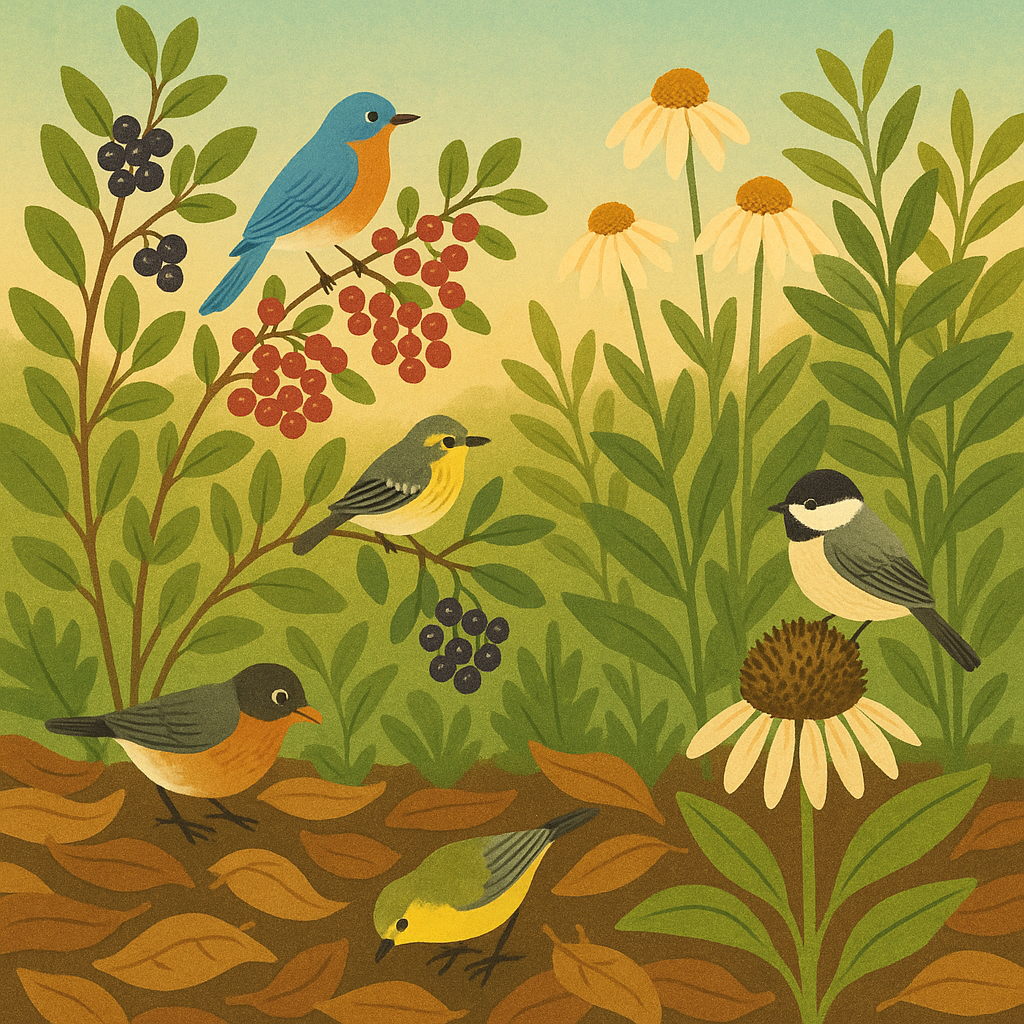
Insects are easy for people to overlook, but birds notice them constantly. Chickadees, wrens, warblers, robins, bluebirds, woodpeckers, and many other familiar birds may search bark, grass, flowers, and leaves for beetles, caterpillars, spiders, grubs, and other small prey.
Where beginners can look
- Tree trunks and branches: Watch for birds creeping, tapping, or peering into bark cracks.
- Low shrubs: Small birds often hop through leaves while picking at tiny insects.
- Lawns after rain: Robins and other ground feeders may find worms or soil insects.
- Leaf litter: Sparrows, towhees, and thrashers may scratch through old leaves for hidden food.
This does not mean you need a messy yard. It simply means a little natural texture can help. A small leaf corner under shrubs may be more useful to birds than bare soil that is raked clean every week.
Berries and Fruit Bring Seasonal Visitors
Many backyard birds eat berries or fruit when the season is right. Robins, catbirds, cedar waxwings, orioles, mockingbirds, thrushes, and some woodpeckers may visit fruiting shrubs or trees. The exact birds depend on your region, but the pattern is simple: when fruit ripens, birds pay attention.
If you enjoy planning a longer-term bird-friendly yard, BirdPeep’s guide to native plants birds love by U.S. region can help you think about shrubs, flowers, and trees that fit your local area. Start with one plant rather than trying to redesign the whole yard at once.
What to notice near berries
Watch whether birds swallow fruit whole, peck at it, or return in small groups. Also notice timing. Some berries are busy in late summer, while others become more valuable in fall or winter when insects are harder to find.
Seeds Are Not Only in Feeders
Seed heads on grasses, coneflowers, sunflowers, asters, and other plants can feed birds without any feeder at all. Goldfinches, sparrows, juncos, doves, chickadees, and titmice may investigate dried flowers or weedy edges, especially when the yard is quiet.
Cornell’s All About Birds explains that a diversity of plants can offer buds, fruit, seeds, nectar, sap, and the insects associated with those plants. Their backyard habitat article gives a helpful overview here: how to provide seeds and shelter for backyard birds.
A simple habit is to leave a few seed heads standing after bloom. You can still keep walkways tidy while letting one quiet corner serve birds a little longer.
Nectar, Sap, and Other Small Surprises
Hummingbirds are the birds most people connect with nectar, but flowers can also attract insects that feed other birds. Orioles may investigate fruit or nectar-like offerings, and woodpeckers sometimes visit sap wells or trees where insects gather.
If you already keep feeders, natural foods make the feeder feel less like the whole restaurant and more like one small table. For feeder upkeep, BirdPeep’s guide to cleaning and maintaining your bird feeding station pairs well with this natural-food approach.
Pros and Cons of Relying More on Natural Food
More natural behavior
You get to watch birds forage, scratch, hover, perch, and search instead of only seeing quick feeder visits.
Less daily work
Plants, leaf litter, and shrubs can support birds without needing to be refilled every morning.
Better year-round learning
You begin noticing how bird food changes with rain, flowers, frost, migration, and fruiting seasons.
Results take patience
A new shrub or flower bed may take time to become useful, so do not expect instant flocks.
Some foods are seasonal
Berries, insects, nectar, and seed heads appear at different times, so the yard will not look busy every day.
A Simple Backyard Food Checklist
- Insects: Look at bark, leaves, grass, and leaf litter before assuming birds are absent.
- Berries: Notice which shrubs get repeat visits and what month the activity begins.
- Seeds: Leave a few dry flower heads standing where they are not in the way.
- Nectar: Add flowers gradually and keep any nectar feeders clean if you use them.
- Shelter: Food works better when birds have safe cover nearby.
- Notes: Write down where birds feed naturally so you can spot patterns over time.
If you like recording patterns, a small notebook makes this easier. BirdPeep’s article on starting a nature journal for bird discoveries can help turn casual sightings into useful backyard clues.
Frequently Asked Questions
Do backyard birds still need feeders if natural food is available?
Not always, but feeders can supplement natural food when kept clean and fresh. Think of them as one helpful option, not the whole habitat.
Should I remove all leaf litter to keep the yard tidy?
You can keep paths and sitting areas tidy while leaving a small quiet leaf patch under shrubs. That patch may hold insects and shelter for ground-feeding birds.
Which natural food attracts the most birds?
It depends on your region and season. A mix of insects, native berries, seed heads, water, and cover usually helps more than one single food source.
How can I tell what a bird is eating?
Watch the behavior. Pecking bark, scratching leaves, hovering near flowers, or returning to berries can give you good clues without needing to identify every tiny food item.
Final Thoughts
Backyard birds eat far more than feeder seed. They follow insects, berries, natural seeds, nectar, sap, and the quiet shelter that helps those foods appear. Once you notice these patterns, birdwatching becomes calmer and richer.
This week, choose one corner of the yard and watch it for ten minutes at the same time each day. Notice where birds search, what they ignore, and what brings them back. The yard may already be feeding them better than you realized.